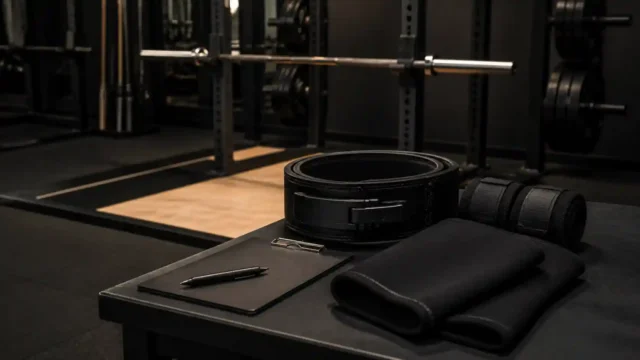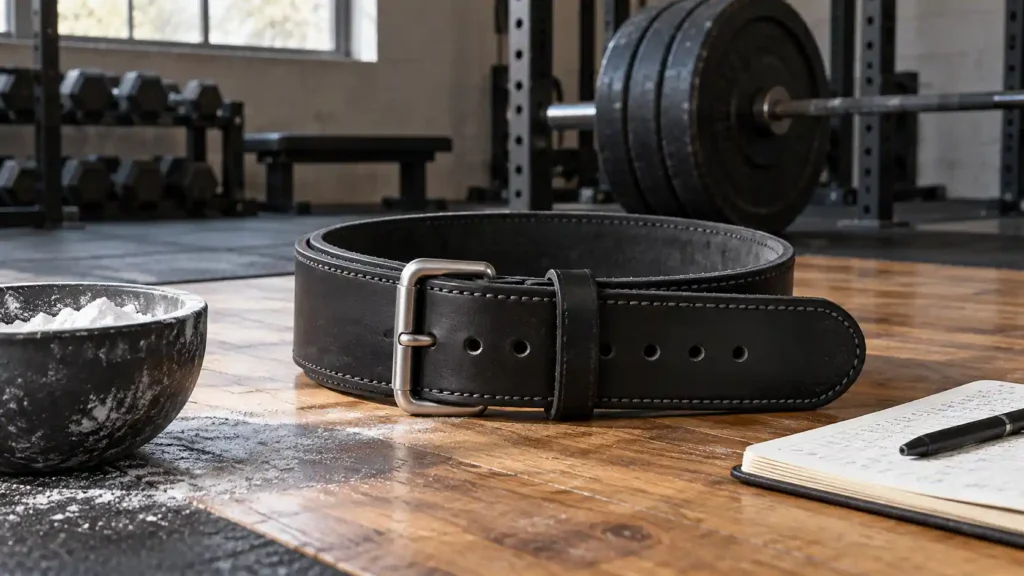
A lifting belt should not feel loose, but it does not need to feel like a test of toughness. The useful setting is one you can reproduce: you can take a deliberate breath, brace against the belt, reach the position your lift needs and complete the planned work without fighting the hardware.
That answer is less dramatic than “as tight as possible,” but it is more useful. A belt is one part of a setup. It does not create a brace for you, make an unfamiliar load safe or solve pain, numbness, weakness or breathing difficulty. Those are reasons to stop and get individual guidance, not to pull the buckle tighter.
This is a specifications-and-practice guide, not a hands-on review of a named product. It focuses on using a belt in movements you already know.
- What the belt is there to do
- What a workable fit feels like
- How to test the setting
- When rules and fit are different questions
The belt gives your brace a surface
A belt does not replace trunk control. It gives your torso a firm external surface to expand into while you create a deliberate brace. Research has measured changes in pressure when a belt is worn, but that does not turn the belt into a medical device or prove that any particular tightness prevents injury.
In a small 1989 trial, nine participants deadlifted at 90% of maximum with and without a belt; the belt condition increased several measures of intra-abdominal pressure. Read the original study for its measurement method and limits. It studied a very small group and a particular task, so it cannot tell every lifter how tight a belt should be.
A 2019 systematic review also found that high-intensity resistance exercises produce different intra-abdominal and intrathoracic pressures depending on the lift and load. The review reinforces a practical point: the exercise, the load and the person matter. There is no single belt hole that can be prescribed from a paper.
A workable fit passes three checks
Start with a belt setting that feels firm around the torso but does not prevent you from taking the breath and brace you intend to use. Then check three things.
- You can create the same brace. Before the first work set, stand in your familiar position and take a controlled breath. The belt should provide something to brace against, not force you into a shallow, rushed breath.
- You can reach the positions of the lift. A squat, conventional deadlift and bench setup can place the belt differently against the ribs, abdomen and hips. If the belt pinches, shifts sharply or blocks the start position, that is information about the setting or placement.
- You can repeat it without drama. You should be able to fasten and release the belt calmly between sets. If the buckle takes so much effort that you rush your setup, the tightest hole may not be the most useful one.
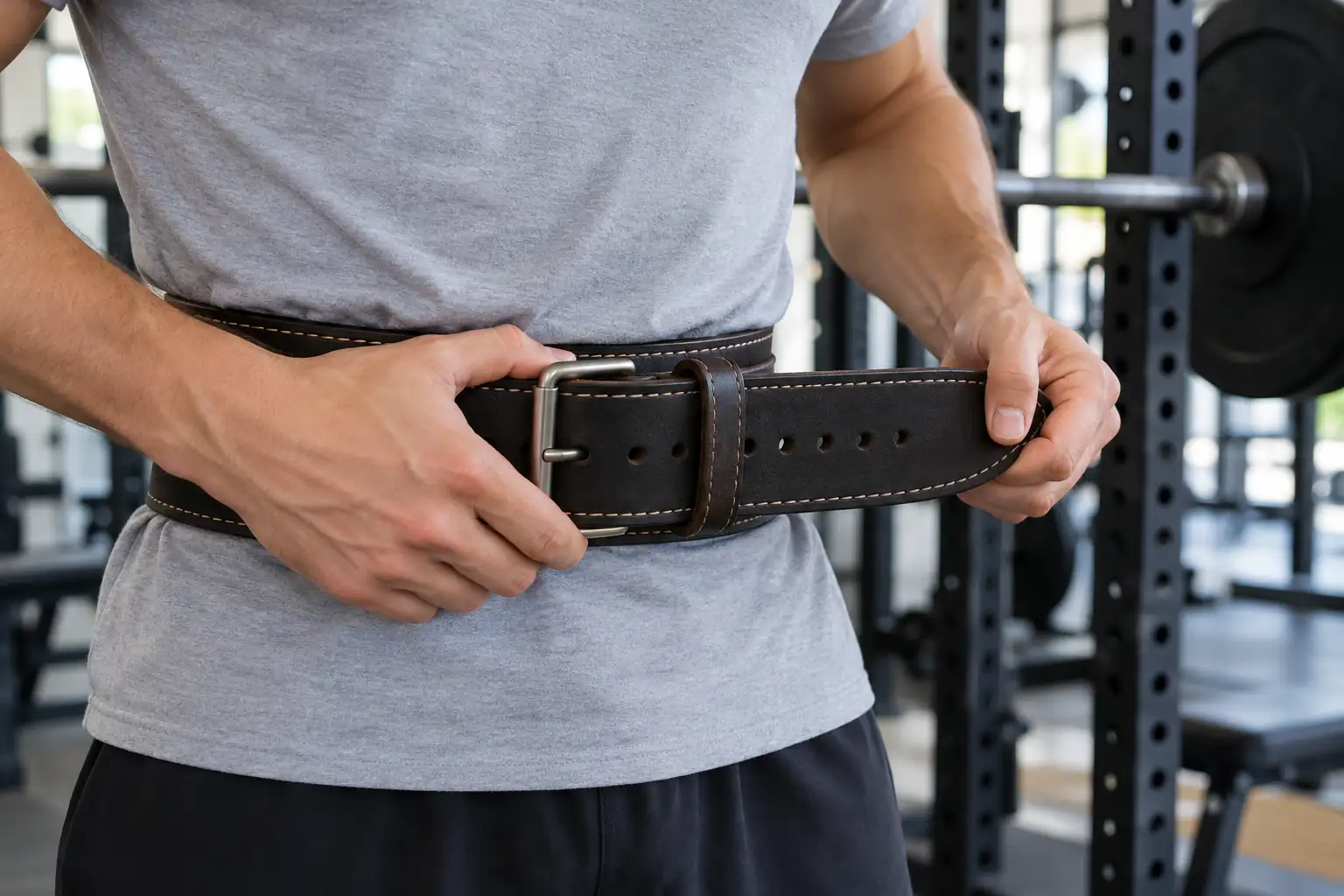
Test it with ordinary working sets
Do not discover a new belt setting on a maximal attempt. Use a lift you already perform, a manageable work weight and the same clothing you normally wear. Try one setting for a few controlled sets, then note whether you can breathe, brace, keep your normal positions and release the belt comfortably after the set.
Change only one variable at a time. Moving one hole tighter while also changing belt height, exercise, load and shoes tells you very little. If the lift feels restricted, first decide whether the problem is tension, placement, a very stiff new belt or a movement that does not suit that belt shape. A uniform-width belt can fit one lift well and crowd another.
The broader guide to lifting belts covers when a belt has a useful role. For the closure choice itself, see lever versus prong belts. Both point back to the same test: can you set up and brace in a way you can repeat?
Know the signals to loosen or stop
A belt should be firm, but it should not make the session feel unsafe or unmanageable. Loosen it or end the set if you cannot take the breath you normally use, feel numbness, severe pain, dizziness or a sudden change in symptoms. Do not keep tightening a belt to train through those signs. A general fitting guide cannot determine whether an individual symptom is caused by equipment, technique, fatigue or a health issue.
A new leather belt can also feel unusually rigid for a while. That does not require forcing the tightest hole. Practice fastening and bracing with moderate loads, and reassess after ordinary sessions. If the belt still cannot be positioned comfortably for the movement you want to train, another width, thickness or shape may be a more useful change than more tension.
Tight is not a competition category
A belt may fit well in training and still fail a competition rule, or meet a rule and still be uncomfortable for you. These are separate questions. The current IPF Technical Rules regulate belt dimensions and approved equipment for that federation. They do not tell an individual lifter which hole should be used.
If you are entering a meet, check the exact federation, division, current rulebook and approved-equipment list before buying or relying on a belt. The IPF rulebook is an example, not a universal standard. A product can be legal in one setting and irrelevant in another; a belt that passes inspection is not automatically the right fit for your training.
The practical answer
The right belt tension is the tightest setting that still lets you take a deliberate brace, move through your planned range and repeat the setup calmly. If going one hole tighter costs you breath control, position or confidence, it is not a better setting simply because it is tighter.
Use a familiar lift, keep the test controlled and let repeated work decide. A belt should make your preparation more consistent, not become the hardest part of the session.