A training log should answer a simple question when you arrive at the gym: what am I trying to repeat or improve today? A paper notebook can do that. A phone app can do that too. The better option is not the one with the longest feature list. It is the one you will open after an ordinary hard set, use without friction and be able to review when a pattern matters.
This is a criteria guide, not a hands-on review or a recommendation for a specific notebook, app or brand. Paper and digital tools solve different practical problems. Before choosing one, decide what you need the record to preserve and what makes you stop using a tool after the first enthusiastic week.
- What a useful strength log records
- When paper makes more sense
- When an app makes more sense
- How to test the system before buying into it
Start with the record, not the format
A strength log does not need to capture every sensation in the room. It needs enough detail to make the next exposure comparable. For a main lift, that usually means the exercise or variation, load, completed repetitions and sets, a short effort note when relevant, and a note about anything that changed the meaning of the work: a pause, altered range, shortened rest, unusual exercise order or a substitution.
The planned work matters too. If the plan was three sets of five and you completed three sets of four with a different rest interval, the log should show the difference. That record makes a later decision less dependent on memory. It helps you distinguish a genuine training change from a session that only felt different.
Research on feedback supports the broad principle, not one particular logging tool. A 2024 systematic review and meta-analysis of feedback in self-monitoring interventions found better physical-activity outcomes with feedback than without it in the studies that could be pooled. The authors also reported high risk of bias and considerable variation in the interventions. That does not prove a notebook or app will improve a barbell number. It supports the modest idea that recorded information is more useful when it can be reviewed.
A notebook is a good fit when friction is the enemy
Paper has a few practical advantages. It starts instantly, does not need a battery, works in a poor-signal gym and gives you a limited space that can make the record simpler. A notebook can also keep the phone out of the middle of every rest period, which may help when notifications or scrolling regularly disrupt the session.
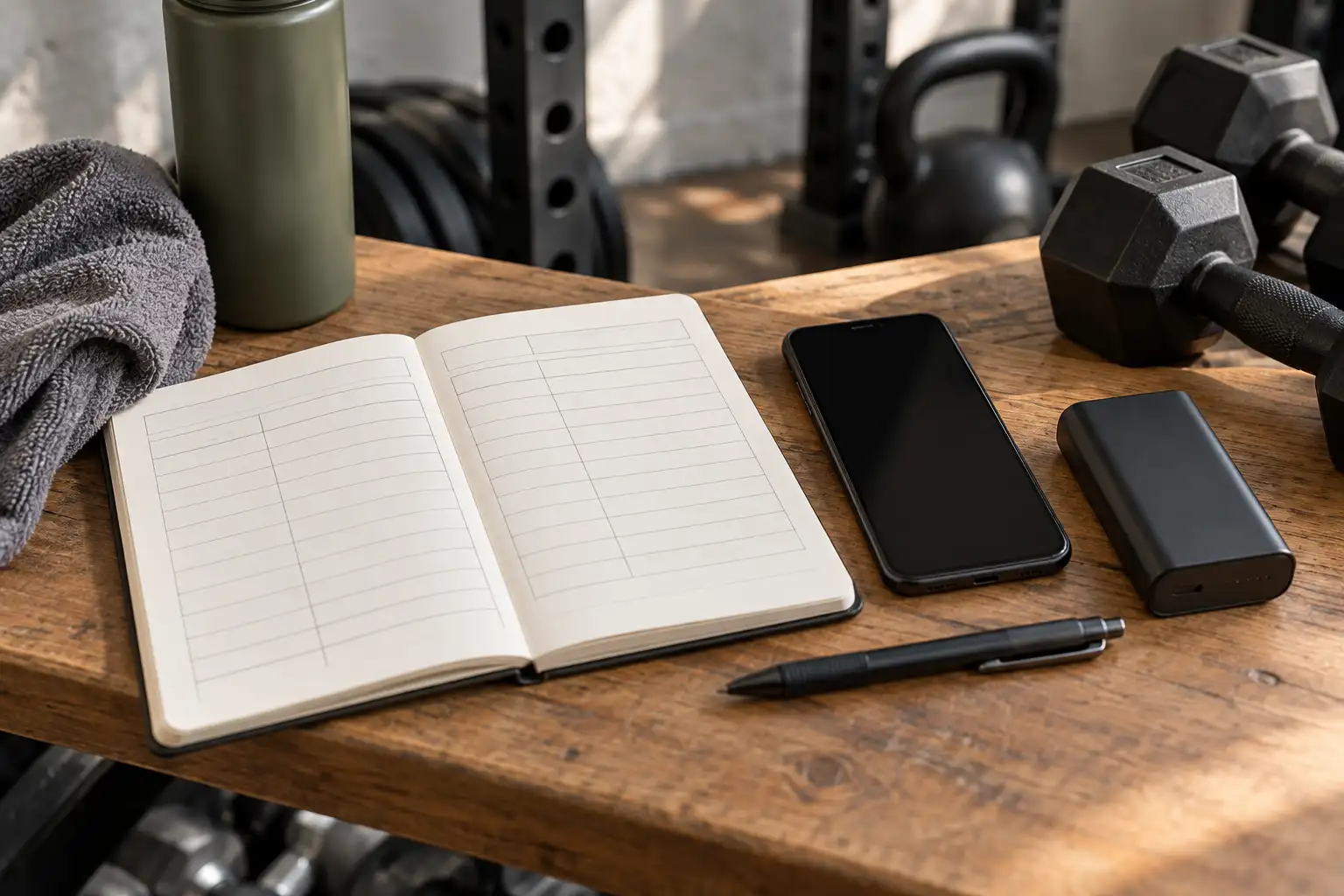
A simple notebook template is enough: one page per session, with columns for exercise, planned work, completed work and a brief note. If you like a larger view, reserve one page at the end of each month for repeated exercises or a few observations. You do not need an elaborate planner, custom stickers or perfect handwriting. You need to be able to find the previous version of the lift in seconds.
Paper has limits. It does not calculate volume automatically, plot a trend or search every squat session you have ever performed. It can be lost, damaged or left at home. If you choose paper, take occasional photos or scans of completed pages and keep the notebook somewhere dry. The backup is part of the system, especially when several months of data would be frustrating to lose.
An app is a good fit when review and portability matter
A digital log can make repeated work easy to find. It may let you duplicate a session, calculate simple totals, graph a lift, attach a short video note or export your history. These features are useful when you run several variations, train across different locations or want to review a pattern before making a programming change.
The app itself is not the point. Reviews of smartphone fitness apps report uneven quality and limited evidence for long-term effects. A 2022 systematic review of smartphone fitness apps found that only a small number of included studies and apps were judged good quality. A separate meta-analysis of activity-app and tracker interventions found modest average improvements in physical activity, while also reporting substantial heterogeneity. Read the meta-analysis for its methods and limits. These studies are mostly about activity behavior, not strength logging, so they do not settle the notebook-versus-app choice for a lifter.
Instead, check a few practical specifications before committing. Can you record a set in a few taps while resting? Can you edit a mistake? Does the tool work offline if your gym has poor reception? Can you export your own data in a format you can save? Does the privacy policy make sense for the information you choose to store? Is the core record still available without a subscription that you do not want?
If the app makes you open a social feed, compare your current session to strangers or switch between several screens before you can write one set, its convenience may be an illusion. Use a focused mode, silence notifications or choose paper for the lifting portion of the session. The device should serve the work, not keep you from it.
Choose by your normal training conditions
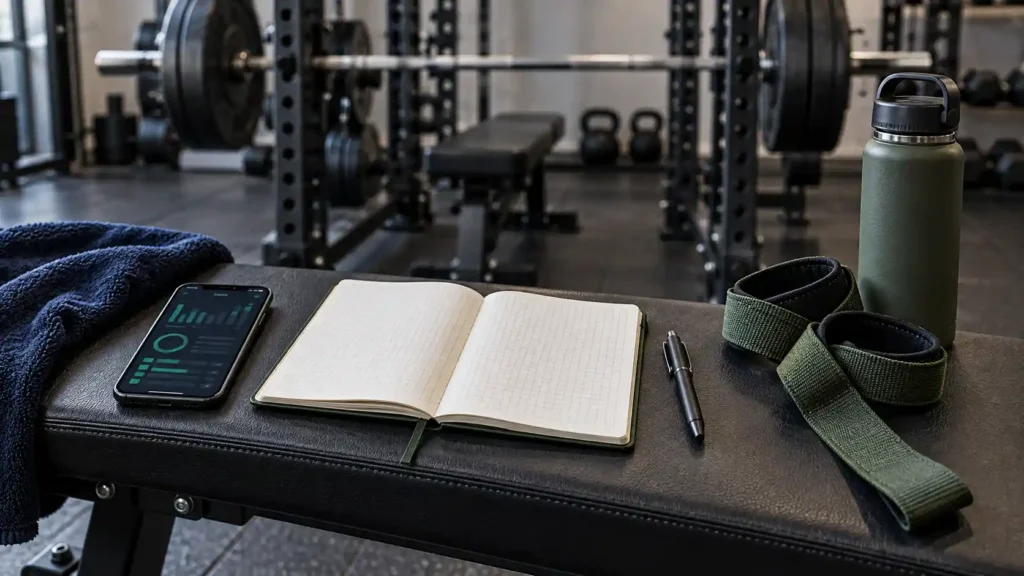
Use paper if you want a low-distraction, low-cost record and you are comfortable reviewing pages manually. Use an app if you value searchable history, automatic calculations and a portable backup, and it does not pull attention away from the session. A hybrid approach is also reasonable: paper for immediate training notes and a weekly digital transfer, or an app for sets and a short paper note for cues that matter.
There is no virtue in the more complicated option. A log with hundreds of fields that you stop using is worse than four reliable fields that appear every session. The same is true of analysis. RPE Without the Guesswork can help you decide when an effort note has a clear job. Add information only when you know what decision it will support.
Test the system for two ordinary weeks
Before buying a premium notebook or committing to a paid app, use a basic version for two ordinary weeks. Record your planned and completed work, then look back before repeating each main lift. Ask three questions: did I record the session without delaying it; could I find the last comparable session; and did the format create distraction or confusion?
If the answer is yes, keep it. If the app is too slow, simplify its template or change it. If the notebook stays at home, keep a pen with your gym bag or take a phone photo after the session. Make one adjustment at a time. The purpose is not to build a data project. It is to let your next session start with useful information.
For the related decision about what to do with that information, read Rest Between Sets Is Part of the Set. A log can show that your repetitions change when rest changes; it cannot make that decision for you.
Conclusion
Notebook or app is a tool choice, not an identity. Choose the system that is quick enough to use during normal training, clear enough to review, safe enough to back up and quiet enough to keep your attention on the lift. The best log is the one that makes the next session easier to understand.