Arnold Schwarzenegger is an easy name to flatten into a slogan: huge arms, movie lines, seven Mr. Olympia titles, governor of California. But the more useful fitness story is quieter than the poster version. It starts with a teenager from Thal, Austria, who found a direction, repeated the work for years, and then learned how to make that work visible to people who had never cared about bodybuilding.
That is why the title "changed fitness forever" is not just about trophies. Many athletes have won. Fewer have changed what normal people think a gym, a physique, or a training life can represent. Schwarzenegger helped move bodybuilding from a narrow competitive world into mainstream culture, then kept turning fitness into books, events, public service, and media.
This story is inspiration, not a template. Most lifters do not need the extremes of elite bodybuilding, celebrity ambition, or public reinvention. The useful lesson is simpler: a clear target, repeated practice, and the ability to communicate the work can compound far beyond one training block.
- The Austrian beginning
- Why the titles mattered
- How media changed bodybuilding
- Why the legacy outgrew the stage
- What everyday lifters can actually use
The Austrian beginning
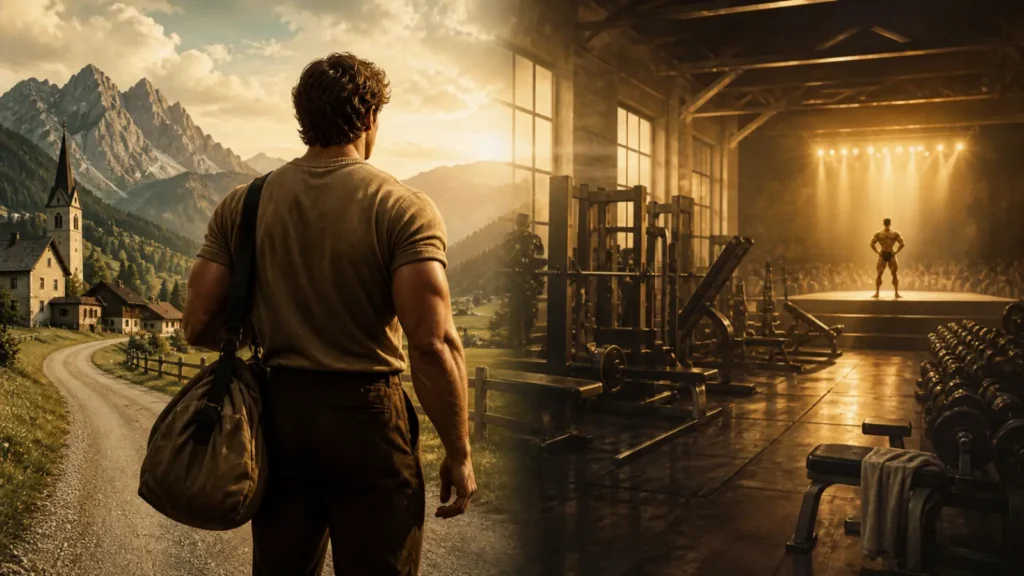
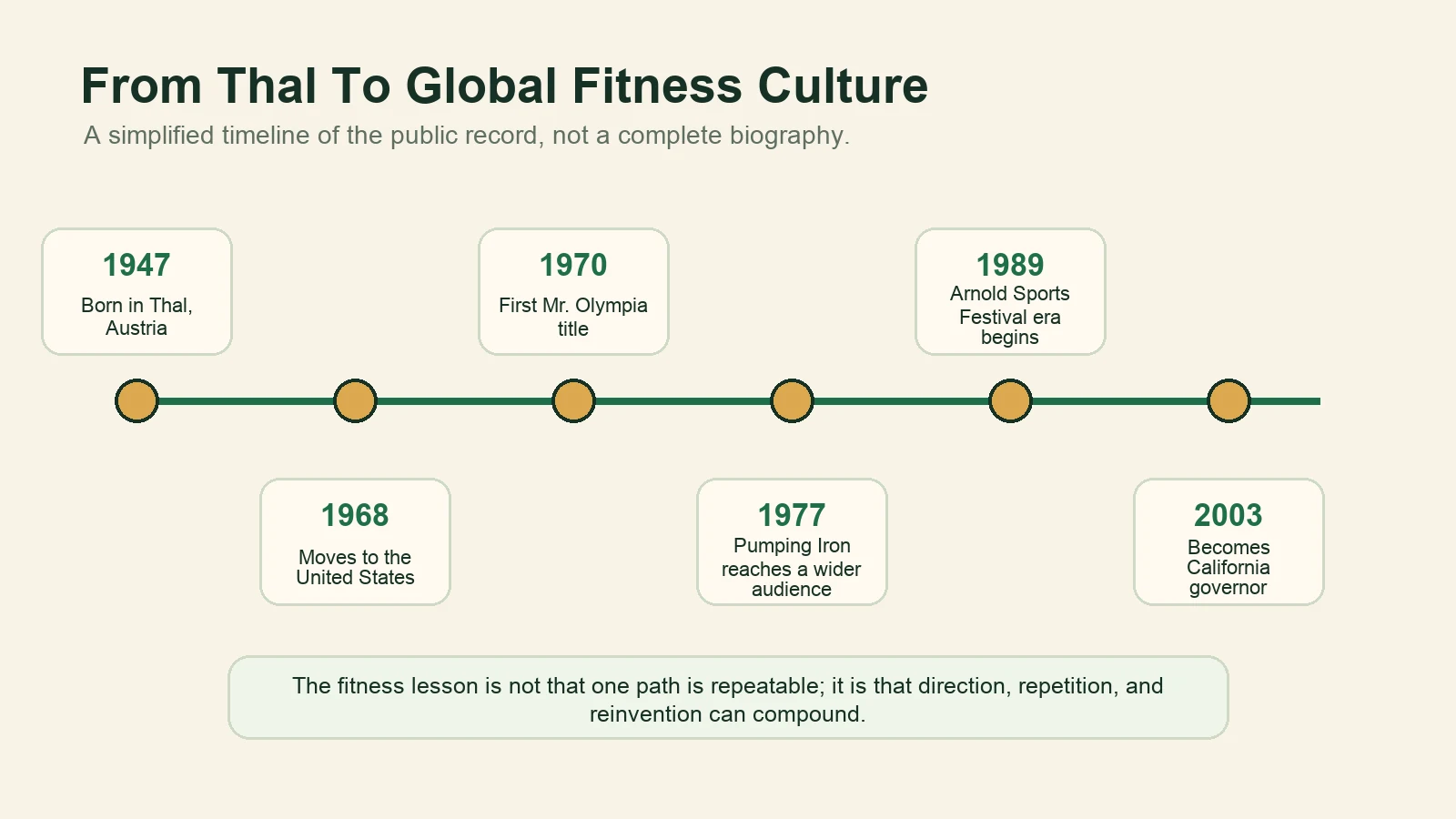
The official Schwarzenegger biography places the beginning in Thal, Austria in 1947. That setting matters because it makes the later story feel less inevitable. Before Hollywood and global fitness expos, there was a young athlete looking outward, studying what strength and physique could become.
The National Park Service biography describes how movies and bodybuilders helped shape his early obsession with America and with bodybuilding. For a fitness reader, that detail is more than color. It shows the first pattern in the story: he did not only train; he attached training to a bigger identity and destination.
Bodybuilding gave him structure. It gave him measurable progress, public tests, and a reason to treat the gym as more than exercise. That does not make his path universally healthy or realistic for every person. It does show how powerful a chosen direction can be when it organizes daily behavior.
Why the titles mattered
Schwarzenegger’s competitive record gave the story its weight. His official bio says he became the youngest person ever to win the Mr. Universe title, moved to America in 1968, and later won five Mr. Universe titles and seven Mr. Olympia titles before retiring from competitive bodybuilding.
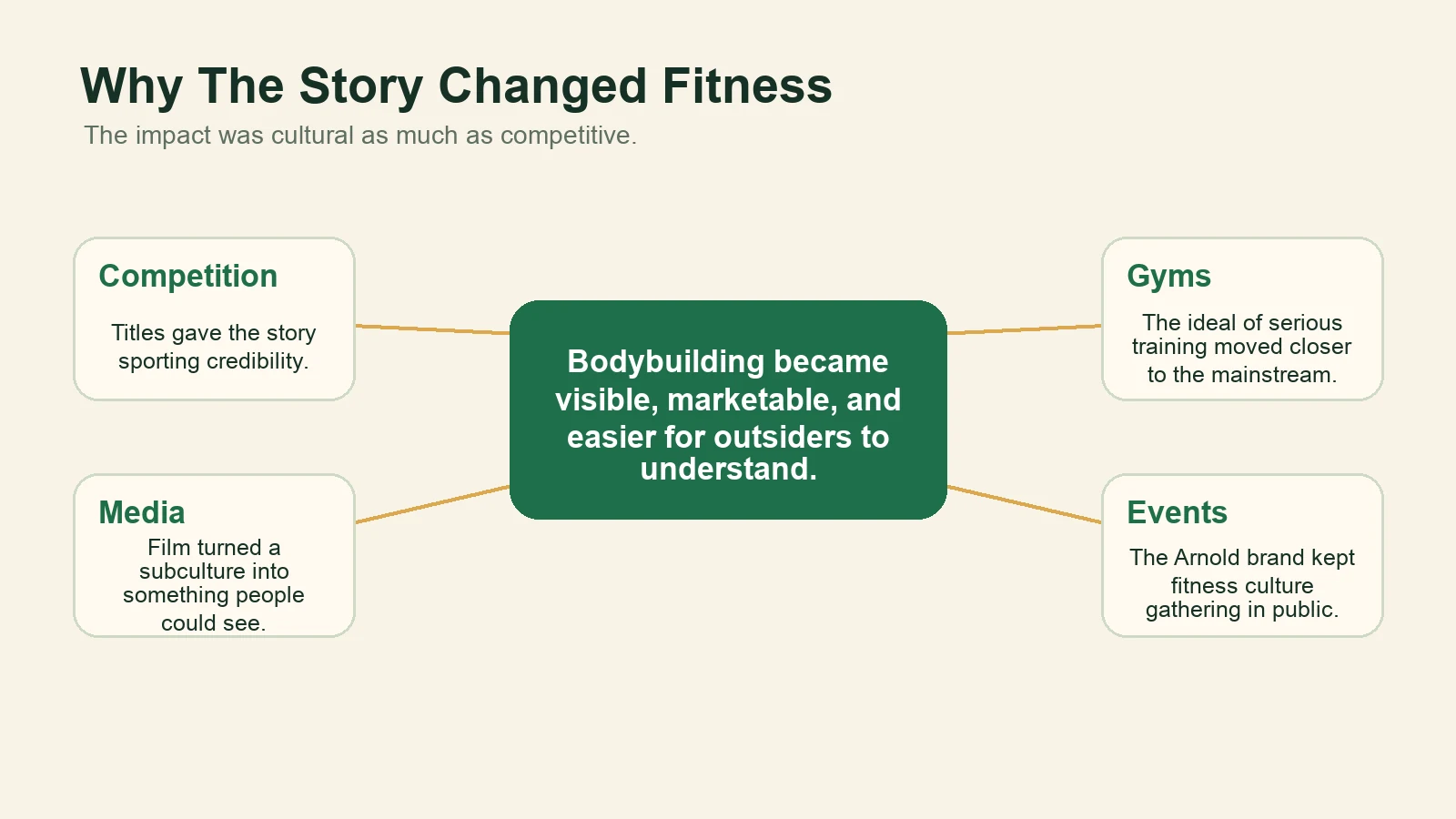
Those numbers matter because they gave him credibility inside the sport before he asked outsiders to care. Without the titles, the later media machine would have been much thinner. The message was not just "look at me." It was "this is what disciplined physique training can produce at the highest level."
For everyday lifters, the lesson is not to chase professional bodybuilding standards. The lesson is that progress becomes more persuasive when it is anchored in skill and consistency. A body, a lift, or a habit carries more meaning when it has been built through repeatable practice rather than constant novelty.
How media changed bodybuilding
The cultural turn came when bodybuilding became watchable. The NPS biography points to the 1977 documentary Pumping Iron as a key moment in helping push bodybuilding toward the mainstream. The film did not only show physiques; it showed personalities, rivalry, training spaces, and the strange theater around the sport.
That mattered because many people had never seen bodybuilding from the inside. A niche pursuit became a story with characters and stakes. The gym became less hidden. Muscular development became less abstract. Whether viewers admired it, questioned it, or found it excessive, they now had an image of the training world.
This is where Schwarzenegger’s influence becomes different from a normal champion’s influence. He understood that the work had to be performed twice: once in the gym and once in public. That second performance helped bodybuilding travel into movies, magazines, commercial gyms, and later the broader fitness industry.
Why the legacy outgrew the stage
The stage was only one chapter. Schwarzenegger became a movie star, a businessman, and later California’s 38th governor. His official biography records the transition from bodybuilding and entertainment into California public office in 2003.
That matters for a fitness story because his public identity kept carrying the message that training could be part of a bigger life, not just a stage result. The official biography also notes his work with fitness councils, Special Olympics, after-school programs, and health-related policy efforts. Fitness became part of public service, branding, and cultural advocacy.
The current Arnold Sports Festival presence shows another part of that legacy: the story did not end with his own competition career. The name became attached to a continuing gathering point for bodybuilding, strength, physique, and fitness culture.
None of that means every part of celebrity fitness should be copied. Public figures simplify themselves into symbols, and symbols can hide costs, mistakes, and context. The better reading is that Schwarzenegger helped make fitness visible enough that millions of people could imagine entering a gym with a purpose.
What everyday lifters can actually use
The first usable lesson is direction. Schwarzenegger’s story is extreme, but it is not random. He had a target early, and that target made repeated work meaningful. Most people do not need a world-title dream, but they do need a reason specific enough to shape behavior.
The second lesson is craft. Bodybuilding is often dismissed as appearance, yet high-level physique development requires exercise selection, effort, nutrition, posing, recovery, and long-term patience. Even if your goal is modest, treating training as a craft makes progress less dependent on mood.
The third lesson is communication. Schwarzenegger changed fitness partly because he could translate a niche world for outsiders. For a normal lifter, that might mean something smaller: explaining your routine to family, choosing a gym culture that supports you, or using progress photos and logs as feedback rather than vanity.
The fourth lesson is reinvention. His identity moved from athlete to actor to public figure without fully abandoning the fitness base. That is useful because many people think fitness only counts when life is perfectly stable. In reality, a durable training identity has to survive new jobs, injuries, parenting, aging, travel, and changing goals.
Continue with a related guide
For the next practical step, read Arnold vs. Lou Ferrigno: The Rivalry That Made Bodybuilding Cinematic. For a second perspective from the same topic cluster, continue with Franco Columbu: The Strongman, Bodybuilder and Unlikely Champion.
Conclusion
Arnold Schwarzenegger changed fitness because he did more than win. He made bodybuilding legible to people outside the sport, connected training to ambition and showmanship, and kept fitness in public view long after his own competitive career ended.
The healthy takeaway is not that every lifter should copy the volume, the physique standards, or the celebrity path. The takeaway is that training becomes powerful when it has direction, when the work is repeated long enough to become craft, and when the story around it helps people see what disciplined effort can build.
FAQ
Did Arnold Schwarzenegger make bodybuilding mainstream by himself?
No. Many athletes, coaches, gym owners, filmmakers, promoters, and fans shaped that shift. Schwarzenegger was unusually visible, charismatic, and successful, which made him one of the central figures in the transition.
Should everyday lifters train like Arnold?
Usually not. Elite bodybuilding routines reflect unusual goals, genetics, recovery demands, and historical context. Everyday lifters are better served by taking the principles of direction, consistency, and progressive work while scaling the plan to their own body and life.