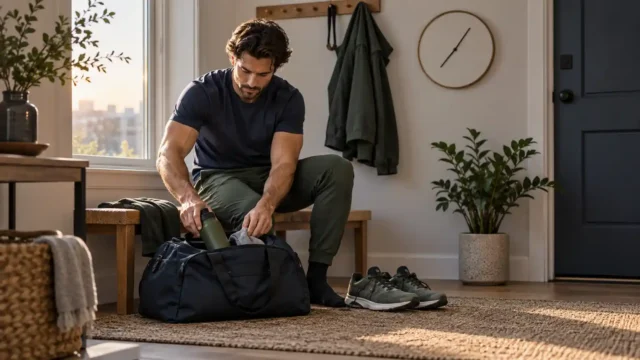
Training alone can be one of the best parts of a gym routine. You choose the music, rest when you need to, keep the session quiet and leave without coordinating anyone else’s plan. None of that means you are isolated.
Loneliness is a different experience. The World Health Organization describes it as the distressing gap between the social connections a person has and the connections they want or need. A person can train alone and feel entirely connected elsewhere. Another person can train in a crowded gym and still feel detached. The useful question is not whether you have a training partner. It is whether your routine leaves room for the kind of connection that would make life feel more supported.
This article offers small ways to make a solo routine feel less closed off. It does not treat loneliness, anxiety or depression. If feeling alone is persistent, distressing or affecting daily life, reaching out to a qualified mental-health professional or a trusted local support service can be a more appropriate next step than trying to solve it through a gym routine.
- Why solo training can work well
- Why a busy gym can still feel lonely
- Small ways to create connection
- How to keep the routine your own
Solo training is a valid preference
Some people concentrate better alone. They want to follow a program without negotiating exercise order, match their rest interval to the set in front of them and keep training as a private part of the day. Schedules, work and family life can also make a regular training partner unrealistic.
That is not a deficit to fix. A good solo session can still have structure, safety and enjoyment. Use rack safeties where appropriate, ask for a spot when the lift calls for one and choose exercises you can set up reliably. The goal is a routine you can repeat, not a performance of independence.
Our guide to what makes a great training partner makes the complementary point: a good partner can be valuable, but they are not required for a session to count. Training alone remains a complete way to train.
A full room does not automatically create connection
The WHO separates the number of interactions from their quality. You can exchange a few words with many people and still miss the kind of familiarity, care or shared interest you want. Equally, one dependable connection outside the gym can make a quiet training routine feel entirely fine.
That distinction avoids two unhelpful rules. You do not need to force friendship with everyone who uses the rack after you. You also do not need to conclude that a desire for more connection means you are bad at solo training. It simply gives you a useful choice: add a little social contact where it fits, or look for connection in another part of life.
Research does not show that group exercise is universally superior to training alone. A 2026 systematic review and meta-analysis found that both individual and group-based physical-activity approaches can be effective, with group-based conditions showing only small and non-significant advantages on several broad outcomes. Read the review of individual and group physical-activity interventions for its varied settings and limits. The point is not to choose the winning format. It is to choose one you can continue.

Add small, repeatable points of contact
Connection rarely needs a dramatic introduction. In a familiar time slot, start with a nod, a quick “How is your training going?” or a practical question about whether someone is using a piece of equipment. Let the relationship remain light unless it naturally develops.
Three low-pressure options work for many solo lifters:
- Keep one regular training window. Seeing a few familiar faces can make a place feel less anonymous without asking anyone to change plans.
- Offer practical gym courtesy. Ask before taking equipment, offer to share when appropriate, or return a plate someone is looking for. These small actions make the room easier to occupy together.
- Choose one shared setting occasionally. A beginner class, club session, lifting clinic or occasional meet can offer structured contact while keeping most training solo.
The activity itself is only one setting for connection. A 2021 systematic review and meta-analysis of social-connection interventions found that different approaches affected frequency and quality of contact differently. The review is a reminder that more people around you is not the same as more meaningful connection. A club class may help one person; a regular walk with a friend, volunteering or an interest outside fitness may suit another better.
Protect the parts of solo training you value
Connection works better when it does not turn into a demand. You can be friendly without offering coaching, sharing personal information or giving up the focused part of the session. A brief chat between sets is enough. Headphones, a written plan and a predictable leaving time are also reasonable boundaries.
It can help to name the minimum you want. Perhaps you would like one person at the gym whose name you know. Perhaps you want a class once a month while keeping your main program private. Perhaps the gym is only for training, and the desired connection belongs elsewhere. All are legitimate answers.
The people you only know between sets captures why these lighter connections can still matter. They do not need to become close friendships to make a familiar room feel more human.
Conclusion
Training alone is an arrangement. Loneliness is a feeling about the gap between the connection you have and the connection you want. They sometimes overlap, but one does not prove the other.
Keep the independence that makes solo training work. Then add one small point of contact if it would make the week feel better: a familiar class, a conversation between sets or a shared event outside the normal program. The aim is not to make the gym solve every social need. It is to make your routine fit more comfortably into a connected life.