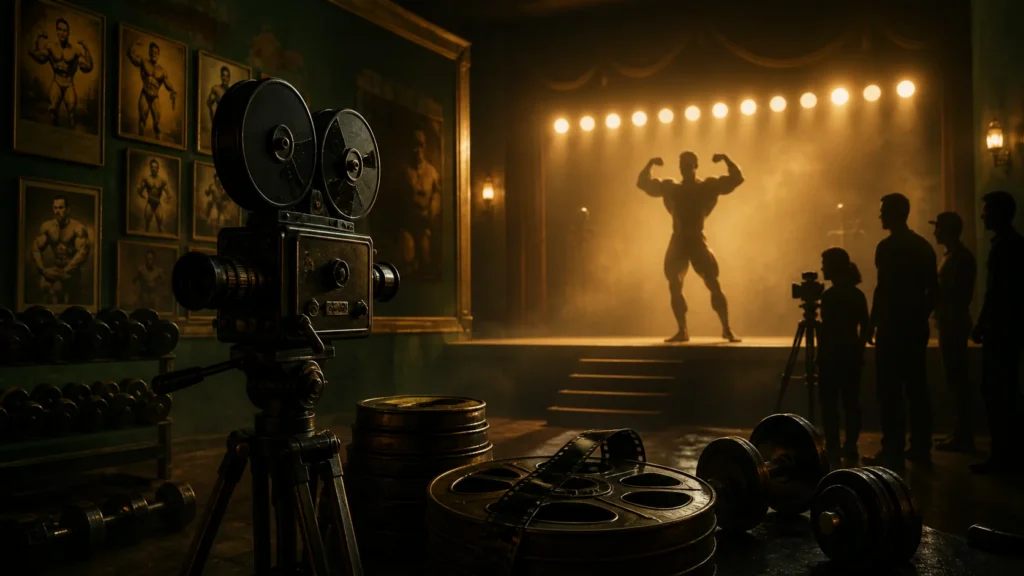
Before Pumping Iron, bodybuilding was visible to insiders but strange to many outsiders. People knew muscular bodies existed, and physique contests had their own magazines, gyms, heroes, and rituals. But the wider public rarely saw the daily environment that produced those bodies: the repetition, the posing practice, the rivalry, the insecurity, the humor, and the odd mix of sport and theater.
That is why the film mattered. It did not simply show big bodies. It gave bodybuilding a cast, a mood, and a story. Viewers could follow preparation, personality, tension, and competition. The gym stopped being a hidden room and became a stage before the stage.
This article treats Pumping Iron as a cultural success story, not as a training template. Elite bodybuilding is an extreme world. The useful lesson for everyday lifters is how a film made invisible work understandable.
- Why bodybuilding needed a story
- How the camera changed the gym
- Why character mattered as much as muscle
- What lifters can use today
Bodybuilding needed a door for outsiders
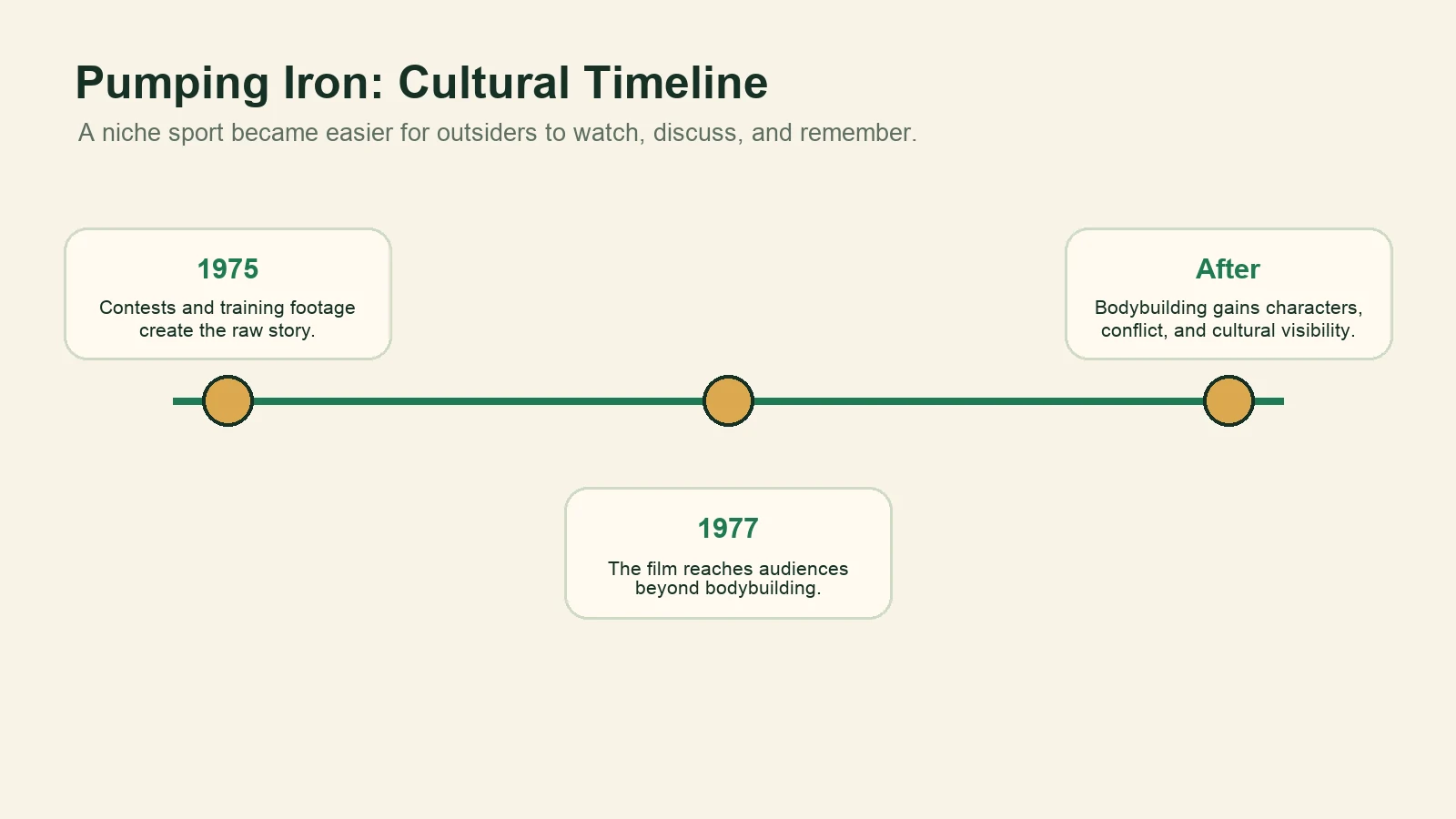
The Letterboxd film listing identifies Pumping Iron as a 1977 documentary directed by George Butler and Robert Fiore. That simple catalog fact matters because documentary form gave the sport a different kind of access. A contest result tells people who won. A film can show what the world felt like.
For a viewer outside bodybuilding, the sport can look like a final image: a posed body under lights. Pumping Iron widened the frame. It showed training spaces, backstage energy, personalities, and the build toward competition. The body became the visible end of a process rather than a disconnected spectacle.
That kind of access is powerful. People often respect work more when they can see the process. The film made bodybuilding easier to discuss because it gave the public scenes, not just physiques.
The gym became cinematic
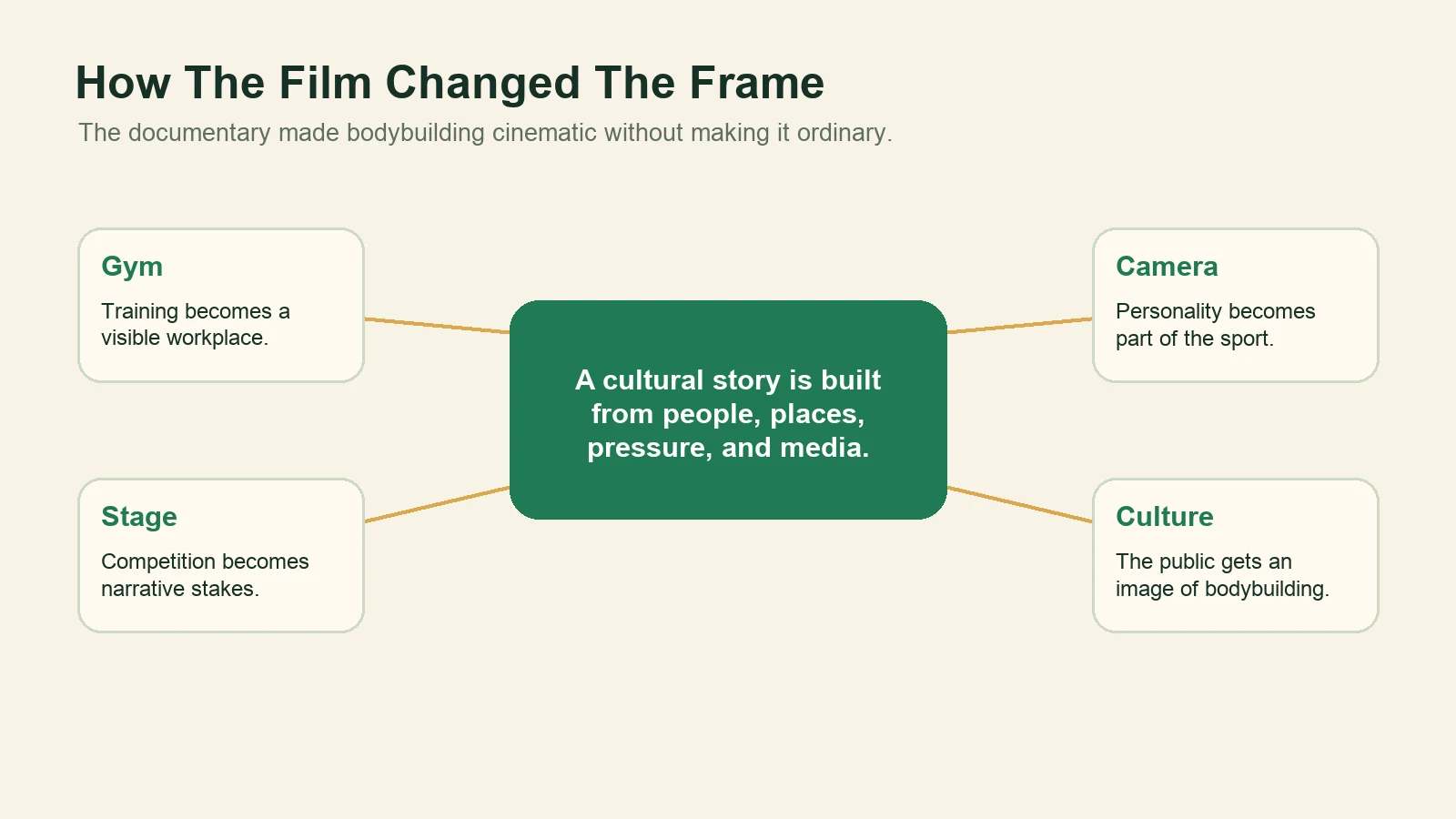
The gym in Pumping Iron is not just background. It is where the story earns its credibility. The weights, mirrors, jokes, fatigue, and routines make the stage feel less magical and more constructed.
That mattered for fitness culture. A gym could be more than a place for exercise. It could be a workshop, a social world, and a place where identity was practiced every day. Modern gym culture still carries that idea. People do not only train muscles; they learn habits, standards, language, and belonging.
The Rotten Tomatoes page for the film preserves its public identity as a movie people still look up and discuss. That afterlife is part of the story. A documentary that remains recognizable decades later has done more than record a contest. It has shaped memory.
Character made the sport legible
Bodybuilding is visual, but Pumping Iron worked because it gave viewers character and contrast. Arnold Schwarzenegger appears not only as a champion bodybuilder, but as a performer who understood attention. The official Schwarzenegger biography places bodybuilding, film, business, and public life as connected chapters in one unusually visible career.
The film helped because it presented the sport through people. Rivalry, confidence, doubt, family pressure, jokes, and showmanship gave audiences something to hold onto. A viewer did not need to understand every judging criterion to understand tension.
That can be uncomfortable too. A cinematic story simplifies real people. It selects scenes, creates heroes and rivals, and makes a complex sport easier to consume. The healthier way to watch the film is to appreciate its cultural impact without treating every moment as a complete biography or every elite behavior as advice.
It turned a niche into an image people could copy, question, or reject
After Pumping Iron, bodybuilding was not suddenly normal for everyone. But it was more imaginable. People had pictures in their heads: the serious gym, the contest stage, the charismatic champion, the challenger, the intense preparation.
That image influenced fitness even for people who never wanted to compete. Commercial gyms, magazine culture, movie physiques, and later online fitness all benefited from the idea that training could be a story about transformation, identity, and discipline.
The IMDb listing is another reminder that the film lives in both sport history and movie history. That dual identity is the whole point. Pumping Iron did not only belong to bodybuilding fans. It became part of pop culture’s archive.
What everyday lifters can actually use
The first lesson is that process matters. If you only look at finished physiques, training becomes mysterious or discouraging. If you look at repeated work, the story becomes more human.
The second lesson is context. Elite bodybuilding involves unusual goals, extreme physiques, and trade-offs that do not belong in most everyday routines. A regular lifter can admire discipline without copying an elite bodybuilder’s training life.
The third lesson is storytelling. People keep training longer when the work means something. Your story does not need cameras or stage lights. It can be as simple as becoming stronger, keeping promises to yourself, or building a body that supports real life.
Why the legacy still needs a careful reading
The film helped fitness culture, but it also helped create a very specific image of what serious training looks like: muscular, male, competitive, theatrical, and extreme. That image is historically important, but it is not the whole fitness world.
Modern readers should keep two ideas together. Pumping Iron made the process more visible, which was valuable. It also made one narrow version of physique culture unusually influential. The best use of the film is to study how discipline, environment, and media interact, while remembering that health and strength can look many different ways.
Continue with a related guide
For the next practical step, read Sergio Oliva: Why They Called Him The Myth. For a second perspective from the same topic cluster, continue with Arnold and Franco Columbu: Friendship, Competition and the Golden Era.
Conclusion
Pumping Iron took bodybuilding out of the gym by giving the public a way to see it. The film turned training rooms, rivalries, and contest preparation into a cinematic language. That language helped bodybuilding travel into pop culture.
The useful takeaway is not that everyone should chase the extremes of the film. It is that hidden work becomes more powerful when people can understand it. For everyday lifters, the best part of the legacy is not the pose under the lights. It is the reminder that a body is built through repeated work long before anyone sees the result.