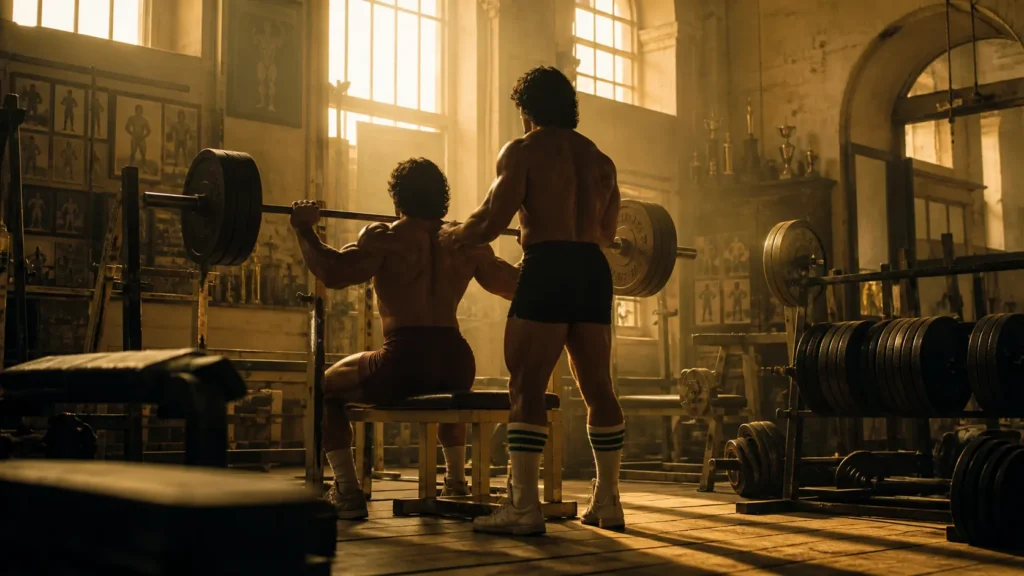
The Arnold Schwarzenegger and Franco Columbu story is often remembered through golden-era images: old iron, Venice gyms, sun, posing rooms, heavy lifting, and a small circle of bodybuilders who seemed to be inventing modern gym culture as they trained. The friendship matters because it gives that era a human shape.
Bodybuilding can look solitary from the outside. One person, one body, one mirror, one stage. But the culture that shaped it was often social. Training partners spotted, challenged, joked, compared, and raised the standard of the room. Arnold and Franco became one of the most memorable examples of that mix.
This article is not a private biography. It is a public fitness story about friendship, competition, and what everyday lifters can learn from a serious training environment.
- Why the golden era still feels powerful
- What training partners change
- How friendship and competition can coexist
- What lifters can use without copying the era
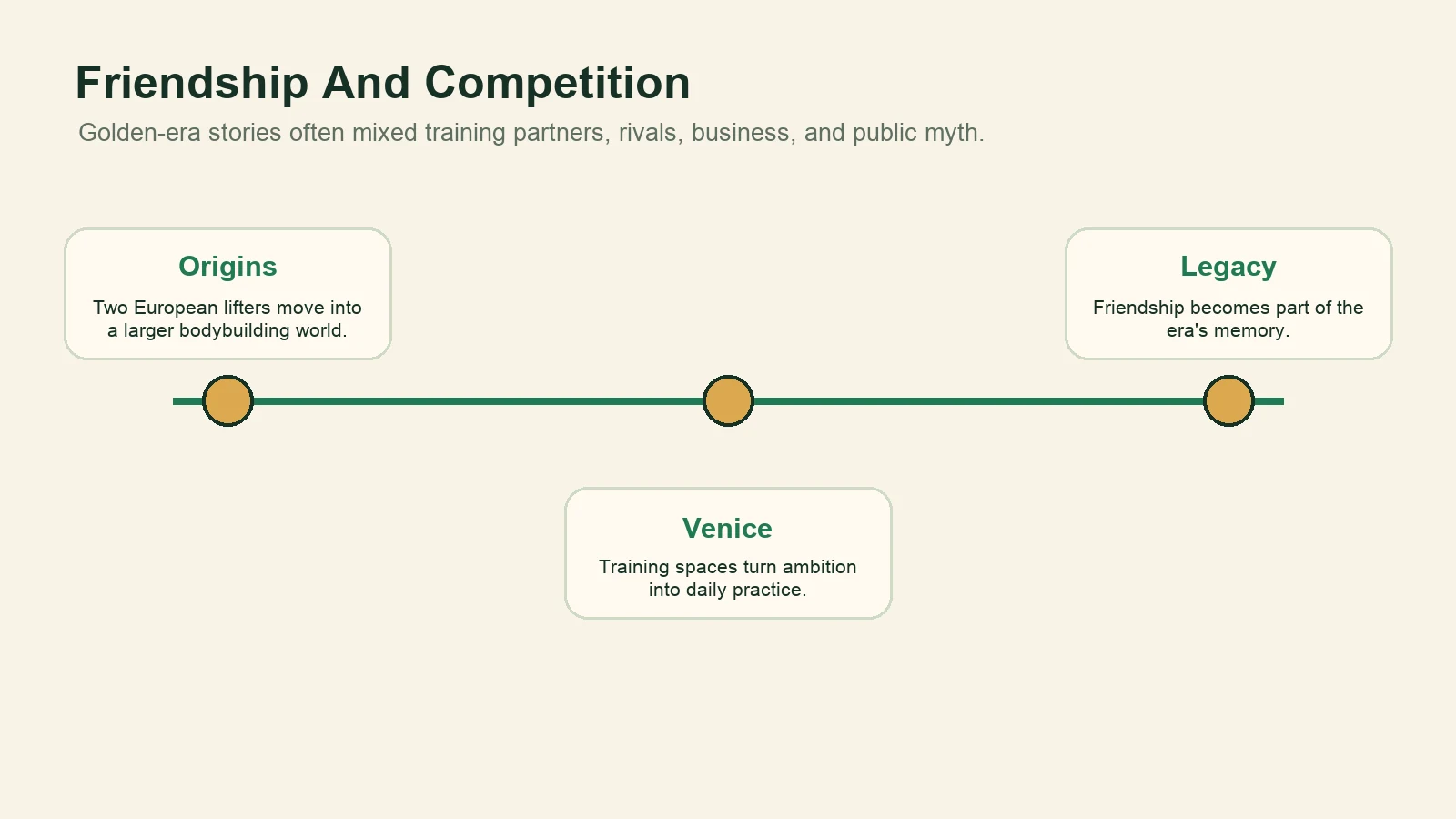
The golden era was a place as much as a time
The official Schwarzenegger biography presents his bodybuilding career as the base for later film, business, and public life. That matters because the golden-era story was never only about contests. It was about a training world that produced people who could become symbols.
Franco Columbu’s public memory is closely tied to that world. In film and bodybuilding history, he appears as more than a background figure. The Letterboxd listing for Pumping Iron places the documentary in the same cinematic archive that keeps the era visible today.
The environment mattered. A serious gym compresses ambition. When many people in one room care about training, standards become easier to see. That does not make the era perfect or universally healthy. It does explain why people still talk about it.
Training partners change the work
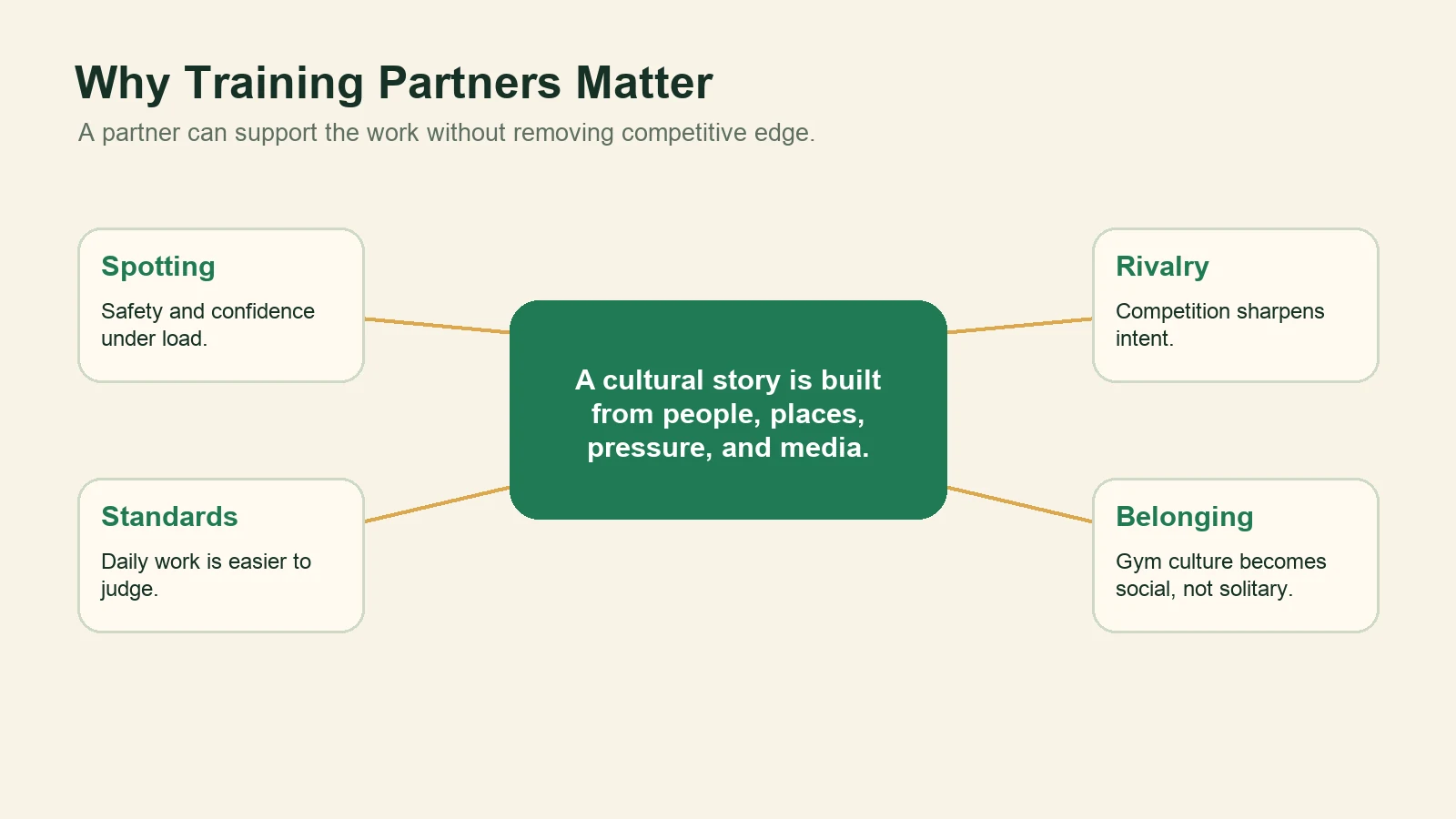
A good training partner does not only count reps. They change the emotional temperature of the session. They notice effort. They make heavy sets safer. They make inconsistency more visible. They can also make training more fun, which matters more than many serious lifters admit.
Arnold and Franco are remembered partly because they represent that partner dynamic at a high level. The useful idea is not that every lifter needs an elite bodybuilder beside them. It is that progress often improves when the environment contains honest feedback and shared standards.
For an everyday lifter, a partner might help with:
- showing up when motivation is low;
- spotting heavy or technical work;
- keeping rest periods honest;
- noticing form breakdown;
- making training feel less isolated.
That social layer can be the difference between a plan that exists on paper and a plan that survives months.
Competition can sharpen friendship
Friendship and competition are often treated as opposites. In training, they can support each other when the relationship is healthy. A friend can want you to improve without needing you to lose. A rival can raise your standard without becoming your enemy.
The IMDb page for Pumping Iron keeps the film attached to a cast and public memory, not only contest results. That is important because golden-era bodybuilding was remembered through relationships as well as trophies.
The danger is romanticizing everything. Elite environments can also create pressure, comparison, and narrow standards. The lesson is not to recreate the past exactly. The lesson is to build relationships where effort is expected and respect is not conditional on winning.
The era became myth because it had texture
People remember the golden era because it had texture: specific gyms, recognizable athletes, homemade-feeling equipment, beach culture, contests, magazines, and eventually film. That texture gave bodybuilding a world.
The Arnold Sports Festival shows how one part of that legacy kept developing into a broader event culture. Modern fitness is full of expos, competitions, influencer communities, and gym brands. The golden era helped establish the idea that physique training could have a public world around it.
For readers, this is a reminder that environment shapes identity. If your training space makes effort normal, you need less daily persuasion. If your people support consistency, the plan feels less lonely. If your standards are shared, the work becomes easier to respect.
What everyday lifters can use
First, find peers if you can. That does not have to mean a hardcore crew. It can mean one reliable friend, a coach, a class, or a gym where people train with respect.
Second, compete cleanly. Use stronger people as proof of what practice can build, not as evidence that you are behind. Comparison should clarify the next step, not poison the reason you train.
Third, keep friendship human. A training partner is not just a performance tool. The best gym relationships make people more capable and more grounded outside the gym too.
Why nostalgia needs limits
Golden-era stories are attractive because they feel textured and simple: old iron, clear goals, recognizable characters, and a sense that everyone in the room was serious. But nostalgia can edit out costs. Elite bodybuilding has always involved pressure, risk, and standards that do not fit most people’s health or life.
The better use of the Arnold and Franco story is to take the social principle, not the entire lifestyle. Find people who raise your standards. Train in places where effort is normal. Keep competition friendly enough that it builds confidence instead of resentment.
That version of the lesson is still useful in a small local gym, a home garage, or a simple weekly session with one trusted partner.
Continue with a related guide
For the next practical step, read Arnold Schwarzenegger: The Kid From Austria Who Changed Fitness Forever. For a second perspective from the same topic cluster, continue with Arnold vs. Lou Ferrigno: The Rivalry That Made Bodybuilding Cinematic.
Conclusion
Arnold and Franco Columbu’s friendship endures in fitness culture because it represents more than two impressive physiques. It represents a world where friendship, competition, craft, and environment shaped the daily work.
The useful takeaway is not to copy the golden era exactly. It is to notice what serious peers and serious places can do. Good training culture makes effort normal, standards visible, and progress less lonely.