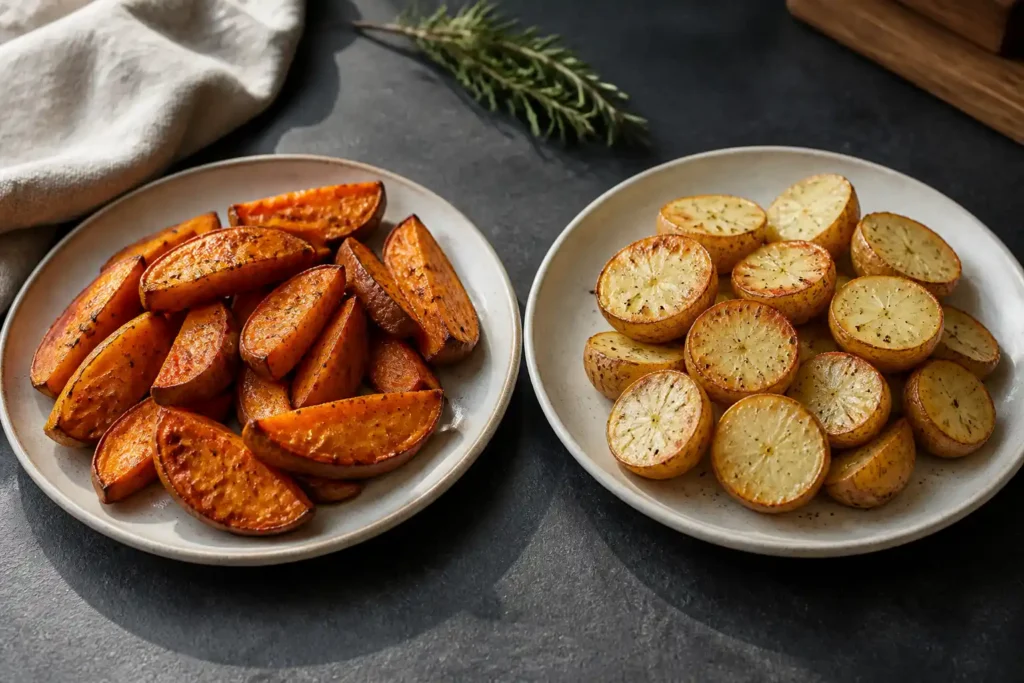
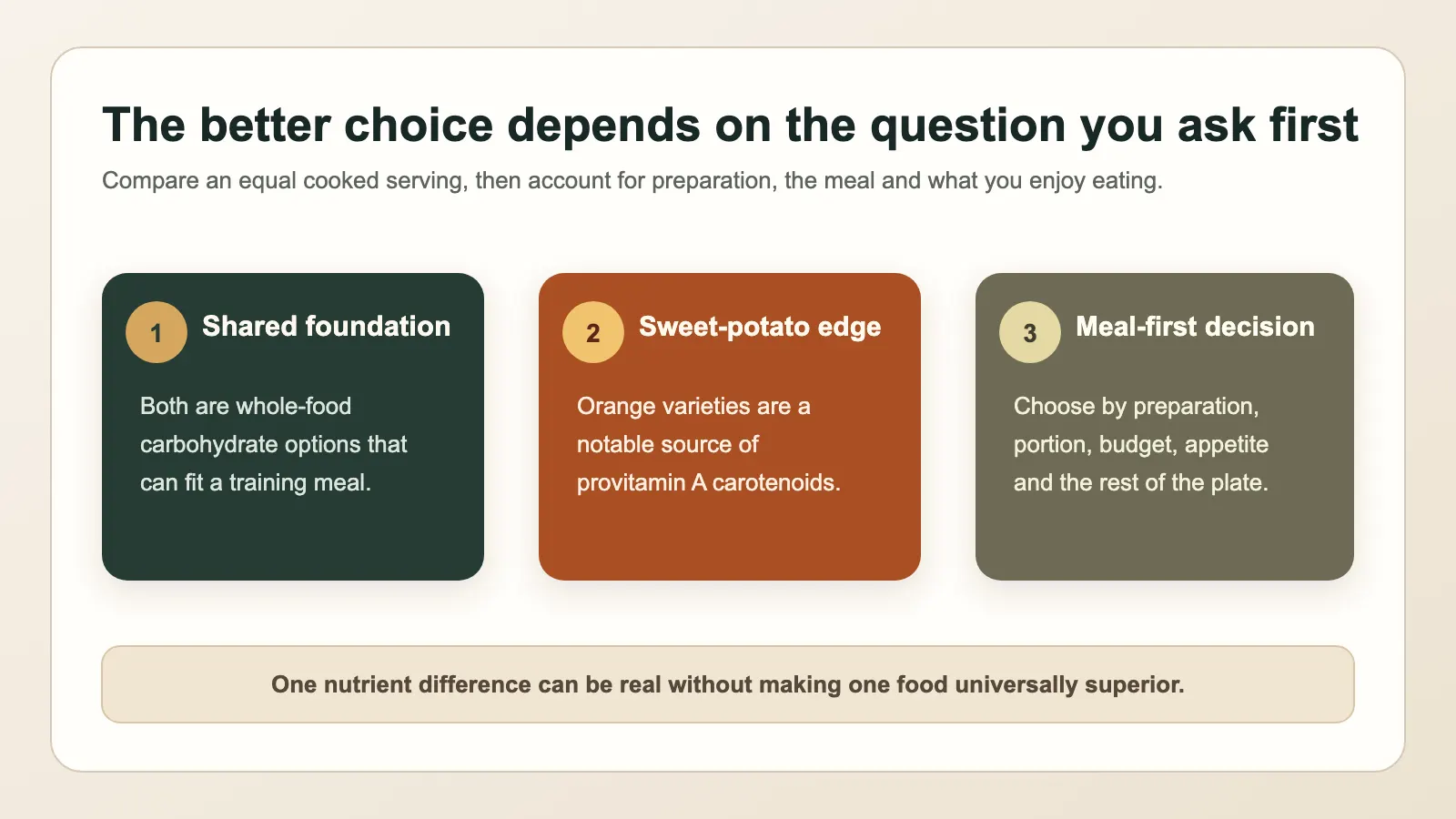
Sweet potatoes often win the nutrition conversation before the comparison has even started. Their orange flesh signals that they contain something white potatoes do not contain in the same amount: provitamin A carotenoids. That is a real difference. It is not, however, a reason to treat a white potato as an inferior carb or a sweet potato as a health requirement.
Both foods can be useful in an active diet. Both can provide carbohydrate, both can be prepared in ways that range from plain to very rich, and both work with the same basic meal structure: a protein source, produce, a cooking method and a portion that fit the day. The useful question is not which one wins in theory. It is what changes when you compare equal cooked servings and then put them on a real plate.
This is general food guidance for healthy adults, not a prescription for carbohydrate or potassium intake. People with kidney disease, a potassium restriction, diabetes or a medically prescribed diet should use advice tailored to their condition rather than making food changes from a general fitness article.
- What the two foods have in common
- Why orange sweet potatoes stand out
- What white potatoes still bring to the plate
- Why preparation can change the comparison
- How to choose for a normal training meal
Start with an equal cooked serving
A fair comparison begins by matching the form and serving. A baked sweet potato is not directly comparable to a large serving of fries, and a plain boiled white potato is not directly comparable to a sweet-potato casserole loaded with butter and sugar. Variety, skin, cooking method and added ingredients all change the final nutrition label.
The USDA’s FoodData Central is the best place to check the food you actually buy or cook. It includes entries for different potato types and preparations, rather than treating every potato as the same object. That matters when you want numbers, because a small roasted potato, a large baked potato and packaged mashed potatoes are not interchangeable portions.
At the broadest level, both sweet and white potatoes are starchy vegetables that can supply carbohydrate. For an active person, that can make either one useful alongside a meal before or after training, or simply as part of a satisfying dinner. Neither is a protein replacement, and neither becomes a complete meal on its own.
The existing guide Potatoes for Lifters: Carbs, Potassium, Vitamin C and Why They Deserve More Respect covers why potatoes broadly can fit a strength diet. This comparison narrows the question: what does the orange-versus-white choice actually change?
Orange sweet potatoes have a real carotenoid advantage
Orange-fleshed sweet potatoes are notably rich in beta-carotene, a provitamin A carotenoid. The body can convert dietary provitamin A carotenoids into vitamin A, although conversion differs between people. The NIH vitamin A fact sheet lists a baked sweet potato among its high-food sources and explains the difference between preformed vitamin A from animal foods and provitamin A carotenoids from plant foods.
That makes sweet potatoes a practical way to add orange produce to a varied diet. It does not mean they are a substitute for all other vegetables or that eating one after training has a special recovery effect. Their value is nutritional variety: they offer a different plant pigment profile from a white potato, alongside familiar carbohydrate and a texture many people enjoy.
The color is a useful clue, but it is not a scorecard for the entire diet. White potatoes, rice, oats, beans, fruit and breads can all make sense as carbohydrate foods. A diet with different colors and food groups over time is more useful than a rule that declares one color of potato superior at every meal.
White potatoes are not nutritionally empty
White potatoes are sometimes treated as if they provide only starch. That shortcut is inaccurate. Depending on the variety and preparation, they can contribute potassium and vitamin C as well as carbohydrate. The actual amount changes with the potato, its size, the skin and how it is cooked, which is exactly why FoodData Central is more useful than a single viral graphic.
Potassium is an essential mineral and electrolyte. The NIH potassium fact sheet explains that healthy intake comes from a range of foods, including vegetables, beans, dairy, fruit and fish. Potatoes can be part of that broader pattern. They are not a reason to chase a single nutrient or ignore medical guidance when potassium needs are restricted.
White potatoes also have a practical advantage that nutrition charts cannot fully measure: they are inexpensive in many places, widely available and easy to use in many meals. Mash, baked potatoes, boiled baby potatoes and simple roasted wedges can all carry a meal without asking you to redesign your shopping or cooking routine. A food you can afford, prepare and enjoy repeatedly has a useful kind of nutritional value.
Preparation can matter more than the color
The biggest difference between two potato meals is often not the potato. It is the oil, butter, cream, cheese, sauce, salt, breading and serving size around it. Roasted sweet potatoes with olive oil and roasted white potatoes with olive oil are comparable meals. A deep-fried potato side with a large sauce is a different food decision, whatever color the potato started as.
That does not make added fat or a richer recipe bad. Fats can make a meal satisfying and help a person meet energy needs. The point is to describe the complete dish honestly. If you are comparing foods for your normal week, compare portions cooked in a similar way and served with similar protein and produce.
Glycemic-index arguments need the same caution. Variety, cooking, cooling, processing and the rest of the meal can change the response, and a single number does not tell you whether a dinner is useful for your appetite or training. Most people will get farther by choosing a form they digest well and can repeat than by treating one chart value as a verdict.
Choose the potato that makes the meal easier to repeat
Choose sweet potatoes when you like their flavor and want the carotenoid contribution of orange produce. Choose white potatoes when you prefer the texture, the recipe, the price or the way they work with the rest of the meal. Use both if variety makes weekday food easier.
A practical plate might be sweet potato with eggs, greens and fruit, or white potatoes with salmon and vegetables. The Eggs Are More Than Protein guide is a useful reminder that a protein food also brings its own micronutrients; the meal gets stronger through combination, not because one ingredient carries the entire nutritional identity.
For training, either potato can be a reasonable carbohydrate side when it fits your appetite and schedule. Prepare enough to make the meal satisfying, pair it with protein and produce, and keep the choice proportionate. A sweet potato’s beta-carotene advantage is real. A white potato’s place in a normal, varied diet is real too.
FAQ
Are sweet potatoes healthier than white potatoes?
Orange sweet potatoes usually provide much more provitamin A carotenoids. That is a meaningful difference, but it does not make white potatoes unhealthy or unsuitable for an active diet. Preparation and the whole meal still matter.
Which potato is better after a workout?
Either can work as a carbohydrate food. Choose the one you digest well, enjoy and can pair with enough protein and other foods for the meal you are building.
Should I remove the skin?
Keep it when you enjoy it and when the potato is clean and the preparation suits it. Peeling is also fine. The overall food pattern matters more than turning potato skin into a rule.