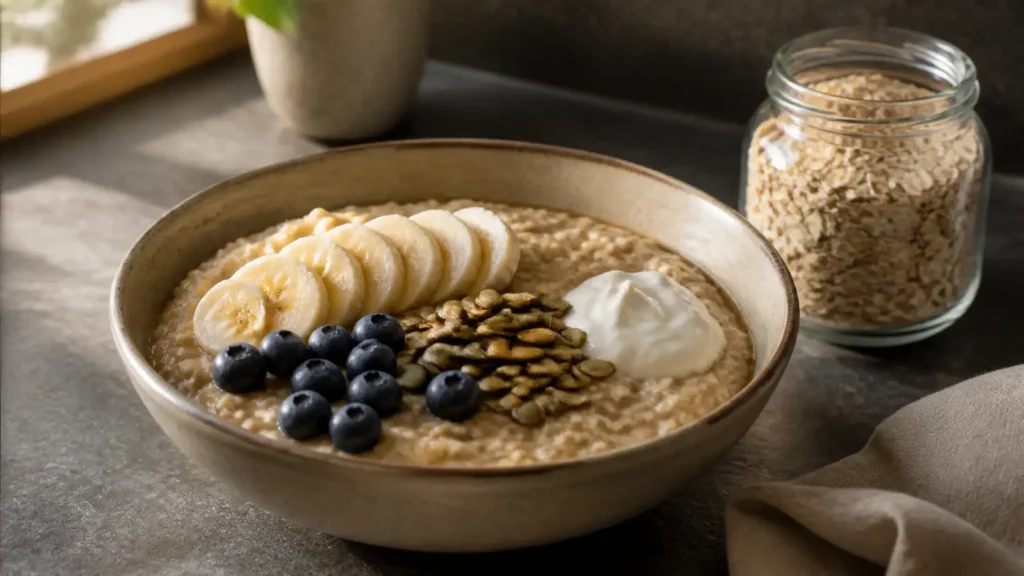
Oats are often treated as a breakfast personality trait: a bowl before work, perhaps with berries, then forgotten for the rest of the day. That misses what makes them useful for active people. Oats are a familiar whole-grain carbohydrate food that can also contribute fiber, magnesium, iron, and a modest amount of protein. More importantly, they are inexpensive, easy to store, and flexible enough to work in meals that have nothing to do with breakfast.
For lifters, that practical side matters. A food does not need to be special to help a routine. It needs to fit your appetite, budget, preparation time, and the rest of the plate. Oats can be a warm bowl before training, an overnight meal for a busy morning, a savory lunch base, or an ingredient in a simple bake. They are not mandatory, and they are not a substitute for a complete diet. They are one useful option in a larger rotation of grains, potatoes, fruit, legumes, and other staples.
- What oats contribute to a training meal
- Why fiber changes the practical choice
- How magnesium and iron fit the picture
- When to use oats around training
- How to use oats beyond breakfast
Start with the meal, not the bowl
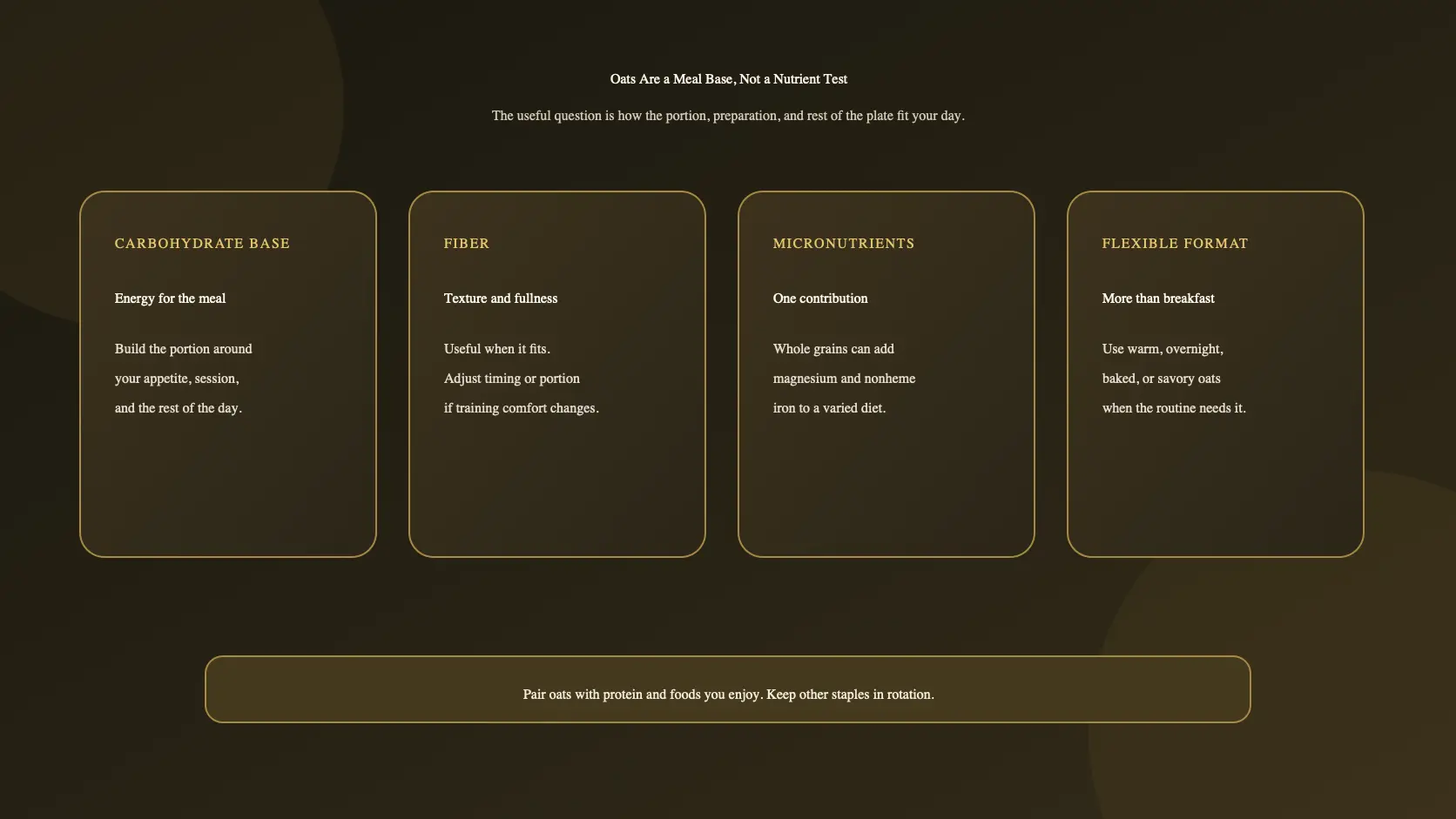
Oats mainly earn their place in a lifting diet as a carbohydrate base. Carbohydrate can help an active person build meals that meet the energy demands of training, but the useful amount and timing depend on the session, total activity, appetite, and what else you have eaten. A bowl of oats is not automatically a pre-workout meal, recovery meal, or fat-loss meal. It becomes one part of whichever meal you build around it.
That distinction protects the food from both hype and dismissal. A basic serving of dry oats provides mostly carbohydrate, along with fiber and some protein. The exact numbers change with the product, serving size, and whether it is plain, flavored, instant, fortified, or mixed with other ingredients. Use the USDA FoodData Central database or the label on the packet in your kitchen when a specific comparison matters. Do not assume that every oat product has the same profile.
The rest of the meal changes the result. Add Greek yogurt, milk, eggs, tofu, or another protein source when you need the meal to carry more protein. Add fruit, nuts, seeds, or nut butter when they fit your appetite and budget. A plain bowl can be perfectly useful too, especially when it is one component of a larger day of eating.
Fiber is useful, but timing is personal
Oats are usually higher in fiber than refined cereal or white bread. That can make a meal more filling and give it a thicker, slower-eating texture. For many people, that makes oats a convenient breakfast or a meal that carries them through a long morning.
But “more fiber” is not an instruction to put a large oat bowl immediately before every workout. Some lifters are comfortable training after oats; others prefer a smaller portion, more time between the meal and training, or a lower-fiber carbohydrate before an early session. The right choice is the one that lets you train without digestive distraction and still makes regular meals easy to maintain.
That is why oat type can matter in ordinary ways. Rolled oats often give a recognizable texture and work well for meal prep. Quick oats cook faster and can be easier when time is tight. Steel-cut oats take longer and have a chewier bite. Flavored packets may be convenient, but added sugar, sodium, and serving size are product questions, not properties of oats themselves.
The practical lesson is simple: choose the version you will prepare and enjoy. If a high-fiber bowl feels too heavy before training, move it earlier in the day, use a smaller amount, or choose a different carbohydrate for that meal. Rice for Strength Training: White, Brown, Basmati or Jasmine? makes a related point: the best staple is usually the one that works in the actual meal, not the one with the most impressive label.
Magnesium and iron are contributions, not promises
Oats are also more than a carbohydrate source. Whole grains are among the food groups that can contribute magnesium. The NIH magnesium fact sheet lists whole grains among good dietary sources and notes that refining grains can lower magnesium content. This is one reason an oat meal can bring something different from a more refined carbohydrate choice.
Magnesium has roles in normal muscle and nerve function, protein production, and many other processes in the body. That does not mean an oat bowl treats cramps, fatigue, poor sleep, or a suspected deficiency. One food is not a diagnosis or a treatment plan. If you are concerned about symptoms or a deficiency, use appropriate clinical testing and guidance rather than trying to solve the question with a larger serving of oats or a supplement.
Oats can also contribute nonheme iron. The NIH iron fact sheet explains that plant foods and fortified grain products can supply nonheme iron, while absorption varies with the full meal. That context matters. Iron from a plant-based meal does not behave exactly like iron from meat or seafood, and product fortification can change a label substantially.
Think of oats as one contributor among legumes, meat or seafood where included, fortified foods, leafy vegetables, and other staples. Pairing an oat meal with fruit is an easy food choice if you enjoy it, but it is not a substitute for professional advice when iron status is a concern. Nutrition advice becomes more reliable when it stays proportional to the evidence.
Put oats where the day makes sense
There is no special hour when oats become useful. Their best slot depends on your routine.
- Before training: a moderate bowl can work when you have enough time to digest it comfortably. Add a protein source if the meal needs to be more complete.
- After training: oats can be one carbohydrate option alongside a protein-containing meal. They do not need to be eaten immediately after the last set to count.
- Between sessions: overnight oats or a baked oat dish can make a portable meal when work, commuting, or family schedules leave little room to cook.
- Later in the day: savory oats can be a quick base for eggs, beans, vegetables, or leftover protein when you want something warmer than a sandwich.
The broader diet matters more than a perfect oat window. A person who trains after work may prefer oats at breakfast and potatoes or rice at dinner. Someone who trains early may prefer toast or fruit first and use oats later. Potatoes for Lifters offers another example of how different carbohydrate foods can solve different meal problems without competing for a single winner.
Use oats beyond sweet breakfast bowls
The familiar bowl is only one format. Overnight oats are useful when you want to prepare two or three servings ahead. Baked oats can travel better than a warm bowl. Ground oats can help thicken a smoothie or form part of a homemade pancake mixture, though the rest of the recipe still determines the meal. Savory oats can be cooked with stock or water and topped with eggs, beans, mushrooms, greens, or leftover chicken.
These are not recipes you must follow. They are reminders that a staple becomes more useful when it can adapt to the ingredients you already buy. If fruit and yogurt make breakfast easier, use them. If dinner leftovers are more realistic, use oats as a simple grain base. The best option is the one you will make again without turning food preparation into another demanding task.
Portion and context beat oat mythology
Oats are sometimes sold as a food that automatically controls appetite, fixes cholesterol, or makes a diet “clean.” Those claims are too broad for a general strength-training guide. Oats can be part of a balanced eating pattern, but their role depends on the amount you eat, what you add, your overall diet, and individual medical context.
Start with a portion that fits the meal and adjust based on hunger, training schedule, and practical results. If you need more energy, build the meal with other foods rather than asking oats to do every job. If you need a lighter meal before training, reduce the portion or choose a different carbohydrate. If you have celiac disease, choose oats labeled gluten-free only when that is appropriate for your individual plan, because oats can be cross-contacted with gluten-containing grains during production.
Conclusion
Oats deserve more credit than “breakfast.” They offer practical carbohydrate, fiber, and contributions of magnesium and iron in a food that is affordable, shelf-stable, and easy to adapt. Their real value is not a nutrient headline. It is the way they help you build meals you can prepare, enjoy, and repeat.
Use oats when their texture, timing, and preparation fit your day. Pair them with protein and other foods when the meal needs more structure. Keep other carbohydrate staples in the rotation. A strength-supporting diet does not need a hero food. It needs enough good options to work on ordinary days.
FAQ
Are oats good before a workout?
They can be, if the portion and timing feel comfortable for you. Some people prefer oats well before training; others choose a lighter or lower-fiber option closer to the session.
Are steel-cut oats healthier than rolled oats?
They have a different texture and cooking time, but neither needs to win a nutrition contest. Compare the product label and choose the format that fits your meal prep and preferences.
Do oats provide enough protein for lifters?
Oats contain some protein, but they are usually better treated as a carbohydrate base. Add a protein source when the meal needs to support a higher protein target.
Continue with a related guide
For another everyday carbohydrate staple, read Potatoes for Lifters: Carbs, Potassium, Vitamin C and Why They Deserve More Respect. For a practical comparison of grain choices, continue with Rice for Strength Training: White, Brown, Basmati or Jasmine?.