Choosing a gym is often presented as a choice between two identities. The commercial gym is supposedly for casual people. The powerlifting gym is supposedly for serious people. That story is flattering, simple, and usually unhelpful.
For some people, a commercial gym is the most practical place to build years of strength. For others, a powerlifting gym provides the equipment, coaching cues, and training culture that a barbell goal requires. The right choice is the one that turns your stated goal into ordinary behavior.
- What each type of gym is built to support
- When a commercial gym is the better choice
- When a powerlifting gym earns its place
- How culture changes the decision
- How to test a gym before committing
Start with the work, not the image
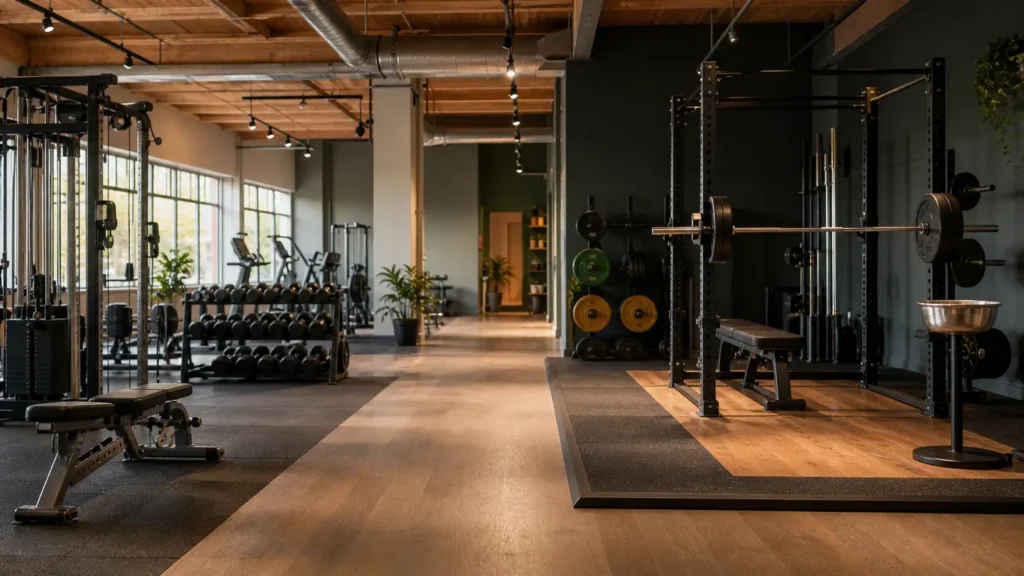
A commercial gym is usually designed for breadth: machines, dumbbells, cardio equipment, classes, longer hours, and alternatives when one area is busy. That range can suit a mixed program or changing schedule.
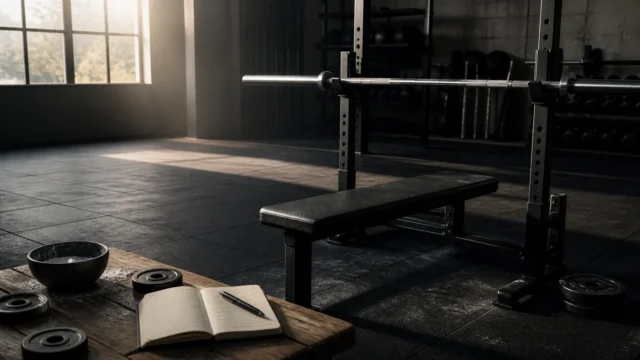
A powerlifting gym is usually designed for specificity. It is more likely to prioritize racks, platforms, barbells, plates, benches, chalk, and people who understand the rhythm of squat, bench press, and deadlift training. That does not make it automatically better. It makes it better suited to someone whose progress depends on those tools being reliably available.
The distinction is practical. If you want to train before work and the powerlifting gym opens too late, the atmosphere does not solve the access problem. If your goal is a competition squat and the commercial gym has one rack that is always occupied, the membership price does not solve the practice problem.
A commercial gym can be a very serious training home
Commercial gyms are easy to dismiss because they serve many kinds of members. That variety can be an advantage. A beginner may benefit from machines that make it easier to learn a movement, a selection of dumbbells for gradual loading, and enough space to train alone without feeling observed.
They can also fit ordinary life. A location near home or work, reliable opening hours, and a short commute can turn inconsistent training into repeatable training.
The tradeoff is equipment optimized for general use rather than barbell specificity. Sharing racks or working around rules on chalk and deadlifts matters most when competitive lifts are central to the goal.
A powerlifting gym earns its place through specificity
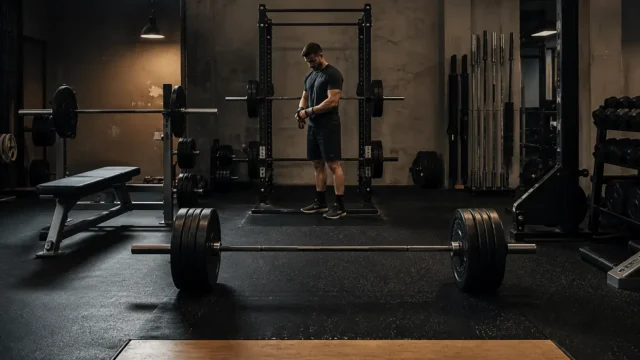
A good powerlifting gym reduces friction around the lifts it is built for. There are usually enough racks to squat, enough plates to load a deadlift, and a culture where longer rest periods, warm-up progressions, and careful setup are normal rather than inconvenient.
That environment can be useful when you want feedback on a competition-style lift, a reliable spotter, or people who understand why a small change in rack height or bar path matters.
But specificity has costs. The room may be farther away, have fewer machines, offer narrower hours, or feel socially intense when you simply want a quiet session. A powerlifting gym is not an upgrade if the commute makes you miss half your planned training. It is an upgrade when its specific tools and norms remove a bottleneck that your current gym cannot solve.
Competition changes the equipment question
If you intend to compete, training in a powerlifting-focused space can make the sport less mysterious. You can become familiar with a platform, a rack, command-style practice, and equipment choices that are closer to the event context.
It is still important to separate gym culture from the rules of a meet. The federation and event materials decide what is permitted. For example, the International Powerlifting Federation publishes its current technical rules and approved-equipment information; another federation can use different rules. A gym’s usual practices, a coach’s habit, or another lifter’s equipment do not override the documents for your event.
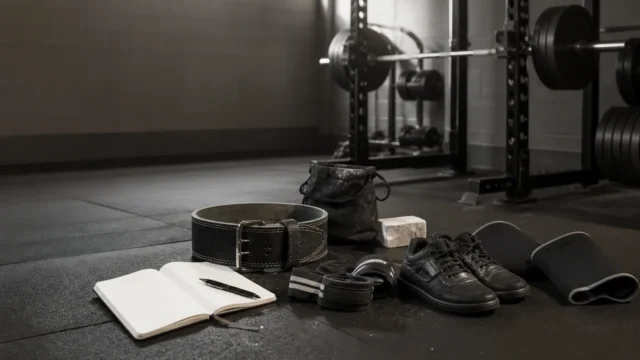
For a first meet, a useful next step is the practical guide to packing gear that belongs in your bag. It starts with the same principle: use familiar equipment and follow the current rulebook, not gym folklore.
Culture is an operating condition, not decoration
Every gym teaches you something about what counts as normal. In one room, people may rerack equipment, leave each other space, and offer help only when it is wanted. In another, members may film strangers, occupy several stations, or treat a beginner as an audience for advice. Equipment cannot cancel out that difference.
Visit at the time you would normally train. Notice how people share a rack, whether staff answer a basic question clearly, and whether someone can train quietly.
The most useful culture lets you become more capable without demanding that you perform a role. You should be able to work hard, ask for a spot, decline advice, or use light weights while learning without becoming a project for someone else.
Make the decision with a normal-week trial
Before signing a long contract, run a small test. Visit each option at the hour you would actually train. Perform a version of your real session, or at least walk through the parts that matter: getting there, changing, warming up, finding equipment, and leaving.
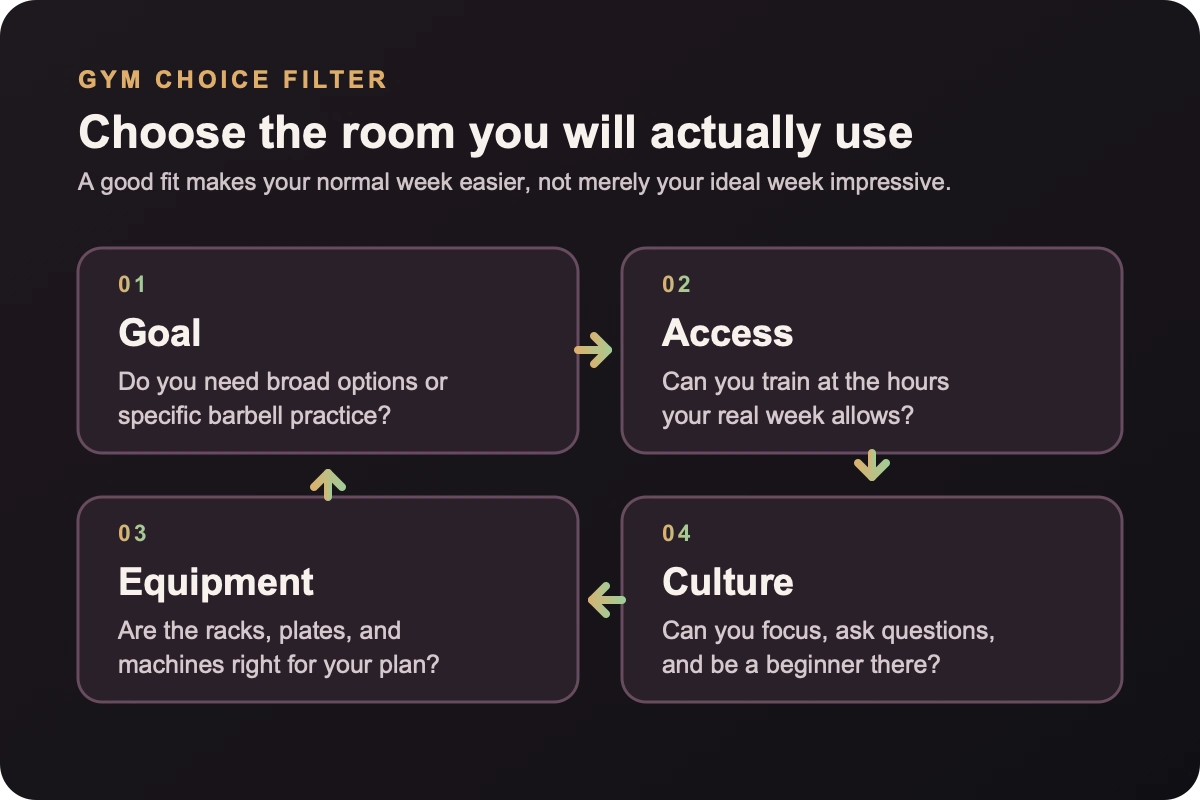
Ask four plain questions: does it support the goal, fit the schedule, provide the equipment, and let you focus? The answers are more useful than a tour or a brand name.
Continue with a related guide
For the lifts that define the sport, read The Big Three: Why the Squat, Bench and Deadlift Still Rule Strength Training. For the practical event checklist, continue with Your First Powerlifting Meet: The Gear That Actually Belongs in Your Bag.
Conclusion
Commercial gyms usually offer access and variety. Powerlifting gyms usually offer barbell specificity. Choose the room that makes your next year of training easier to show up for.
FAQ
Can I get strong in a commercial gym?
Yes. A commercial gym can support serious strength training when it has the equipment you need, enough access to use it, and a membership that fits your routine.
Should I switch gyms before my first powerlifting meet?
Not automatically. Switch when the current gym prevents you from practicing the relevant lifts or meet-specific setup. Otherwise, a focused block at your existing gym may be enough.