Powerlifting gear is easy to overbuy because every item is presented as a missing piece. A better question is simpler: what problem does this item solve in the training you are actually doing? If the answer is vague, the purchase probably belongs on hold. If the answer is specific, repeatable, and compatible with your competition rules, the item may earn a place.
This is a specifications-and-rules guide, not a hands-on review of named products. It does not claim that one belt, shoe, sleeve, or wrap will make someone stronger or safer. It gives you a way to evaluate equipment before you spend money, and a way to keep the product from becoming more important than the training plan.
- Start with the work, not the product category
- Separate essentials, situational tools, and optional purchases
- Check rules before competition purchases
- Evaluate fit, function, and total cost
- Use a calm buying process
Start with the training problem
The foundation of a powerlifting setup is not exotic: clothing you can move in, stable footwear appropriate to the lift and facility, access to a bar and plates, and a way to record sessions. Those basics support the work that changes performance: practice, sensible loading, recovery, and a program you can repeat. If you are still learning the lifts, spending time on a consistent setup and a useful log will usually tell you more than adding accessories immediately.
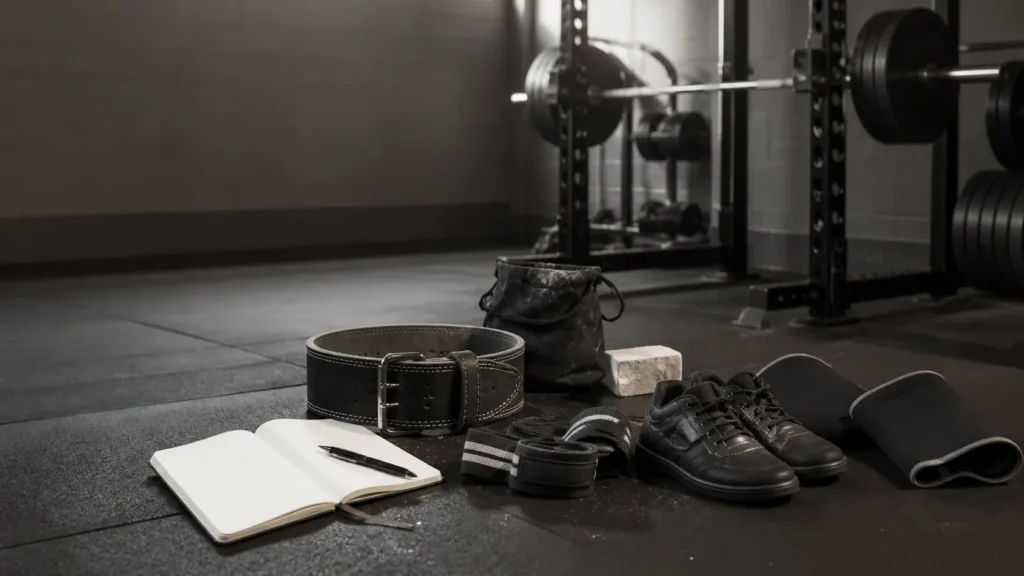
The first filter is functional. Does the item make a known task easier to set up, more repeatable, or more compatible with a rule set? A flat shoe may be useful because it gives you predictable contact with the floor. A belt may be useful because you are choosing to compare bracing against a firm surface during familiar heavy work. A second pair of socks may be useful because your federation requires coverage for deadlifts and a spare prevents a small problem becoming a meet-day problem.
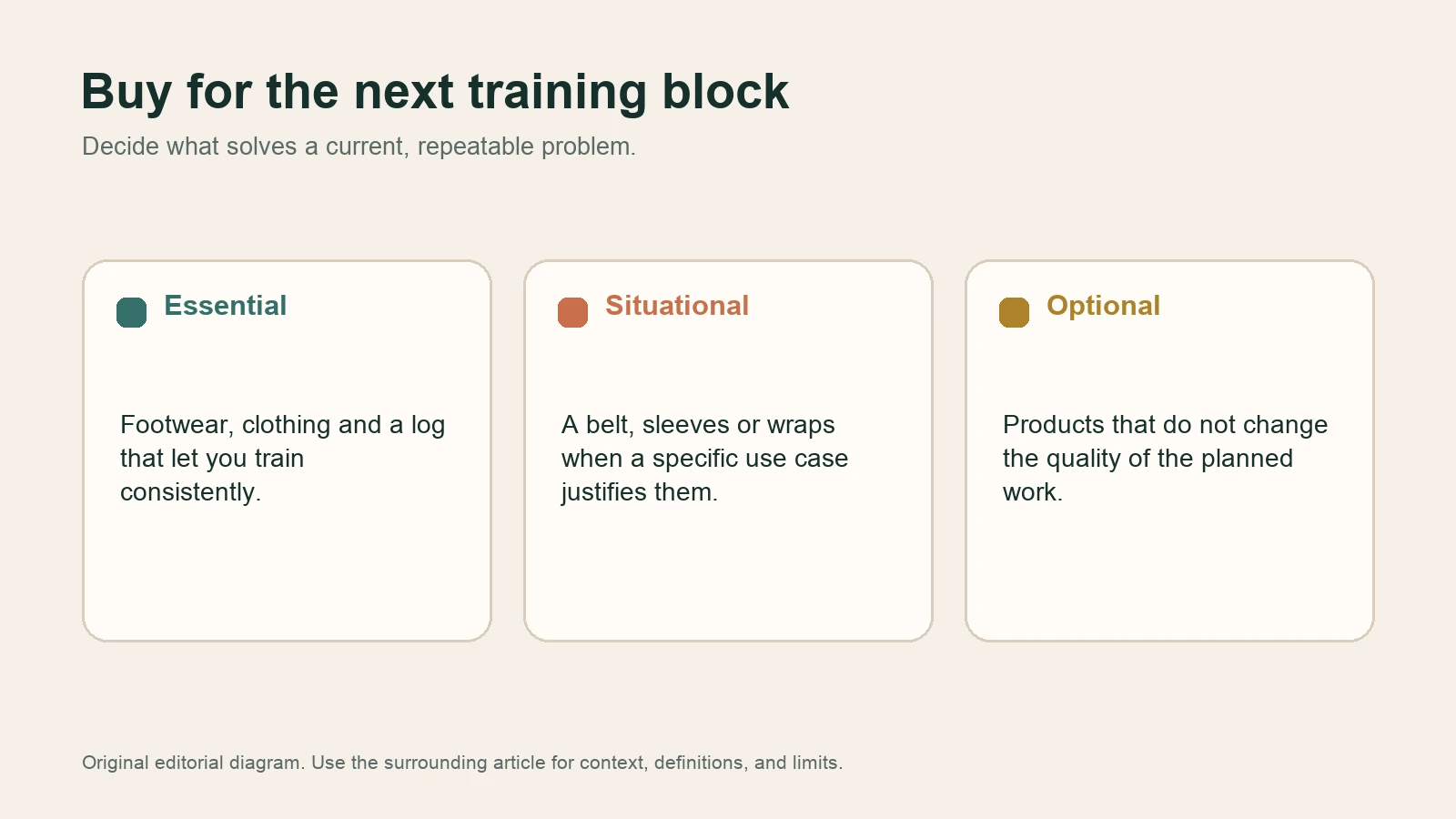
That framing also protects beginners from an unhelpful identity test. You do not need to own every item associated with serious lifting to take your training seriously. The work should make the equipment useful, not the other way around. If you are building a base, the clearer priority is a program you can follow, such as the structure described in the anatomy of a great strength program.
Separate function from marketing
Useful gear language is concrete. It says what an item is designed to change, where the claim stops, and what you must still do yourself. For example, straps may change the grip demand in a pulling exercise; they do not replace grip training in every context. A belt creates a firm surface to brace against; it does not perform the brace for you. Knee sleeves may provide warmth, compression, or a preferred feel, but the specific model does not erase the need for a tolerable load and controlled repetition.
The research base for many accessories is narrower than advertising suggests. A 2026 exploratory review of lifting straps describes a limited and still-developing evidence base rather than a universal prescription. Read the review of lifting straps as a reason to ask a narrower question: does this tool help the purpose of this exercise in this program? That is more useful than asking whether straps are “good” or “bad.”
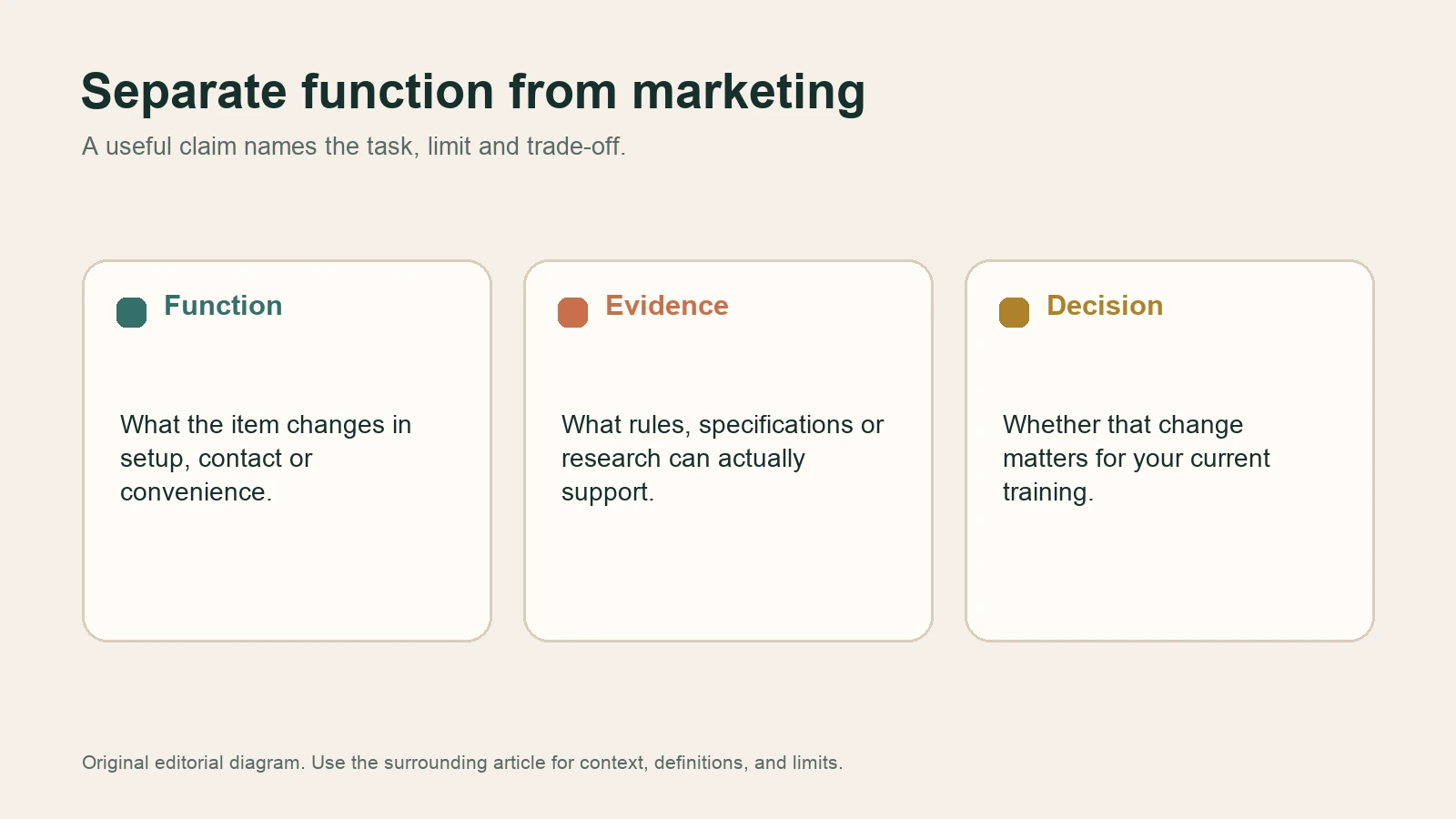
Use three checks when reading a product page. First, identify the claimed function: grip, friction, storage, closure, warmth, positioning, or legal compliance. Second, identify the evidence: a material specification, an official rule, a study, or merely a testimonial. Third, identify the trade-off: cost, learning curve, maintenance, restriction, or competition compatibility. Claims that cannot survive those three questions do not need to drive a purchase.
Let the lift and rule set shape the choice
Different lifts create different practical questions. For the squat, footwear, rack setup, and the ability to recreate stance and depth matter more than collecting accessories. For bench press, a shirt, wrist position, grip, and the federation’s equipment rules can matter. For the deadlift, stable floor contact, appropriate footwear, and any required leg coverage are ordinary details that deserve attention before a novelty product.
Competition changes the decision because the rulebook becomes the authority. The International Powerlifting Federation publishes current technical rules, including equipment specifications and inspection requirements. Other federations have their own current rules, approved lists, divisions, and meet instructions. Never use a generic article or an old product listing as your final compliance check. Read the rulebook and the meet director’s instructions for your specific event before purchasing or packing.
This is also why “competition legal” is not a timeless product feature. A belt dimension, closure, logo policy, sleeve approval, or footwear rule can vary between organizations and can change. Check the version date, the division you entered, and the applicable approved-equipment list. If the equipment is only for training, your choice can be broader, but it should still be based on a real training need.
Assess the total cost, not just the sticker price
An item is inexpensive only if it fits, works in your setup, and keeps working. A belt that pinches in your usual position, shoes that change your balance in an unhelpful way, or wraps you cannot fasten consistently have a cost even if their price was low. The reverse is also true: a simple durable item can be a strong purchase if it solves a frequent problem across many training blocks.
Consider fit in the context of your body and movement, not a generic size chart alone. Can you fasten the item without rushing? Can you reproduce the same placement? Can you move through your intended range? Then consider maintenance. Leather, stitching, laces, levers, hook-and-loop closures, and fabric all wear. Inspect equipment before training and especially before a meet. Do not rely on equipment to manage symptoms that need clinical assessment; persistent pain, neurological symptoms, or a sudden change in function deserve qualified advice.
The updated systematic review of injuries in weightlifting and powerlifting is a reminder that sport risk cannot be reduced to one purchase. Training exposure, load management, technique, recovery, history, and context all matter. Gear may change a setup or a rule-compliance problem; it is not a personal guarantee against injury.
Buy after a pattern, not after a feeling
The strongest purchase signal is a repeated constraint in a written training log. Perhaps your hands become the limiting factor in a specific high-repetition pulling accessory, while grip work is trained separately. Perhaps you have begun competing and need a rule-compliant belt you have already practiced with. Perhaps your current shoe does not provide stable, repeatable contact for a movement you perform often. Those are concrete reasons to compare options.
Run the current plan first. Record what happened. Compare the least complicated alternatives, including changing the exercise, load, setup, or session order. Then buy when the equipment is the cleanest answer to a problem that keeps returning. This sequence is slower than shopping from a checklist, but it gives each item a job.
The practical gear guide is therefore short: train first, read the rulebook if you compete, demand a specific function, check the trade-offs, and let repeated use justify the purchase. The barbell work remains the center of the sport. Equipment should support that work quietly rather than compete with it.
Continue with a related guide
For the movements behind the equipment choices, read The Big Three: Why the Squat, Bench and Deadlift Still Rule Strength Training. For the competition checklist, continue with Your First Powerlifting Meet: The Gear That Actually Belongs in Your Bag.