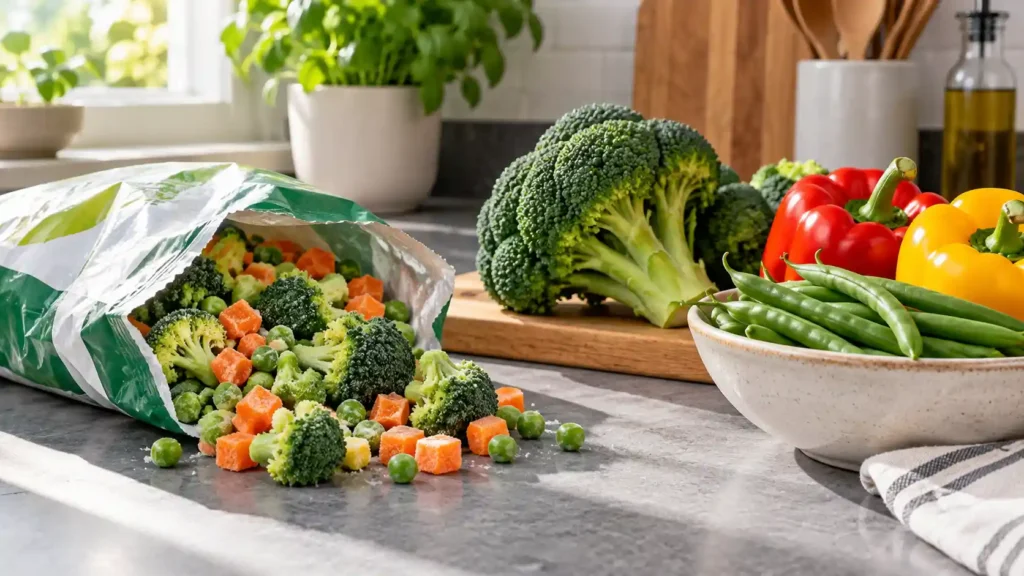
A bag of frozen vegetables can feel like a compromise: cheap, convenient and somehow less real than the broccoli, peppers or beans displayed in the produce aisle. That story is appealing because fresh food looks like a clear winner. Nutrition is less tidy. A vegetable’s nutrient content changes with the variety, harvest, transport, storage, processing and cooking that happen before it reaches your plate.
Frozen vegetables are not automatically lower in nutrients than fresh vegetables. Fresh vegetables are not automatically better because they were never frozen. Both can be useful choices for an active person. The more practical question is which option lets you buy a range of vegetables, store them safely and use them often enough that they become part of ordinary meals.
This article compares plain frozen vegetables with fresh vegetables, not battered products, prepared side dishes or meals with added sauces. A package’s ingredient list and nutrition panel still matter: plain broccoli is a different food choice from broccoli in a cheese sauce, regardless of whether it came from a freezer.
- What freezing changes and what it does not
- Why the vegetable and storage time matter
- How cooking can change the comparison
- How to choose a useful mix for your kitchen
Freezing is one step in a longer chain
Commercially frozen vegetables are usually processed near harvest, often with a brief blanching step before freezing. Blanching helps control enzymes that would otherwise affect quality during frozen storage. It can change some nutrients and texture, so freezing is not a nutritional pause button. But fresh vegetables also continue to change after harvest, while they travel, sit in storage and wait in a refrigerator.
The direction and size of the difference depend on the food and the nutrient. In a 2015 comparison of eight fruits and vegetables stored refrigerated or frozen, researchers measured vitamin C, riboflavin, alpha-tocopherol and beta-carotene. Vitamin C did not differ significantly in five of the eight foods and was higher in frozen samples in the other three; beta-carotene decreased in frozen peas, carrots and spinach. Read the comparative vitamin-retention study for the food-specific results. It is useful evidence, but it does not make a general nutrient scorecard for every vegetable in every shop.
Broccoli shows why headlines should be cautious. A study of industrially frozen broccoli found changes in texture and some nutrient measures during processing, while antioxidant capacity was similar and glucosinolates remained constant. The authors concluded that the frozen product remained broadly similar to fresh broccoli in nutritional quality. See the broccoli processing study for its exact measurements. A different vegetable, different processing method or long storage time could produce a different pattern.
That is why the right comparison is rarely “fresh versus frozen” in the abstract. It is the fresh vegetable you will buy, keep and cook this week versus the frozen vegetable you will actually use from your freezer.
Fresh has strengths; frozen has strengths
Fresh vegetables can give you texture, color and dishes that rely on crispness. A ripe tomato, raw pepper or a salad leaf is not well replaced by a thawed frozen version. When fresh vegetables fit your budget and you use them before they deteriorate, they are a strong choice.
Frozen vegetables solve a different problem. They are often washed, trimmed and ready to add to a soup, stir-fry, pasta sauce or egg dish. That can reduce waste and lower the effort required to include vegetables in a meal after a long day. Frozen choices can also make portioning less ambiguous: you can take out only the amount needed for the meal and return the rest to the freezer, instead of hoping a whole fresh bag will be used before it spoils. The USDA’s MyPlate frozen-food guidance makes the same practical point: fresh and frozen forms of the same food can offer similar nutrients, while freezer storage can make variety easier to keep on hand.
Neither format needs to replace the other. A useful shopping pattern may include fresh vegetables you enjoy raw or expect to use soon, plus two or three plain frozen options that prevent a week from becoming a vegetable-free week when plans change. The right amount depends on household size, storage, budget and the meals you normally make. This is a general planning approach, not a prescribed portion plan.
Cooking changes the picture again
Nutrient comparisons often stop at the shopping basket, but preparation matters. Heat, water, time and the vegetable’s structure can all change what remains in the finished food. Boiling can move water-soluble compounds into the cooking water; steaming, microwaving, roasting and quick skillet cooking create different conditions. This is not an argument that one method is always superior. It is a reason to avoid treating raw laboratory values as the exact nutrients in dinner.
A study comparing common cooking methods in selected vegetables found that vitamin retention varied widely by food and method. Vitamin C retention ranged from 0 to 91.1% across the cooked samples; microwaving generally retained more vitamin C than boiling in that experiment. The cooking-method study supports a practical rule: use a cooking method that makes vegetables pleasant enough to eat regularly, and avoid long, unnecessary cooking in lots of water when you care about retaining water-soluble vitamins.
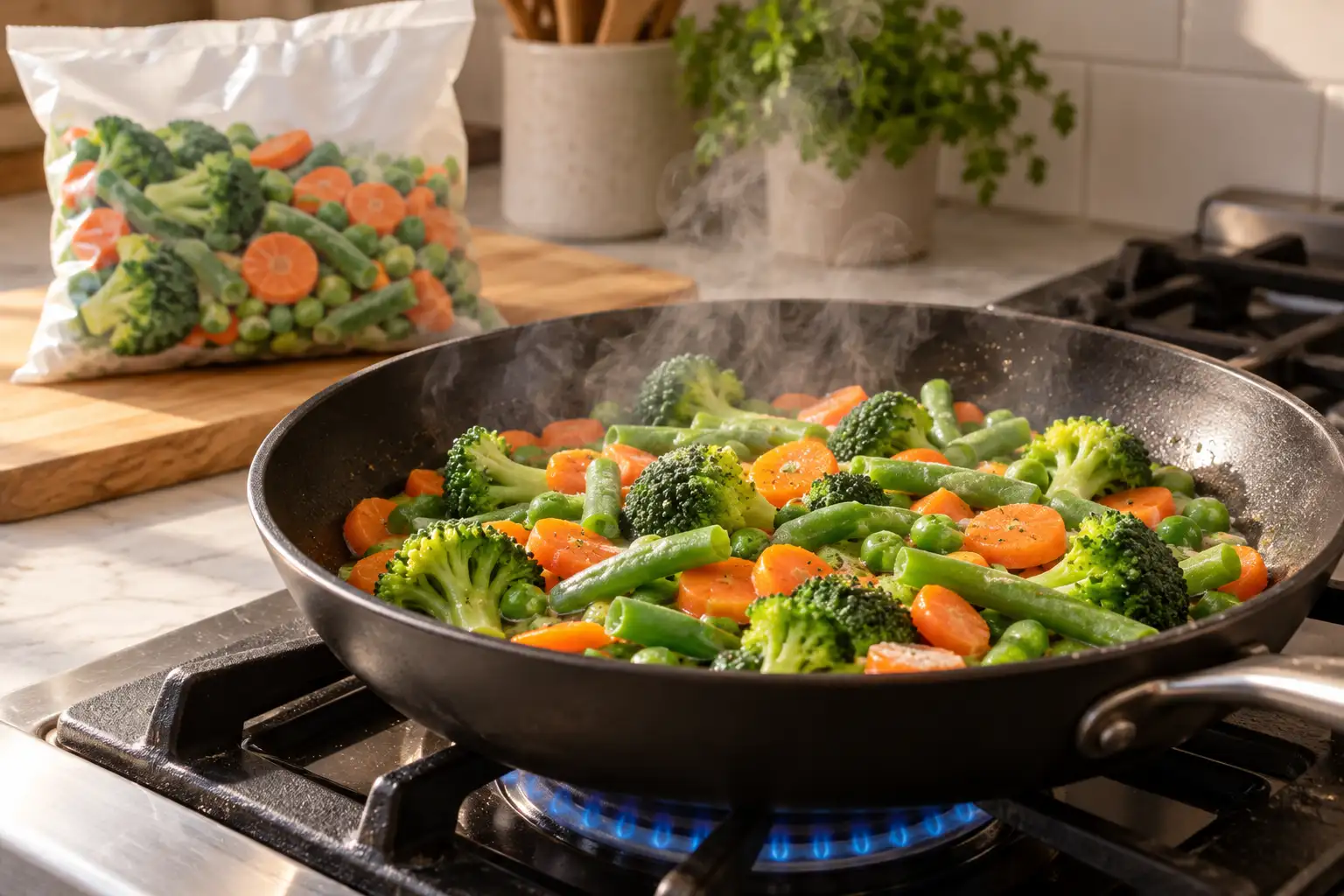
Frozen vegetables are often best cooked from frozen according to their package instructions. That helps you keep preparation simple and avoids turning a convenience food into a wet, overcooked side dish. Food safety still matters. Keep frozen products frozen until you cook them, follow the instructions on the package and use normal kitchen hygiene when they share a workspace with raw animal foods.
Read the package for the decision you are making
The front of a package may celebrate one ingredient while the back reveals oil, butter, cheese sauce, salt or a sweet glaze. Those additions are not automatically bad. They simply change the product you are choosing. If you want a flexible vegetable to add to several meals, a single-ingredient bag gives you more control over seasoning and how it fits the rest of the plate.
For an active person, vegetables contribute more than a performance claim. They can bring fiber, potassium, folate, vitamin C, vitamin K and other compounds, depending on the vegetable. But no single vegetable needs to carry your diet. Broccoli for Lifters explains the strengths and limits of one popular choice; Brussels Sprouts for Lifters offers another. Rotation makes more sense than searching for one nutritional champion.
If a frozen blend is the version you will cook on a busy evening, it is a useful food. If fresh vegetables give you meals you look forward to, they are useful too. Price, access, texture preferences and waste are legitimate parts of the decision. Nutrition advice that ignores them rarely survives a real kitchen.
Conclusion
Frozen vegetables do not automatically lose the nutritional comparison to fresh vegetables. The answer changes with the specific vegetable, processing, time in storage and how you cook it. Use fresh vegetables for the meals and textures they do well. Keep plain frozen vegetables for reliable variety and low-friction cooking. The better option is often the one that helps you eat vegetables more often, rather than the one that wins an imaginary aisle debate.