Berries often arrive in fitness advice with a sales pitch attached: antioxidants for recovery, a superfood for performance, the one expensive item that makes an ordinary breakfast “athletic.” They do not need that story to be useful.
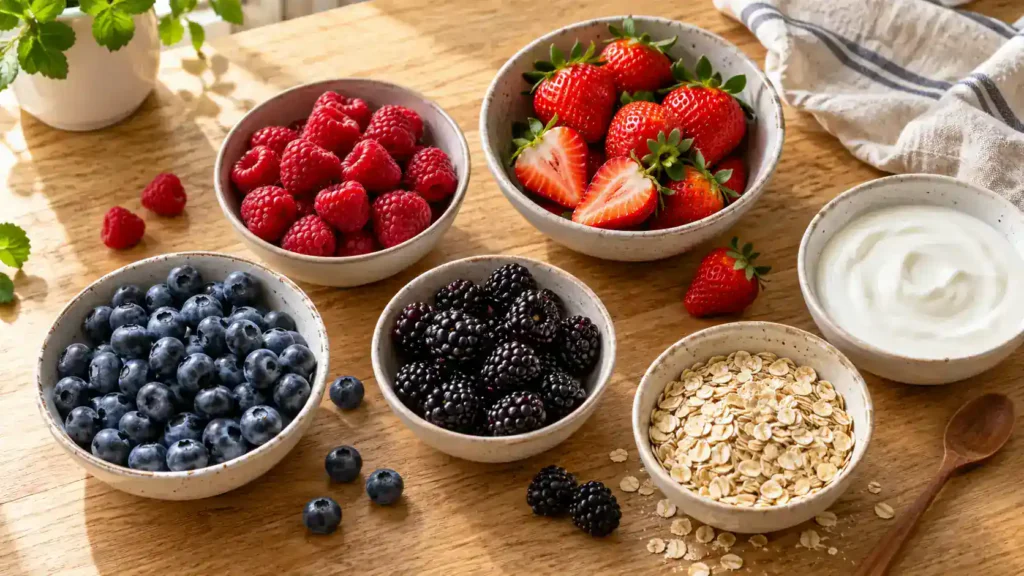
Blueberries, raspberries, blackberries and strawberries can add fruit, fiber and different micronutrients to an active diet. They also bring color and flavor to foods that are otherwise easy to repeat, such as oats, yogurt or a simple snack. None of those qualities makes berries required for muscle growth, and no berry replaces adequate food, progressive training or sleep.
The practical question is not whether berries are good or bad. It is whether they are a food you enjoy, can buy at a sensible price and will use often enough to improve the variety of your normal meals.
- What berries add to an ordinary meal
- Why the “recovery food” claim needs care
- Fresh, frozen and cost
- How to use berries without building a food rule
Start with food, not a supplement claim
“Berries” is a useful shopping category, not a single nutritional product. Strawberries, blueberries, raspberries and blackberries differ in flavor, fiber, vitamin C and the plant compounds that give some of them red, blue or purple color. Serving size, ripeness and whether a product has added sugar also change the label.
That variation is why a single magic number is less useful than a real comparison. The USDA FoodData Central database lets you compare a specific fresh or frozen food when a nutrient detail matters. In everyday terms, berries are mostly a fruit choice: they bring water, carbohydrate and fiber, with nutrient profiles that differ by type. They are not a meaningful protein source, so pairing them with yogurt, milk, tofu, eggs or another protein-containing food can make a meal more complete when protein is the goal.
The “nutrient-dense” part of the claim is fair when it means a food provides useful nutrients for its amount of energy. It becomes misleading when it implies superiority over every other fruit. An orange, apple, banana, kiwi or frozen mango can all have a sensible place in the same diet. Variety over a week matters more than winning a fruit ranking.
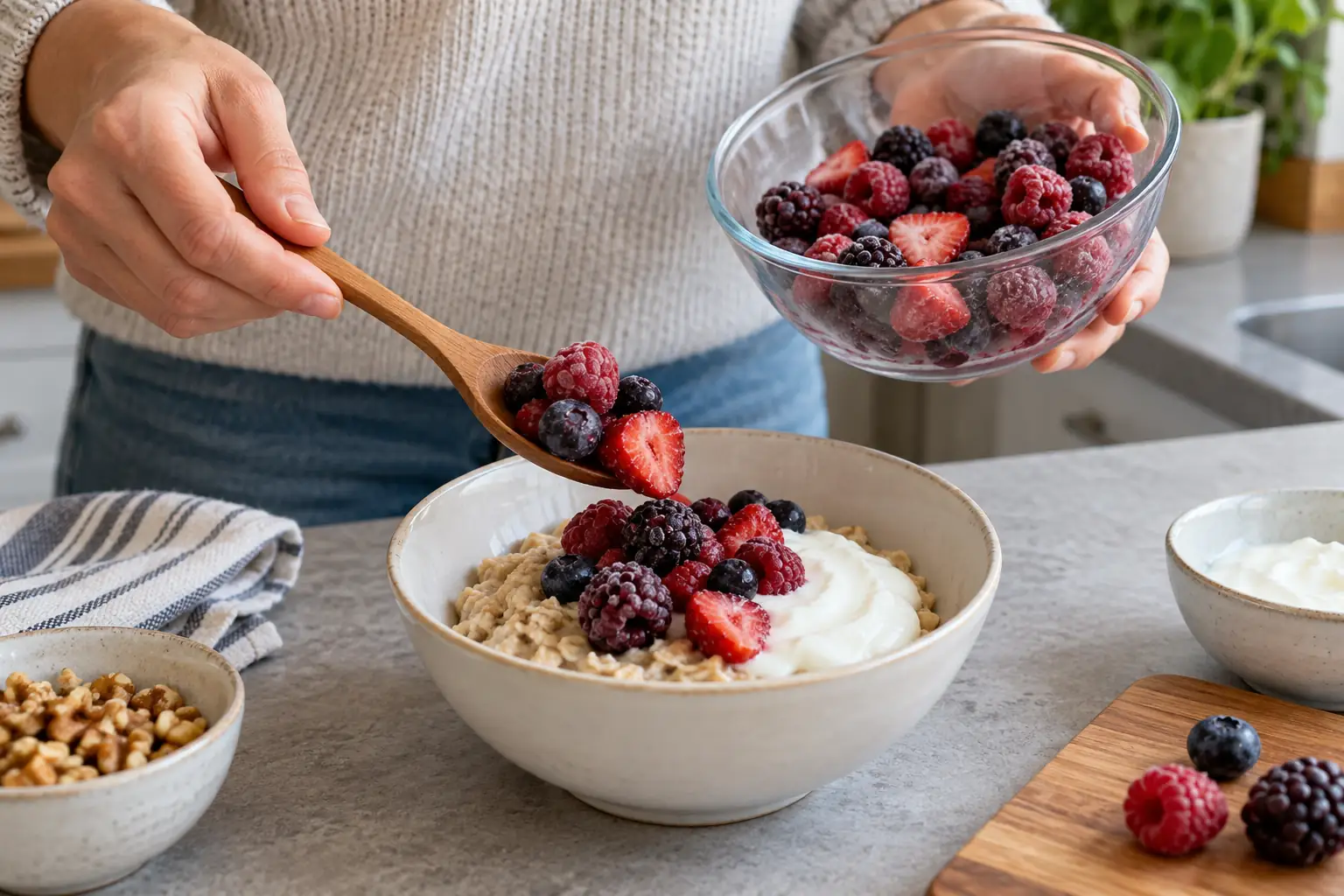
Berries can also make a repeatable meal easier to enjoy. Add them to oats, plain yogurt, cottage cheese or a smoothie if those foods already fit your day. Our guide to oats for lifters explains why an ordinary oat meal can be useful before or after training without needing a special food identity.
What exercise research actually tested
Darkly colored berries contain anthocyanins, a class of plant compounds that has attracted exercise research. That research is interesting, but the gap between a bowl of fruit and a study intervention matters.
A 2024 systematic review of blueberries, cranberries and bilberries examined 13 studies in healthy people. The interventions included berry products and supplements, and the review found no significant exercise-performance differences overall; only one study reported a benefit in recovery markers. Read the Vaccinium berry systematic review for the product types, outcomes and limits. It is a useful corrective to the idea that any serving of berries automatically speeds recovery.
A broader 2024 systematic review of berry fruits and skeletal-muscle outcomes reached a similarly careful conclusion. It included both animal and human evidence, with only nine human reports among the 16 selected studies. The authors found early encouraging signals but said firm conclusions could not yet be drawn. See the review for the mixed berry types and study designs.
That does not make berries pointless. It simply sets the right expectation. A berry-rich snack can be enjoyable, add fruit to the day and support a varied diet. It does not become a recovery protocol because its pigments have an interesting biological pathway.
Recovery is not a reason to overbuy
Some evidence reviews report changes in recovery-related outcomes after dietary anthocyanin interventions. A 2023 systematic review and meta-analysis pooled 39 studies and reported improvements in some biochemical, physiological and subjective recovery measures. But the interventions varied widely: whole foods, juices, concentrates, doses, timing, exercise protocols and participants were not interchangeable. The anthocyanin recovery review is best read as a reason to keep studying the question, not as a prescription for a particular punnet of blueberries after lifting.
This distinction protects a useful food from exaggerated promises. The products tested in research can deliver a measured amount of anthocyanins over a set period; a supermarket berry mix may not resemble that intervention. Training type matters too. A result after a damaging running protocol does not automatically transfer to a normal strength session, and a short-term biomarker change is not the same as a meaningful improvement in long-term progress.
There is another reason to stay moderate: recovery is not a single switch. Training load, carbohydrate and protein intake, sleep, stress, medical history and the next session all shape how a person feels and performs. Adding berries is fine. Treating them as the missing fix for under-fueling, a chaotic schedule or a training plan that never allows recovery is less useful.
Fresh or frozen: make the practical choice
Fresh berries can be excellent when they taste good, are in season and fit your budget. They need to be used soon, however, and can become an expensive source of food waste if they sit in the refrigerator until soft.
Frozen berries solve a different problem. They keep longer, work well in oats, yogurt and smoothies, and can make it easier to keep fruit available when fresh options are expensive or inconsistent. Check the ingredient list if you are buying a prepared blend: plain frozen fruit is different from a sweetened dessert mix or fruit packed in syrup.
Neither format earns a nutrition medal. Choose fresh for the texture and meal where it makes sense. Choose frozen for convenience, storage and a reliable portion. If neither is appealing or affordable, choose another fruit. The aim is a pattern you can maintain, not a color-coded shopping cart.
Three simple ways to use them
- Build around a meal you already eat. Add berries to oats or plain yogurt instead of creating a complicated “recovery bowl.” The rest of the meal can supply protein, carbohydrate or fat according to what you need that day.
- Keep the portion ordinary. A handful or a scoop is enough to add flavor and fruit. You do not need to match the dose of a supplement study to benefit from eating a food you enjoy.
- Rotate the fruit. Buy berries when they are good value, then use bananas, kiwi, oranges or other fruit at other times. Our article on kiwi before bed is another example of how a useful fruit does not need a guaranteed effect to deserve a place in a routine.
Food allergies and digestive tolerance still matter. Some people react to specific berries or find a large fruit serving uncomfortable close to training. Choose a portion and timing that agrees with you. Persistent symptoms deserve individual medical advice rather than a nutrition experiment.
The useful verdict
Berries are nutrient-dense food, not a fitness requirement. They can add fruit, fiber, flavor and variety to a meal, and the research on anthocyanin-rich products is worth following. At present, it does not justify promising better recovery or performance from an ordinary serving.
Buy berries when you like them and they fit the budget. Frozen is often a practical option. Pair them with foods that make the whole meal work, and let the everyday pattern do more of the work than the label “superfood.”