
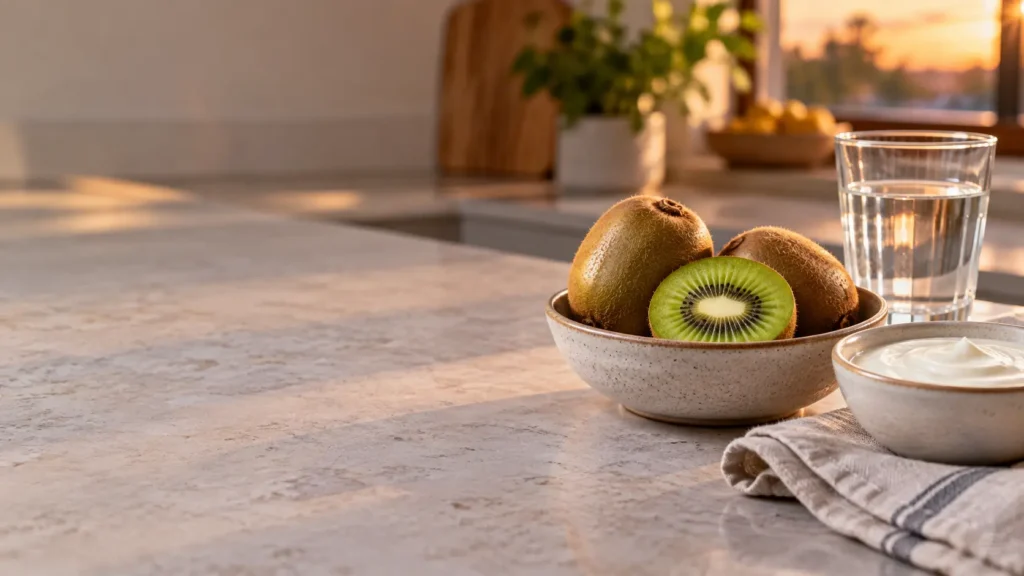
Two kiwifruit before bed has become a tidy piece of nutrition advice: eat the fruit, sleep better. It is appealing because the food is ordinary, inexpensive in many places and easy to prepare. But the evidence needs more room than a social-media caption gives it.
Kiwifruit can be a useful food in an evening snack. It provides vitamin C, contains fiber and brings a tart-sweet option to a meal that might otherwise be only dairy, cereal or toast. Small studies have also reported improvements in some sleep outcomes after kiwifruit intake. Those studies are interesting, but they do not show that kiwi treats insomnia, fixes a disrupted schedule or guarantees better recovery after training.
This guide explains what the fruit contributes, what the sleep research actually studied and how to use it without turning a snack into a medical plan. If sleep difficulty is persistent, severe or affecting daily life, use appropriate individual clinical advice rather than trying to manage it through food experiments.
- What kiwi brings to an ordinary snack
- What the sleep studies found
- Why the results have limits
- How to use kiwi practically
Start with the food, not the promise
Kiwifruit is a fruit, not a sleep supplement. That is a useful starting point because it keeps the decision ordinary. You might eat it because you like it, because it is available or because it adds fruit to a day that has been short on it. The bedtime detail is optional.
The fruit is a notable source of vitamin C. The NIH Office of Dietary Supplements vitamin C fact sheet lists one medium kiwifruit at 64 milligrams of vitamin C, or 71% of the Daily Value. Vitamin C is required for collagen biosynthesis and is involved in protein metabolism; it also improves the absorption of nonheme iron from plant foods. Those are useful nutrition facts. They do not mean that a kiwi eaten at night has a special effect on training adaptation.
Kiwifruit also contributes fiber, water and carbohydrate. Exact values change with the size and variety of the fruit, which is why the USDA FoodData Central database is more useful than treating every kiwi as a fixed nutritional unit. If you are choosing a snack before sleep, the practical questions are simpler: does the portion feel comfortable, does it fit the rest of the meal and is it a food you will actually keep buying?
For a plant-based meal, kiwi can serve another everyday role. Our guide to lentils for lifters explains why vitamin-C-containing foods can support nonheme iron absorption when eaten with a lentil meal. That pairing can happen at lunch, dinner or a snack; it does not depend on the clock.
The sleep finding began as a small, specific question
The most-cited kiwi sleep study was published in 2011. Twenty-four adults with self-reported sleep problems ate two kiwifruit one hour before bed for four weeks. The participants reported improvements in several sleep measures, and the study also used actigraphy. Read the original 2011 kiwifruit sleep study for the intervention and outcomes.
The result is a reasonable reason to study the food further. It is not a reason to prescribe kiwi for everyone. The study was small, had far more women than men and used a free-living, self-controlled design rather than a placebo-controlled trial. That means changes in routine, expectation, the act of following a nightly plan and natural variation in sleep could all matter. The participants also had sleep concerns, so the result does not tell us what will happen for a person who already sleeps well.
A 2023 randomized, single-blind crossover study took a different approach. Twenty-four young men with good or poor sleep quality consumed fresh kiwi, dried kiwi or a water control with a standardized evening meal. The fresh versus dried kiwi trial reported changes in selected next-morning and sleep-related outcomes, with different patterns by sleep-quality group and product. That is more useful than a single uncontrolled result, but it is still one acute study with a small sample. It cannot identify an ideal fruit, dose or timing for every lifter.
Promising is not the same as settled
Sleep research on foods is hard to make tidy. People do not sleep in identical rooms, follow identical schedules or bring the same stress, caffeine use, training load and health history to the study. Foods also differ in variety, serving size, preparation and what they replace in the diet. A better bedtime routine, an earlier meal or less alcohol may affect sleep more than the fruit itself.
The athlete literature has some encouraging signals too. A 2023 four-week study in elite athletes reported improvements in sleep and recovery questionnaires after participants ate two green kiwifruit an hour before bed. But the athlete kiwifruit study should be read with its design in mind: it compared the intervention period with baseline rather than a matched control group. It supports a question for future controlled research; it does not establish kiwi as a recovery protocol.
A 2026 scoping review of melatonin-containing foods reached a similarly careful conclusion. Kiwifruit was among foods that may contribute to better sleep outcomes, especially in people with sleep disturbances, while the included studies differed in population, timing, doses and measurement methods. Read the scoping review for those limits. In practical terms, the literature makes kiwi a reasonable food to try if you enjoy it. It does not make it a substitute for a consistent sleep opportunity or professional care when sleep problems persist.
Make the snack fit the evening you actually have
There is no need to copy a study protocol exactly. The two-fruit, one-hour timing in several studies describes what researchers tested. It is not a universal target. One kiwi with yogurt, fruit after dinner or kiwi added to a small bowl of oats can all be ordinary ways to eat the food. A person who finds acidic or high-fiber foods uncomfortable late in the evening may prefer a smaller portion, an earlier snack or a different food entirely.
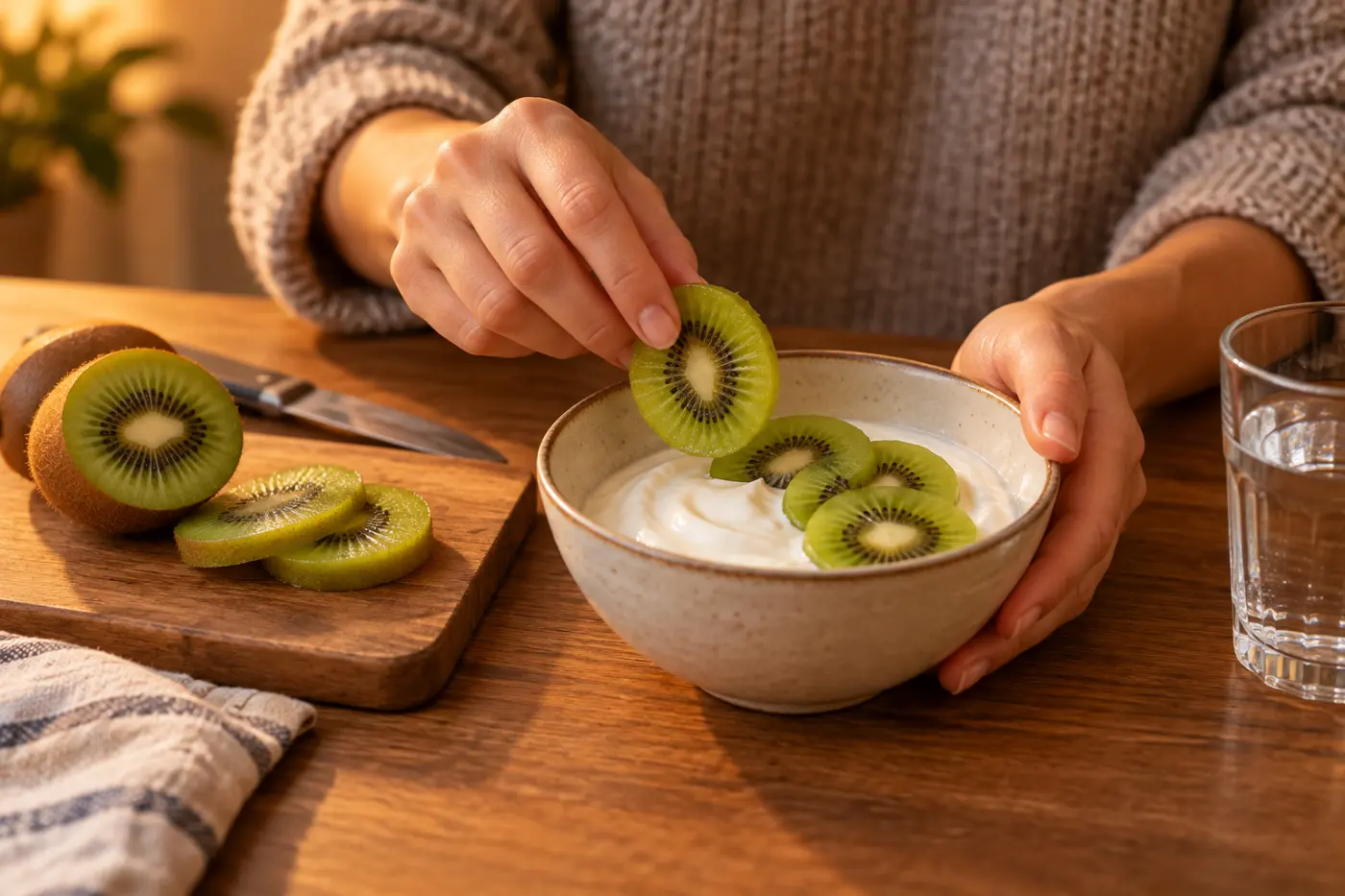
Pairing kiwi with yogurt can make the snack more satisfying and add protein, but it does not turn the meal into a sleep formula. The same restraint applies to pre-sleep protein. Cottage cheese before bed can be a convenient way to close a protein gap, while total daily intake and the rest of the diet remain more important than any single snack.
Notice the practical trade-offs. Kiwi is portable and needs little preparation, but not everyone enjoys its flavor or texture. Some people are allergic to kiwifruit, and anyone who has had mouth tingling, swelling, hives or breathing symptoms after eating it should not repeat the experiment; seek appropriate individual guidance. If the fruit does not agree with your digestion before bed, do not force it because a study used it.
The useful trial is low stakes: include kiwi in an evening snack for a short period if you like the food, keep the rest of your routine broadly stable and notice whether it fits. Do not change your training plan, caffeine intake, bedtime and five other variables at the same time. If sleep is still difficult, the result is not that you chose the wrong fruit. Sleep has many causes that a food article cannot diagnose.
Conclusion
Kiwi can be a practical evening fruit because it provides vitamin C, fiber and variety. Small studies suggest possible benefits for some sleep outcomes, but their size, design and populations limit what can be promised.
Eat kiwi before bed if it is an enjoyable snack that fits your appetite and routine. Treat any improvement as personal information, not proof of a treatment. The bigger recovery foundations remain a workable schedule, enough sleep opportunity, adequate food and training that fits the rest of your life.