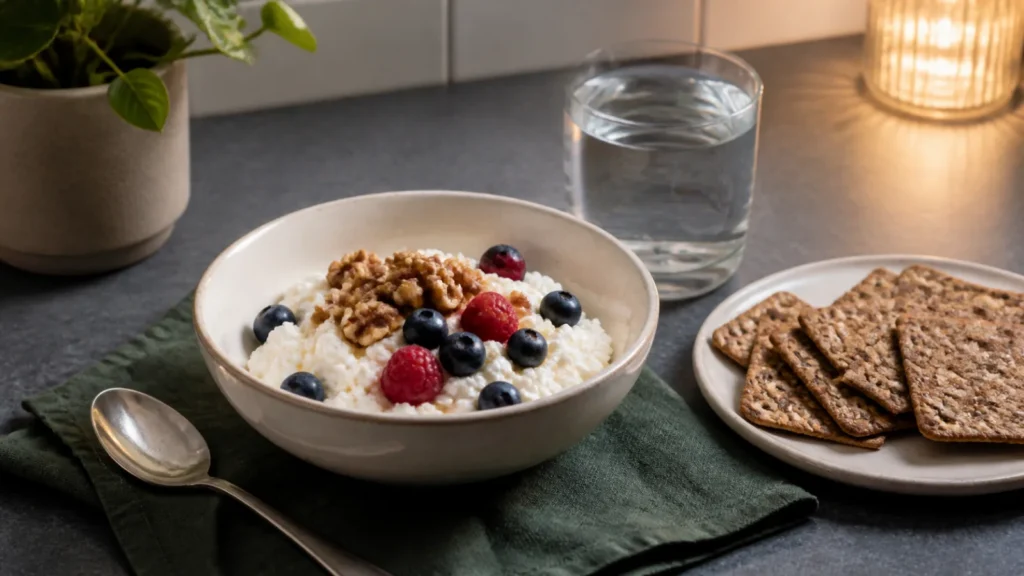
Cottage cheese before bed is one of those old gym habits that keeps coming back because it has a real idea underneath it. The idea is not that cottage cheese burns fat while you sleep or that nighttime eating is automatically anabolic. The useful idea is simpler: cottage cheese is a convenient dairy protein food, rich in casein, that can help some lifters close a protein gap before a long overnight fast.
That makes it practical, not mandatory. Some people sleep better with a small protein snack. Others feel heavy, thirsty, refluxy, or simply uninterested in eating near bedtime. Both experiences are normal. The right question is not "Should every lifter eat cottage cheese before bed?" It is "Does this solve a real problem in your diet?"
This article is for healthy adults who tolerate dairy. The short version is this: cottage cheese can be useful before bed when it helps you reach total daily protein comfortably, but the portion, sodium, digestion, and timing matter.
- Why cottage cheese became a bedtime fitness food
- What lowfat cottage cheese gives you
- What the pre-sleep protein research actually says
- Why calcium and B12 still matter
- How to use cottage cheese without forcing it
Why cottage cheese became a bedtime fitness food
Cottage cheese became popular with lifters because it is high in dairy protein and easy to eat without cooking. Much of that protein is casein, the slower-digesting family of milk proteins. Compared with whey, casein tends to release amino acids more gradually, which is why it is often discussed around overnight recovery.
The broader protein foundation still comes first. The ISSN position stand on protein and exercise recommends total daily protein around 1.4-2.0 g per kilogram of body weight for most exercising individuals and notes that pre-sleep casein protein intake around 30-40 g can increase overnight muscle protein synthesis and metabolic rate without influencing lipolysis.
That does not mean cottage cheese has to happen at night. If your daily protein is already covered and you are not hungry, a bedtime snack may add nothing useful. If you routinely finish the day short on protein, cottage cheese can be a low-effort way to close the gap.
What lowfat cottage cheese gives you
Using USDA FoodData Central reference values for lowfat 2% cottage cheese, a 100 g portion provides roughly:
- about 12 g protein
- around 90-100 mg calcium
- about 0.4 mcg vitamin B12
- often more than 300 mg sodium, depending on product
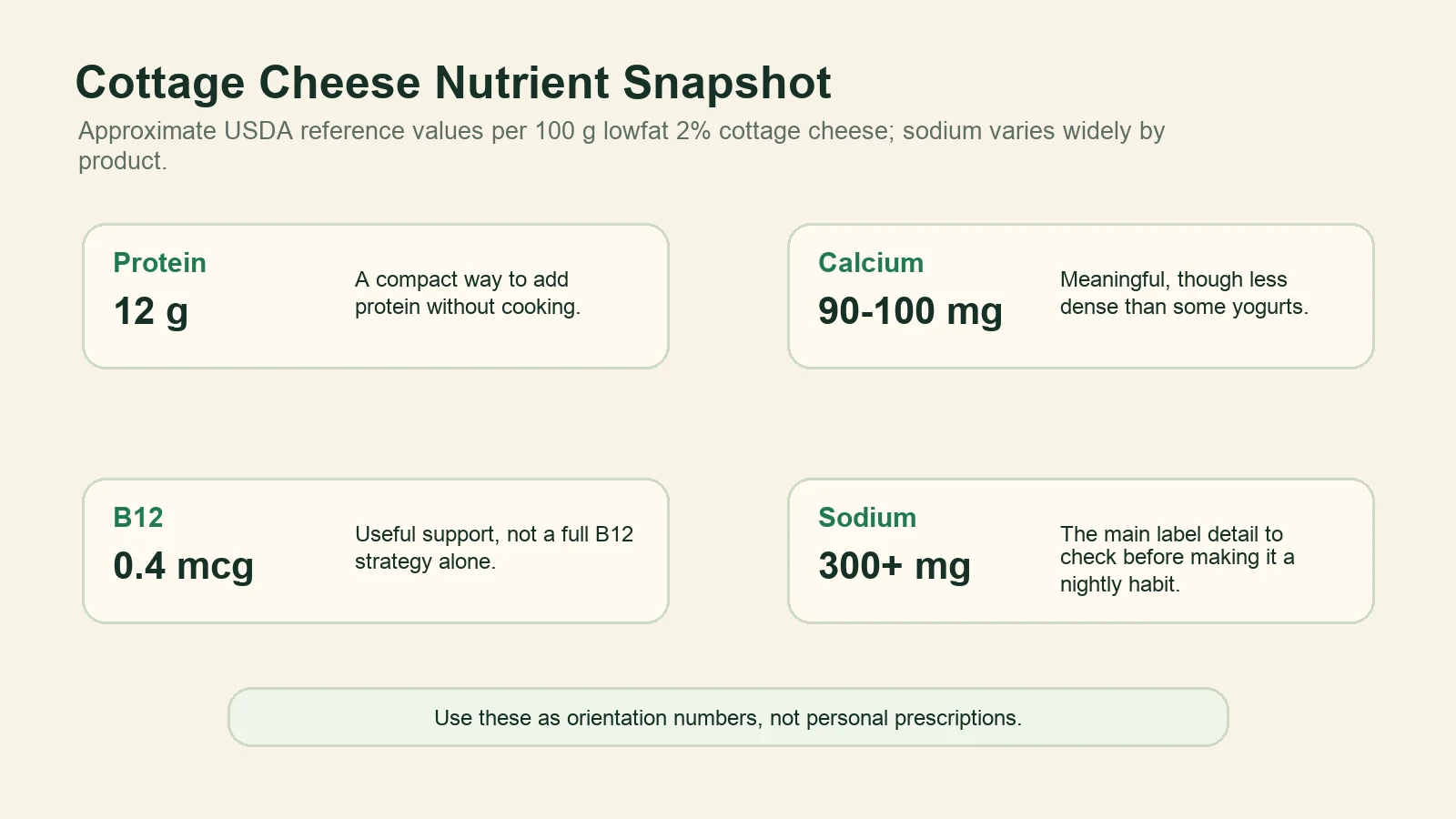
The protein number scales quickly because many servings are larger than 100 g. A bowl around 200 g can move close to a useful protein dose for many lifters, especially if it is paired with milk, Greek yogurt, or another protein food.
The sodium detail deserves attention. Cottage cheese can be much saltier than people expect. That may not matter for a healthy, sweaty athlete eating an otherwise balanced diet, but it can matter for someone with blood pressure guidance, kidney concerns, or a sodium-sensitive eating pattern.
What the pre-sleep protein research actually says
The research case is about protein timing and overnight availability, not about cottage cheese being magical. A 2012 study on protein ingestion before sleep found that protein consumed immediately before sleep was digested and absorbed and stimulated overnight muscle protein synthesis after evening resistance exercise.
A later systematic review on pre-sleep protein summarized that 20-40 g of casein about 30 minutes before sleep can improve the overnight protein synthetic response in healthy adults, with possible benefits for longer-term adaptations in some contexts.
There is also a direct whole-food angle. A study comparing pre-sleep cottage cheese with casein supplement and placebo examined active young women and used cottage cheese as a whole-food protein option before sleep. The study was small, so it should not be exaggerated, but it supports the idea that whole foods can be part of the pre-sleep protein conversation.
The practical interpretation is measured. If cottage cheese helps you get enough total protein and it feels comfortable before bed, it can fit. If it causes stomach discomfort, thirst, reflux, or poor sleep, the theoretical benefit is not worth it.
Why calcium and B12 still matter
Protein gets the attention, but cottage cheese is still a dairy food. The NIH calcium fact sheet describes calcium as important for bones, muscle movement, nerve signaling, blood vessel function, and hormone release. Cottage cheese is not the highest-calcium dairy food, but it contributes.
Vitamin B12 is another part of the picture. The NIH vitamin B12 fact sheet explains that B12 helps keep blood and nerve cells healthy and helps make DNA. Cottage cheese contributes some B12, although people with low intake or absorption issues may need a more deliberate plan.
This is the useful food-first lesson: a bedtime snack can serve multiple jobs. It can help with protein, hunger, calcium, and B12 at the same time. But only if it fits the person.
How to use cottage cheese without forcing it
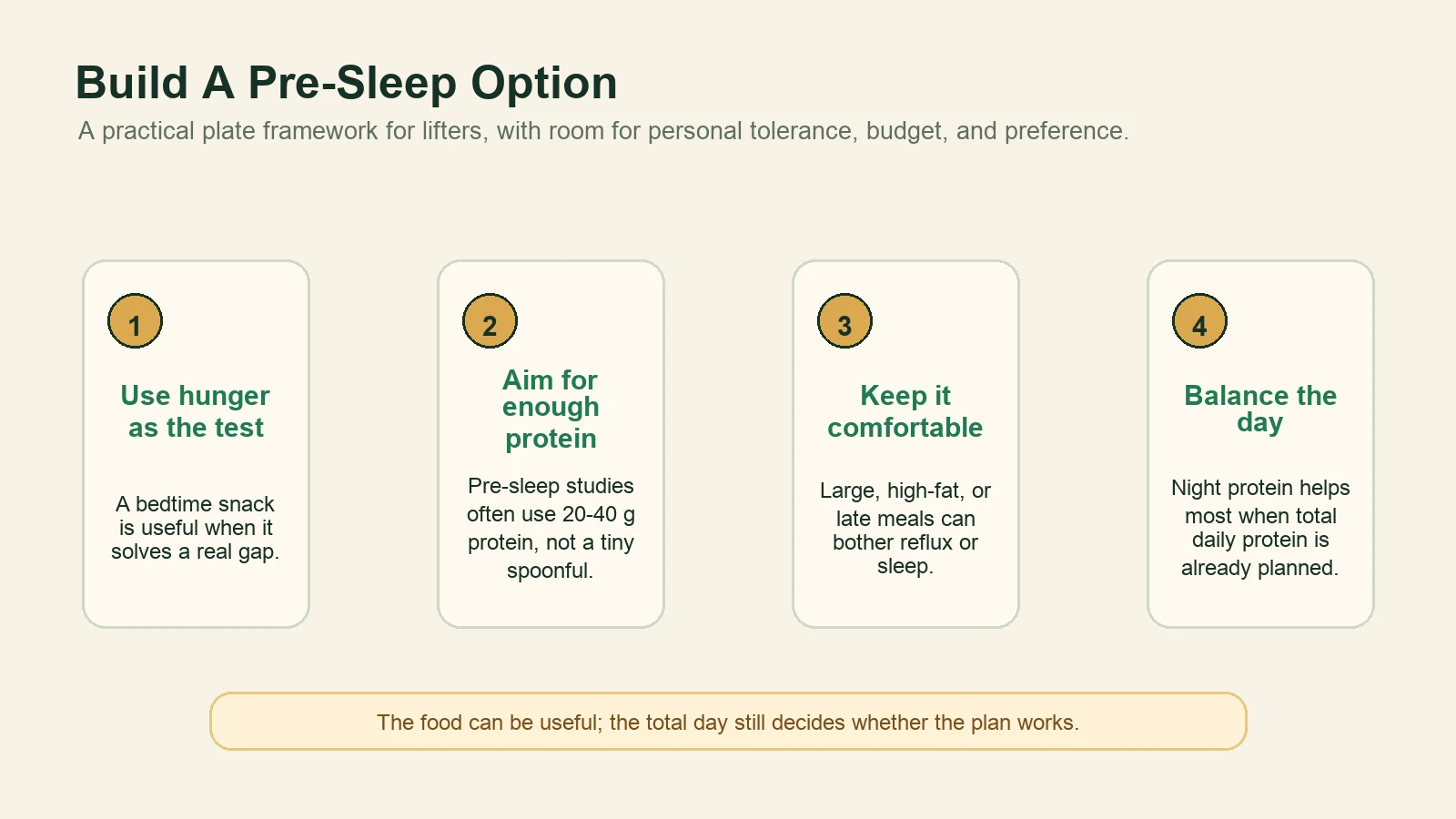
Start with hunger and protein need. If you are not hungry and already hit your protein target, skip it. If dinner was light or your day ended short on protein, a bowl of cottage cheese may be useful.
Then choose a portion that makes sense. A tiny spoonful is unlikely to match the amounts used in pre-sleep protein research. A huge bowl right before lying down may be uncomfortable. Many people do better with a moderate serving 30-90 minutes before bed.
Pair it based on the job. For a simple snack, berries and cinnamon work. For more calories, add nuts, oats, toast, or crackers. For a savory option, add pepper, tomatoes, cucumber, herbs, or olive oil. Choose lower-sodium products if sodium matters for you.
If you have a milk allergy, lactose intolerance, reflux, kidney disease, hypertension, or medical advice about sodium, calcium, or dairy intake, use individual guidance instead of a general bedtime snack rule.
What cottage cheese does not do
Cottage cheese before bed does not override a low-protein day by magic. It does not guarantee muscle gain. It does not make sleep better for everyone. It also does not mean nighttime eating is required for lifters.
The strongest evidence-based idea is not "eat cottage cheese at night." It is "make sure total daily protein is sufficient, and pre-sleep casein-rich protein can be one useful timing option." Cottage cheese is simply one whole-food way to apply that idea.
If you dislike cottage cheese, Greek yogurt, milk, casein powder, eggs, tofu, or another protein food may fit better. The body cares more about the total pattern than your loyalty to one bedtime snack.
A practical label note
Cottage cheese labels deserve a closer look than people expect. Protein is usually strong, but sodium can vary a lot between products. If you plan to use it often, compare a few labels instead of assuming every tub is nutritionally identical.
Texture and curd size matter too. Some people dislike large curd cottage cheese but enjoy whipped or small curd versions. Others prefer it savory instead of sweet. That is not a minor detail. A food only helps consistency when you can actually eat it without negotiating with yourself every night.
If bedtime eating feels uncomfortable, move the same food earlier. A late evening snack is still useful if it helps the day add up.
Continue with a related guide
For the next practical step, read Eggs Are More Than Protein: Choline, B12, Selenium and What Lifters Actually Get From Them. For a second perspective from the same topic cluster, continue with Greek Yogurt: The High-Protein Food That Also Brings Calcium, B12, Iodine and Potassium.
Conclusion
Cottage cheese before bed can be useful because it provides dairy protein, calcium, vitamin B12, and casein-rich slow-digesting protein in a food that requires almost no preparation. That makes it a practical option for lifters who finish the day hungry or short on protein.
But it is not mandatory. Use it when it fits your appetite, digestion, sodium needs, and total daily protein plan. The win is not a special bedtime ritual. The win is a repeatable food choice that helps the day add up.
FAQ
How much cottage cheese before bed makes sense?
It depends on the product and your target. Pre-sleep protein studies often use 20-40 g protein, so the serving needs to be large enough to matter. Check the label and fit it into your total day.
Is cottage cheese before bed better than Greek yogurt?
Not always. Cottage cheese is casein-rich and often savory-friendly. Greek yogurt can be smoother, higher or lower in protein depending on brand, and easier for some people to digest. The better choice is the one you tolerate and repeat.