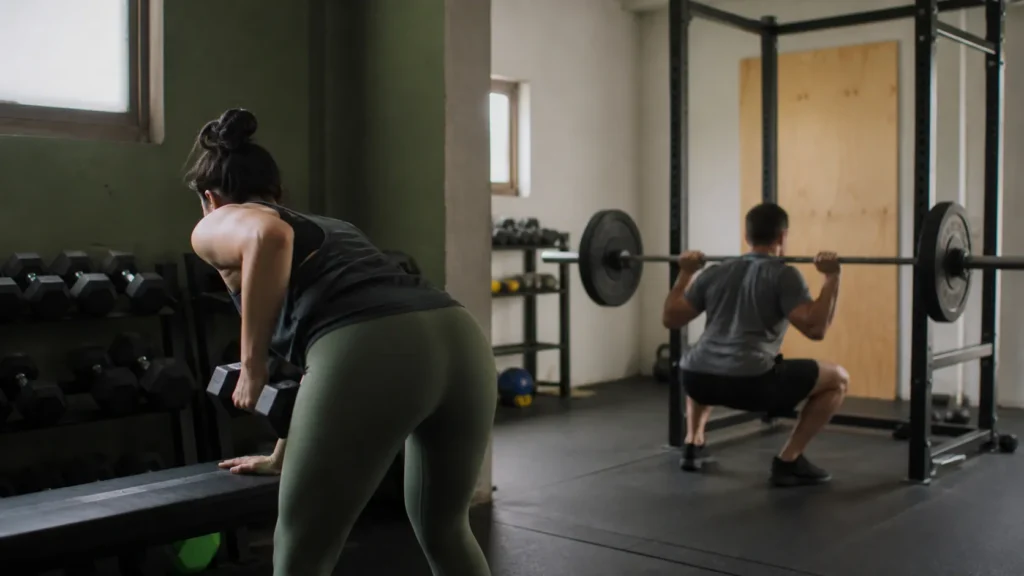
Comparing lifts is almost automatic in a shared gym. Plates are visible, numbers are easy to rank and social media supplies an endless highlight reel. Comparison can provide information or inspiration. It becomes a problem when someone else’s performance replaces the context of your own training.
You do not need to pretend other lifters do not exist. You need a better scoreboard. Your program, training age, body, equipment, goals and current life determine what progress means for you.
- Recognize an incomplete comparison
- Understand the highlight reel
- Build a personal scoreboard
- Use comparison selectively
- Handle gym-floor triggers
- Protect enjoyment
Most comparisons are missing the denominator
A 180-kilogram deadlift tells you a load. It does not tell you how long the person has trained, whether the lift follows competition rules, what they weigh, how they recover or what they sacrificed. Even when all those details are known, the number may still be irrelevant to your current goal.
This does not make strength standards useless. Standards can describe a sport or help classify competition. They become harmful when used as a universal judgment of worth. A beginner learning a stable hinge and an experienced powerlifter peaking for a meet are doing different work.
Social media selects for the unusual
People post records more often than routine sessions, and algorithms amplify performances that hold attention. You therefore see a sample designed to look exceptional. Quiet months of training, failed attempts, coaching, genetics, support and editing remain outside the frame.
Treat online lifts as entertainment or technical examples, not a representative survey of what everyone else can do. If a feed repeatedly leaves you discouraged or pushes unsafe decisions, unfollowing or limiting it is a training adjustment, not a failure to be motivated.
Research on comparison is nuanced. A study of upward and downward social comparison found that upward comparison could increase short-term self-improvement motivation while also increasing negative emotions, with different effects later. Comparison is not reliable fuel simply because it sometimes creates urgency.
Build a personal scoreboard
Choose measures connected to your goal. For strength, track a few main movements, repetition quality, consistency and perceived effort. Compare similar conditions across time. A set performed after three months of practice is more informative beside your earlier set than beside a stranger’s warm-up.
Include process measures that keep progress possible: sessions completed, pain-free variations found, sleep protected and weeks where you followed the planned effort instead of testing. These are not consolation prizes. They are inputs that support future performance.
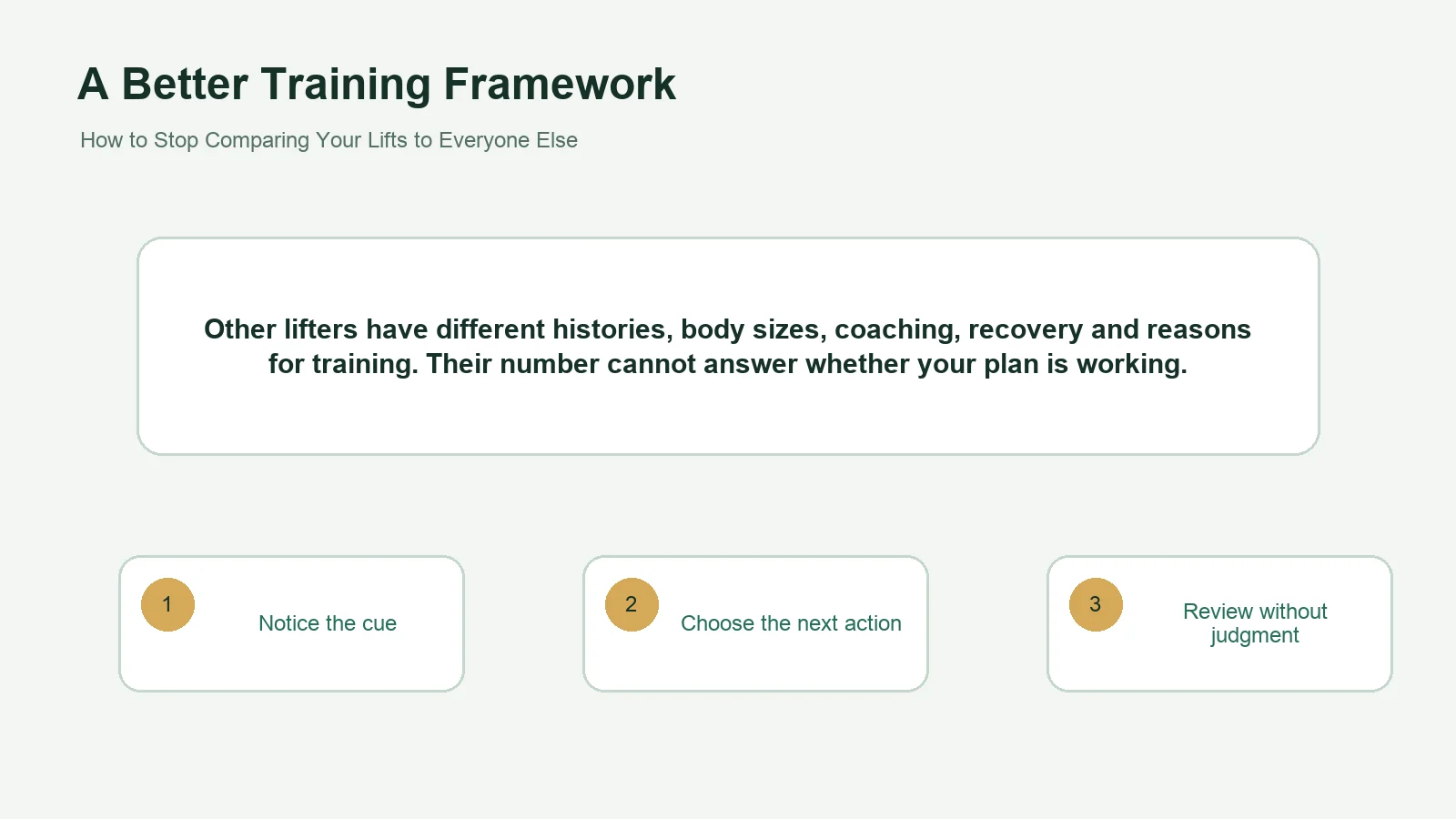
Use comparison for a specific question
Comparison can help when it has a job. Watch an experienced lifter to study how they organize a setup, communicate with a spotter or move through a warm-up. Compare programming approaches to understand options. Ask a coach whether your progression is appropriate for your experience.
Stop when the question becomes “Am I good enough?” A lift cannot answer it. Return to a question that produces action: Is my technique repeatable? Did the planned work improve? What should stay the same next week?
Handle comparison on the gym floor
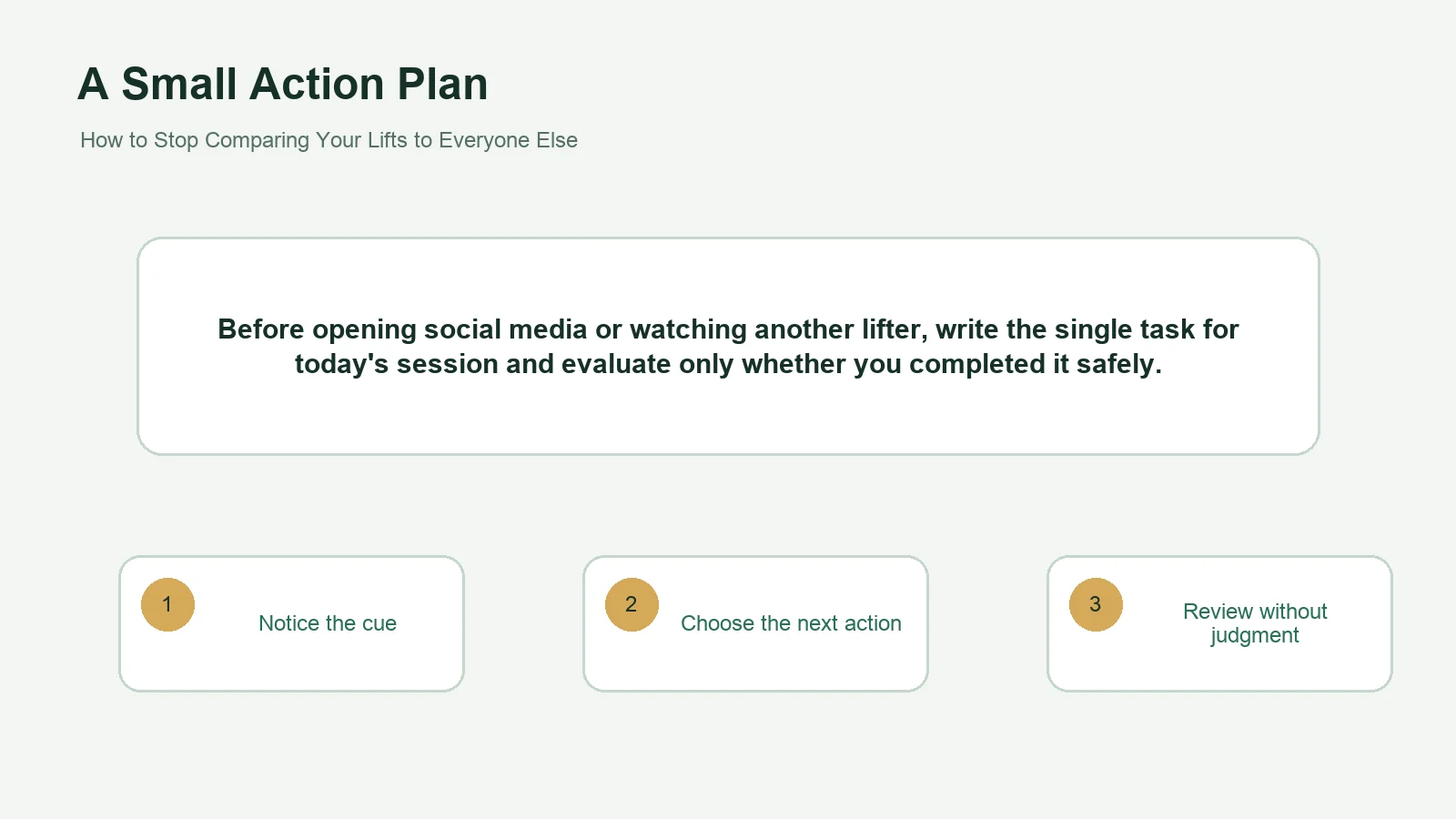
When someone nearby uses your goal weight for warm-ups, notice the reaction without obeying it. Keep your planned load. Changing the session to defend your ego creates a poor experiment and can create unnecessary risk.
Use a short reset: read the next set in your log, perform the same warm-up cue and focus on one technical instruction. If the environment remains distracting, move equipment or train at a quieter time when practical. Attention is part of the setup.
Protect the reason you started
Comparison often narrows fitness into ranking. Revisit what training adds to your life: capability, a skill, structure, confidence or time with people you enjoy. Those outcomes remain valid even when someone else lifts more.
You will never reach a point where no stronger person exists. That is good news. It means you can stop waiting for rank to grant permission to value your progress. Build a personal scoreboard, use other lifters as sources of information when useful and let their numbers belong to their stories.
Compare programming inputs before outcomes
When another person’s result interests you, look first at the inputs you can actually observe. How often do they practice the lift? What standards do they use? Are they training for a competition, general strength or social-media content? Even a detailed answer will not turn their result into a prediction for you, but it can reveal a useful method to discuss with a coach.
Do the same with your own log. Compare blocks with similar attendance, exercise variations and effort targets. If performance improved, identify the repeatable inputs rather than crediting a single intense session. If it did not, change one variable at a time. This keeps comparison connected to decisions instead of rank.
Strength categories have limited jobs
Body-weight classes, age groups and competition divisions make organized sport possible. Informal strength standards can also help someone understand the broad demands of a lift. They are descriptions built for a context, not universal grades for recreational training. A number labeled beginner or advanced does not know your movement history, equipment, goals or constraints.
Use a standard when you need to enter an event, choose an appropriate attempt or understand the sport. Do not use it to erase progress that occurred outside its assumptions. The most relevant standard for an ordinary training day is often the range, tempo and effort your program prescribed.
Curate what repeatedly enters your attention
Comparison is harder to manage when every quiet moment opens onto a ranking system. Review the accounts, leaderboards and group chats you consume. Keep sources that teach, entertain or connect you with people you value. Mute sources that repeatedly provoke reckless testing, shame or the sense that normal progress is invisible.
This is not an attempt to avoid all discomfort. Useful examples can challenge your expectations. The test is whether the exposure leads to a specific, proportionate action or merely leaves you agitated. If there is no useful action, attention can return to your own plan.
Be a better comparison for someone else
Other lifters may be comparing themselves with you, even if you do not feel advanced. Describe progress honestly. Mention the time, coaching and failed attempts behind a result when context matters. Avoid turning a stranger’s lighter set into a joke or unsolicited lesson.
On the gym floor, celebrate another person’s milestone without ranking it against your own. Share equipment fairly and answer questions without pretending one method fits everyone. A culture becomes easier to train in when strength is respected as a skill rather than used as permission to dismiss people.
Run a two-week reset
If comparison is changing your sessions, try a short reset. Hide public leaderboards, write loads before entering the gym and keep the phone in a bag between sets. At the end of each workout, record one execution win and one next step. After two weeks, review whether effort selection, enjoyment or concentration changed.
The experiment is intentionally small. You are not promising never to compare again. You are testing whether reducing irrelevant inputs helps you follow a better reference point: the work your current goal requires.
Continue with a related guide
For the next practical step, read How to Train When You Don’t Feel Like Training. For a second perspective from the same topic cluster, continue with Motivation Is Overrated: What Actually Keeps You Training.