Lean beef versus chicken is not a test of whether a lifter is eating correctly. Both can be practical protein foods. The useful comparison asks what each one adds to the meal, what it costs, how it fits your appetite, and whether you can cook it often enough for it to matter.
Chicken is frequently chosen because certain cuts make a lower-fat, protein-forward meal easy to build. Lean beef is often chosen because it can bring more iron, zinc, and vitamin B12 alongside protein. Those are real distinctions, but neither creates a universal winner. A week of meals, not one food, determines whether the diet has enough variety and coverage.
This comparison assumes cooked portions and leaner forms of beef. Ground beef, steak, chicken breast, thigh, skin, oil, sauce, and restaurant portions can change calories and fat dramatically. Check labels and the USDA record that matches the food on your plate. Medical conditions, diagnosed deficiencies, kidney disease, pregnancy, and dietary restrictions require individual guidance.
- Why protein alone does not settle the comparison
- What lean beef can add beyond protein
- When chicken makes the meal easier
- Why portion, cooking, and budget matter
- How to build a useful weekly rotation
Protein can be comparable while the food experience is not
Comparable cooked portions of lean beef and chicken can both provide substantial protein. The difference often starts with fat and energy density. A very lean chicken breast can make it straightforward to add protein while leaving room for carbohydrates and fats elsewhere in the meal. A lean beef cut can still fit a lower-fat meal, but the exact cut and preparation deserve attention.
Use USDA FoodData Central to compare the actual cut and cooking state. “Beef” covers a huge range, from a lean trimmed cut to a fatty burger; “chicken” covers breast, thigh, skin-on pieces, breaded products, and prepared foods. Comparing broad labels without a portion and preparation method produces a confident answer to the wrong question.
For strength athletes, protein is a useful planning variable, but it is not the only variable. A meal also needs to be enjoyable, affordable, digestible, and compatible with the rest of the day. A food that fits the plan in theory but is never bought or cooked has limited practical value.
Lean beef’s distinctive nutrients
Lean beef is often notable for heme iron, zinc, and vitamin B12. The NIH iron fact sheet explains iron’s role as a component of hemoglobin, which carries oxygen from the lungs to tissues. Heme iron is found in animal foods and is generally more readily absorbed than nonheme iron from plant foods. That does not mean every athlete needs more beef or an iron supplement; it explains why beef can be one useful food in a varied diet.
Zinc and B12 matter too. The NIH zinc fact sheet describes zinc as involved in many aspects of cellular metabolism, while the B12 fact sheet covers B12’s roles in normal blood and nerve-cell health. Lean beef can be a concentrated way to bring these nutrients into a meal without needing a specialty product.
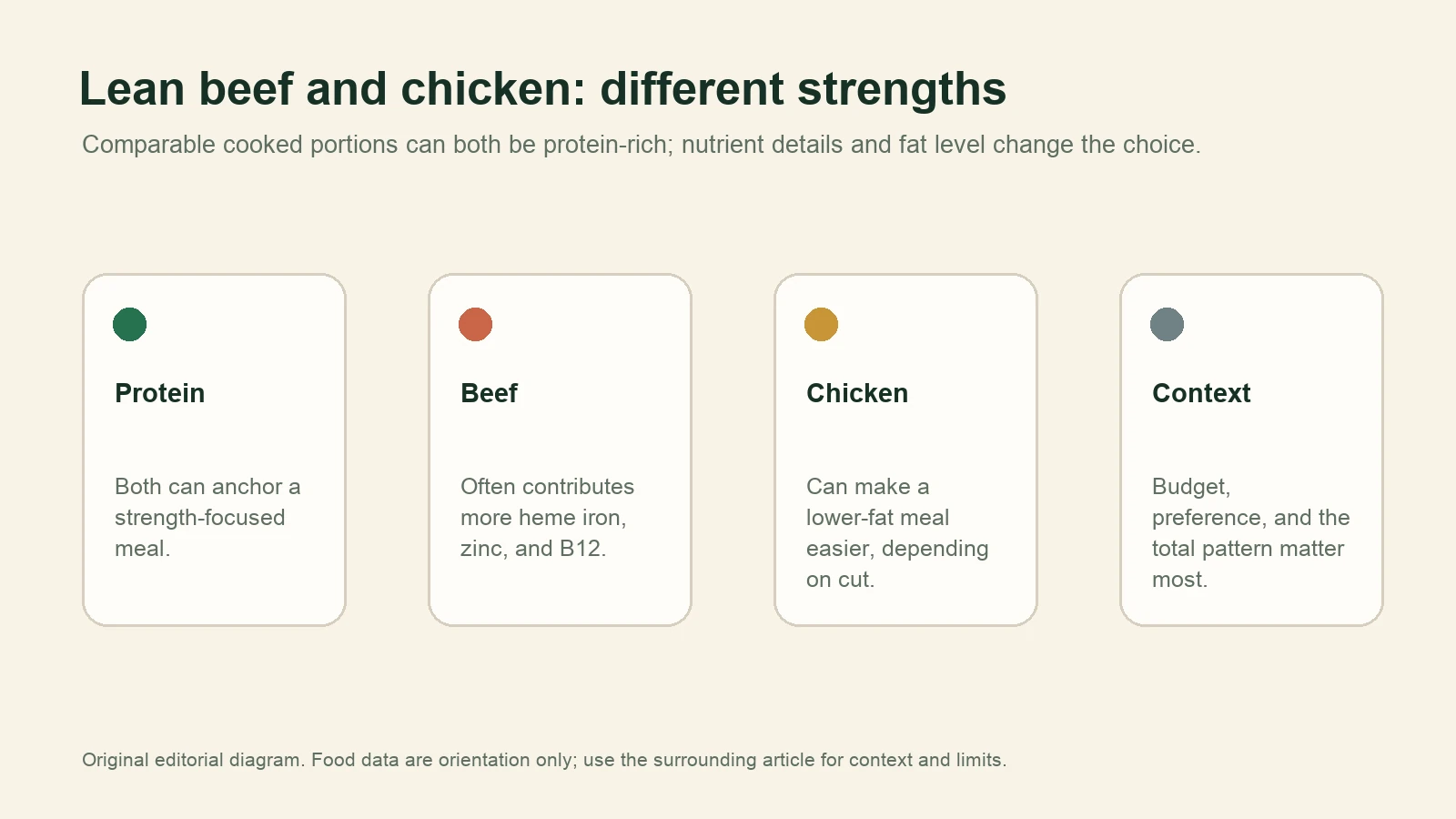
The right interpretation is modest. Beef is a food with a particular nutrient profile. It is not a replacement for a blood test, a diagnosis, or a reason to self-treat fatigue with large portions or supplements. If you suspect an iron or B12 issue, work with a clinician rather than treating a food comparison as medical assessment.
When chicken is the cleaner fit
Chicken can be the easier choice when you want to keep a meal lean, when the recipe already has a fat source, or when you want a neutral protein that works in several cuisines. It can pair with rice, potatoes, pasta, beans, vegetables, yogurt-based sauces, or a sandwich without forcing the dish in one direction.
Chicken also has its own B vitamins and minerals. Its advantage is not nutritional emptiness plus protein; it is that the leaner cuts give you a predictable base. That can be useful when appetite is lower, when you want room for more carbohydrate around a hard training session, or when a meal needs to be easy to portion.
Do not mistake leanness for superiority. A meal that is too dry, too small, or too repetitive can become difficult to keep. Add flavor and satisfaction deliberately through cooking methods, sauces, fats, vegetables, and carbohydrates. The meal should support training and normal life, not prove a point.
Let the week make the decision
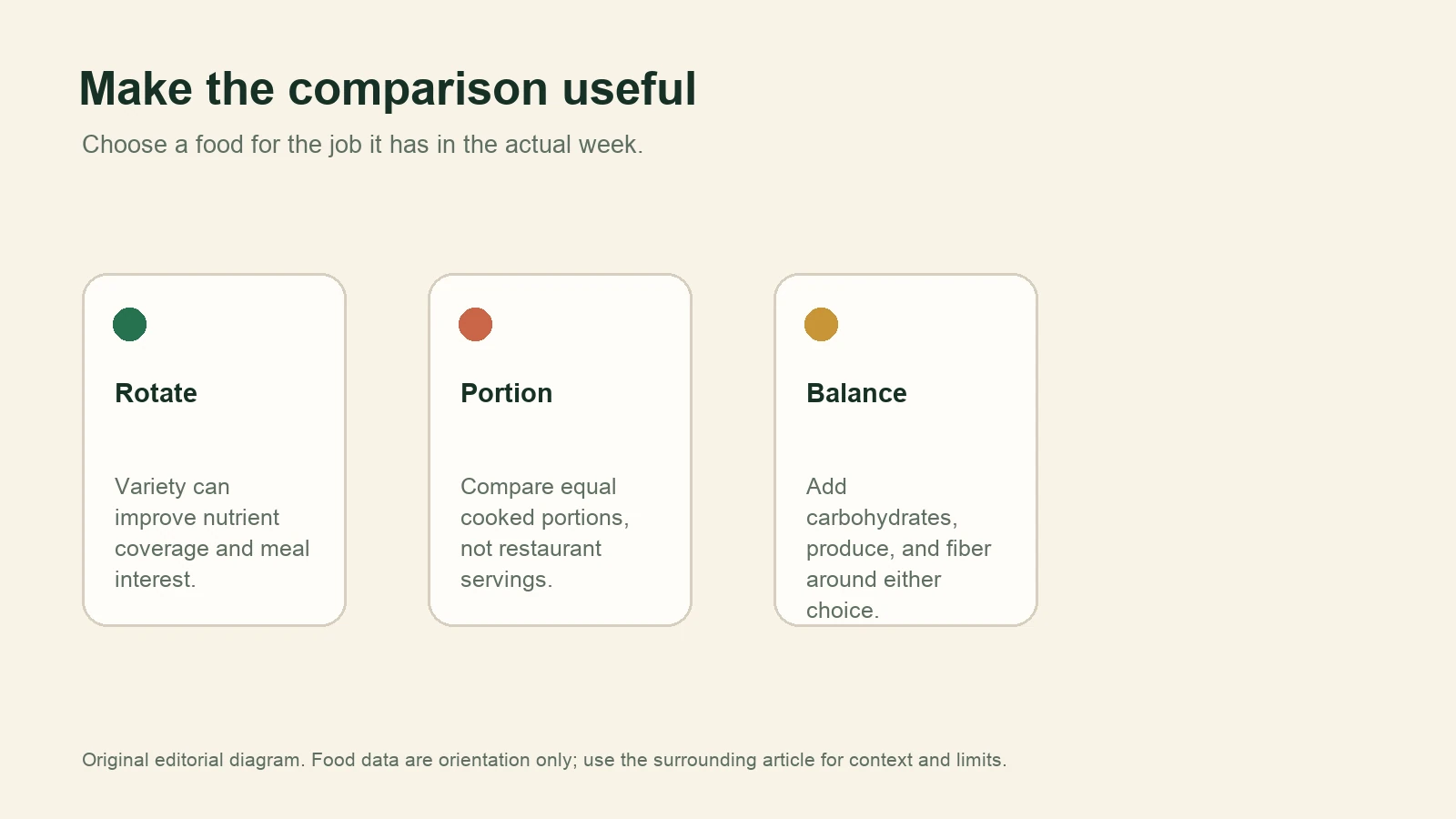
Rotating lean beef and chicken can be a straightforward way to vary flavor and nutrient exposure. You might use chicken in a high-volume lunch prep, then choose lean beef for a dinner where iron, zinc, and B12 are welcome additions. You might choose based on price that week. You might use neither if fish, beans, tofu, dairy, eggs, or another food fits better.
The Dietary Guidelines for Americans emphasize varied protein foods and an overall dietary pattern. That is a more useful lens than asking which meat “makes more sense” in every situation. Food choices are allowed to be practical.
Lean beef and chicken both make sense for a strength athlete when they are part of a balanced, repeatable diet. Compare equal cooked portions, notice the micronutrient differences, and choose the option that helps you build the meal and week you can actually sustain.
Preparation, portions, and a weekly rotation
The word “lean” should prompt a closer look, not a conclusion. A lean steak, extra-lean ground beef, a trimmed roast, and a restaurant burger are different foods in practice. The same is true of chicken breast, thigh, deli chicken, breaded chicken, and takeout. Labels, cooking fats, sauces, and serving size are part of the comparison.
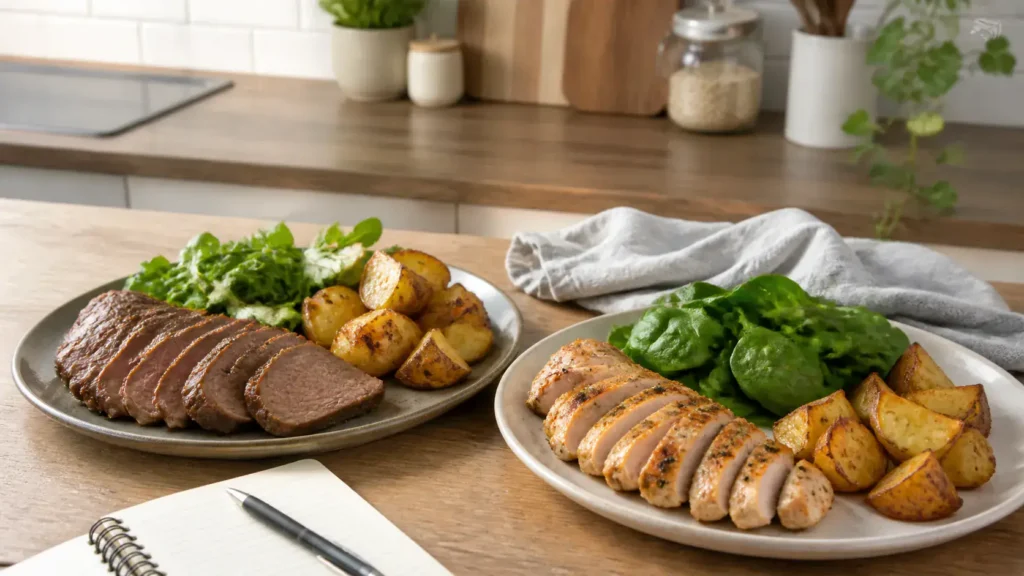
For a practical meal test, compare equal cooked portions in a similar recipe. A lean beef-and-potato bowl and a chicken-and-potato bowl with similar vegetables and oil reveal more about the real decision than comparing a steak dinner with a fried chicken sandwich. Calories are energy, not a reward or a problem by themselves. The meal needs to match the person’s training volume, appetite, and day.
Beef’s iron, zinc, and B12 do not prove that a supplement is needed or that every lifter should eat more red meat. Nutrient status cannot be diagnosed from fatigue or a gym log. Likewise, chicken’s lower-fat profile does not mean dietary fat should be avoided. If a clinician identifies a deficiency or a medical condition affects food choices, use that individual plan rather than a food-comparison article.
A weekly rotation can make the choice less dramatic: chicken in batch-cooked lunches, lean beef in a chili with beans, eggs at breakfast, yogurt as a snack, and legumes in a soup. These are examples, not required templates. Budget, freezer space, cooking time, leftovers, and household preferences all influence what becomes sustainable.
The decision can change with the season
Food choices are not fixed traits. In a busy week, chicken may be easier to prepare in volume. In colder weather, a lean beef stew or chili may be more appealing. During a period with limited budget, beans, eggs, dairy, or frozen foods may be the better foundation. Training nutrition works when it adapts to the actual constraints rather than trying to maintain one idealized menu.
When you do buy beef, use the cut you can afford and cook well. When you buy chicken, use the preparation that avoids waste. Keep an eye on ingredients that can materially change the meal, such as large amounts of oil, butter, cheese, or sugary sauces, but do not assume that these ingredients are automatically inappropriate. They can be useful parts of food people enjoy. The relevant question is what the complete meal contributes.
This perspective also respects people who eat less meat or none at all. Neither beef nor chicken is mandatory for strength. A well-planned diet can use many protein sources. The comparison is useful only for someone deciding between these two foods, not as a claim that athletes need animal foods to train effectively.
The best choice is therefore allowed to be boring: buy the food you can afford, prepare it safely, make the meal satisfying, and rotate it when variety would help.
There is no need to force a winner after every comparison. Beef and chicken answer slightly different meal-planning questions, and both can disappear from the menu for a while without damaging a well-rounded strength diet.
Use the answer that simplifies the next meal, then revisit it when your schedule, goals, or food preferences change. That is how comparison information becomes genuinely useful.
Continue with a related guide
For the next practical step, read Milk for Muscle and Strength: What’s Actually Inside a Glass?. For a second perspective from the same topic cluster, continue with Salmon for Lifters: Protein, Omega-3s, Vitamin D, Selenium and Potassium.