

Training for years requires a different mindset from training for a deadline. A short challenge can tolerate a rigid schedule, temporary fatigue and a life arranged around the gym. A durable practice has to coexist with work, family, travel, illness, holidays and periods when progress is not visible. The sustainable lifter is not the person who never changes the plan. It is the person who knows how to change the plan without losing the thread.
This guide is for recreational lifters who want strength training to remain part of adult life. It is not a rehabilitation plan or a promise that every interruption can be trained through. Pain, illness and significant health changes need appropriate individual guidance. For ordinary scheduling pressure, however, a flexible structure is usually more useful than another burst of perfection.
- Think in training seasons
- Build a weekly floor
- Use a traffic-light system
- Protect recovery and interest
- Review the year, not one week
Think in training seasons
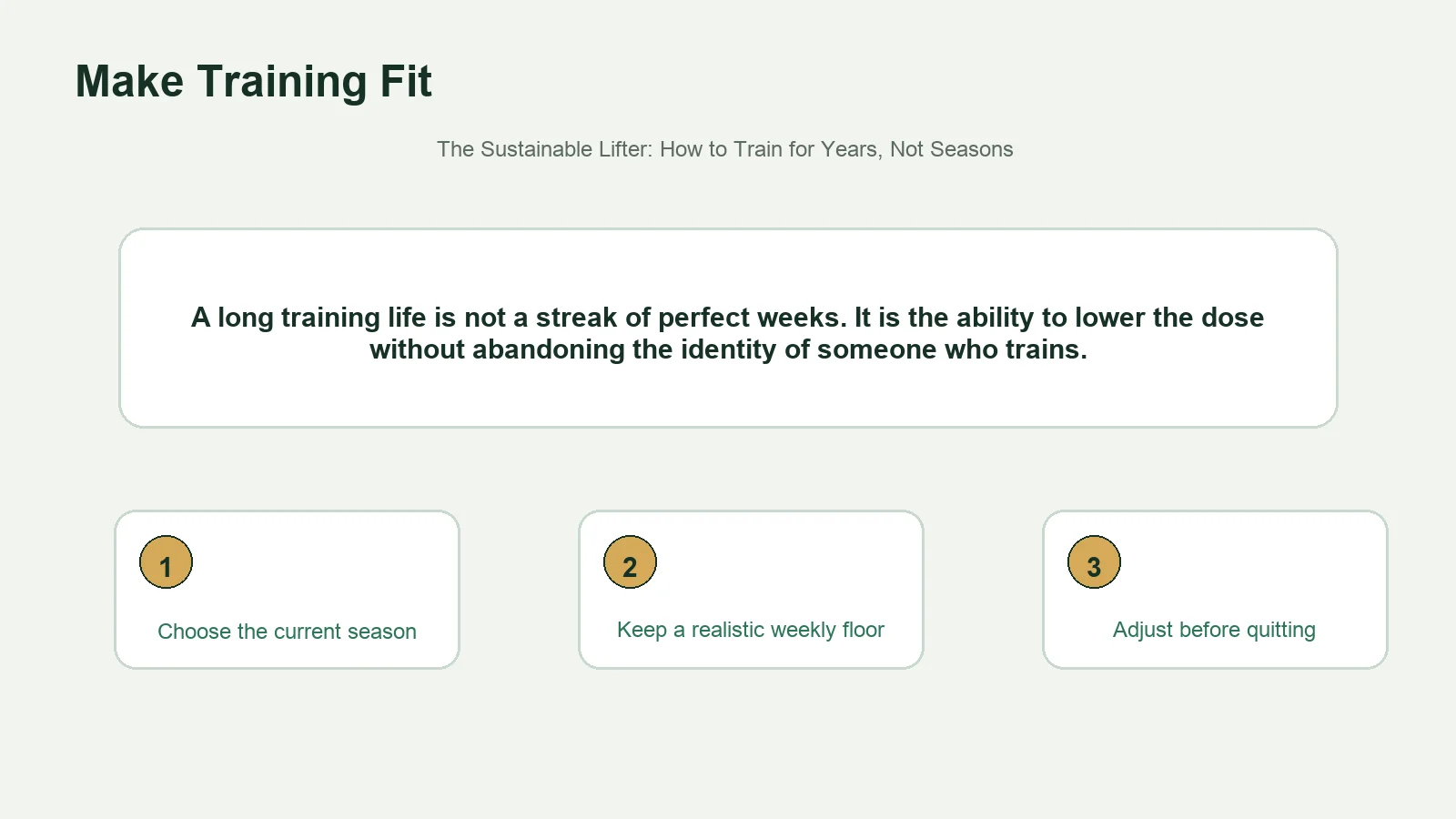
A sustainable plan accepts that not every month has the same purpose. You may have a build phase when sleep, schedule and motivation support more work. You may have a maintenance phase during travel or a demanding project. You may need a return phase after illness or a long break. Calling these periods different seasons removes the false choice between training at full capacity and doing nothing.
The CDC overview of physical activity benefits emphasizes that some activity is better than none and that regular activity supports health. That public-health perspective is useful here because it keeps a reduced week in proportion. A lighter period can still preserve movement, skill and routine even when it is not designed to produce a peak.
Write the purpose of the current season at the top of your log. “Build the squat,” “maintain twice-weekly training,” and “return without rushing” lead to different decisions. If the purpose is clear, a smaller session stops looking like failure and starts looking like the correct dose.
Build a weekly floor before a ceiling
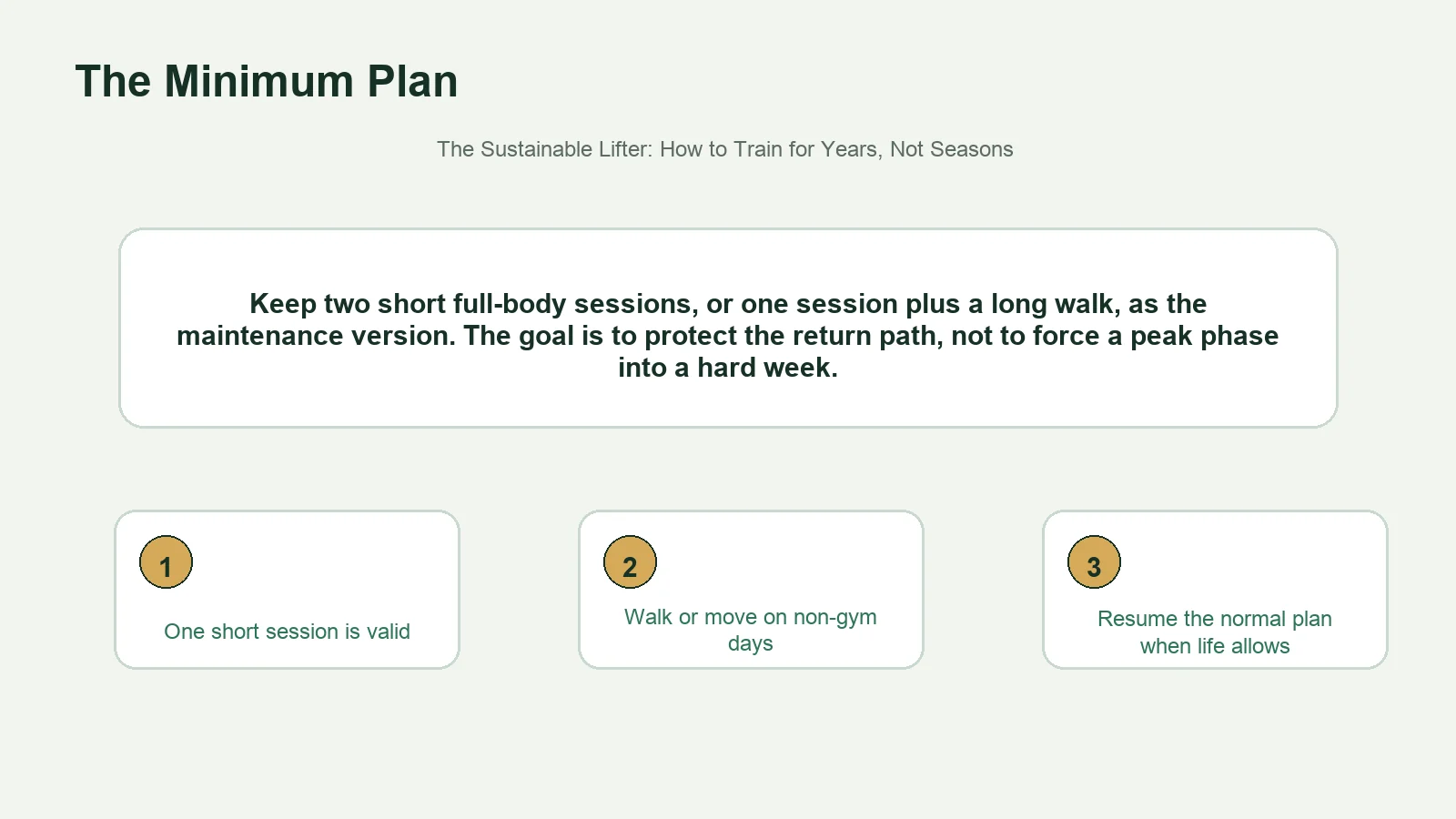
Most programs describe the ideal week. Sustainable lifters also define the smallest useful week. Your floor might be two 35-minute full-body sessions. During an unusually difficult week, it might be one session built around a squat pattern, a press and a pull. The floor should be small enough to use when life is busy, but substantial enough to keep your main movements familiar.
Do not make the floor a secret hard workout. Choose familiar exercises, leave repetitions in reserve and limit setup. A minimum session should reduce friction, not create a second test of character. If you finish with energy for tomorrow, it did its job.
The normal plan can sit above this floor. Add a third session, accessory work or longer conditioning when the week supports it. Because the floor already protects continuity, extra work becomes a choice made for a reason rather than a payment for guilt.
Use a traffic-light system
A simple traffic-light rule can prevent daily negotiation. Green means you slept reasonably, have normal energy and can train as planned. Amber means the session stays, but you reduce load, sets or complexity. Red means illness, sharp or escalating pain, concerning symptoms or a situation where training would be unsafe; rest and appropriate help take priority.
Amber days are where sustainability is usually won. Instead of cancelling, choose one adjustment before the warm-up: remove a set from each exercise, use a familiar variation or cap the session at 30 minutes. If the warm-up feels progressively worse, move toward the red decision. If you settle in, complete the reduced plan and leave.
This system is not a medical screen. It is a planning tool for ordinary variation. Its value comes from making a smaller useful response available before frustration turns one imperfect day into a lost week.
Protect recovery and interest
Sustainability is not only injury avoidance. A plan can be physically tolerable and still become mentally exhausting. Keep enough repetition to build skill, but allow small choices that preserve interest: a different accessory, a seasonal outdoor activity or a training partner once a week. Variety should refresh the structure, not erase it.
Sleep, food and non-training stress also set the budget. When recovery falls, reduce training cost before trying to manufacture more discipline. This may mean fewer hard sets, less failure work or a temporary pause in progression. Progress is easier to resume from maintenance than from a cycle of exhaustion and forced rest.
Review the year, not one week
At the end of each month, record sessions completed, the main lifts practiced and one recovery observation. At the end of a quarter, ask whether the plan still fits your life. The annual view will include missed sessions, flat periods and rest. It may also reveal something a seven-day streak cannot: you kept returning.
A sustainable lifter does not need to win every week. The goal is to preserve enough health, skill, curiosity and routine that training remains available next year. Build a floor, name the current season and adjust early. Longevity is not created by avoiding effort. It is created by spending effort at a rate you can afford.
Continue with a related guide
For the next practical step, read The Sustainable Approach to Getting Strong. For a second perspective from the same topic cluster, continue with When the Gym Becomes Your Third Place.