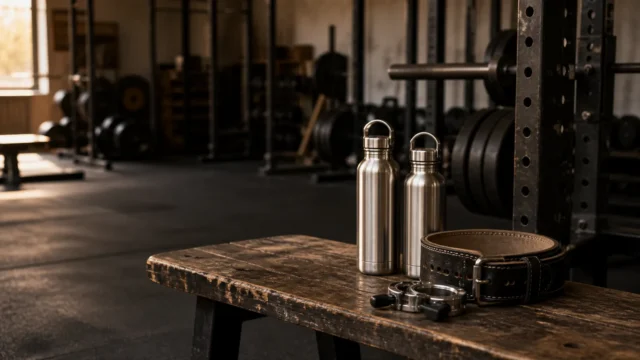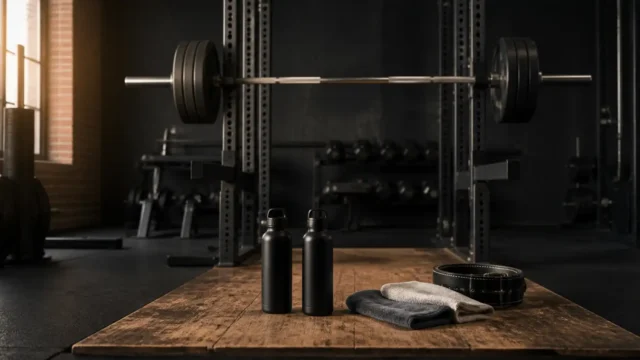
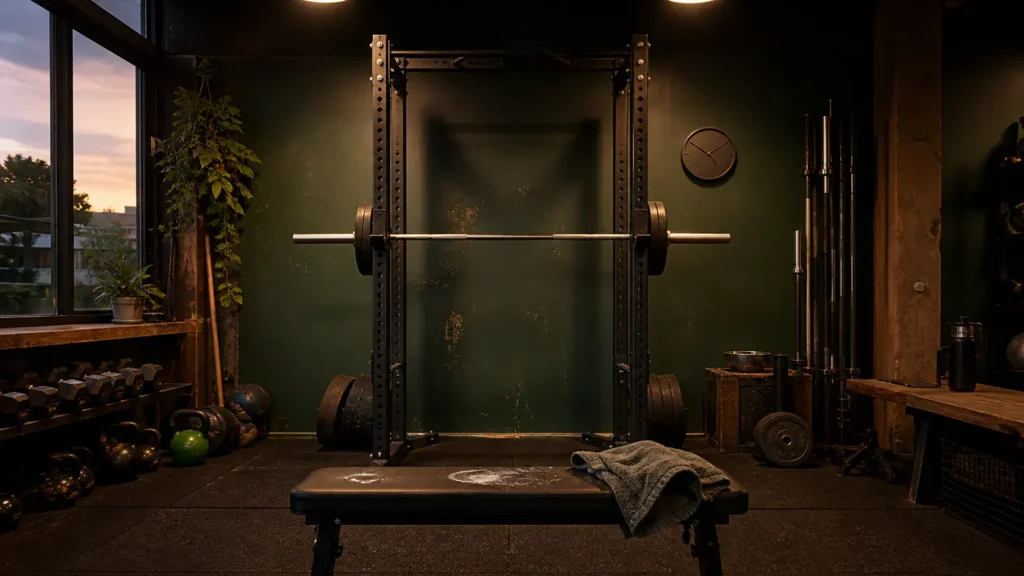
The room is rarely remarkable after you have been going there for a while. You know which rack sits slightly closer to the window, where the plates are stacked, which bench has a firm pad, and how long it takes to warm up before the first work set. The equipment has not become exciting. That is part of the point.
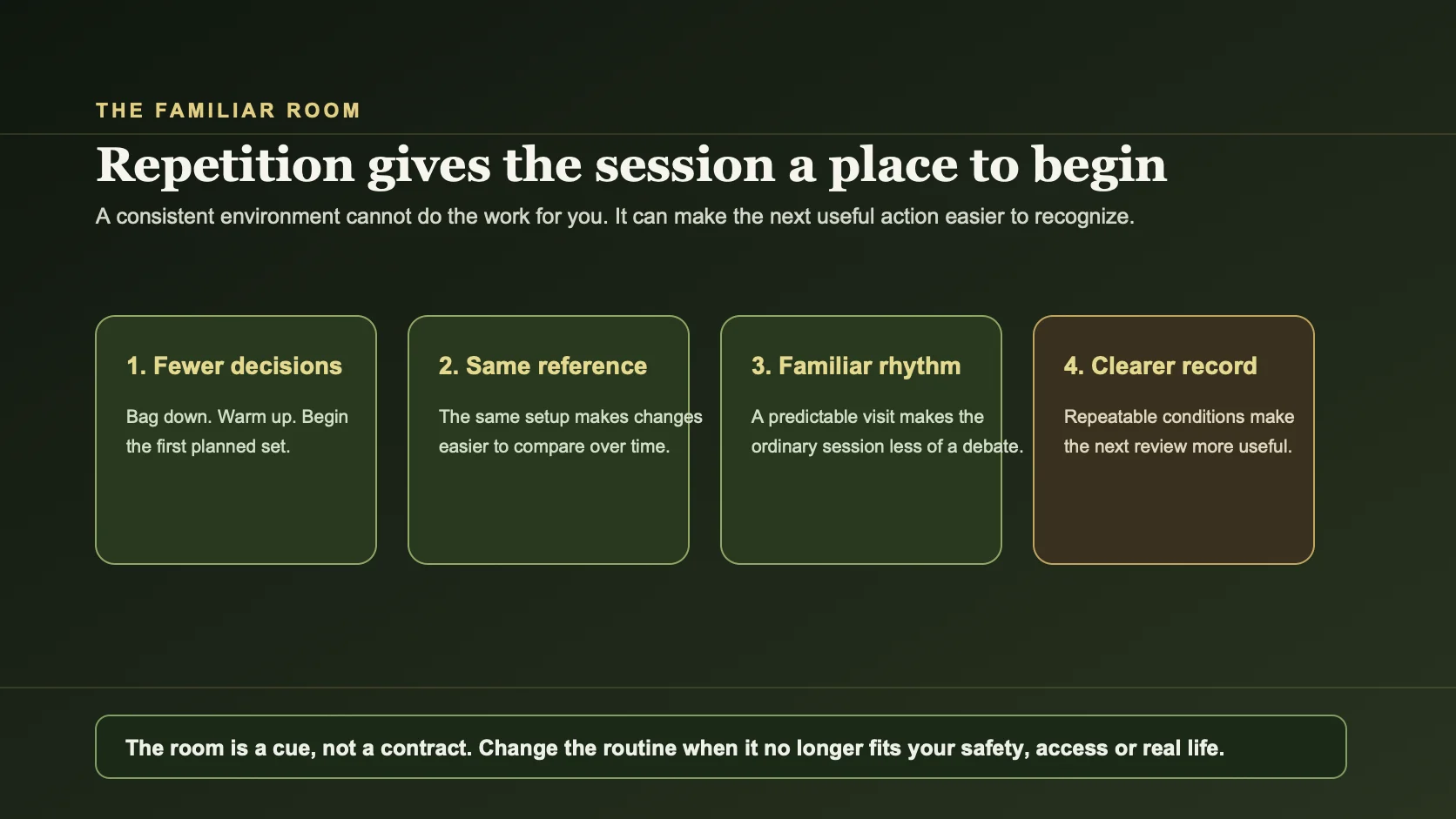
Training asks for repeated effort. The more often you return to a place, the less of that effort has to be spent deciding where to begin. You walk in, put your bag down, find the bar, run through the warm-up, and start the work that already has a place in the week. A familiar gym room does not make anybody stronger by itself. It can make the ordinary session easier to start, repeat and compare.
- Why the room becomes a cue
- How familiar equipment makes comparison easier
- What other regulars add without saying much
- Why lifting the same things is not stagnation
- When the familiar room stops serving you
The room becomes a cue, not a source of magic
At first, a gym can create too many choices. Which machine is free? Where do the collars live? Is that bar the same weight as the other one? What is the unwritten order for a busy rack? After enough visits, the room answers some of those questions before you have to ask them.
That familiarity can make a training visit feel smaller in a good way. You no longer need a burst of inspiration to begin every session. You need to arrive, change shoes if that is part of your routine, and do the first planned action. The room has become one of the cues that points toward the behavior you meant to do.
A 2025 systematic review and meta-analysis on habit and identity in health behaviors found a positive association between them, but did not establish a one-way predictive path. Treat that as context, not proof that a gym membership guarantees attendance.
Build a route into the session that makes the next action obvious: a familiar room, repeated arrival time, or written first exercise.
The same equipment gives you a better reference
There is a practical reason lifters return to the same rack, bench or machine. Consistent equipment makes the training log easier to read. A bench press on the same bench, with the same bar and a similar setup, tells you more than a number collected under completely different conditions. The same is true for a cable stack, a row machine, or the height of a pull-up bar.
If the bench is higher, the machine handles differently, or the room is too crowded to use the planned setup, the session can still be useful. Just do not pretend it is a perfectly identical reference.
The value of familiar equipment is not nostalgia. It is less noise. When the setup stays mostly stable, small changes in load, repetitions, technique or effort become easier to interpret. That is why a modest room with equipment you understand can be more useful than a more impressive facility you cannot use consistently.
Other regulars can make the room feel occupied before it feels social
The social part should not be romanticized. Not every lifter wants conversation, and nobody owes strangers attention. A good training environment leaves room for focus as well as connection.
The Weight Room Has Rules Nobody Ever Wrote Down looks at those ordinary norms: reracking equipment, sharing space and not turning a busy room into a private stage. The same quiet agreements are part of why a room can become comfortable without becoming overly familiar.
Lifting the same things is how the work becomes visible
There is a version of fitness culture that treats novelty as evidence of seriousness: a new variation, a new challenge, a new room, a new reason to restart. Novelty can be enjoyable, and sometimes a change is exactly what a program needs. But a routine cannot be evaluated if every session changes the task.
The barbell, dumbbell, row, press or carry that you repeat is not automatically boring. It is a reference point. You learn the setup, notice the hard part of the range, and record whether the same work became more controlled. A plan becomes useful when it is stable long enough to show whether you can recover from it and make a small next step.
Why Slow Progress Is Still Progress explains why that quieter trend matters. The same room and same movements do not remove the need to adjust a plan. They give you clearer information when it is time to decide whether an adjustment is earned.
The familiar room is allowed to stop fitting
Routine should serve your life, not trap it. A gym may become too expensive, too crowded, too far away, unsafe, or simply incompatible with a changed schedule. Home training, a different facility, a park, a community center, or a smaller routine can be the better answer. The World Health Organization’s physical-activity guidelines make room for muscle-strengthening activity in many settings; they do not require a particular room or membership.
Changing spaces does not erase the work you did in the old one. Carry forward the useful parts: a realistic schedule, a small number of movements, a way to log the work, and a cue that helps you begin. The equipment may change. The point is to preserve the conditions that make training repeatable.
Conclusion
We return to the same room because repetition makes the first step smaller. The rack is where it was. The warm-up has a familiar shape. The equipment gives the log a reference. The people and norms are legible enough that you can focus on the work.
That is not romance, and it is not a promise that every session will feel good. It is infrastructure for an ordinary habit. When the room helps you arrive and repeat the work, it has done something useful. When it no longer fits, change the room and keep the practice.
FAQ
Do I need to use the same gym to make progress?
No. A familiar gym can reduce friction and make comparisons easier, but progress can happen in many settings. The important part is a safe, repeatable setup that fits your life.
Is it bad to repeat the same exercises for months?
Not automatically. Repeating a movement can make technique and progression easier to evaluate. Change it when the exercise no longer suits the goal, access, comfort or program, not just because familiarity looks unexciting.
What if I feel uncomfortable in my current gym?
You do not need to force loyalty. If the environment feels unsafe, inaccessible or consistently unpleasant, look for a different setting that supports regular training and your practical needs.
Continue with a related guide
For the social texture of a familiar room, read The People You Only Know Between Sets. For the unwritten habits that make shared spaces work, continue with The Weight Room Has Rules Nobody Ever Wrote Down.