When a squat stops moving, it is tempting to name one weak link: weak quads, weak glutes, weak core, weak confidence. Sometimes an accessory can help. More often, the first useful answer is less dramatic. The limiting factor may be that the squat itself is not practiced often enough, the working load has advanced too quickly, useful volume is missing, positions change from set to set, or recovery no longer supports the plan.
A bigger squat comes from a repeatable training process. This guide is for healthy lifters using a familiar squat variation. It cannot diagnose pain or prescribe a return from injury. If pain changes your movement, stop treating the issue as a weak-link problem and seek individual assessment.
- Start with the lift you want to improve
- Find the recurring limit
- Change one variable
- Use accessories as support
Start with the squat, not the accessory list
Strength is specific. If the goal is a stronger back squat, regular controlled practice with the back squat or a close variation deserves a central place in the plan. The 2026 American College of Sports Medicine position stand synthesized 137 systematic reviews and found that voluntary strength was enhanced by heavier loading, full range of motion, multiple sets, work early in the session and at least two weekly sessions. Read the position stand for its evidence base and limits.
That does not mean every session should be heavy or identical. It means the main lift needs enough clear, repeatable exposure that you can tell whether it is improving. Our guide to rep ranges for strength explains how heavier, moderate and lighter sets can give different jobs inside one plan. For a fuller explanation of the principle, read why heavier loads matter for a strength goal.
Look for a pattern across sessions
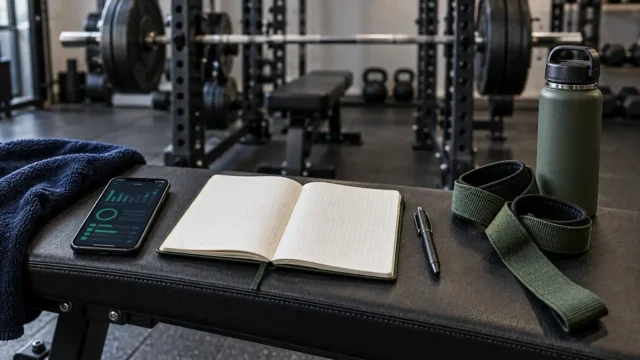
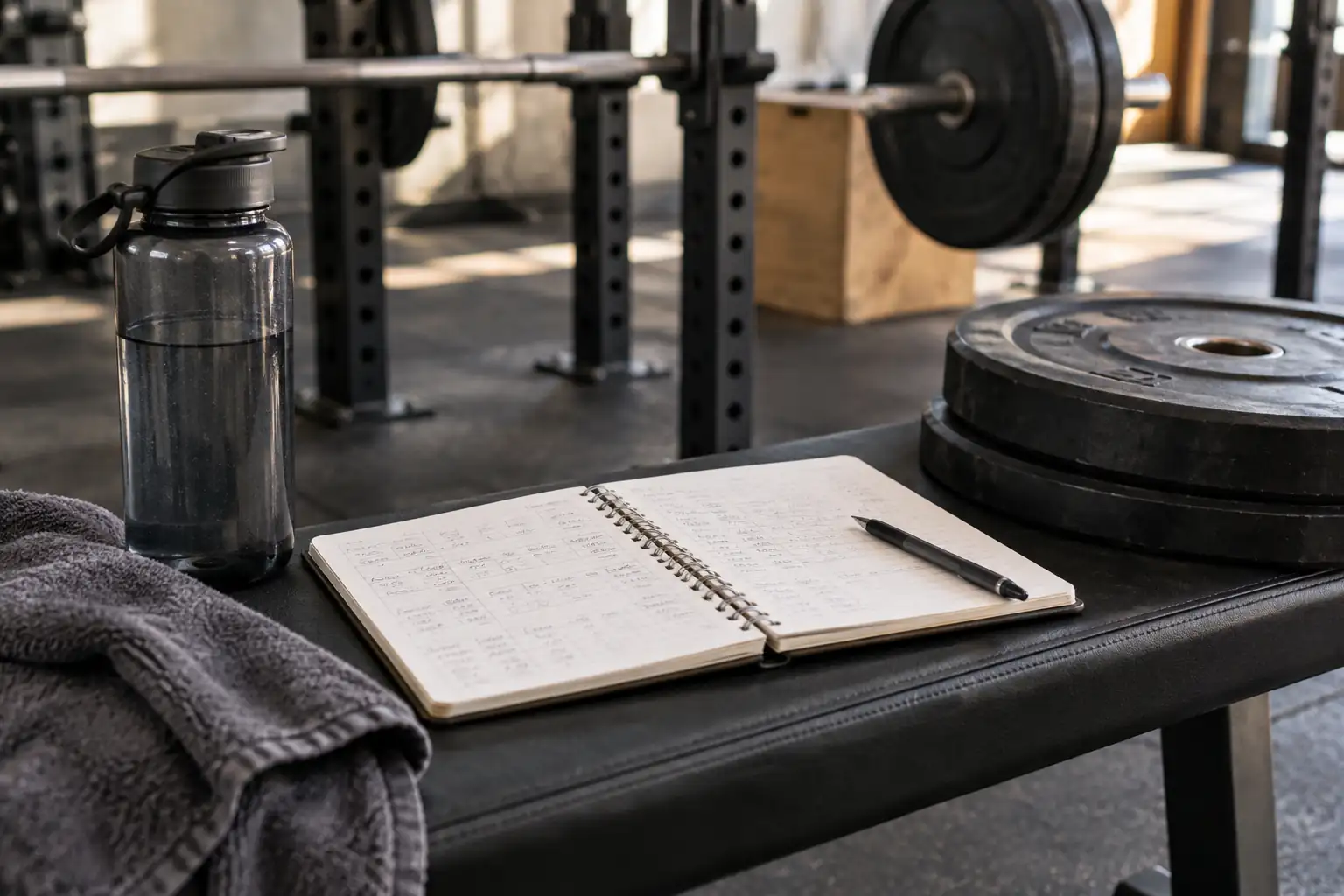
One missed repetition is not a diagnosis. Review several sessions and record a few concrete details: load, repetitions, effort, sleep, position quality and whether the same part of the lift changes first.
If your technique changes before the intended repetitions are complete, the immediate priority may be a load you can control. If a familiar weight feels steadily harder while sleep, stress or total training have changed, recovery or accumulated fatigue may be the constraint. If your squat is technically stable but you have not added repetitions, load or useful sets for many weeks, the program may need a measured progression rather than another exercise.
Change one variable at a time
Choose the smallest adjustment that matches the evidence in your log. If practice is inconsistent, keep the squat in the plan twice a week before adding more work. If you lack controlled volume, add one manageable back-off set or a close variation. If the load has moved ahead of technique, repeat the load or reduce it slightly until the repetitions are comparable again.
A 2023 network meta-analysis of resistance prescriptions found that all examined approaches improved strength and hypertrophy versus no training, while higher-load prescriptions ranked highest for strength. Read the review for the comparisons. It supports progressive training, not a fixed weekly template for everyone.
Keep the setup safe and comparable
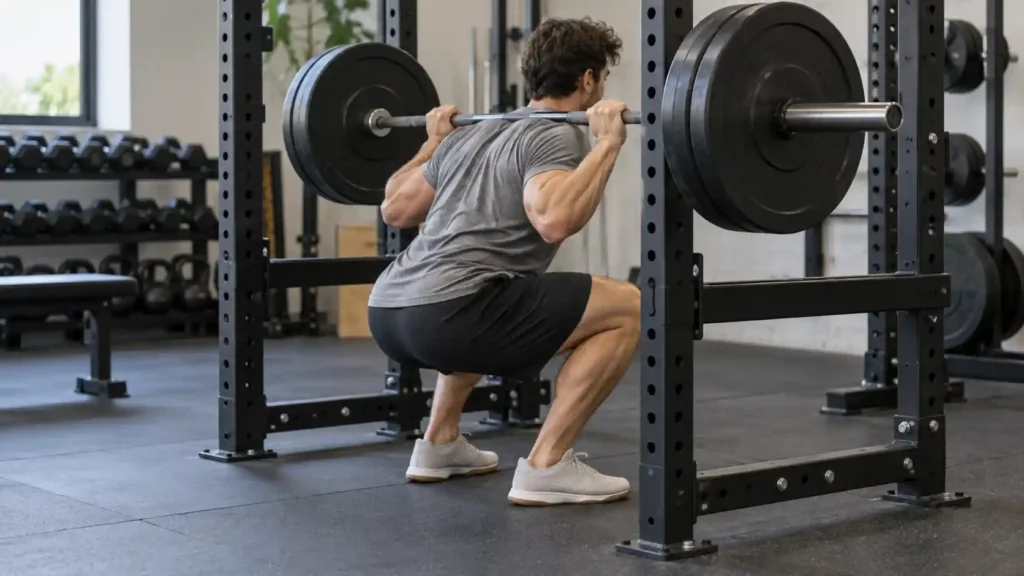
Use the same rack height, footwear and safety-arm setting often enough that changes in performance are not merely changes in setup. Warm up with progressively heavier, low-fatigue repetitions before judging the work weight. A familiar setup makes a training log more useful because it reduces the number of possible explanations for a hard day.
Do not use an article as a reason to chase a deeper position, wider stance or heavier bar than you can currently control. Different bodies and squat styles need different arrangements. The standard is not a photograph-perfect shape; it is a repeatable movement that meets your training or competition requirement and stays within your current capacity.
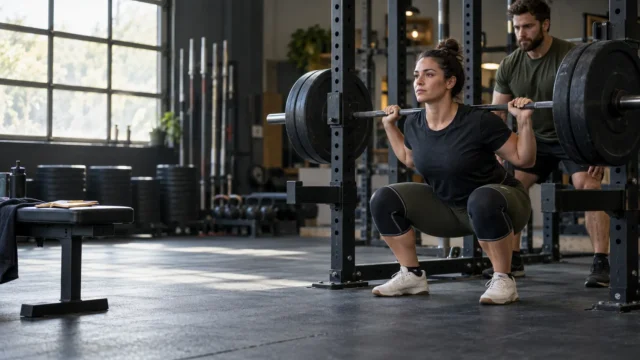
A training partner, coach or video from a consistent angle can provide another observation, but it should not replace the record of repeated sessions. Ask a narrow question: did the position change, did the bar path change, or did the planned load simply exceed the work you had prepared for? A specific answer leads to a smaller, safer adjustment than declaring your whole body weak.
A good log also shows whether the issue follows one lift or the whole week. If several exercises deteriorate at once, reducing demands or prioritizing recovery may be more useful than trying to fix a single squat position.
Use accessories to support a known need
Accessories earn their place when they solve a specific problem you have observed. A split squat may add lower-body work with less absolute load. A paused squat can give you controlled practice in a position that becomes inconsistent. A row or trunk exercise may support general training capacity. None is a universal cure for a stalled barbell squat.
Keep the accessory selection modest. If it prevents recovery from the squat work you are trying to improve, it is competing with the goal. The same principle applies to adding more sets: useful work has a point of diminishing return. A 2026 meta-analysis of strength-training variables found non-linear dose-response relationships, with volume and intensity interacting with the total training dose. That is useful context for adding work gradually rather than all at once.
A simple four-week check
For four weeks, keep one squat variation, one main rep range and one small supporting change. Record the same details each session. At the end, ask whether positions are more consistent, whether the planned work feels more manageable and whether the next session remains productive.
A 2024 six-week study of recreationally trained adults found improvements from both lower- and higher-load squat training, with details varying by group and outcome. See the study for its limited sample and design. The practical lesson is not to copy its exact loads. It is to let a stable plan run long enough to learn from it.
The weak link that matters most is usually the one you can demonstrate in your training record. Improve that constraint first, then reassess. A bigger squat rarely requires a dramatic answer; it needs work you can perform, recover from and repeat.