
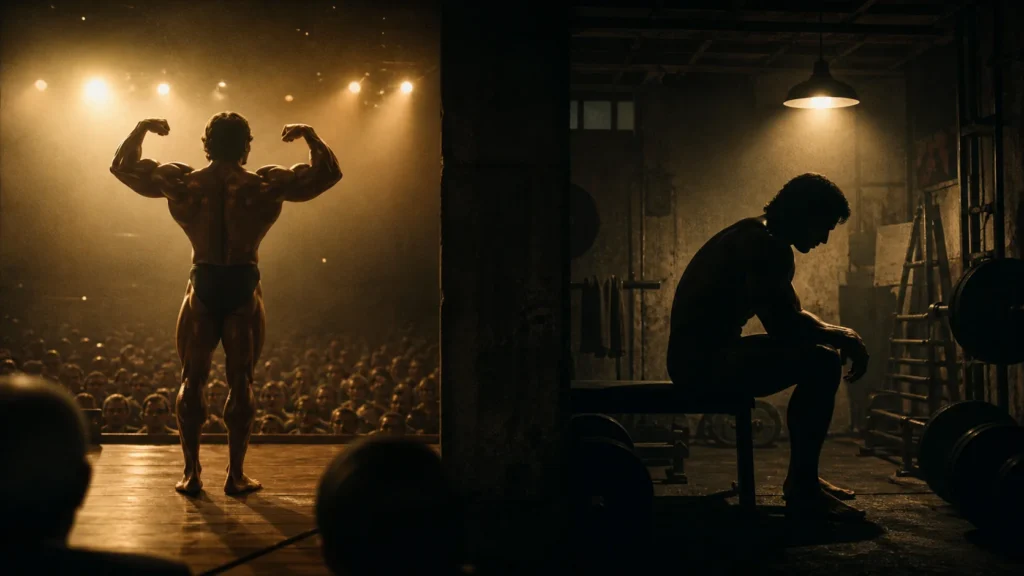
The Arnold Schwarzenegger and Lou Ferrigno rivalry is one of the reasons Pumping Iron still works as a movie, not just as a bodybuilding document. The contrast is immediately readable: champion and challenger, confidence and pressure, public ease and private intensity.
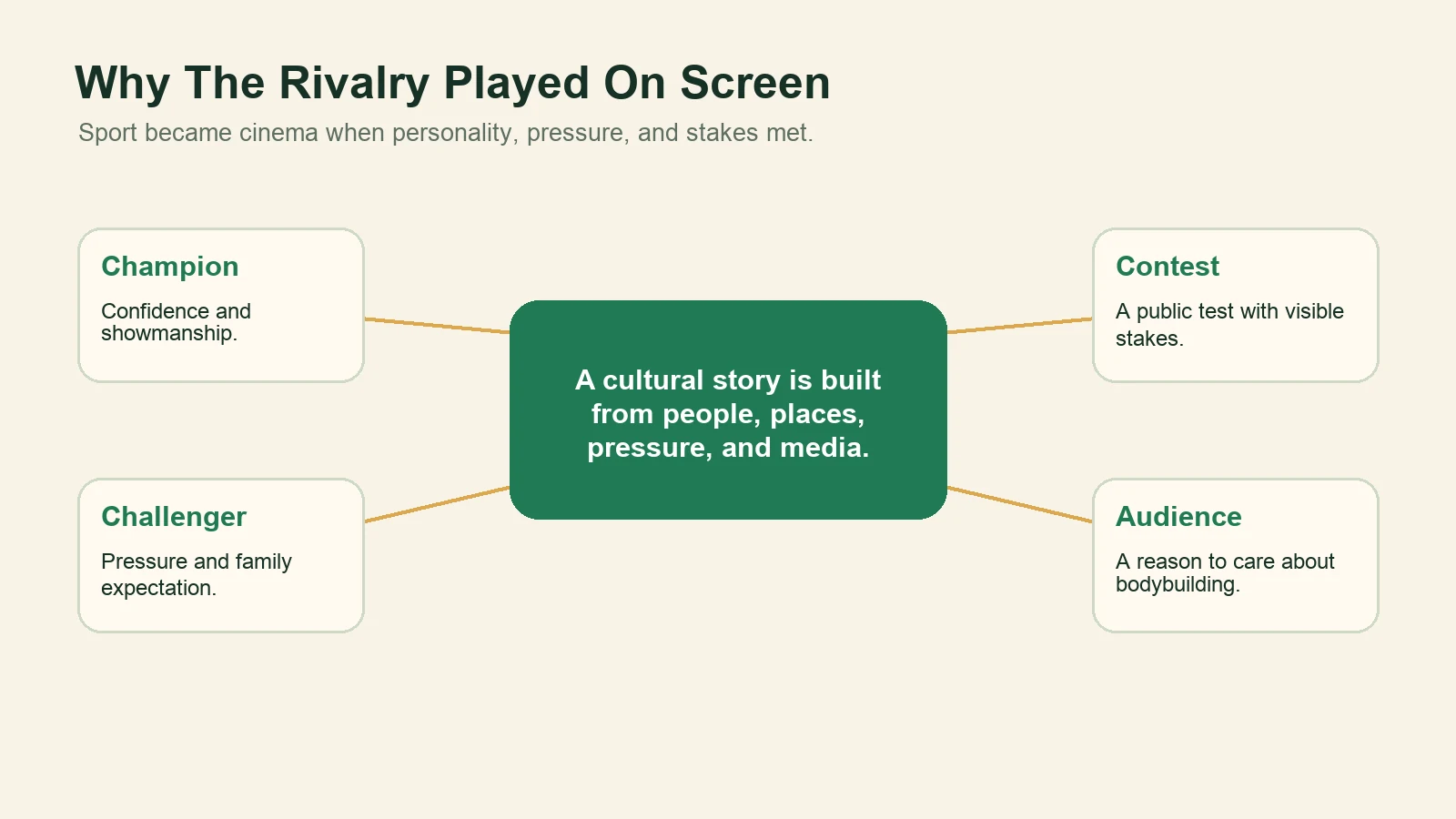
That framing made bodybuilding cinematic. Viewers did not need to know every judging detail to understand the story. They could feel a contest building. They could recognize ambition, intimidation, family expectation, showmanship, and the strange psychology of trying to make a body win under lights.
This is a cultural story, not a complete biography of either man. The useful question is how a rivalry helped a niche sport become watchable to people outside the gym.
- Why the contrast worked
- How the film made pressure visible
- What rivalry can teach lifters
- Where comparison becomes dangerous
The contrast gave the audience a doorway
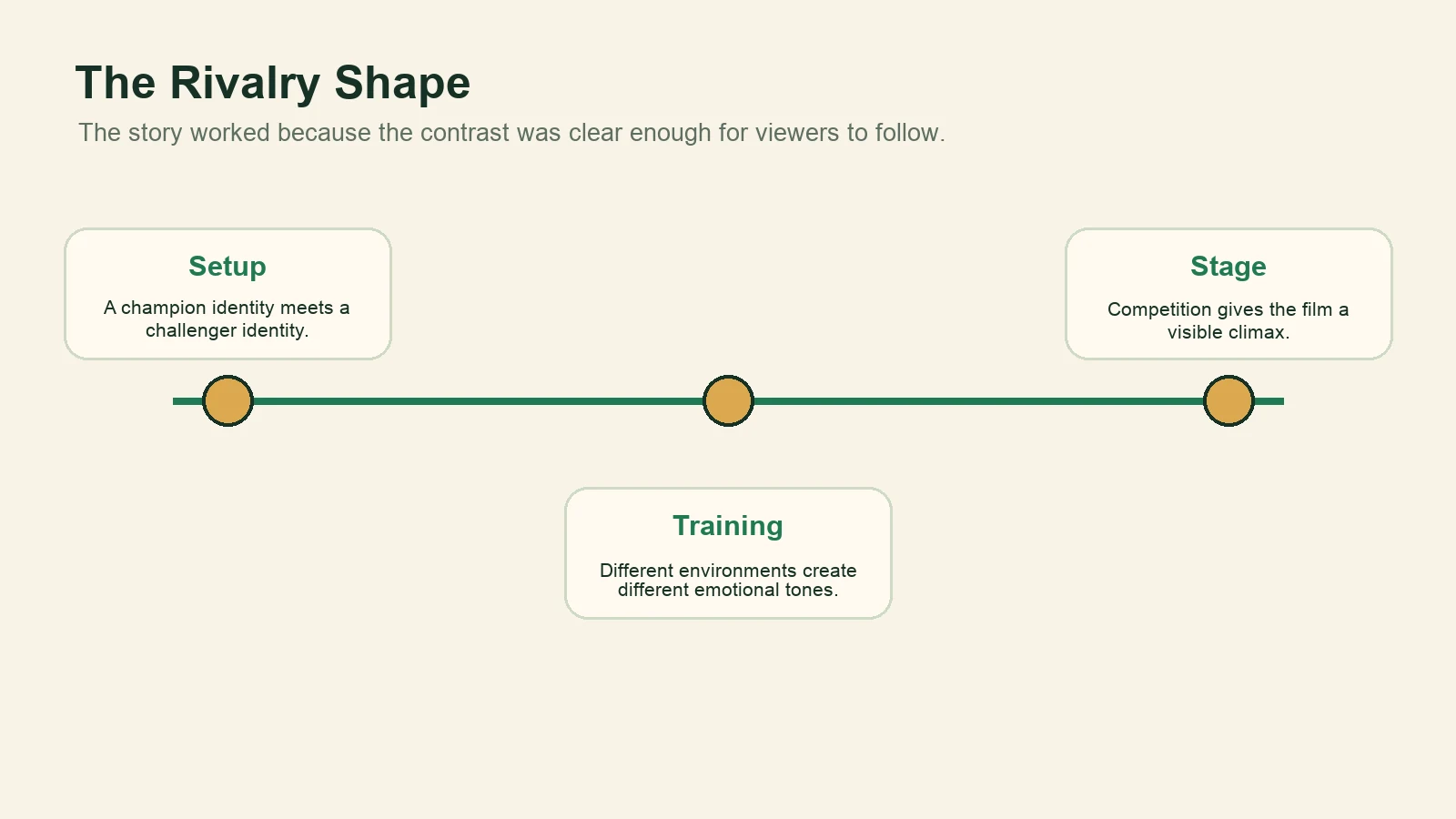
The Letterboxd listing for Pumping Iron places the film in 1977 and identifies George Butler and Robert Fiore as directors. But the reason many people remember the movie is not only its documentation. It is the way the film organizes bodybuilding around personality.
Arnold is framed as the dominant figure: relaxed, verbal, strategic, theatrical. Lou is framed as the enormous challenger training under visible pressure. Whether every editorial choice is fair or complete is a separate question. As cinema, the contrast is effective because viewers instantly understand the emotional roles.
That matters because bodybuilding can be hard for outsiders to read. A rivalry gives the audience a simple line through the sport: who is prepared, who is threatened, who is chasing, who is controlling the room?
The champion was also a performer
The official Schwarzenegger biography presents bodybuilding, film, business, and public life as connected parts of his path. That connection helps explain why his presence in Pumping Iron feels different from a normal athlete profile.
He understood the camera. He knew how to talk about confidence, control, and desire in a way that made bodybuilding feel larger than contest scoring. That does not make the portrayal neutral. It makes it memorable.
In a gym culture sense, this changed something. The champion was not only the person with the physique. He was the person who could explain, perform, and sell the meaning of the physique. That combination helped bodybuilding travel beyond specialist audiences.
The challenger made the stakes human
Lou Ferrigno’s role in the film gives the rivalry emotional weight. He is not simply "the other bodybuilder." The film presents him as a large, serious challenger working under pressure. That makes the outcome feel less like a list of placements and more like a confrontation between two worlds.
The IMDb page for Pumping Iron keeps the film in movie history, which is important here. Movies need more than information. They need tension. Ferrigno’s presence gave viewers someone to measure against the champion.
For everyday lifters, this is where the story becomes useful and risky. Comparison can sharpen focus. It can also distort self-worth. A rival can help you train harder, but only if your own goals remain clear.
The stage made the psychology visible
Bodybuilding is judged visually, but the film’s drama is psychological. The stage matters because it turns months of preparation into a public moment. Everything private becomes visible: size, condition, posing, confidence, control.
The Rotten Tomatoes listing shows the film’s continuing cultural presence. People still return to it because the contest is more than a sporting result. It is a performance of preparation.
That is why the rivalry became cinematic. The gym gave the work. The stage gave the test. The camera gave viewers permission to read the test emotionally.
What the rivalry teaches lifters
The first lesson is that contrast clarifies effort. Watching someone else train seriously can raise your standard. A good training partner, a stronger lifter nearby, or a friendly rival can make your own effort more honest.
The second lesson is that comparison needs scale. Arnold and Lou were elite bodybuilders in an extreme context. Their rivalry should not become the standard for a beginner trying to train three days per week and live a normal life.
The third lesson is that performance and process are different. The stage is public and dramatic. The work is repetitive and private. If you want long-term progress, spend more attention on the process than on the fantasy of the final pose.
Where comparison becomes dangerous
Rivalry becomes harmful when it turns training into humiliation. If another person’s body makes you feel worthless, if you chase loads or leanness that do not fit your life, or if every session becomes a threat to identity, the comparison has stopped helping.
Healthy competition makes the next action clearer. Unhealthy comparison makes the self smaller. The difference matters. Fitness should build capability, not a permanent sense that someone else is the real standard and you are always behind.
Why the rivalry still works decades later
The rivalry still works because it is easy to understand even if you know very little about bodybuilding. One person looks like the established master of the game. The other looks like the challenger trying to break through. The contest gives the story a finish line.
That simplicity is cinematic, but it is also a reminder to read sport stories carefully. A film can make people feel emotionally complete while leaving out ordinary context: years of training, editing choices, private uncertainty, and everything that happened after the contest.
For lifters, that means the rivalry is best used as a lens, not a rulebook. Let it show how pressure can sharpen a goal. Do not let it convince you that every useful training life needs an enemy.
Continue with a related guide
For the next practical step, read Franco Columbu: The Strongman, Bodybuilder and Unlikely Champion. For a second perspective from the same topic cluster, continue with Frank Zane: How Aesthetics Became a Different Kind of Dominance.
Conclusion
The Arnold vs Lou rivalry made bodybuilding cinematic because it gave the sport contrast. Champion and challenger, public confidence and private pressure, gym work and stage performance: the film turned those elements into a story viewers could feel.
For everyday lifters, the lesson is not to copy elite rivalry. It is to use comparison carefully. Let strong people raise your standards, but keep your own goals, context, and health at the center of the work.