Beef has a strange place in strength culture. Some lifters treat it like a secret weapon. Others treat it like something that should be avoided entirely. Neither version is useful enough. Beef is not magic, but it is also not just another protein food with a dramatic reputation. It brings a compact mix of protein, heme iron, zinc, vitamin B12, and small amounts of dietary creatine.
For strength athletes, that mix matters because training is not only about hitting a protein target. The body also needs enough micronutrients to support normal oxygen transport, nervous-system function, tissue repair, and basic metabolism. Beef can help with several of those jobs at once, especially for people who already eat animal foods and tolerate red meat well.
This article is for healthy beginner and intermediate lifters, not for people with medical instructions to limit red meat, saturated fat, sodium, iron, or cholesterol. The short version is this: beef can be a useful protein option for strength athletes, but it works best when the cut, portion, and rest of the plate are chosen deliberately.
- Why beef is more than protein
- What a 100 g reference serving gives you
- Why iron, zinc, and B12 matter
- Where creatine fits without hype
- How to build a better beef meal
Why beef is more than protein
Protein is the obvious reason lifters care about beef. A cooked serving can contribute a serious amount of high-quality protein, and the International Society of Sports Nutrition position stand on protein notes that most exercising individuals do well with total daily protein around 1.4-2.0 g per kilogram of body weight per day, with meal-level recommendations often around 20-40 g of high-quality protein.
That makes beef useful, but not unique. Chicken, fish, eggs, dairy, soy, and mixed meals can also help reach protein targets. The better case for beef is the package around the protein. Red meat can provide heme iron, zinc, vitamin B12, selenium, creatine, and other nutrients in a small amount of food.
The practical question is not "Is beef the best food?" A calmer question is "What job does beef do in this meal?" If the job is to anchor a protein-forward dinner while adding iron, zinc, and B12, beef can do that well. If the job is to solve a poorly planned diet by itself, it cannot.
What a 100 g reference serving gives you
Nutrition numbers depend heavily on the cut, fat level, cooking method, trimming, and serving size. A lean sirloin steak does not land the same as a high-fat burger. To keep the discussion concrete, this article uses USDA FoodData Central values for cooked ground beef as a reference portion, not as a universal label for every beef meal.
Per 100 g, the USDA reference used here provides roughly:
- 23.9 g protein
- 2.27 mg iron
- 5.84 mg zinc
- 2.49 mcg vitamin B12
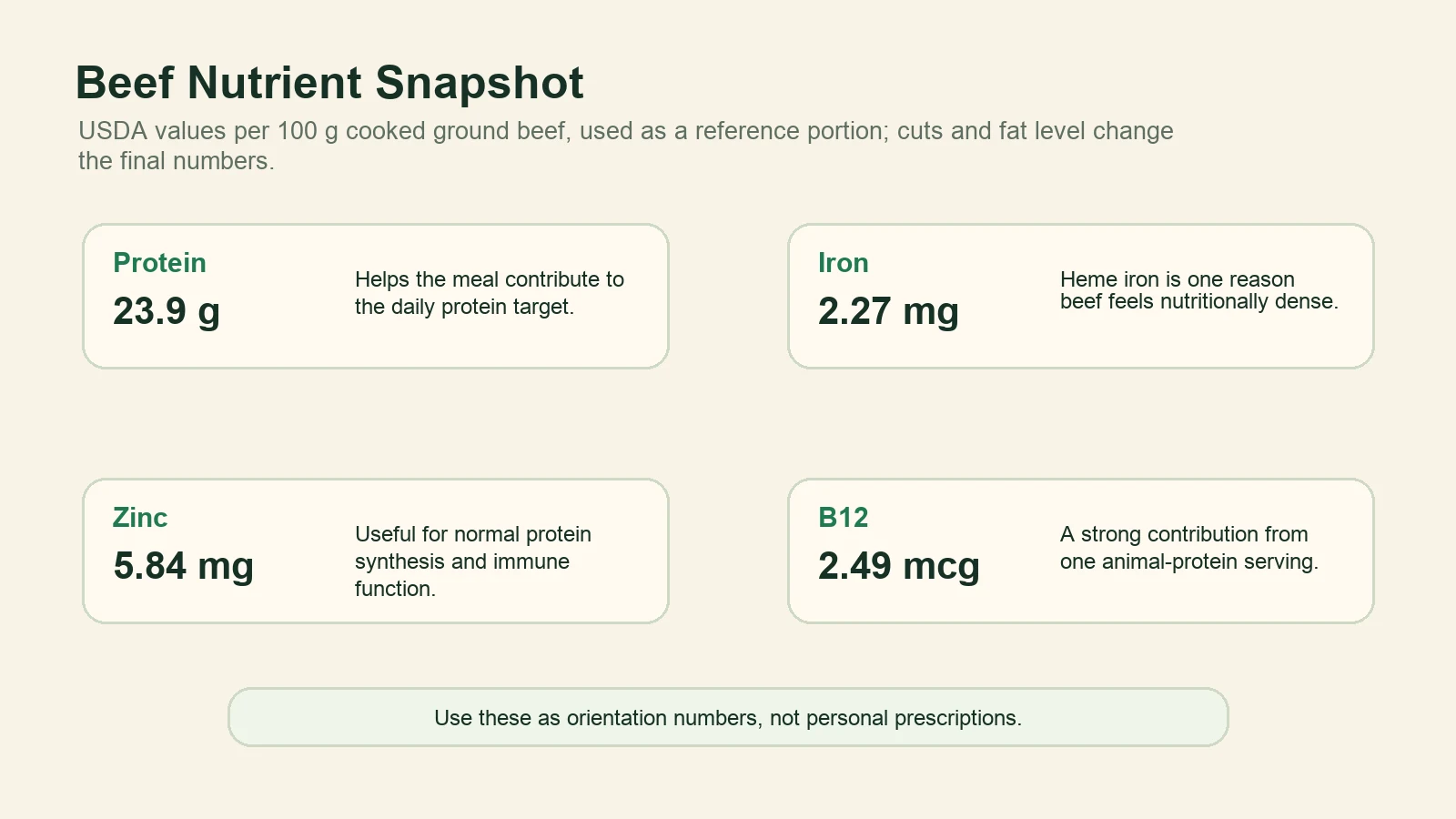
Those numbers explain why beef feels nutritionally dense. A modest serving can push a meal close to a useful protein range while also adding minerals and B12 that many lifters rarely track.
The limitation is that nutrient density is not the same thing as a balanced meal. Beef has no fiber and no carbohydrate. If you train hard, especially with volume, conditioning, or sport practice, the meal usually becomes more useful when beef is paired with potatoes, rice, bread, beans, fruit, or another carbohydrate source.
Why iron, zinc, and B12 matter
Iron is the first micronutrient lifters usually underappreciate. The NIH Office of Dietary Supplements iron fact sheet explains that iron is part of hemoglobin, which carries oxygen in the blood, and myoglobin, which supports oxygen availability in muscle. That does not mean more iron automatically equals better lifting. It means low iron status can become a real problem, and iron deserves respect.
Beef contains heme iron, the form found in animal foods. For people who eat meat, this is one reason beef can be a direct way to improve iron intake. But iron is also a nutrient where more is not always better. People with diagnosed high iron stores or medical conditions affecting iron metabolism should follow qualified medical advice, not general fitness content.
Zinc is another major reason beef belongs in the conversation. The NIH zinc fact sheet describes zinc as involved in hundreds of enzymes and in immune function, protein and DNA synthesis, wound healing, and cell signaling. For lifters, the useful interpretation is not that zinc is a testosterone shortcut. It is that zinc is part of normal tissue and recovery biology.
Vitamin B12 rounds out the trio. The NIH B12 fact sheet describes B12 as needed for healthy blood and nerve cells and DNA synthesis. Beef can contribute a strong amount of B12 in a normal serving, which is especially relevant for people whose diets include limited animal foods.
Where creatine fits without hype
Creatine is one of the few sports nutrition topics where the evidence is genuinely strong. The ISSN position stand on creatine states that creatine supplementation can increase intramuscular creatine concentrations and help explain improvements in high-intensity exercise performance and training adaptations.
Beef naturally contains creatine, which is why it often shows up in strength-athlete conversations. But the scale matters. A normal beef meal is not the same as a structured creatine monohydrate supplement protocol. Food can contribute to habitual creatine intake, while supplementation is a separate decision about dose, consistency, tolerance, cost, and goals.
The clean takeaway is this: beef supports the creatine story, but it should not be sold as a replacement for evidence-based supplement dosing when someone has a specific performance goal. It is simply one of the animal foods that contributes some creatine alongside protein and micronutrients.
How to build a better beef meal
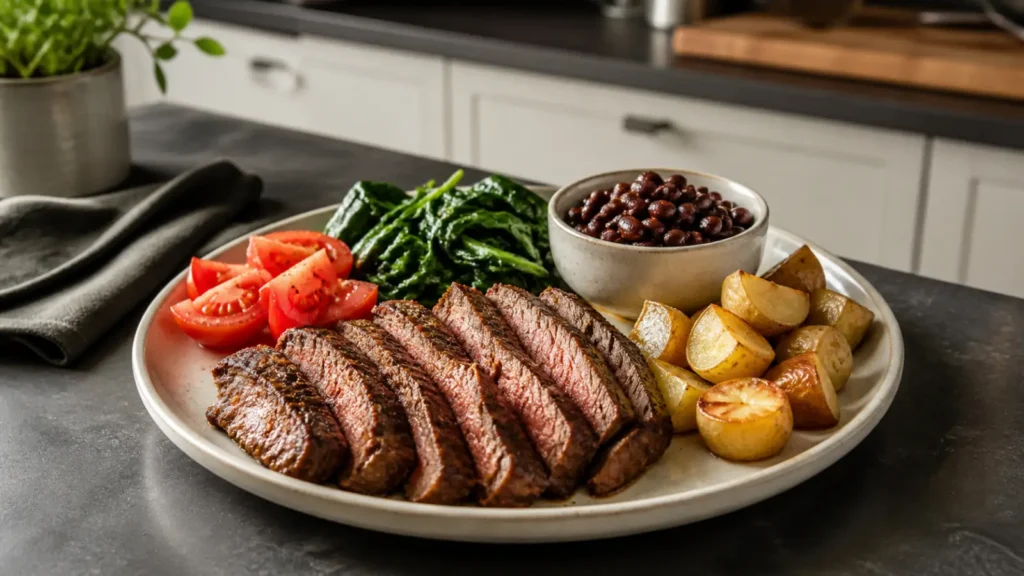
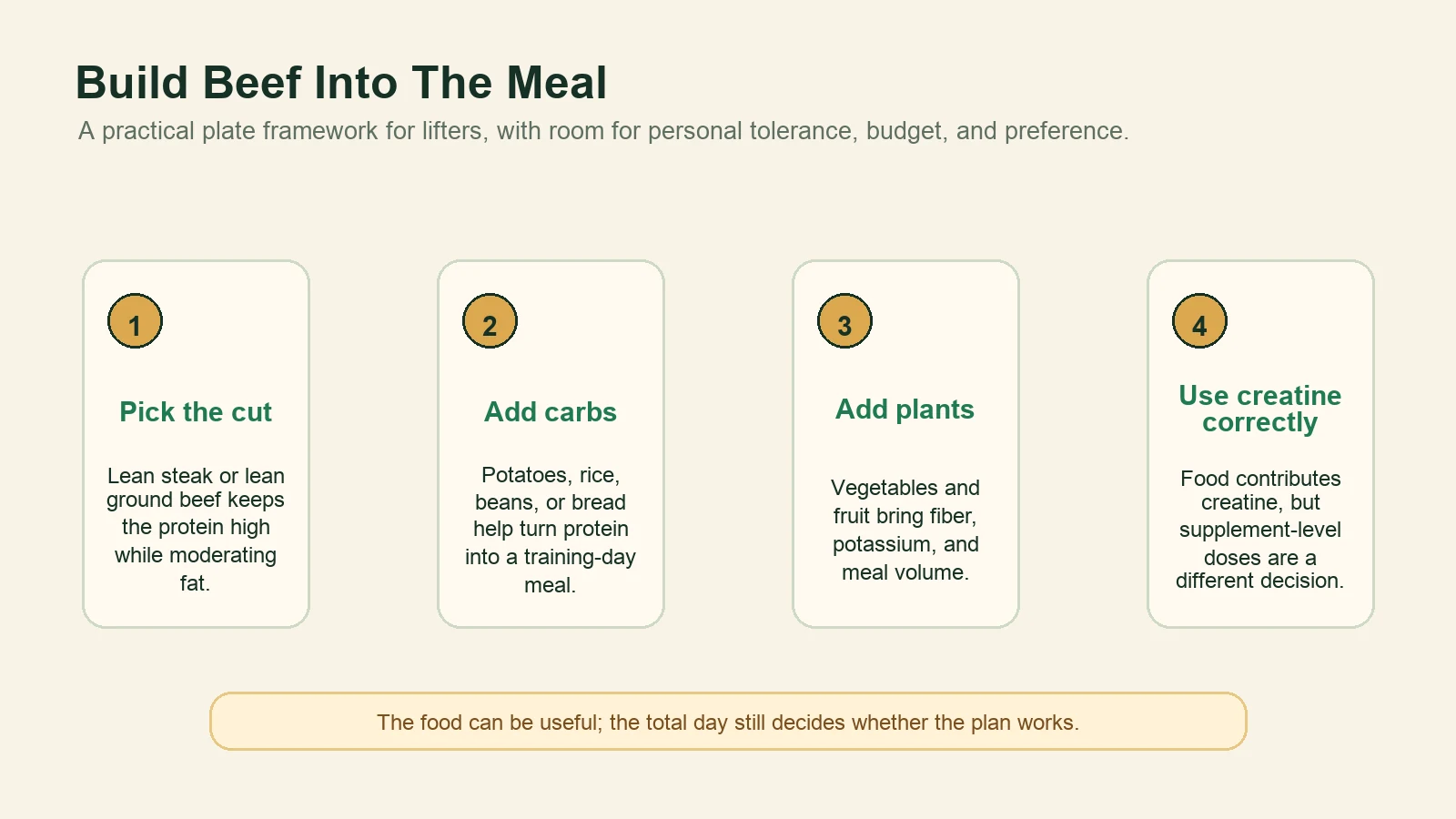
The biggest mistake with beef meals is stopping at meat. A steak on a plate may be high in protein, but it is not automatically a complete training meal.
Start with the cut. If you eat beef often, leaner cuts or leaner ground beef can make it easier to keep protein high without letting calories and saturated fat climb by accident. Higher-fat cuts can still fit, but they need more awareness.
Next, add carbohydrate. Potatoes, rice, pasta, bread, beans, or fruit can make the meal more useful around training. Carbohydrate is not a weakness in a lifter’s diet; it is often what makes hard training repeatable.
Then add plants. Vegetables, beans, fruit, and herbs bring fiber, potassium, volume, and flavor. They also make the meal feel like food rather than a macro math problem.
If you have cardiovascular disease, kidney disease, hemochromatosis, gout, digestive conditions, or medical advice about red meat, iron, sodium, or saturated fat, individual guidance matters more than a general lifting article.
What beef does not do
Beef does not guarantee strength gains. It does not replace progressive training, sleep, total energy intake, or enough protein across the whole day. It also does not need to be eaten by every lifter. Vegetarians, pescatarians, and people who simply dislike beef can build strong diets with other protein sources.
It is also worth separating fresh beef from processed meat products. This article is about beef as a whole-food protein option, not about making sausages, heavily processed deli meats, or fast-food burgers the center of a strength diet.
The fairest conclusion is moderate. Beef can be valuable. It can also be overused, poorly portioned, or treated as a personality. A good diet does not need that much drama.
Continue with a related guide
For the next practical step, read Beef Liver: Nutritional Powerhouse or Too Much of a Good Thing?. For a second perspective from the same topic cluster, continue with Chicken Breast Is Great for Protein – But What Else Does It Give You?.
Conclusion
Beef earns its place in strength nutrition because it combines high-quality protein with heme iron, zinc, vitamin B12, and some dietary creatine. That package can be especially useful for lifters who want a dense protein food that also contributes important micronutrients.
But beef is still only one tool. The best version is chosen deliberately, portioned clearly, and built into a full meal with carbohydrates, produce, and enough variety across the week. Use it for the jobs it does well, not as a magic food that has to carry the whole plan.
FAQ
Is beef better than chicken for building muscle?
Not automatically. Both can provide high-quality protein. Beef usually brings more iron, zinc, B12, and creatine, while chicken is often leaner and easier to fit into lower-fat meals.
Does eating beef replace creatine supplementation?
Usually not if the goal is a research-style creatine dose. Beef contributes dietary creatine, but supplementation uses deliberate daily amounts that are hard to match through normal beef portions alone.