Chicken breast is popular in strength nutrition for a clear reason: it makes it easy to add a substantial amount of protein without bringing much fat. That is useful, especially when someone wants a simple meal-prep staple. But protein is only the first line of its nutrition story. Chicken breast also brings B vitamins, selenium, phosphorus, and a format that pairs easily with the rest of a real meal.
It is still only food. Chicken breast does not create strength by itself, repair every session, or need to appear at every meal. The useful case is more modest: it is a practical, lean protein option that can make consistent eating easier. If another protein food is more affordable, more enjoyable, or more aligned with your dietary pattern, that can be a strong choice too.
This article refers to cooked, skinless chicken breast as a comparison point. Raw weight, cooking method, added oil, sauces, portion size, and the exact product can all change the final numbers. Use the package label or the USDA database for the food you actually buy. General nutrition information cannot replace individual dietary advice for a medical condition, allergy, or diagnosed deficiency.
- Why chicken breast is useful beyond its protein grams
- What B vitamins and selenium add to the picture
- Why a lean food still needs a complete meal around it
- How cooking and portions change the practical result
- How to keep chicken breast from becoming repetitive
Protein is the entry point, not the whole argument
Skinless cooked chicken breast is concentrated protein. A common cooked reference portion has roughly 25 to 30 grams of protein per 100 grams, but the exact number varies with water loss, trimming, and preparation. That makes it useful for meals where you want a visible protein anchor without needing to estimate around fatty cuts, batter, or a large sauce.
The USDA FoodData Central database is helpful because it lets you compare the cooked form, the raw form, and the preparation method instead of treating “chicken” as one fixed food. Roasted, grilled, poached, breaded, fried, marinated, and skin-on versions can belong in a diet, but they are not nutritionally identical. The label and the cooking method are part of the information.
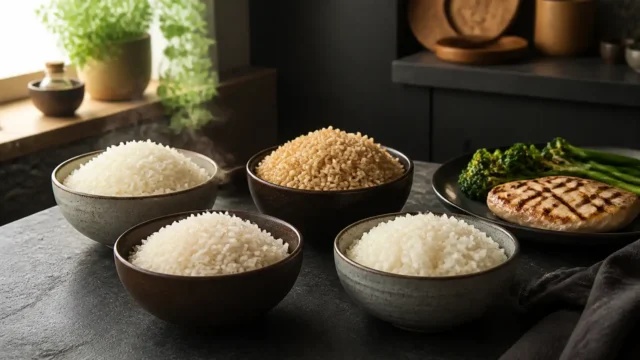
Chicken breast also helps because it is flexible. It can be served with rice after a demanding session, folded into a sandwich, added to pasta, mixed into beans and vegetables, or cooked in advance for a busy workday. That convenience matters. A theoretically perfect food that is never prepared will not support the routine as well as an ordinary food you can use calmly every week.
B vitamins matter, even if they are less visible than macros
Chicken breast contributes several B vitamins, especially niacin and vitamin B6. These nutrients have normal roles in energy metabolism and other physiological functions. The NIH niacin fact sheet explains that niacin is involved in the coenzymes NAD and NADP, while the NIH vitamin B6 fact sheet describes B6 as involved in more than 100 enzyme reactions, including protein metabolism.
That does not mean chicken breast is a pre-workout supplement or that eating more B vitamins automatically improves training. It means the food’s role is broader than one macro. In a diet that includes different protein foods, grains, legumes, fruit, and vegetables, chicken can help cover several ordinary nutrient needs without asking for special planning.
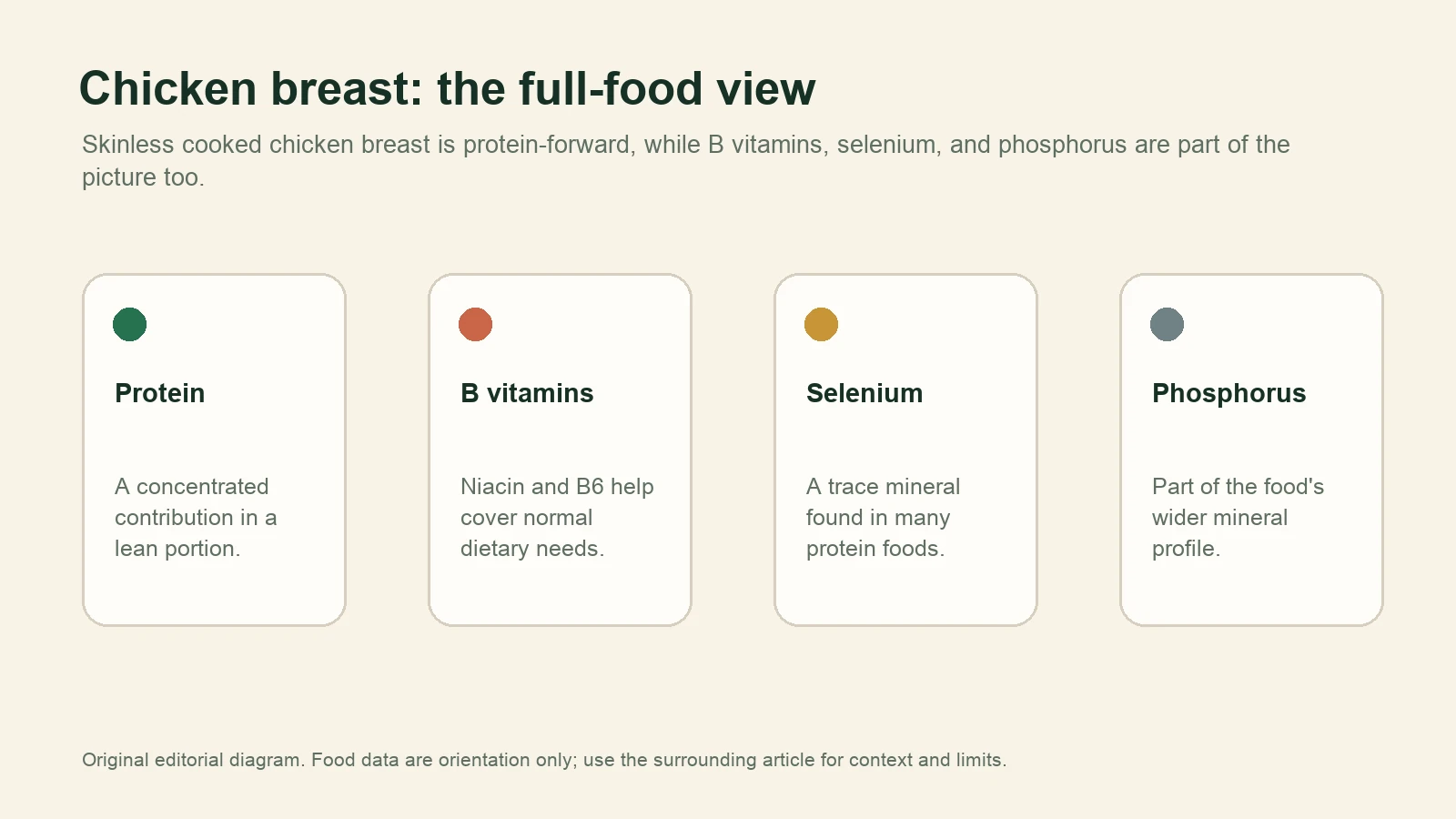
Selenium and phosphorus are also present in chicken. Selenium is a trace element with roles in selenoproteins, and the NIH selenium fact sheet is a useful source for the broader context. Phosphorus is found widely in protein-rich foods and forms part of bones, teeth, and energy-related compounds. These details do not make chicken uniquely superior; they explain why a protein-food rotation gives more than protein variety alone.
Build the meal around the training day
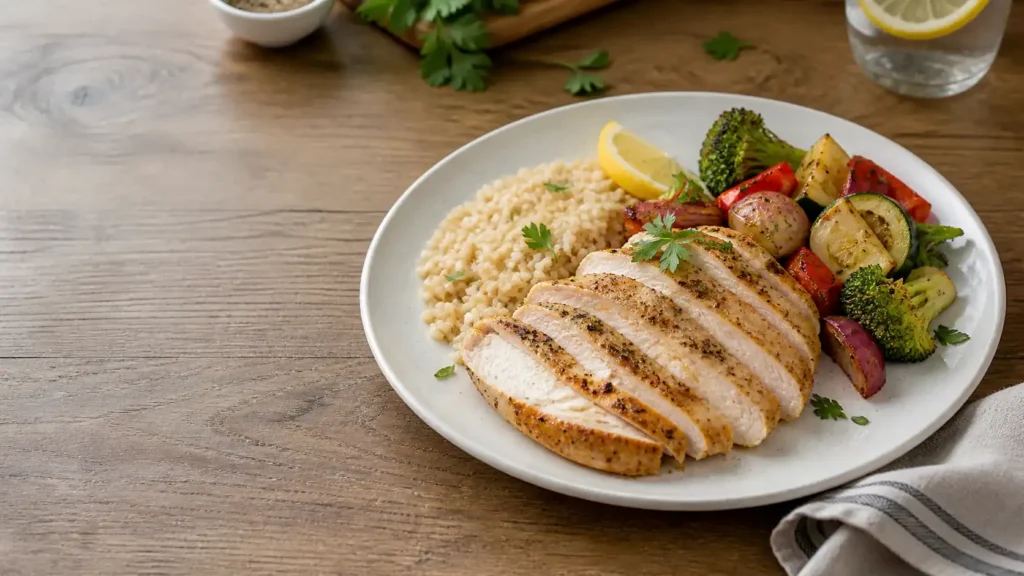
The most common chicken-breast mistake is treating the food as the complete meal. A container of dry chicken and nothing else may hit a protein number, but it may not be satisfying, provide much fiber, or match the energy needs of the day. The rest of the plate is not decoration.
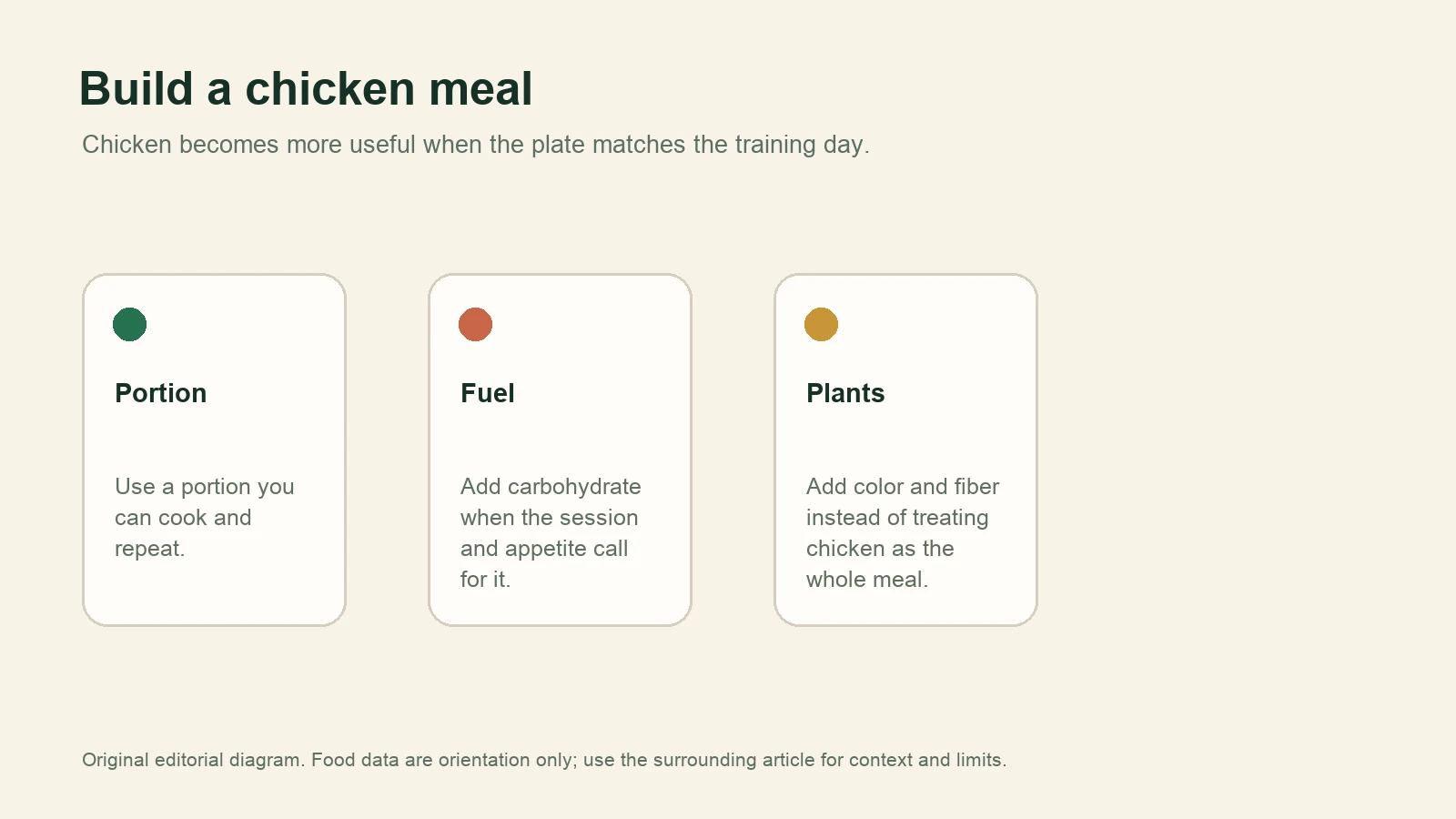
Add a carbohydrate source when it fits the session and your appetite: rice, potatoes, pasta, bread, beans, or another food you digest well. Add vegetables, fruit, or both for fiber, volume, and nutrient variety. Add fats intentionally through cooking oil, avocado, nuts, seeds, or the meal itself when that supports satisfaction. The right combination depends on the person and the day, not on a bodybuilding template.
The Dietary Guidelines for Americans frame protein foods within a pattern that also includes vegetables, fruits, grains, dairy or fortified alternatives, and healthy fats. That broader view is more useful than calling chicken clean and every alternative inferior. A strength diet needs sufficient food, not a moral hierarchy of ingredients.
Cooking changes more than flavor
The preparation method can change energy density, sodium, and how often you want to eat the meal. Plain roasted or grilled chicken is easy to compare across portions. A breaded or fried preparation may bring more energy and fat. A heavily salted marinade may change the sodium profile. None of those changes makes the food forbidden. They simply mean the version should match the meal you are planning.
Keep food safety practical. Cook poultry thoroughly, avoid cross-contamination with ready-to-eat foods, refrigerate leftovers promptly, and reheat them safely. If meal prep makes you dislike chicken by the third day, change the seasoning, cut, recipe, or frequency. Repetition is useful only while it remains sustainable.
The best chicken breast is the one that stays in rotation
Chicken breast is a strong staple because it is lean, protein-rich, flexible, and more nutrient-dense than its reputation as “just protein” suggests. Its B vitamins, selenium, and minerals are useful supporting details. They are not a reason to eat it exclusively.
Use chicken breast when it makes a meal easy. Rotate it with fish, dairy, eggs, legumes, beef, tofu, and other foods you enjoy. Build the plate around training, hunger, culture, and budget. That is how a simple protein food stays helpful instead of becoming another restrictive rule.
Portion and variety make the numbers useful
Chicken breast nutrition is often discussed in raw package weights and then eaten as a cooked portion. Water loss during cooking means those figures are not interchangeable. A raw package does not become the same cooked weight, and a cooked reference serving does not tell you what a large restaurant plate contains. Choose one method for your own meals and use it consistently. You can weigh a cooked portion occasionally to learn what it looks like, then rely on the same container, plate, or recipe more often.
Protein needs do not create one universal chicken amount. Training volume, body size, age, appetite, goals, and the protein in other meals all change the context. The better pattern is one you can repeat without turning food tracking into stress. A chicken meal can be large on one day and smaller on another when the rest of the menu changes.
Rotate chicken with fish, dairy, eggs, legumes, beef, tofu, and other foods that fit your budget and culture. This improves meal variety and avoids asking one food to supply every nutrient. Seasoning helps too: herbs, spices, acids, tomato sauces, yogurt marinades, and different cooking methods can make a staple sustainable. Flavor that helps someone eat balanced meals consistently is a practical asset.
Keep the meal realistic
An ordinary chicken meal can be as simple as a cooked portion, a starch, vegetables, and a flavor source. It does not need a complicated macro trick to be useful. On days when a full meal is hard to assemble, a sandwich, soup, wrap, or leftover bowl may be the more realistic option. The point is not to force one presentation. It is to make the protein food serve a routine that can survive work, travel, and normal appetite changes.
That flexibility is why chicken breast remains useful after the novelty fades. It can be a recurring ingredient without becoming the entire diet, and it can be replaced without the plan falling apart when the grocery list changes.
It is also reasonable to use convenience foods occasionally when they help the plan happen. A rotisserie chicken, a frozen cooked product, or a prepared soup can be practical; just check the ingredients and serving because sodium, sauces, and portions vary. The goal is informed flexibility, not an imaginary perfect meal every time.
That keeps chicken breast in its proper place: a reliable ingredient, not a dietary identity. The meal around it still supplies the variety that active eating needs.
Continue with a related guide
For the next practical step, read Chicken Thighs vs Chicken Breast: Nutrition, Micronutrients and Calories Compared. For a second perspective from the same topic cluster, continue with Cottage Cheese Before Bed: Protein, Calcium and the Case for Slow-Digesting Dairy.