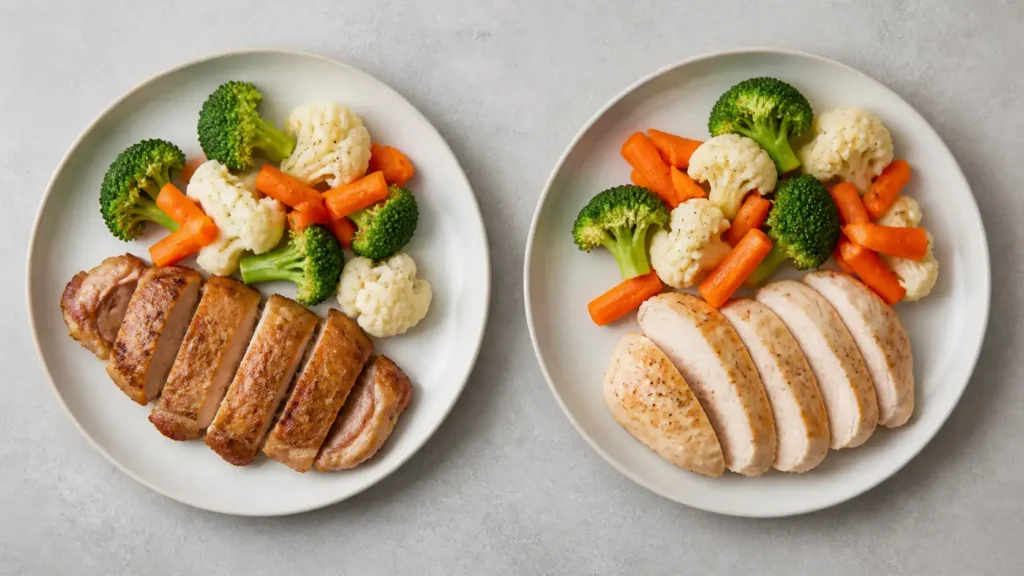
Chicken breast versus chicken thighs is often presented as a contest between discipline and indulgence. That framing is not useful. Both are protein foods. Both can fit a strength-focused diet. The real differences are mostly about fat, calories, flavor, cooking behavior, and the meal you are trying to make.
The simplest comparison uses equal cooked portions with the skin removed. That matters because skin, breading, oil, sauces, bone weight, and raw-versus-cooked labels can distort the comparison quickly. A skinless thigh cooked with a lot of oil is not directly comparable to a plain roasted breast, and a restaurant portion is not automatically the same size as a home portion.
This guide is for healthy adults making ordinary meal decisions. It is not a prescription for weight change, cholesterol management, or a medical diet. If you have a condition that changes your dietary requirements, use individual advice from a qualified clinician or dietitian.
- Compare equal portions first
- Why breast is usually leaner
- What both cuts contribute beyond protein
- How cooking and satisfaction change the decision
- How to choose without turning either cut into a rule
Start with a fair comparison
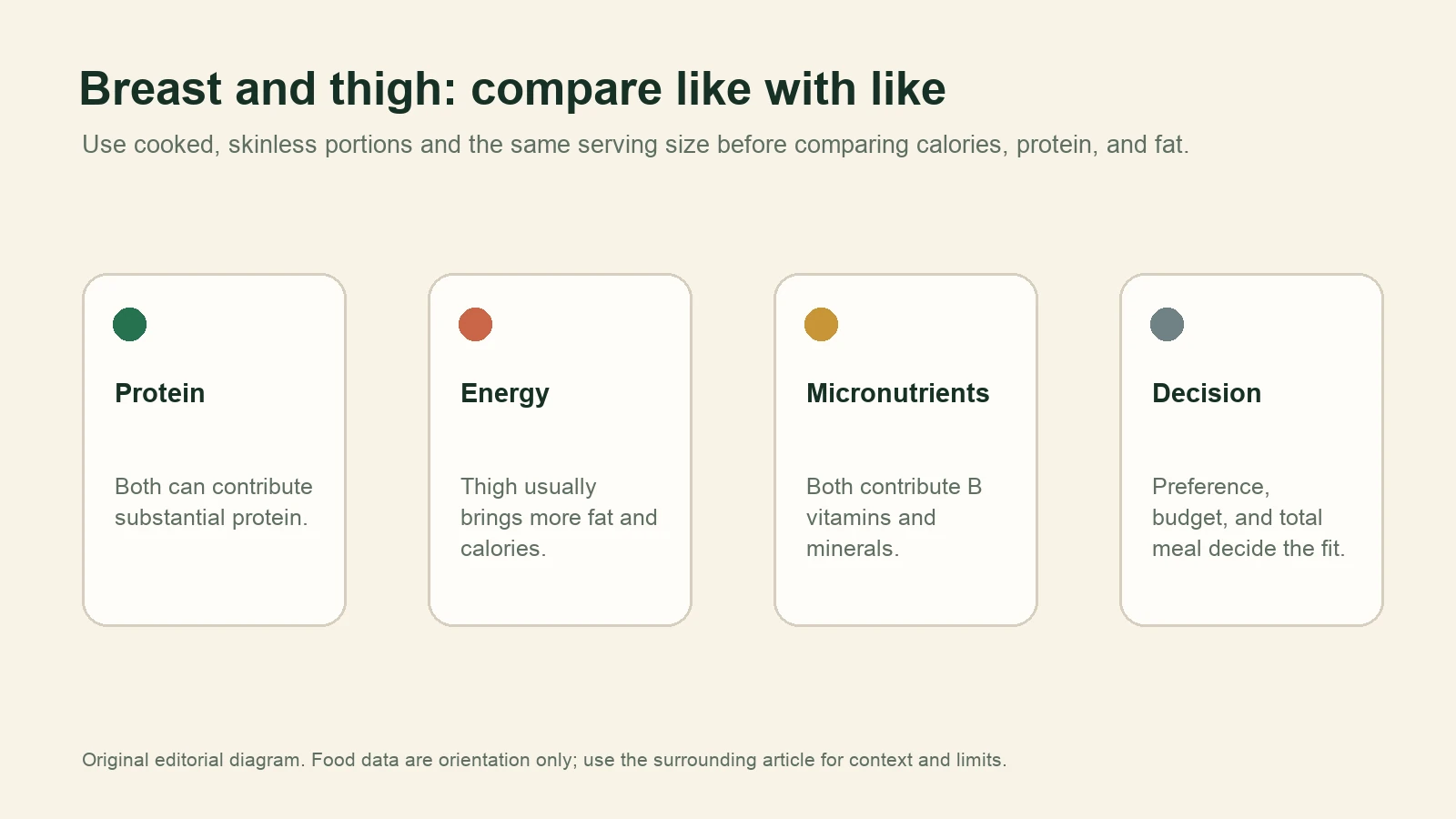
Both cooked skinless breast and thigh provide substantial protein. Breast is generally leaner, so it usually delivers fewer calories and less fat for a comparable cooked weight. Thigh tends to have more fat, which makes it more energy-dense and often more forgiving to cook. That is a difference, not a verdict.
The exact figures depend on the entry you use. The USDA FoodData Central database lets you compare roasted, braised, skinless, skin-on, boneless, and other entries. Use it as a reference, but remember that the meal on your plate can change more from the tablespoon of oil, the sauce, or the portion size than from the label “breast” or “thigh.”
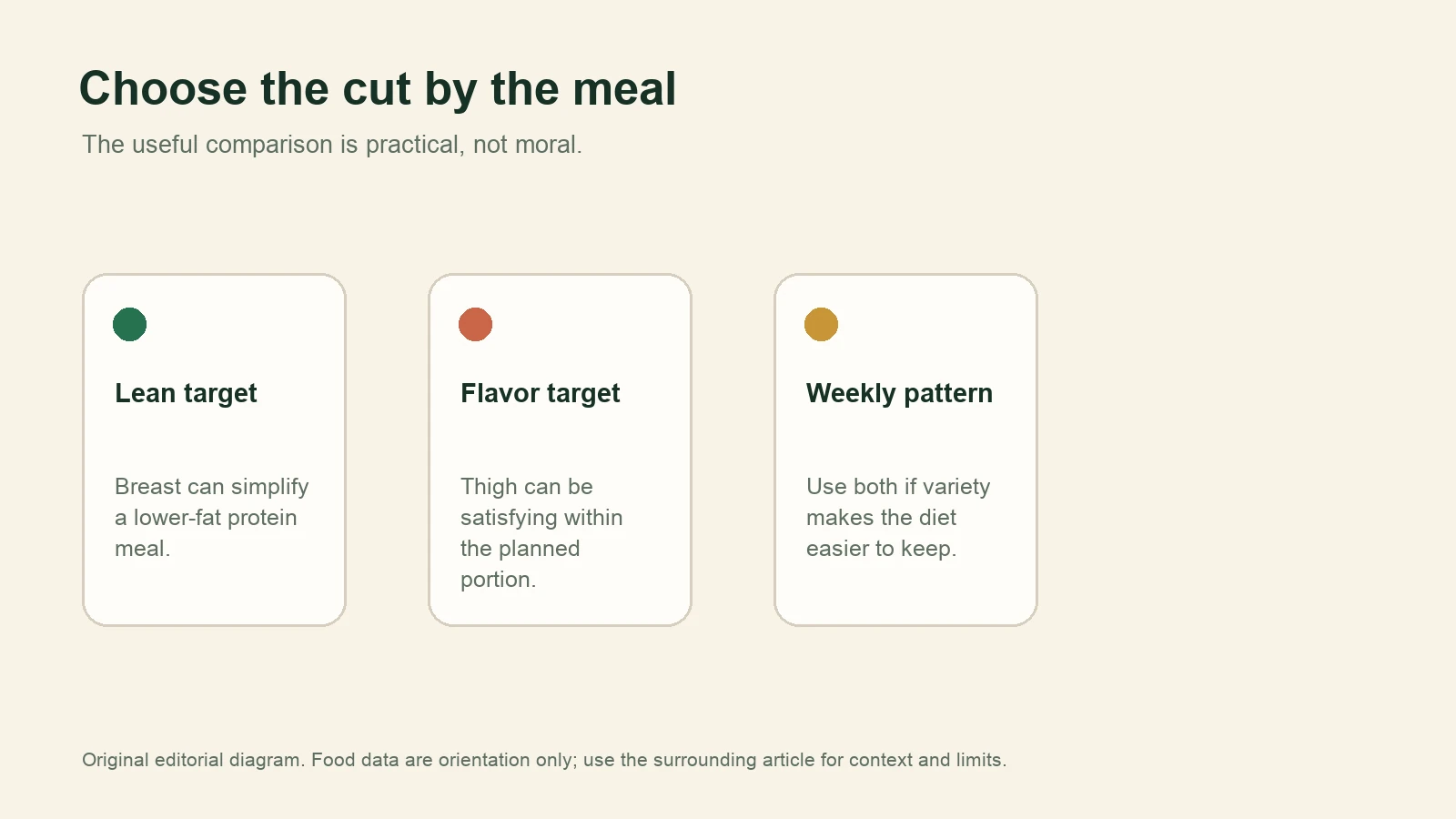
For someone trying to build a lower-fat, higher-protein meal with a predictable calorie range, breast often makes the math simpler. For someone who prefers a richer flavor, has a higher energy need, or needs a cut that stays tender in a batch-cooked dish, thigh can be more satisfying. Neither choice says anything about effort or commitment.
The micronutrient difference is smaller than the social-media difference
Chicken breast and thigh both contribute B vitamins, selenium, phosphorus, and other nutrients found in poultry. The exact balance varies by cut and preparation, but neither cut is empty once you look beyond protein. The NIH vitamin B6 fact sheet, niacin fact sheet, and selenium fact sheet give the physiological context for nutrients that are often overlooked in basic chicken comparisons.
Do not use a small micronutrient difference to build a sweeping hierarchy. The bigger nutrition decision is usually the total pattern. What else is on the plate? How often do you eat poultry compared with fish, beans, eggs, dairy, beef, tofu, or legumes? Are you getting enough fruit, vegetables, whole grains, and other sources of fiber? A varied pattern will normally matter more than trying to identify the one perfect poultry cut.
Cooking method can reverse the headline
Chicken breast is not automatically lean once it is breaded, fried, coated in creamy sauce, or served in a very large portion. Thigh is not automatically high-calorie when it is skinless, roasted, and served in a modest amount. Preparation and portion are part of the food decision.
Thigh can be useful in soups, curries, trays, tacos, and slow-cooked meals because its higher fat content often makes it stay tender. Breast can be useful in quicker meals, salads, sandwiches, and recipes where a neutral protein is easier to season in several directions. If you repeatedly overcook breast and then dislike it, thigh may be the better practical choice. A food that you enjoy and portion consistently can be more useful than a theoretically leaner option that makes meal prep miserable.
Use a small amount of fat purposefully. Oil, tahini, avocado, nuts, cheese, or a sauce can add satisfaction and help a lean meal feel complete. The goal is not to avoid dietary fat at all costs. The goal is to know which ingredients make the meal more energy-dense so your choices are deliberate rather than invisible.
Choose according to the meal, not the label
Choose breast when you want a leaner protein base, when the recipe already has fat, or when you are batch cooking a portion whose energy content you want to keep simple. Choose thigh when you value flavor, moisture, a heartier recipe, or a somewhat more energy-dense meal. Rotate both when variety makes cooking easier.
The Dietary Guidelines for Americans emphasize dietary patterns and food variety. That perspective makes the comparison less dramatic. Strength nutrition is not a permanent chicken-breast diet. It is a pattern that provides enough food, protein, carbohydrate, fat, fiber, and micronutrients to support an active life.
Chicken breast and thigh are both useful tools. Compare the portions fairly, account for preparation, and make the decision based on your appetite and the meal in front of you. That is more reliable than trying to win an argument between two cuts of chicken.
Portion, the rest of the plate, and the budget
The difference between thigh and breast becomes useful only when it is connected to an actual serving. A person can use a modest portion of thigh in a balanced dinner and have a meal that fits comfortably. Another can eat a very large portion of breast plus generous oil and end up with more energy than expected. The cut is information, not destiny.
For a useful home comparison, prepare both cuts similarly, remove the skin, use equal cooked weights, and note what else is on the plate. Then ask practical questions: which meal keeps you satisfied, which recipe is easy to cook, and which fits the weekly budget? Those answers usually matter more than a copied macro table.
Poultry does not provide fiber and does not replace a carbohydrate source on a demanding training day. Add potatoes, rice, pasta, bread, beans, fruit, vegetables, and fats in amounts that make the meal work for you. The cut does not decide the quality of the whole plate.
Budget and waste belong in the decision too. Thighs are often less expensive and more forgiving when reheated. Breasts may be easier to portion or preferred in a particular recipe. Do not buy a cut only because it looks efficient on paper if it repeatedly ends up as dry leftovers. A food plan that is cooked, eaten, and enjoyed is the one that can support training.
Do not confuse a comparison with a restriction
The body does not award points for choosing the leanest cut in every situation. A meal that satisfies you, includes a sensible portion, and can be cooked again is usually more valuable than a food rule that creates rebound hunger or boredom. If a recipe needs thigh for texture and flavor, use thigh. If a batch lunch works better with breast, use breast. The weekly pattern can include both.
There is also no need to force precision when the rest of the meal is changing. A home-cooked curry, stew, tray bake, or sandwich may have variable portions. Learning the broad difference between a leaner and a richer cut is enough to make intentional choices. The next step is to pay attention to what you eat and how the meal fits, not to turn dinner into a laboratory exercise.
Food culture matters as well. Families may have established dishes, local prices, or shared meals that make one cut much more practical. Nutrition advice is only useful when it can live inside real cooking. A comparison should give you options, not remove them.
If you want a simple default, choose the cut that makes the current recipe enjoyable and portion it with the rest of the meal in mind. This is enough information for most ordinary strength-focused decisions.
Keep leftovers in mind as well. A thigh may retain more moisture after reheating, while breast can work well when sliced into a cold salad or wrap. Small practical differences like this affect whether food gets eaten. They are legitimate reasons to choose one cut over the other.
Choose either cut with confidence when it fits the recipe, the budget, and your appetite. The comparison is complete when it helps dinner happen.
Continue with a related guide
For the next practical step, read Cottage Cheese Before Bed: Protein, Calcium and the Case for Slow-Digesting Dairy. For a second perspective from the same topic cluster, continue with Eggs Are More Than Protein: Choline, B12, Selenium and What Lifters Actually Get From Them.