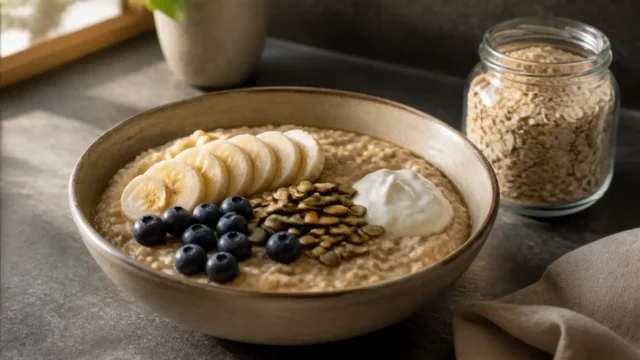

Milk has an odd place in strength nutrition. It is ordinary enough to be ignored, yet it is often promoted as if a single glass has a special muscle-building property. The useful answer sits between those two ideas. Milk is not a shortcut, but it can be an efficient whole food: it supplies protein, carbohydrate, fluid, and several micronutrients in one familiar serving.
The question is not whether milk is mandatory for strength. Plenty of people build strong diets without it. The more useful question is whether it fits your tolerance, preferences, budget, and the meals you can repeat. For a healthy adult who enjoys dairy, a glass of milk can make a breakfast, snack, or post-training meal easier to assemble. For someone who does not tolerate lactose, dislikes dairy, or follows another dietary pattern, it is simply one option among many.
This article uses a typical glass as an orientation point, not a prescription. Milk varies by fat level, fortification, brand, and serving size. Check the carton you buy, especially for protein, carbohydrate, vitamin D, and added ingredients. Individual nutrition needs change with body size, training volume, medical conditions, appetite, and goals.
- Why milk is a mixed food, not just protein
- What a typical glass contributes
- Where calcium and B12 fit in the picture
- How to use milk around training without overthinking it
- When another option may fit better
Milk brings more than one useful variable
People often compare foods through one number. Protein grams are useful, but a food can earn a place for several reasons at once. Ordinary dairy milk generally provides complete protein, carbohydrate in the form of lactose, and a fluid base. It also contributes minerals and vitamins that do not appear in a basic macro target.
The USDA’s FoodData Central is the right starting point for checking the version you actually drink. As a broad reference, a cup of cow’s milk provides roughly eight grams of protein and around twelve grams of carbohydrate, with energy and fat changing substantially between skim, reduced-fat, and whole milk. That is enough protein to contribute to a meal, but it is not a full daily strategy in one glass. The carbohydrate can be useful around active days, while the fluid can make a simple meal more convenient.
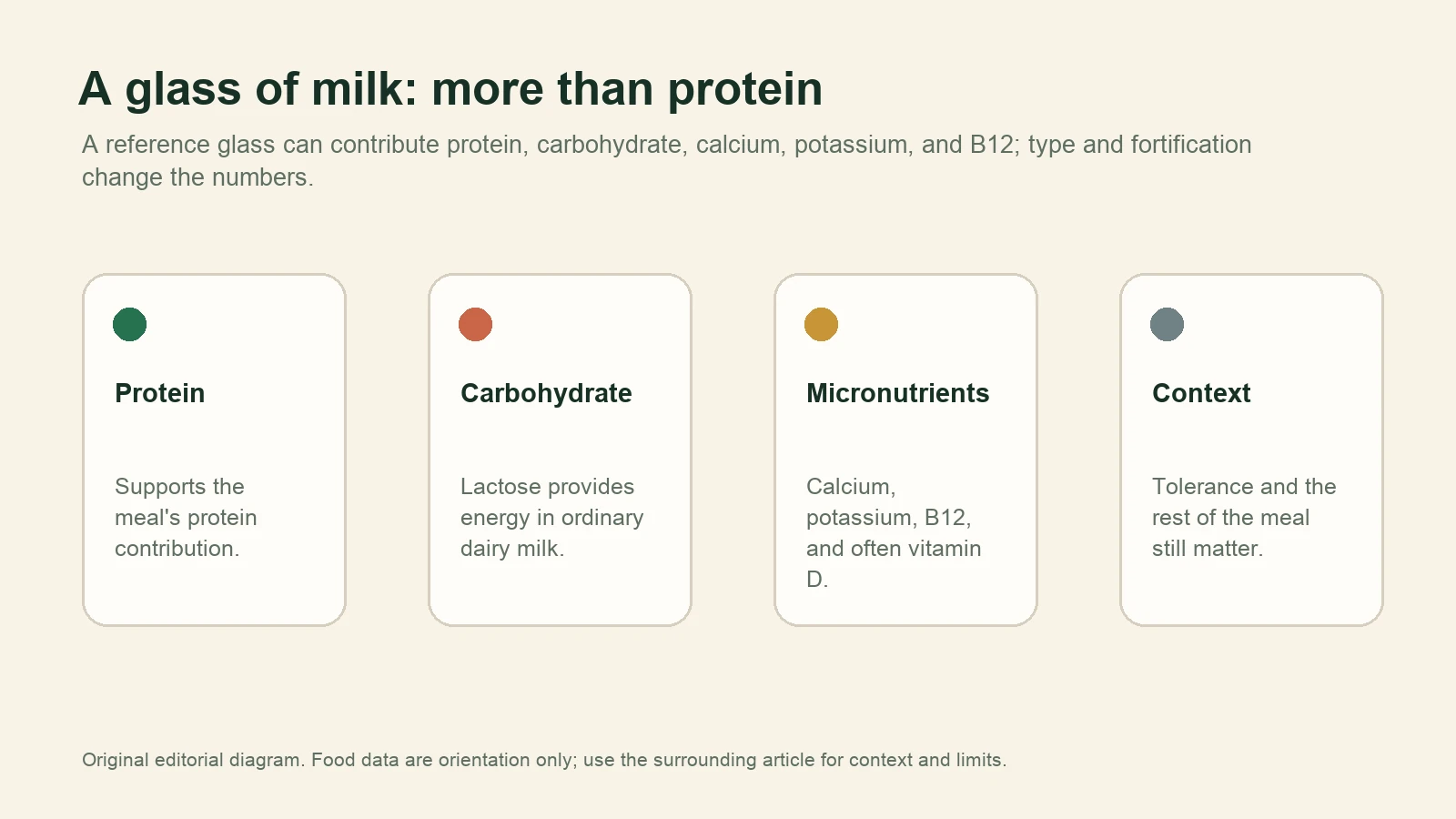
This mixed-food view keeps the discussion realistic. Milk does not replace a varied diet, vegetables, fruit, legumes, grains, or other protein foods. It can make a gap easier to cover. If breakfast is oats and fruit, milk raises the protein and adds a different nutrient profile. If a snack is only a piece of fruit, milk can add more staying power. If a meal already has plenty of protein and calories, a glass may be unnecessary. Context decides the job.
The micronutrients are part of the value
Calcium is one reason dairy remains a practical option for many people. The NIH calcium fact sheet describes calcium as important for bone health and also involved in muscle contraction, nerve transmission, and vascular function. That does not turn milk into a performance supplement. It means the calcium in a regular food can contribute to the broader nutrient pattern that supports normal physiology.
Vitamin B12 is another relevant nutrient in dairy foods. According to the NIH vitamin B12 fact sheet, B12 is naturally present in some animal foods and is involved in normal blood and nerve-cell health as well as DNA synthesis. Milk is not as concentrated a B12 source as some meats or seafood, but repeated ordinary servings can contribute meaningfully across a week.
Potassium, phosphorus, riboflavin, iodine, and fortified vitamin D may also be relevant depending on the milk and country. The point is not to memorize every number. It is to recognize that a food can help the diet in ways a protein-only comparison misses. The current Dietary Guidelines for Americans place dairy within a broader dietary pattern, not as a stand-alone solution. That is the sensible framing for lifters too.
Match the glass to a real meal
Milk works best when it makes a meal more complete or more repeatable. A simple breakfast might be oats cooked with milk, fruit, and a protein-rich food such as Greek yogurt or eggs. A snack might pair milk with a sandwich, cereal, toast with peanut butter, or fruit. After training, milk can be one part of a meal that also includes enough total food for the session you actually completed.
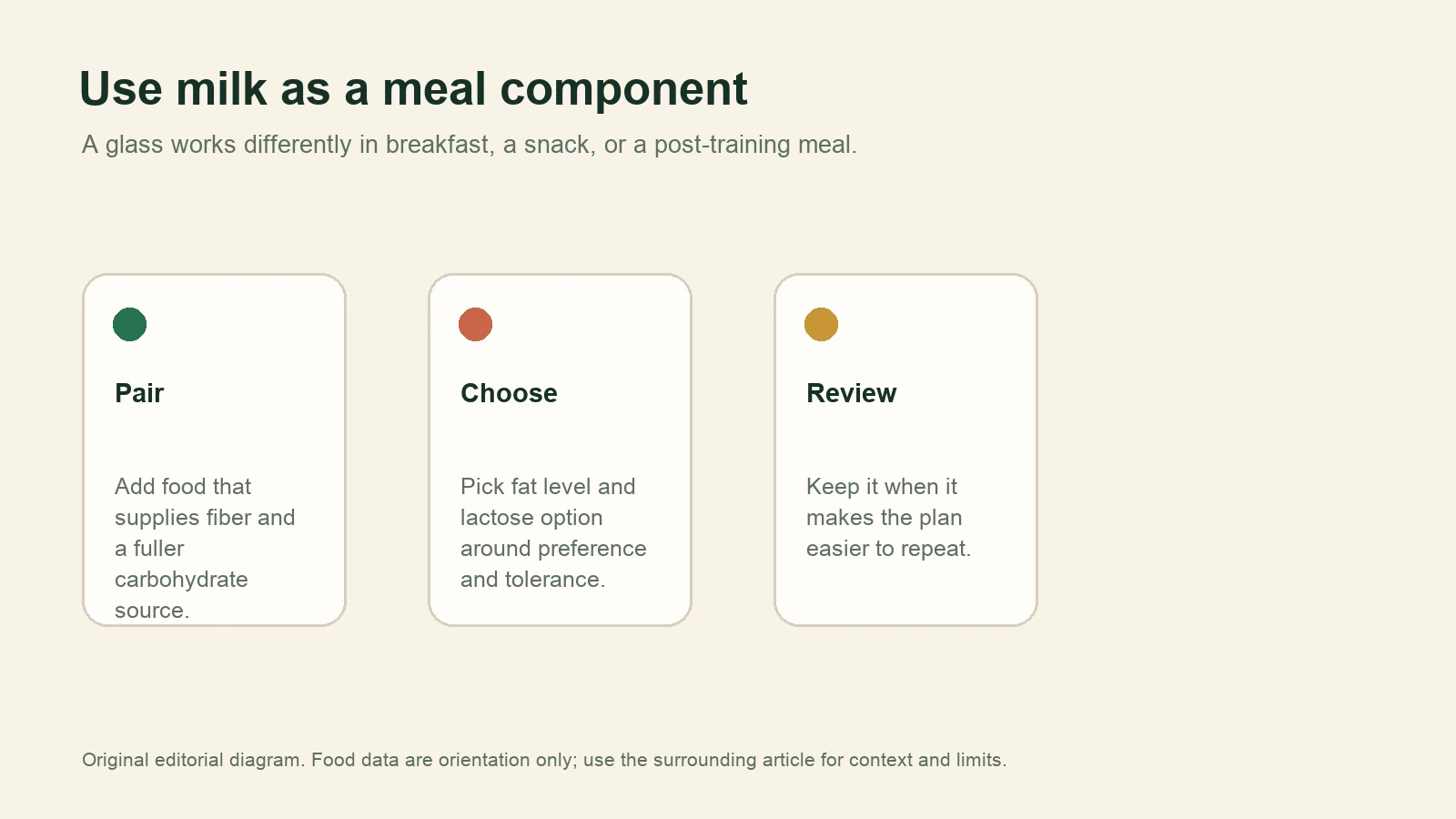
There is no special minute after training when milk becomes mandatory. What usually matters more is whether you eat enough over the full day and whether your routine is reliable. If a glass of milk helps you get breakfast after an early session, that is useful. If it sits poorly before training, choose another source of food and fluid. A good plan should fit both the training session and the rest of your day.
Fat level is a practical choice, not a moral one. Lower-fat milk can make sense when you want a leaner protein-and-carbohydrate addition. Whole milk can make sense when you prefer it, need more energy, or use it in a meal that fits your overall intake. Neither choice is inherently more serious. Compare the serving you drink, the rest of the meal, and how it affects hunger and enjoyment.
Tolerance is real information
Lactose intolerance, milk allergy, digestive symptoms, cultural food patterns, and personal preference all change the decision. Do not force milk because it appears in a strength article. Lactose-free milk can be one alternative for some people. Yogurt and hard cheese may be tolerated differently from liquid milk. Fortified plant drinks can help fill particular roles, but their protein and micronutrient profiles differ widely, so read the label instead of assuming every carton behaves like dairy milk.
Medical questions deserve more than a generic rule. People with diagnosed allergies, digestive disease, kidney concerns, or nutrition restrictions should use qualified individual advice. The same applies if fatigue, weight change, or persistent symptoms are being interpreted through food choices alone. Milk is food, not a diagnosis or treatment.
A useful glass is one you can repeat
Milk can be a quietly helpful addition to a strength-focused diet because it provides several useful things at once: protein, carbohydrate, fluid, calcium, and B12 among them. It is not better than every alternative, and it does not create strength by itself. Its advantage is practical: it can make ordinary meals easier to build.
Choose the type you enjoy and tolerate, check the label, pair it with food that completes the meal, and keep the full-day pattern in view. That is enough. The best nutrition tools are often the ones that make your training routine calmer rather than more complicated.
Portion and the full protein pattern
A glass is not a standardized object. One person may pour 200 milliliters and another may drink twice that from a bottle. The carton label gives a serving size, but the practical question is what your everyday pour adds to the meal. A larger serving can be useful when convenient energy is needed; a smaller serving or lower-fat option can fit when the rest of the meal already covers those bases. Neither choice is a test of discipline.
Milk also does not have to be drunk alone. It can be used in oats, cereal, coffee, soup, pancakes, mashed potatoes, or a yogurt-based sauce. In those cases its contribution belongs to the whole recipe. Food decisions become more useful when they describe a meal rather than chasing one nutrient at a time.
For a more useful carbohydrate side than a generic post-workout rule, see Potatoes for Lifters. They are one of several ordinary foods that can make a meal more substantial without making it complicated.
Keep the broader protein pattern visible. Milk can contribute, but Greek yogurt, cottage cheese, eggs, fish, meats, soy foods, lentils, beans, and fortified alternatives can all play a role. The same is true for carbohydrates: milk’s lactose is one source, not a replacement for grains, fruit, potatoes, or legumes that bring different fiber and micronutrient profiles. A practical strength diet is built from repeatable meals across a week, not a single recovery drink.
Make the choice ordinary
The strongest reason to keep milk in a routine is usually not a headline nutrient. It is that the food is available, affordable, enjoyable, and easy to use. If it makes breakfast or a snack reliably better, it has done its job. If another drink or food works better for your digestion or preferences, that choice deserves the same respect. Consistency comes from fitting food into life, not from repeating a rule because it appeared in a strength article.
Continue with a related guide
For the next practical step, read Salmon for Lifters: Protein, Omega-3s, Vitamin D, Selenium and Potassium. For a second perspective from the same topic cluster, continue with Sardines Might Be the Most Underrated Food in a Lifter’s Diet.