
Mushrooms are not usually grouped with vitamin D foods. They are usually a side dish, a pizza topping or something that shrinks dramatically in a hot pan. Yet some mushrooms can contain a meaningful amount of vitamin D2. The important word is some.
The difference is ultraviolet, or UV, exposure. Mushrooms contain ergosterol, a compound that can be converted to vitamin D2 when the mushrooms receive UV light. That can happen as part of commercial production. A standard carton of mushrooms, however, does not automatically become a vitamin D food because it sat near a sunny shop window or looks similar to a UV-treated product.
This guide explains what to check on the package, what the evidence can and cannot tell you, and how mushrooms fit into an ordinary lifting diet. It is not a way to assess vitamin D deficiency or replace individual medical guidance.
- Why UV exposure changes the food
- What the label can tell you
- What a serving contributes in context
- How to use mushrooms in a normal meal
The vitamin D depends on how the mushroom was grown or treated
Vitamin D is naturally present in only a small number of foods. The NIH Office of Dietary Supplements vitamin D fact sheet lists mushrooms as a variable source of vitamin D2 and notes that some products are treated with UV light to raise the amount. This is a food-production detail with a practical consequence: the variety name alone does not tell you the vitamin D content.
The NIH table illustrates the gap. It lists one half-cup of raw, sliced white mushrooms exposed to UV light at 9.2 micrograms of vitamin D, or 366 IU. A half-cup of raw diced portobella mushrooms is listed at 0.1 micrograms. Those values are reference entries, not a promise for every box at the store. They show why “mushrooms contain vitamin D” is too vague to guide a purchase.
Look for a clear vitamin D amount in the Nutrition Facts panel or a label that says the mushrooms were exposed to UV light. If neither is present, do not assume the product provides the amount from the UV-treated reference food. Different species, UV treatments, storage and serving sizes can change the result. The package is more informative than a social-media claim about leaving mushrooms in sunlight at home.
Vitamin D2 is useful context, not a shortcut
UV-treated mushrooms generally provide vitamin D2, also called ergocalciferol. Vitamin D3 is the form found in many animal foods and supplements. Both forms can affect vitamin D markers in blood, but the exact response depends on the dose, baseline status, duration and the form being measured. That is more complicated than asking whether a food is “good” or “bad” for vitamin D.
A systematic review and meta-analysis of UV-exposed mushroom trials found a mixed effect on total 25-hydroxyvitamin D across six randomized studies, with substantial variation among them. The review found that the D2 form in blood rose after mushroom intake while D3 declined in several studies. A 2023 systematic review similarly concluded that irradiated mushrooms can raise 25-hydroxyvitamin D2, while the evidence was not enough to treat them as a reliable clinical solution for total vitamin D status.
That is a sensible boundary for a food article. A labeled serving can contribute to dietary intake. It does not tell you whether you have a deficiency, prescribe a supplement or show that a mushroom meal will change strength or recovery. If you have a diagnosed deficiency, symptoms that concern you, or medical advice about vitamin D, use that individual plan rather than trying to solve it with a grocery item.
Read the serving, then build the meal around it
When the label provides a vitamin D amount, compare the stated serving with the amount you expect to eat. A half-cup reference is not necessarily the amount that lands on your plate after cooking. Some products show the vitamin D per serving; others may use a different serving weight. The label gives the product-specific answer, and the ingredient list helps confirm that you are buying the food you intended.
Mushrooms do not need to carry the whole meal. They are not a substantial protein source or a concentrated carbohydrate source for training. Treat them as a vegetable-style ingredient that brings texture, flavor and, when UV-treated, potential vitamin D2. Pair them with a protein food and a carbohydrate source that meet those other jobs.
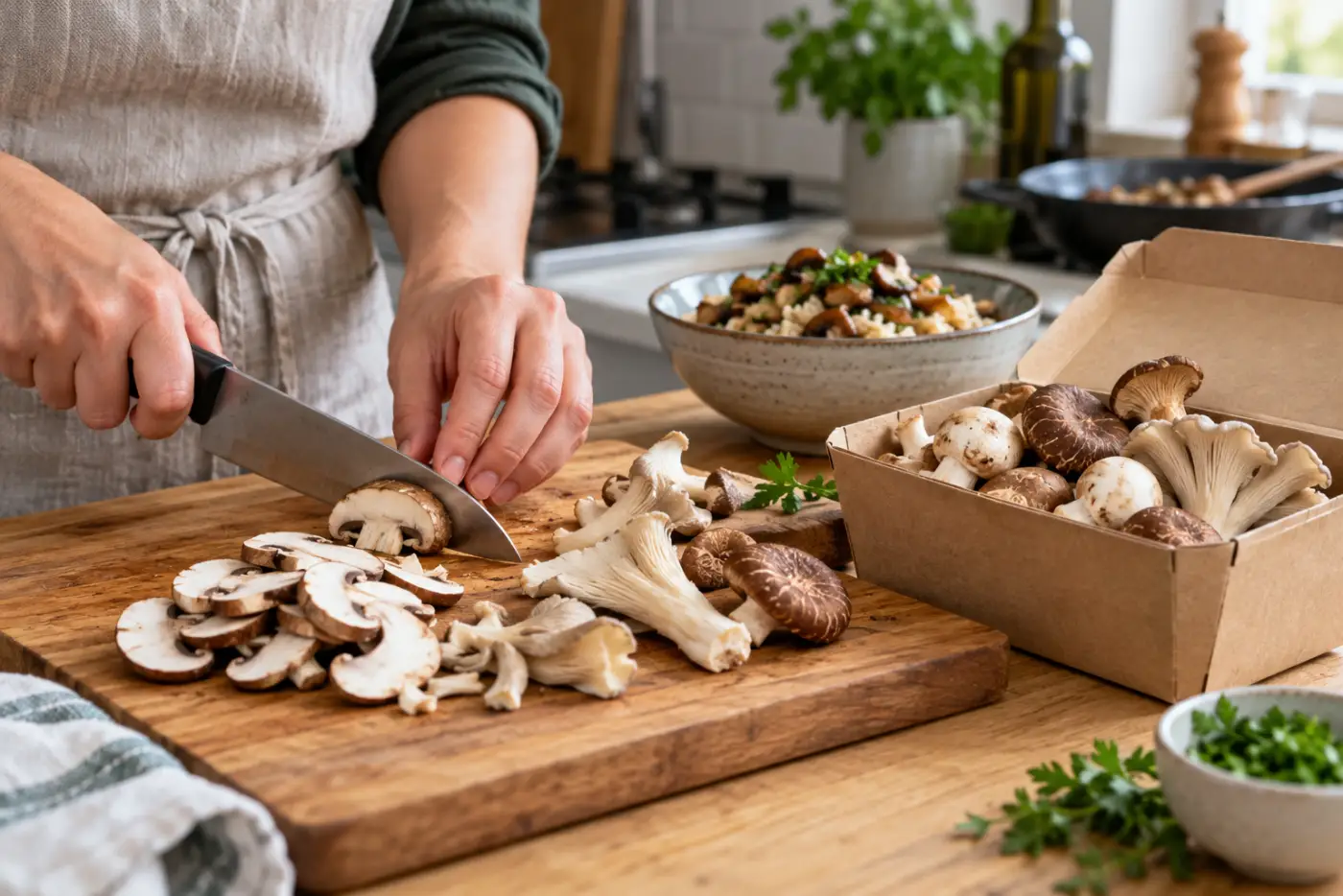
For example, sautéed mushrooms can go into rice with eggs or tofu, beside chicken and potatoes, or into a grain bowl with beans. The cooking method should serve taste, time and tolerance. A small amount of oil can help browning and make the meal more satisfying; it does not turn the dish into a vitamin D treatment. If a large portion of mushrooms feels uncomfortable before training, use a smaller amount or have it at a different meal.
Keep the comparison fair
Mushrooms are a useful option for someone who eats little or no fish, especially when the chosen product is explicitly UV-treated. They are not the only route to dietary vitamin D, and they do not make other foods unnecessary. Fatty fish, fortified foods and supplements can all appear in a person’s diet or care plan for different reasons.
The comparison also changes with the rest of the meal. Our guide to salmon for lifters shows a food that combines protein, omega-3 fats and vitamin D. Mushrooms offer a different role: they can add a savory vegetable component and, in the UV-treated versions, a measurable D2 contribution. Neither food needs to be declared the winner.
There is also no need to turn the vitamin D number into a reason to eat a portion you do not enjoy. If a labeled serving is half a cup and you use it in a meal for two, your own contribution is smaller. If you cook a larger mushroom dish, it may be larger. The practical move is to read the package, decide whether the food fits the meal, and let the portion follow appetite and the rest of the plate. A food label is an orientation point, not a personal target.
The same restraint applies to frequency. A UV-treated mushroom product can be one repeatable option, while another week may include fortified food or a different vitamin-D-containing ingredient. Food availability, budget, culture and dietary preferences all shape that decision. Consistency with a few foods you like is usually more useful than chasing a perfect nutrient score from one unusual ingredient.
Fortified foods need the same label-reading habit. The vitamin D amount in milk, for example, depends on the product and market rather than on the word “milk” alone. Our guide to what a glass of milk can contribute explains why the carton is more useful than assumptions about a familiar food.
If you want a low-effort way to use mushrooms, buy one product with a stated vitamin D amount, cook it in a dish you already repeat and keep the portion realistic. You do not need a complicated exposure experiment, a special mushroom powder or a daily rule. If the label does not state vitamin D, enjoy the mushrooms for their flavor and other food qualities without assigning them a number they may not contain.
Conclusion
Mushrooms can provide vitamin D, but the claim needs its condition: the useful amount usually comes from UV-treated mushrooms with a labeled value. Ordinary mushrooms can vary widely, so the package matters more than the name of the food.
Use a labeled mushroom product as one possible part of a varied diet. Build the meal around protein, carbohydrates and vegetables that fit your needs, and keep questions about vitamin D status or treatment with a qualified health professional. That makes mushrooms a practical food choice instead of a nutritional miracle.