Sardines are not glamorous. They do not arrive with influencer lighting, they do not look expensive, and plenty of people decide they dislike them before they have tried making them into an actual meal. That may be exactly why lifters underrate them.
For a small, shelf-stable food, sardines bring a lot to the table: protein, omega-3 fats, vitamin B12, selenium, and, when eaten with the bones, a surprisingly large amount of calcium. They are also practical. A can can sit in the pantry until a busy day turns into a "what do I eat now?" problem.
This article is for healthy adults who lift and want realistic nutrition tools. The short version is simple: sardines can be one of the most efficient foods in a lifter’s diet, but the sodium, taste, smell, and seafood tolerance details decide whether they are a good fit for you.
- Why sardines are underrated
- What a 100 g reference serving gives you
- Why the bones matter for calcium
- What B12, selenium, and omega-3s add
- How to make sardines easier to eat
Why sardines are underrated
Most lifters think in terms of protein convenience: chicken breast, protein powder, eggs, tuna, Greek yogurt. Sardines rarely make the first list, partly because they carry a strong taste and a strong smell. But nutritionally, they are much more serious than their reputation.
The key is density. Sardines are small fish eaten whole or nearly whole, depending on the product. That means the can can include flesh, skin, and soft edible bones. The result is a food that behaves differently from many other protein sources. It is not just protein with some fat; it is protein plus minerals and marine fats in a compact package.
Sardines are also affordable compared with many fresh seafood options. That does not make them perfect, but it does make them interesting for lifters who want nutrient-dense food without turning every meal into a high-budget project.
What a reference serving gives you
Using USDA FoodData Central values for 100 g canned Atlantic sardines in oil, drained solids with bone, sardines provide roughly:
- 24.6 g protein
- 382 mg calcium
- 8.94 mcg vitamin B12
- 52.7 mcg selenium
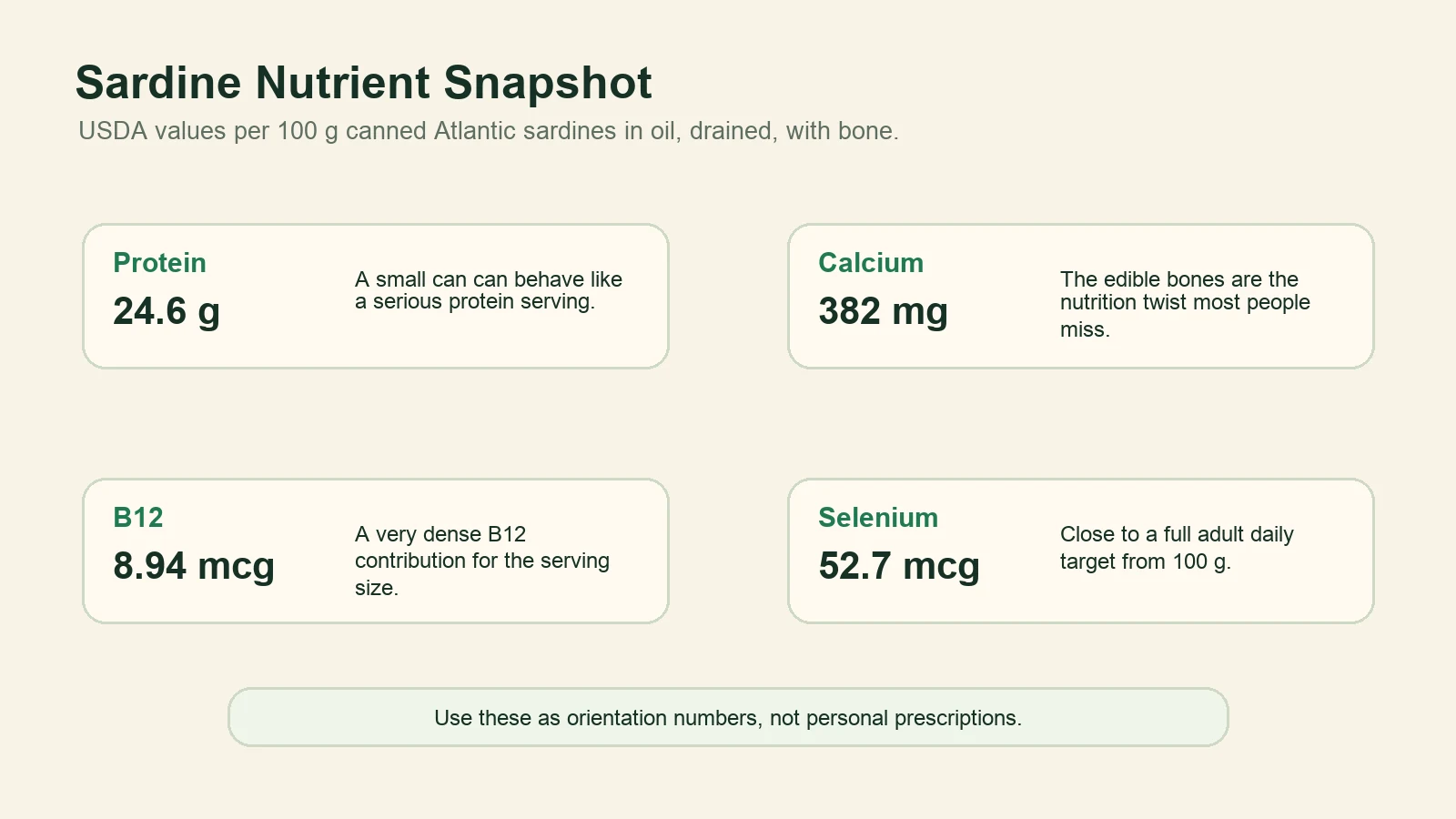
That is a strong profile for a small amount of food. A can can move a meal toward a useful protein target and add nutrients that many lifters do not intentionally plan.
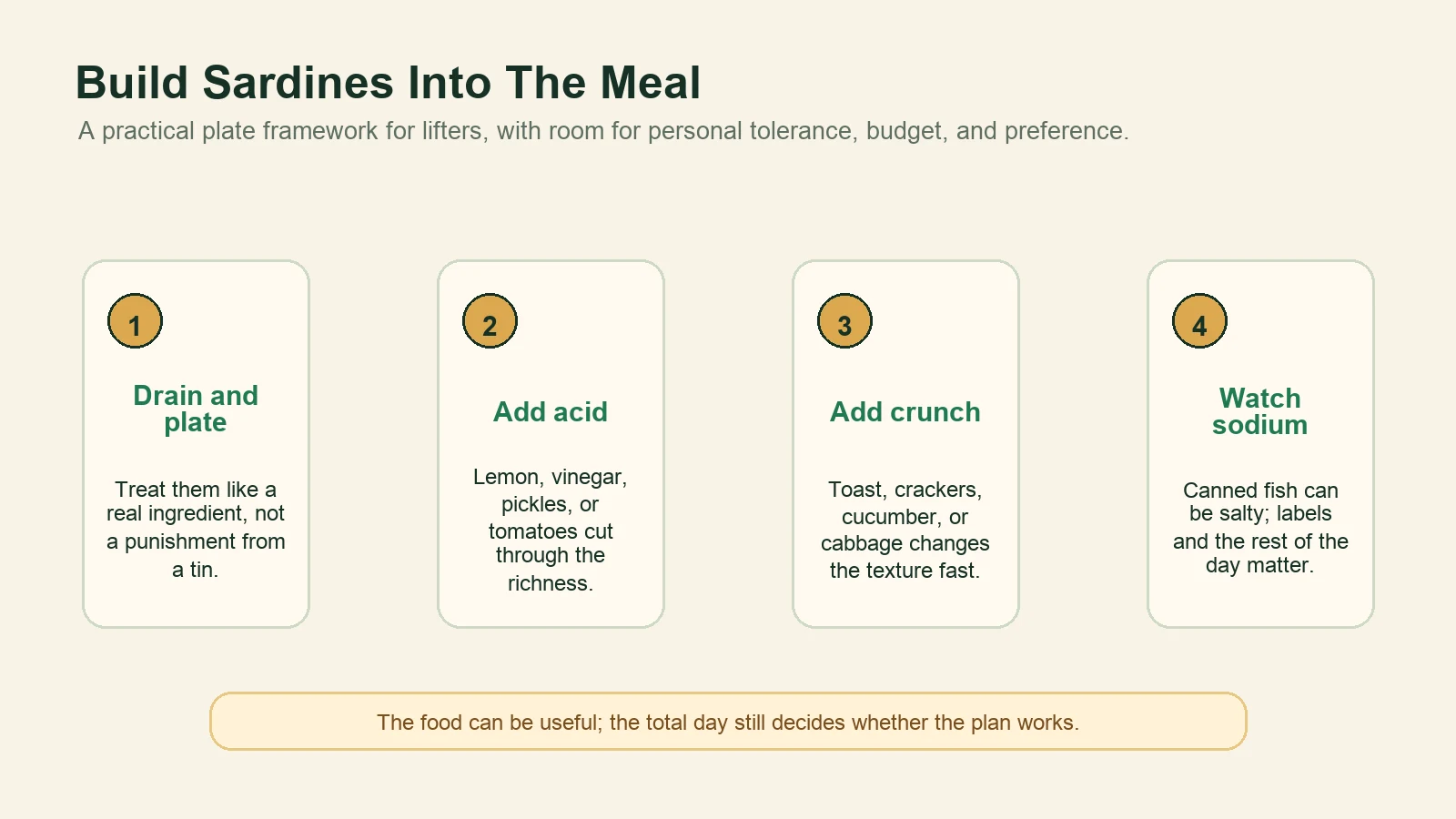
There are two caveats. First, canned products vary by brand, liquid, bone content, and serving size. Second, sodium can be meaningful. USDA values for the reference food show over 300 mg sodium per 100 g, and some products go higher. That is not automatically a problem, especially for active people who sweat, but it is a label detail worth noticing.
Why the bones matter for calcium
The most overlooked sardine benefit is calcium. The NIH calcium fact sheet explains that calcium is needed for bones and teeth and also for muscle movement, nerve signaling, blood vessel function, and hormone release. Lifters often talk about muscle and forget that a body that trains hard still needs ordinary skeletal and nervous-system support.
Sardines with bones are useful because the bones are soft enough to eat and contribute calcium directly. This is why canned sardines can look much more impressive for calcium than boneless fish fillets.
That does not mean sardines replace dairy, fortified foods, tofu set with calcium, leafy greens, or a broader calcium plan. It means they are one unusually compact option, especially for people who do not drink much milk or eat much yogurt.
What B12, selenium, and omega-3s add
Vitamin B12 is another reason sardines punch above their weight. The NIH vitamin B12 fact sheet describes B12 as necessary for healthy blood and nerve cells and DNA synthesis. A small serving of sardines can contribute far more than the adult daily target.
Selenium adds another layer. The NIH selenium fact sheet describes selenium as part of selenoproteins involved in thyroid hormone metabolism, DNA synthesis, reproduction, and protection from oxidative damage and infection. Sardines provide a large amount in a compact serving.
Then there are the marine omega-3 fats. The NIH omega-3 fact sheet explains that EPA and DHA are the omega-3s most associated with seafood research. Sardines are a practical way to get seafood-based omega-3s without cooking a fresh fillet.
For lifters, the right takeaway is not "sardines cure soreness." The stronger takeaway is that sardines improve diet quality in a way that is hard to match at the same convenience level.
How to make sardines easier to eat
The biggest barrier is not nutrition. It is experience. Sardines need help from texture, acid, and context.
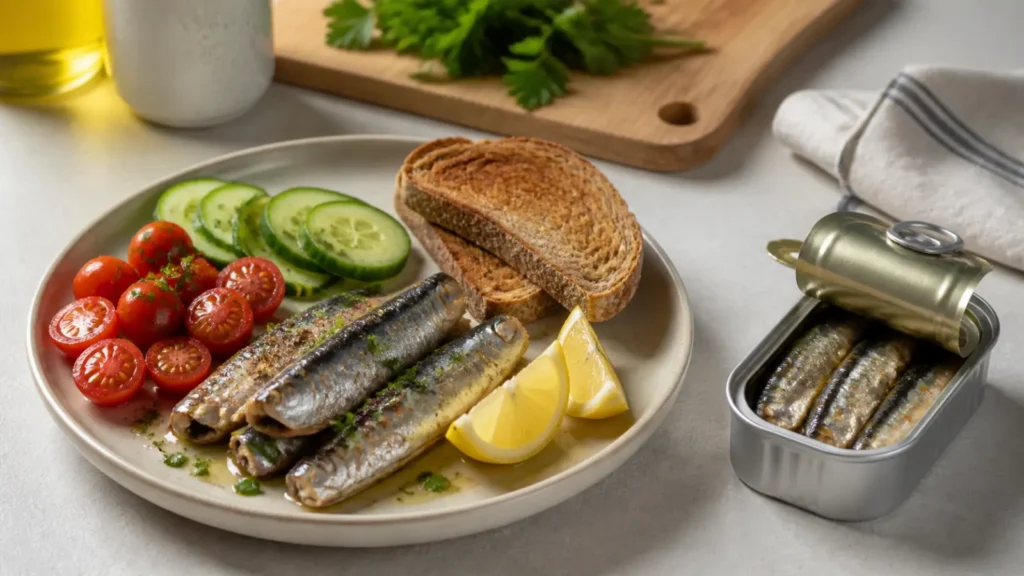
Start by draining them and plating them. Eating directly from the can may work for some people, but many will enjoy sardines more when they look like a meal. Add lemon juice, vinegar, pickles, mustard, tomatoes, or hot sauce. Acid cuts the richness and makes the flavor cleaner.
Then add crunch. Toast, crackers, cucumber, cabbage, onions, or carrots can change the whole experience. Sardines are soft and rich, so crunchy sides make the meal feel more complete.
Finally, use them where strong flavor belongs. Sardines can work on toast, in rice bowls, with pasta, in tomato salads, or mashed into a lemony yogurt sauce. They do not have to stand alone.
Seafood safety and fit
The FDA advice about eating fish recommends choosing a variety of fish that are lower in mercury. Sardines are commonly listed among lower-mercury options, partly because they are small fish lower on the food chain.
Still, variety matters. A lifter who eats fish several times per week should rotate choices instead of turning one canned food into the whole seafood strategy. Salmon, trout, herring, sardines, and other lower-mercury choices can all have a place.
If you are pregnant, breastfeeding, immunocompromised, managing kidney disease, on blood-thinning medication, or under medical advice about sodium, seafood, iodine, or mercury, use qualified individual guidance.
What sardines do not do
Sardines do not need to become a personality test. If you hate them, you can get protein, calcium, B12, selenium, and omega-3s from other foods. They are useful, not mandatory.
They also do not automatically make a meal complete. Sardines on their own bring protein and fat, but many lifters still need carbohydrate and produce. Toast, potatoes, rice, fruit, or beans can make the meal more useful around training.
And because sodium varies, sardines are not equally suited to every day or every person. For some lifters, the salt is no big deal. For others, especially those with blood pressure guidance, it matters.
A practical label note
Two cans of sardines can behave very differently. Some are packed in olive oil, some in water, some in tomato sauce, and some with added salt or flavorings. The protein may stay broadly useful, but calories, sodium, and taste can change enough to affect whether the food fits your day.
If you are new to sardines, start with one version and one simple meal instead of buying a pantry full of cans. Try them with toast and lemon, rice and tomatoes, or crackers and cucumber. If the first version is too strong, a different packing liquid or sauce may make a bigger difference than forcing yourself through the same can again.
Continue with a related guide
For the next practical step, read Beef for Strength Athletes: Protein, Iron, Zinc, B12 and Creatine Explained. For a second perspective from the same topic cluster, continue with Beef Liver: Nutritional Powerhouse or Too Much of a Good Thing?.
Conclusion
Sardines may be one of the most underrated foods in a lifter’s diet because they combine protein, omega-3 fats, calcium from edible bones, vitamin B12, selenium, convenience, and affordability. That is a lot of nutrition from a small can.
The smart version is not forcing them down because they are "optimal." The smart version is learning whether they fit your taste, schedule, sodium needs, and seafood pattern. Add acid, add crunch, build a real meal, and sardines become much easier to appreciate.
FAQ
Are sardines better than tuna for lifters?
It depends on the goal. Sardines usually bring more calcium if eaten with bones and are commonly lower on the food chain. Tuna is often leaner and milder. Both can fit, but variety is better than relying on one fish.
Do sardines count as a protein serving?
Yes. A 100 g reference serving provides about 24.6 g protein in USDA data, which puts sardines in the range many lifters use for a protein-forward meal.