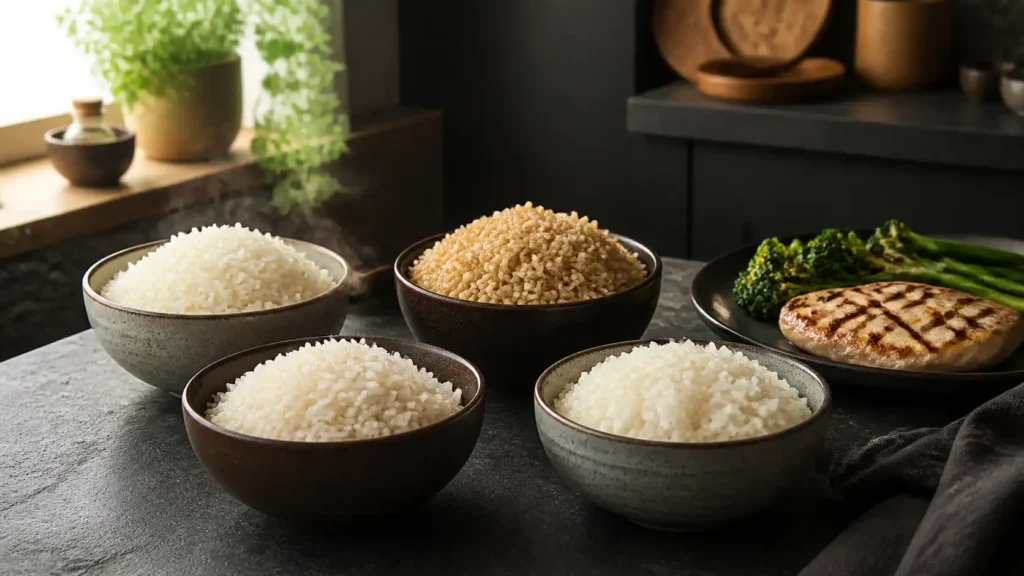
Rice does not need to win a nutrition contest to earn a place in a strength-training meal. It is a familiar carbohydrate base, it works with protein and vegetables, and it can be cooked in batches without turning dinner into a project. The practical question is not whether rice is “good” or “bad.” It is which kind of rice makes the meal you are actually going to prepare and enjoy.
White, brown, basmati and jasmine rice share a lot: they are grain foods that provide carbohydrate and some protein in a cooked serving. The differences that matter most in a normal kitchen are texture, flavor, how the grain behaves in a dish, and whether you prefer a whole-grain or refined option. The rest of the plate still matters more than declaring one bowl the winner.
- What rice contributes to a training meal
- White rice and brown rice in context
- Where basmati and jasmine fit
- Why cooking and the full meal matter
- How to choose without overthinking it
Start with the meal, not the label
For a lifter, rice is usually not the whole meal. It is one component beside a protein source, vegetables, fruit, fats, sauces and whatever makes the meal workable at home. A bowl of rice with chicken, tofu, beans, fish or eggs has a different role from a plain bowl eaten on its own.
That is why raw nutrition comparisons can mislead. Package labels differ by brand and whether the grain is enriched, while cooked values change with water absorption and serving size. The USDA FoodData Central database is useful for checking a specific product or cooked food, but it is not a reason to treat a database entry as a personalized meal prescription.
Use the familiar building blocks first. Pair rice with a protein source and foods you enjoy eating regularly. Chicken Breast Is Great for Protein — But What Else Does It Give You? is one example of how a simple protein can bring more to the plate than a protein number alone. Then choose the rice that fits the dish, your budget and your appetite.
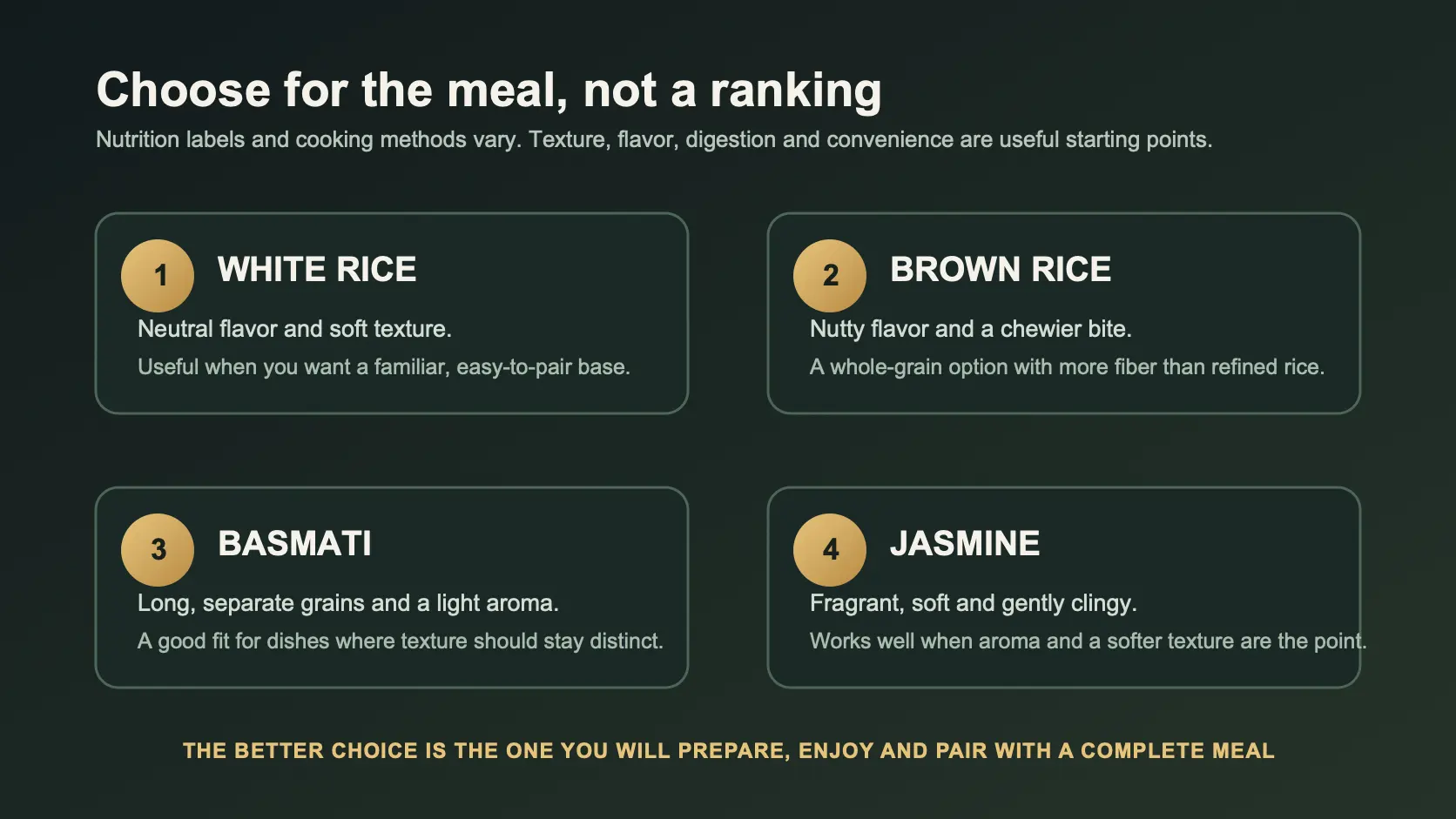
White rice: simple, neutral and easy to build around
White rice has had the bran and germ removed during milling. That changes its texture and reduces the fiber found in the intact grain, but it does not make it useless. Its mild flavor, soft texture and predictable cooking make it easy to combine with stir-fries, curries, grilled meat, beans or vegetables.
For some people, that simplicity is its advantage. A meal made from ingredients you digest comfortably, can prepare consistently and look forward to eating is often more useful than an objectively “cleaner” meal that stays in the cupboard. Enriched white rice may also contribute added nutrients, so the label of the product in your kitchen is more informative than a generic claim online.
White rice is a reasonable default when you want a neutral base, when another part of the meal already brings substantial fiber, or when you are cooking for several people with different preferences. It does not need to be defended as a performance food. It simply needs to fit the meal.
Brown rice: a whole-grain option with a different trade-off
Brown rice retains the bran layer, so it generally has more fiber than refined white rice. It also has a firmer, chewier texture and a nuttier flavor. Those qualities work well in grain bowls, hearty salads and meals where the rice should stay distinct rather than disappear into a sauce.
The trade-off is practical. Brown rice often takes longer to cook, can be less appealing to people who dislike its texture, and may not be the rice you want in every dish. More fiber is not a command to replace every white-rice meal. Food patterns are built from many meals, and a strength-training diet can include both whole and refined grains.
If you already enjoy potatoes, oats, beans, fruit and vegetables, your diet may contain plenty of fiber without forcing brown rice into a meal you do not like. The guide Potatoes for Lifters: Carbs, Potassium, Vitamin C and Why They Deserve More Respect makes the same larger point: carbohydrate foods are not interchangeable in every detail, but they can all have a practical place.
Basmati: useful when you want separate, aromatic grains
Basmati is a long-grain aromatic rice. When cooked well, the grains tend to stay long and more separate than softer, clingier varieties. That makes it a natural fit for dishes where you want the sauce, vegetables and protein to remain visually and texturally distinct.
People sometimes describe basmati as automatically “better” for blood sugar. That is too simple. A systematic review of rice characteristics and preparation found that the post-meal response can vary with cultivar, starch properties, processing, cooking, storage and reheating, as well as the food eaten alongside it. The review is useful because it argues against treating one name on a bag as a medical guarantee. Read the systematic review of rice characteristics and post-meal response as context, not as a reason to self-manage a health condition without qualified guidance.
For ordinary meal planning, choose basmati because you like its aroma and grain structure. It is especially handy for spiced dishes, roasted vegetables and meals that you want to reheat without becoming overly soft.
Jasmine: soft texture and recognizable aroma
Jasmine rice is also long-grain and aromatic, but it usually cooks softer and slightly more clingy than basmati. Its floral aroma works well with Southeast Asian-inspired meals, grilled protein, vegetables and simple sauces. If you meal-prep a rice bowl that you genuinely want to eat on day three, that preference is not trivial; it is part of whether the plan lasts.
Jasmine rice is often grouped with white rice because it is commonly refined, but the specific product still matters. Look at the package if you need to compare a plain white jasmine rice with brown jasmine rice, a microwave pouch or a seasoned rice mix. The cooking fat, sauce and added sodium in a prepared product can change a meal far more than the name of the grain.
Cooking method is part of the answer
Rice is not eaten as a dry nutrition label. Water ratio, cooking time, whether the grains are cooled and reheated, and the rest of the plate can all alter texture and the way a meal feels. That does not mean you need to optimize every pot. It means a simple comparison has limits.
Avoid turning glycemic-index tables into a personality test or a performance rule. They are measured under specific test conditions and do not capture the full context of a mixed meal, personal tolerance, portion or training schedule. Anyone managing diabetes, digestive symptoms or another medical condition should use advice from an appropriately qualified clinician rather than a general fitness article.
For most lifters, the useful cooking questions are more ordinary: Can you cook it without stress? Does it reheat well? Does it pair with a protein and vegetables you like? Can you afford it and keep it on hand? Those questions lead to repeatable meals.
A practical way to choose this week
Choose white rice when you want a neutral, soft and reliable base. Choose brown rice when you enjoy its chew and want more whole grains in the rotation. Choose basmati when the dish benefits from separate, aromatic grains. Choose jasmine when its softer texture and fragrance suit the meal.
Then let variety do some work. Rice does not have to appear at every meal, and it does not have to carry the entire carbohydrate side of your diet. Quinoa: Complete Protein Miracle or Just Another Good Carb Source? is a useful companion because it shows how another grain-like staple can fit without being marketed as magic.
The better rice for strength training is usually the one that helps you make a complete meal consistently. That answer may change by recipe, budget, culture and season. It does not need a winner.
FAQ
Is brown rice always better than white rice for lifters?
No. Brown rice generally provides more fiber, while white rice can be easier to cook and may fit some meals or preferences better. Both can fit a balanced strength-training diet.
Is basmati rice automatically lower impact than jasmine rice?
Not automatically in every product or meal. Rice variety, processing, preparation, portion and accompanying foods all influence the result. Choose a variety for the meal and use individualized professional guidance when a medical condition is involved.
Should rice be eaten only after training?
No. A general strength-training diet is built across the day and week, not around a single “perfect” rice window. Put carbohydrate foods where they make regular meals and training practical for you.