

Chaotic weeks do not ask for permission. A sick child, a work deadline, a bad night of sleep, travel, repairs, stress, and family obligations can all land on the same calendar. When that happens, the normal fitness plan often collapses because it was designed for order.
The answer is not to become more intense. The answer is to decide what consistency means when life is not cooperating. During chaotic weeks, the goal is usually to preserve the thread: one anchor session, one short fallback, one visible cue, one fast restart.
This guide is for people who want training to survive real disruption. The short version is this: plan the fallback before you need it, shrink the workout without guilt, and restart with the next normal session.
- Redefine consistency for chaotic weeks
- Create a 15-minute fallback
- Use cues when motivation is unavailable
- Restart without making up for everything
Redefine consistency for chaotic weeks
Consistency does not always mean doing the full plan. Sometimes it means doing the smallest version that keeps training from disappearing.
The CDC adult physical activity guidance is useful here because it points toward weekly movement and muscle-strengthening targets without implying that activity has to happen in perfect gym blocks. Public health guidance is built for populations with real lives, not only for athletes with controlled schedules.
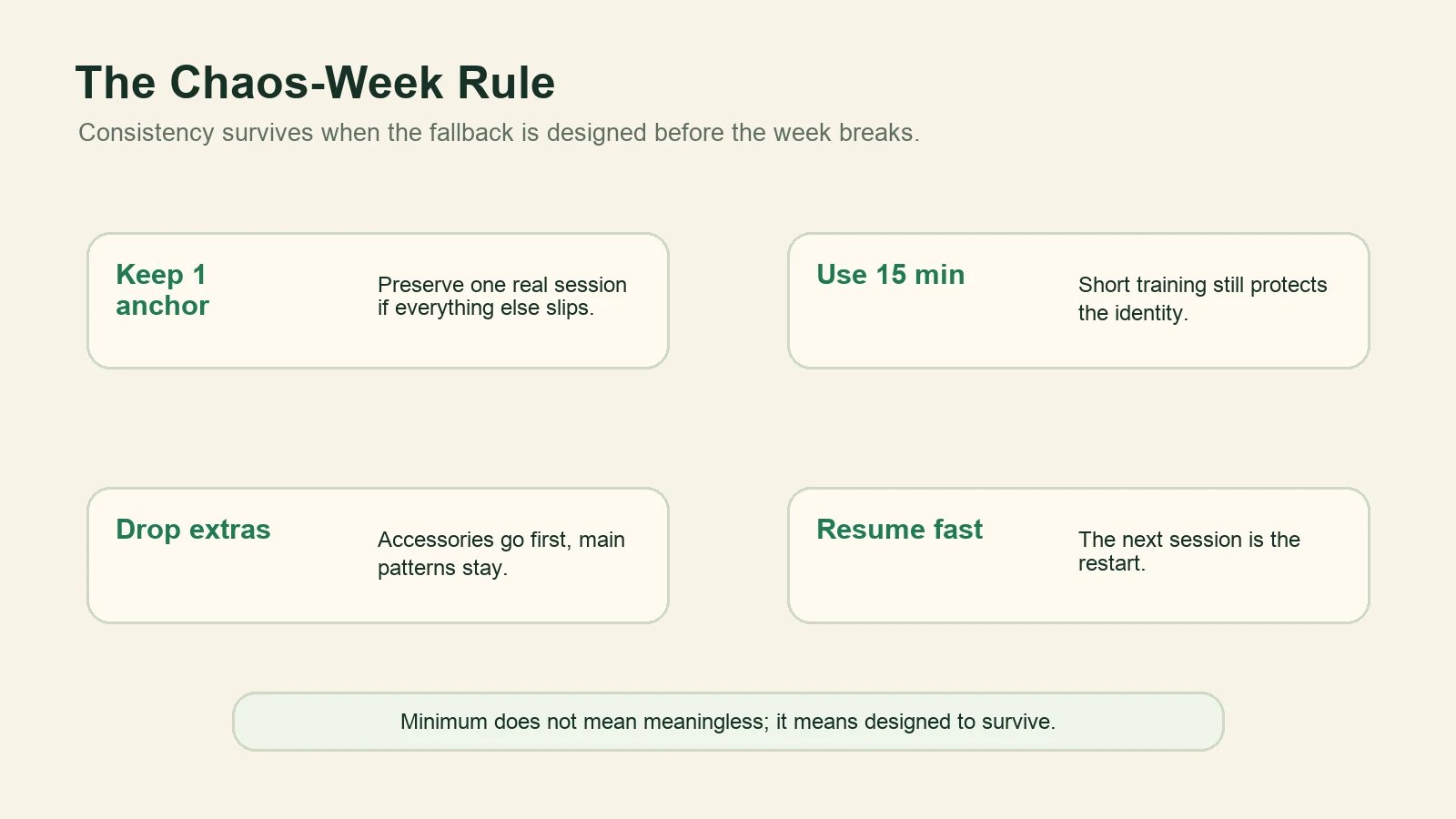
During a chaotic week, pick one anchor. That might be one full-body session, one home workout, or one long walk with a few sets of bodyweight strength. One anchor keeps the identity alive: you are still someone who trains, even when the week is rough.
Create a 15-minute fallback
A fallback workout should be too simple to negotiate with. For example:
- 5 minutes brisk walking or easy cycling
- 3 rounds of squats, push-ups, rows, and carries
- 2 minutes of breathing or light mobility
That is not a complete long-term program. It is an emergency bridge. It keeps movement present, reduces the emotional cost of restarting, and reminds you that the routine can shrink without vanishing.
The Move Your Way campaign frames activity as something that can fit different schedules and preferences. That is exactly the mindset a chaotic week needs. Flexible does not mean unserious. It means designed to survive.
Use cues when motivation is unavailable
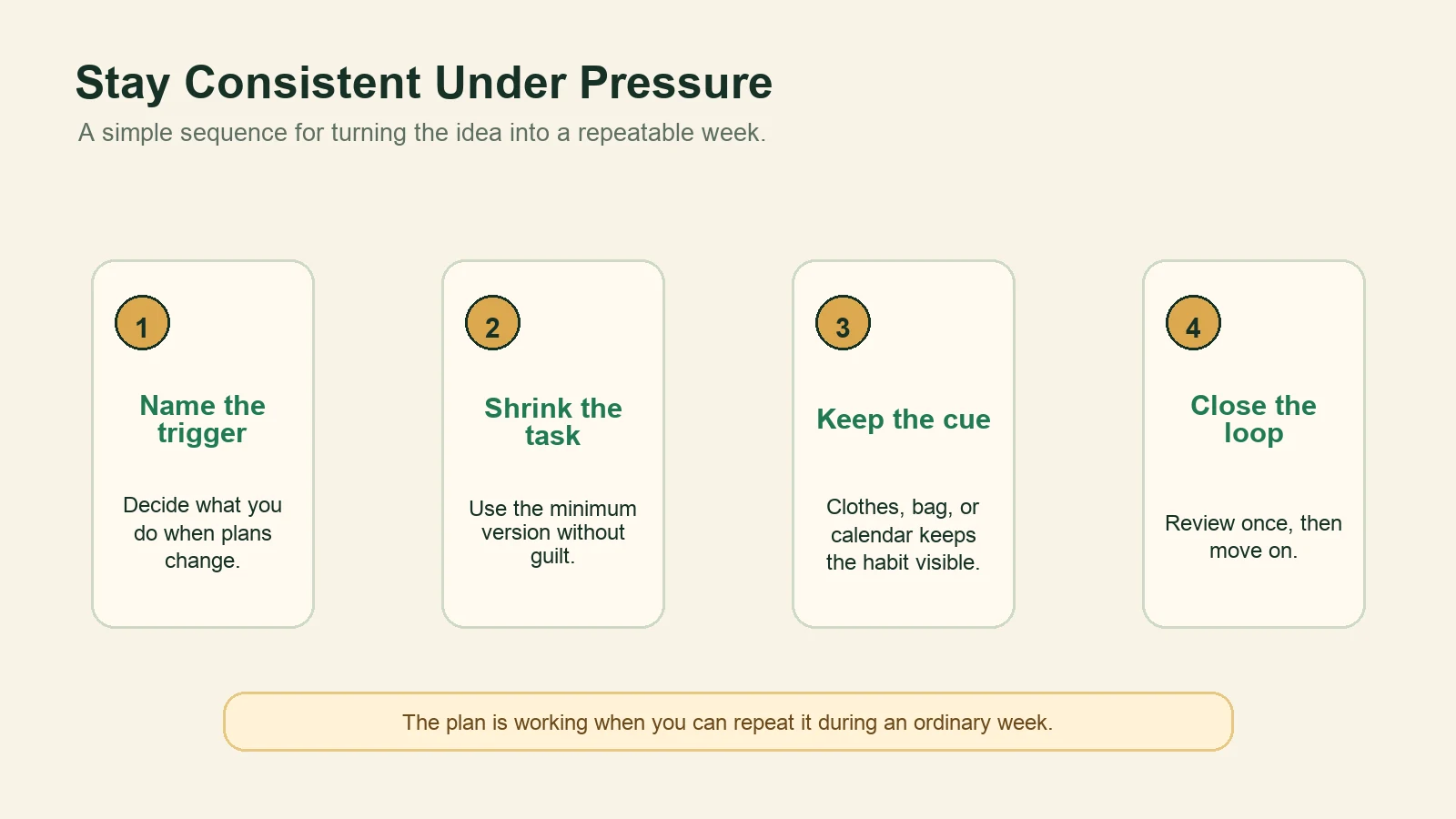
Motivation is often low during stressful weeks. Cues matter more. Put the shoes where you will see them. Keep a resistance band near the desk. Leave the gym bag packed. Put the fallback workout in your calendar with no complicated decision attached.
Research on habit formation helps explain why this matters. A real-world habit formation study found that automaticity builds gradually. When a habit is not yet automatic, visible cues and repeated contexts can carry some of the load.
There is also a useful planning idea from implementation-intention research: decide in advance what you will do when a predictable barrier appears. A meta-analysis on implementation intentions found that if-then planning can support goal achievement. For training, that might sound like: "If I miss the gym, I do the 15-minute home session after dinner."
Restart without making up for everything
The most common mistake after a chaotic week is trying to pay a debt. People miss two workouts, then punish themselves with extra volume, soreness, and exhaustion. That often creates the next missed week.
Do the opposite. Restart with the next normal session. Maybe reduce load slightly if sleep, food, and stress were poor. Then continue. The goal is not to erase the interruption. The goal is to make interruptions less powerful.
If the day is almost gone, do one set each of a squat, push, pull, and carry. Then stop. You kept the thread.
Decide what does not matter this week
Chaotic weeks require subtraction. You may not have time for every accessory, every cardio session, every meal-prep detail, and every mobility drill. Decide what can wait before the week decides for you.
Keep the most important pieces: one strength exposure, some walking or general movement, enough food, and enough sleep to function. Drop the optional pieces first. This prevents the plan from feeling like a long list of failures.
When the week calms down, add pieces back one at a time. Do not rebuild the full routine in one dramatic Monday. The smoother the restart, the less likely the next chaotic week is to break the habit again.
Keep a recovery floor
Consistency is harder when the basics collapse. During chaotic weeks, keep a recovery floor as well as a training floor. That might mean a consistent bedtime window, a simple protein-forward breakfast, or a walk that helps you decompress without turning into another performance target.
This is not a wellness checklist. It is damage control. If sleep is short, stress is high, and meals are random, your full workout plan may not be the wisest demand. A smaller session plus a better night of sleep can be the more consistent choice.
Continue with a related guide
For the next practical step, read The Sustainable Lifter: How to Train for Years, Not Seasons. Continue with The Sustainable Approach to Getting Strong, and use How to Balance the Gym With a Full-Time Job when work is the main constraint.
Conclusion
Staying consistent when life gets chaotic is not about protecting the perfect routine. It is about having a fallback that is already decided, small enough to use, and easy enough to restart from.
Keep one anchor, use a 15-minute option, leave visible cues, and return to normal training without punishment. Consistency is not fragile when the plan is allowed to bend.
FAQ
Is a 15-minute workout worth doing?
Yes, especially during chaotic weeks. It may not replace a full program, but it keeps the habit and movement pattern alive.
Should I make up missed workouts?
Usually no. Restart with the next normal session. Adding punishment volume often creates more fatigue and makes the next interruption more likely.