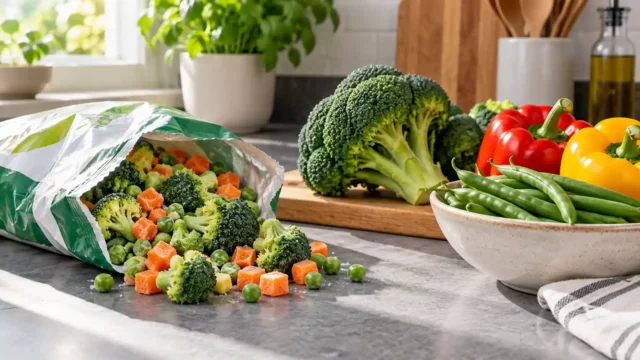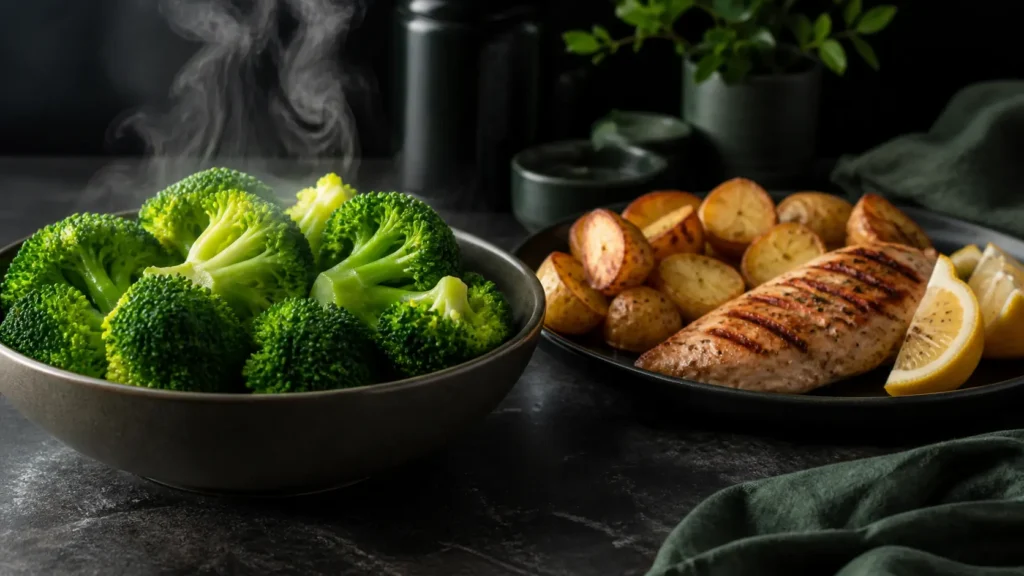
Broccoli is not exciting because it is rare, expensive or hard to prepare. It is useful because it is ordinary. A bag of frozen florets, a fresh head from the shop, a tray of roasted stems, or a few pieces folded into a stir-fry can add color, texture and several nutrients to meals that otherwise lean heavily on protein and starch.
For lifters, that role is easy to overlook. Training meals are often discussed as protein targets, carbohydrate timing and calorie totals. Those are real planning tools, but a plate built only from chicken and rice is still missing the produce, fiber and food variety that make a routine easier to sustain. Broccoli does not make a program work by itself. It helps make the whole meal feel more complete.
- What broccoli contributes beyond a green color
- Why cooking method and portion change the picture
- How broccoli fits a practical training meal
- When consistency matters more than chasing perfect vegetables
Broccoli brings more than one nutrient to the plate
Broccoli is commonly associated with vitamin C, and that association is deserved. The NIH lists cooked broccoli among notable food sources; a half cup of cooked broccoli provides 51 mg in its vitamin C table. Read the NIH vitamin C fact sheet for the fuller context, including the fact that vitamin C content can decline with prolonged storage and cooking.
It also contributes vitamin K and folate. The NIH’s vitamin K fact sheet lists chopped, boiled broccoli as a meaningful source of phylloquinone. Its folate fact sheet includes cooked broccoli among food sources of naturally occurring folate. Those are useful contributions, not a reason to treat one vegetable as a multivitamin replacement.
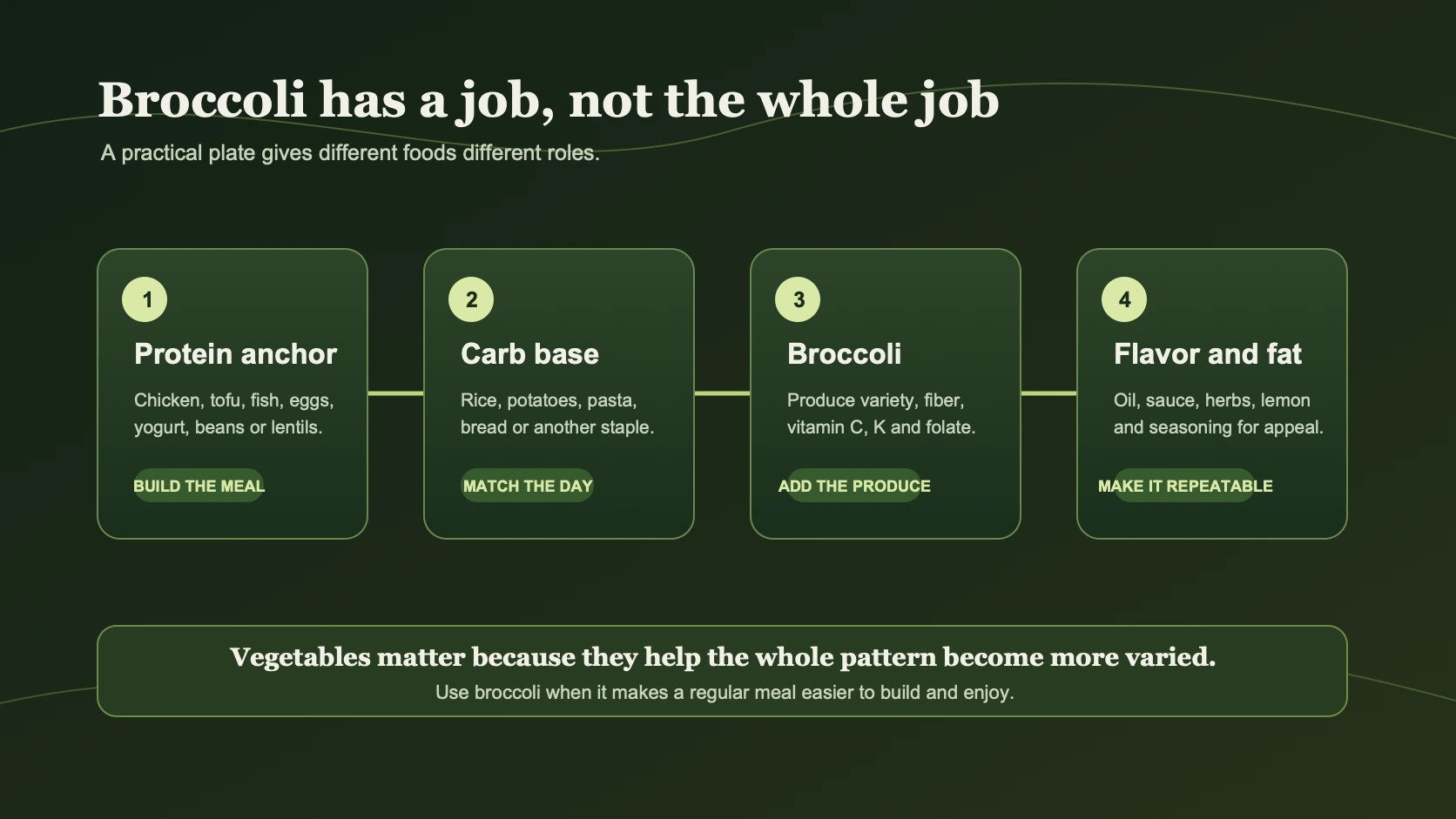
The practical value is the combination. Broccoli can add a distinct nutrient profile, fiber and volume alongside foods that are there for different reasons. A potato may provide the carbohydrate base. Chicken, tofu, fish, eggs, beans or yogurt may supply a more concentrated protein contribution. Broccoli gives the meal a vegetable component that is easy to recognize and adjust without making dinner complicated.
That role also improves the meal’s texture and visual contrast. A plate with a crisp or tender green vegetable beside familiar staples is often more satisfying than another beige bowl built from the same ingredients. The value is practical: more options make it easier to keep meals interesting across a normal week.
Raw, steamed, roasted or frozen all count
Nutrition discussions often get stuck on the one perfect preparation. In real life, the best version is usually the one you will make more than once. Raw broccoli can work in a crunchy salad or with a dip. Steamed broccoli is quick and mild. Roasted broccoli has more flavor and crisp edges. Frozen broccoli is inexpensive, keeps for a long time and can go directly into a pan, microwave or soup.
Cooking changes texture and can change nutrient content, especially for water-soluble vitamin C. That does not make cooked broccoli a bad choice. It means that a fresh, lightly cooked side and a long-boiled vegetable are not identical. Steaming, microwaving, roasting and stir-frying are all practical options when they make broccoli easier to eat regularly.
Use the stalk too. Peel the tough outer layer, slice the tender interior, and cook it with the florets. It adds a different texture and makes the purchase go further. The goal is not to turn meal prep into a sustainability project. It is to make a familiar vegetable less likely to disappear from the fridge untouched.
Build the meal around the job each food does
Broccoli is usually not the protein anchor or the main carbohydrate source. That is not a limitation. It makes the vegetable easy to pair.
- Add broccoli to rice, chicken and a sauce when you want a quick bowl.
- Roast it beside potatoes and salmon for a simple dinner.
- Stir it into pasta with beans, tofu or lean meat.
- Use frozen broccoli in an omelet, soup or curry when fresh produce is running low.
The best plate depends on the day. A person who has a demanding session may want more carbohydrate from rice, pasta or potatoes. Someone making a quick lunch may choose a wrap, leftovers and a bag of microwaved florets. The vegetable does not need a special pre- or post-workout status to be useful.
For a different carbohydrate foundation, Rice for Strength Training: White, Brown, Basmati or Jasmine? explains why the useful choice is the one that fits the meal and your routine. For another food that brings several plant nutrients to the same plate, read Lentils for Lifters. The foods are not competing for a winner. They make a meal more flexible together.
Vegetables matter because the pattern matters
No single vegetable can make up for inadequate food intake, inconsistent training or a diet that lacks variety. Broccoli cannot replace protein when protein is missing, and it cannot replace carbohydrate when a hard training week needs more energy. It is one useful piece in a wider pattern that can include fruit, beans, grains, dairy or fortified alternatives, meat or fish where included, and many other vegetables.
That variety is important because foods do not all bring the same mix of nutrients or the same cooking options. Spinach Looks Incredible on a Nutrition Label – But How Much Do You Actually Absorb? is a useful reminder that nutrition numbers need context. Broccoli is not spinach, and neither needs to win. Rotate greens, peppers, beans, tomatoes, peas, cabbage, carrots, fruit and the vegetables that work in your household.
One practical note matters for people using certain medication: vitamin K intake can be relevant to warfarin management. The NIH notes that people taking warfarin should keep their vitamin K intake consistent and discuss diet questions with their clinician. That is not a reason for everyone else to monitor broccoli precisely; it is a reason not to make broad nutrition advice sound universal.
Make the useful choice easy
Buy broccoli in the form you are most likely to use. Keep frozen florets for busy weeks. Roast a tray when the oven is already on. Add a handful to a dish that is otherwise mostly protein and starch. Season it enough that you enjoy it.
Broccoli earns a place in a lifter’s diet because it makes ordinary meals more varied, colorful and nutritionally useful. That is plenty. Vegetables do not need a dramatic marketing claim to matter.
FAQ
Is broccoli a good post-workout food?
It can be part of a post-workout meal, but it is not a recovery shortcut. Pair it with the protein, carbohydrate and total meal size that fit your training day and appetite.
Is frozen broccoli less nutritious than fresh broccoli?
They are not identical, but frozen broccoli is still a practical vegetable choice. Preparation, storage time and how often you actually eat it matter more than chasing a perfect format.
Do I need to eat broccoli every day?
No. Rotate broccoli with other vegetables, fruit, beans and plant foods you enjoy. Consistency and variety matter more than making one item mandatory.
Continue with a related guide
For another flexible carbohydrate base in active meals, read Rice for Strength Training: White, Brown, Basmati or Jasmine?. For a plant-based staple with its own protein, fiber and folate context, continue with Lentils for Lifters.