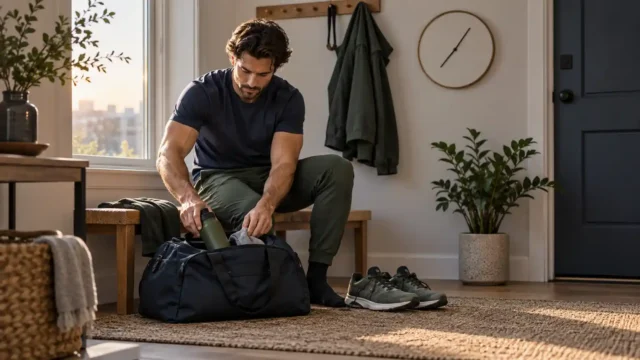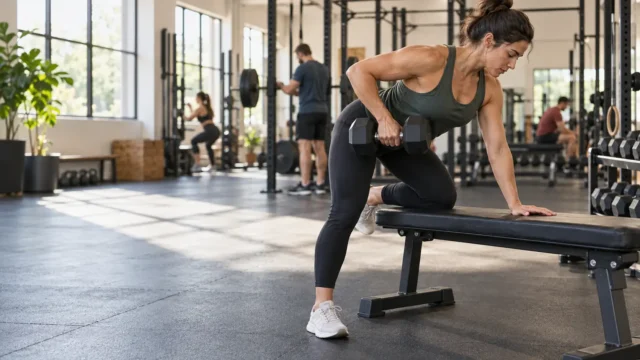
There is a small pleasure in arriving at the gym with no device asking you to improve the last session. You warm up, notice the room, take a few unhurried breaths and start lifting. The rest period ends because you feel ready to make the next set look good, not because your wrist has buzzed.
That is not a case against watches. They are useful tools, and the current popularity of wearable technology reflects that. The American College of Sports Medicine placed wearable technology first in its 2026 fitness-trends survey. For intervals, a running pace, a planned rest period or a simple weekly activity target, a watch can remove guesswork.
But a useful tool does not have to be used in every session. Training without a watch is sometimes a way to make the session quieter, not less serious.
- Why a watchless session can feel different
- When leaving the data behind makes sense
- How to keep the workout purposeful
- Where tracking still earns its place
Fewer prompts can make the work easier to notice
A training watch is good at turning movement into information. Steps, pace, heart rate, intervals and time between sets are all useful when they help you make a clearer decision. The problem is not measurement. The problem is allowing every number to become a verdict on whether a session counted.
Without the next prompt waiting on your wrist, different details become louder. You notice whether your warm-up is actually changing the way you move. You pay more attention to the bar path on a set of squats. You see that the easy walk after work is helping you leave work behind, even if it is not a route you need to pace.
That attention is part of why a simple plan can fit real life. In Fitness for People With Actual Lives, the point is not to make training look optimized from a distance. It is to make it repeatable on an ordinary week. Some days, the most repeatable choice is a session with fewer things asking for your attention.
Choose the sessions that do not need a scoreboard
A watchless session works best when you decide what it is for before you start. It might be an easy walk, a technique-focused lift, an accessory session or a calm return to training after a long day. The purpose gives the session shape even when you are not watching every minute pass.
For example, a lifter can decide that an upper-body day is about controlled rows, presses and a few sets of carries. A runner can leave the pace screen off for an easy route and let conversation-level effort guide the outing. Someone who is new to training can practise their basic movements without checking whether the session looks impressive in an app.
The same idea applies to the gym itself. The Weight Room Has Rules Nobody Ever Wrote Down is partly about making a shared space work. Being present enough to know when someone needs the rack, whether your setup is in the way or when a quick question deserves an answer is not a metric. It is still part of training well.
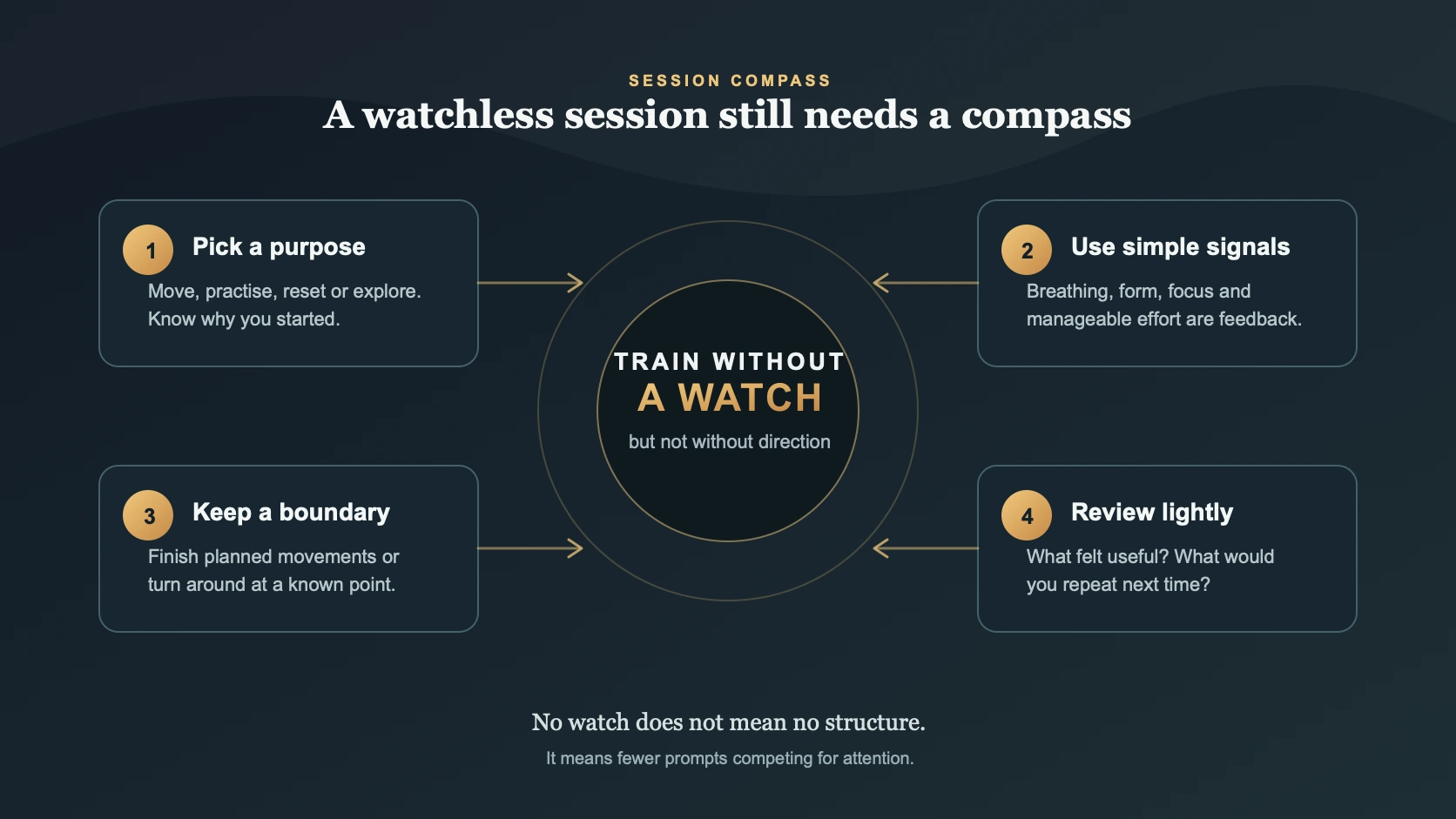
No watch does not mean no structure
Leaving a watch in the locker is not a licence to drift through a workout until boredom wins. Give yourself a light framework instead:
- Pick one purpose: move, practise, reset or explore.
- Choose a small number of movements or a familiar route.
- Use simple signals: breathing, form, focus and manageable effort.
- Keep a boundary, such as finishing the planned movements or turning around at a known point.
- Review briefly afterwards: what would you repeat next time?
This is especially useful for people who tend to turn every training day into a test. The Problem With Needing a PR Every Week makes the larger point: progress needs ordinary sessions to support the exceptional ones. A day that simply lets you practise, move and leave with energy is not a lesser day.
Tracking still has a job
There is no prize for refusing information that would genuinely help. A watch is practical when you need to hold a specific running pace, follow timed intervals, manage a planned recovery window or observe a trend over several weeks. A systematic review and meta-analysis of wearable activity-tracker interventions found that their effects on daily steps and moderate-to-vigorous activity varied with both the user and the way the intervention was designed. Read the review on wearable activity trackers as a reminder that the device is a tool, not a personality type.
The useful question is not, "Should I always track?" It is, "What decision will this number improve today?" If the answer is clear, use the watch. If the answer is that you are checking it because you feel uneasy without a score, try one session without it and see what you notice.
The same middle ground applies to performance goals. Why More People Want to Perform, Not Just Look Fit argues for goals that make the next decision clearer. A watch can help with that. So can a remembered rep target, a familiar route or a short note after training. The method matters less than whether it serves the work.
Let one quiet session be enough
You do not need to become the kind of person who trains without a watch all the time. Start with one low-stakes session: an easy walk, a familiar lift or a few movements you already know well. Decide the purpose before you begin, then let the equipment stay out of the conversation for an hour.
You may find the session feels no different. That is useful to know. Or you may notice your technique, your surroundings and the simple satisfaction of finishing the work are easier to hold in view.
Training has plenty of places for numbers. It also has room for a session that asks only one thing: be here long enough to do the work well.
FAQ
Is training without a watch less effective?
Not automatically. Effectiveness depends on the purpose of the session and whether the method helps you make useful decisions. Tracking can be valuable for structured work; a watchless session can be valuable when it helps you focus on movement and repeat the habit.
When should I keep my watch on?
Keep it on when you need its information for a specific decision, such as interval timing, a planned running pace or a weekly activity target. Use the data deliberately rather than checking it out of habit.
How do I avoid an unstructured watchless workout?
Choose a purpose, a route or a few movements before you begin. Then use a natural boundary, such as completing those movements with good form or reaching a familiar turnaround point.
Continue with a related guide
For a practical framework that survives a busy week, read Fitness for People With Actual Lives. For a calmer relationship with ordinary progress, continue with The Problem With Needing a PR Every Week.