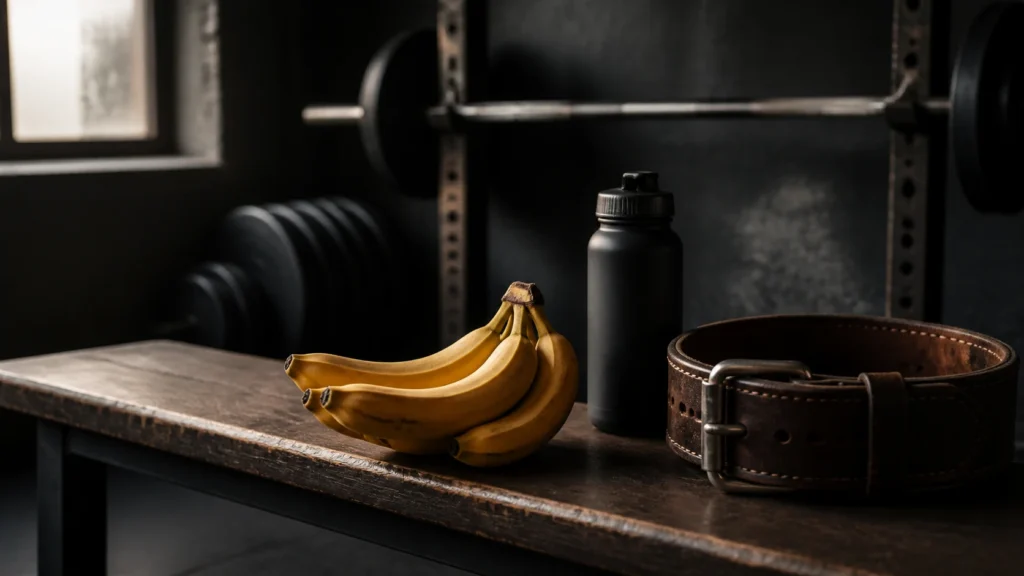
The banana has become gym shorthand: easy to carry, easy to eat and always waiting near the front desk or in someone’s bag. It is often treated as either the perfect training food or the kind of carb a serious lifter is supposed to outgrow. Neither story is especially useful.
A banana is an ordinary food that solves an ordinary problem. It is portable, requires no preparation and supplies carbohydrate with some potassium. That is enough to make it useful before or after training, during a busy day or as part of a snack. It does not need a more dramatic reputation than that.
- What a banana actually provides
- Why convenience matters around training
- Where potassium fits into the picture
- How to use bananas without overthinking them
The useful part is not mysterious
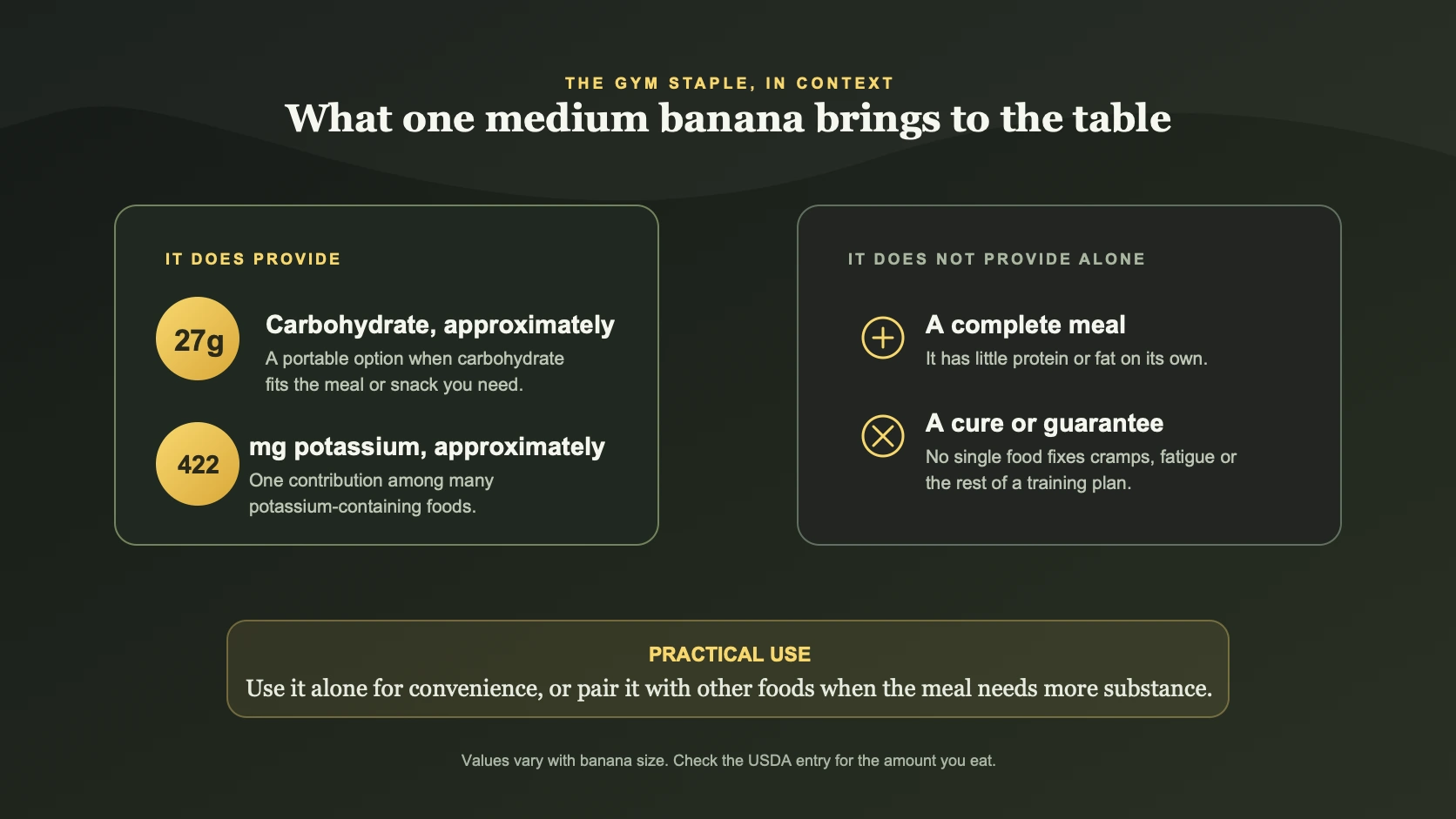
Nutrition numbers vary with size, but a medium banana is commonly listed at about 27 grams of carbohydrate. It is also a source of potassium: the National Institutes of Health lists a medium banana at 422 milligrams, or 9% of the Daily Value, in its potassium fact sheet. The USDA FoodData Central entry for raw bananas is the right place to check the values for the amount you actually eat.
That combination explains the gym reputation. Carbohydrate is familiar fuel for training, and a banana travels better than most foods that supply it. Potassium is an essential mineral found in a wide range of foods, not a banana-exclusive performance ingredient. Potatoes, beans, dairy, leafy vegetables, meat and fish can all contribute as well.
The important distinction is that a banana contributes to a diet; it does not complete one. It has very little protein and fat. If a meal needs protein, fibre, more carbohydrate or simply enough food to match the day, the banana is one item on the plate, not the entire answer.
Convenience can be a legitimate advantage
The best food plan is often the one you can execute when work runs late and training is next. A banana needs no container, cutlery or refrigeration. That makes it easy to put beside a water bottle, add to breakfast or eat on the way to a session.
This is not a rule that everyone needs a pre-workout banana. Some people prefer a fuller meal earlier, while others train at a time when fruit does not sound appealing. The practical question is simpler: does it make eating around training easier without upsetting the rest of your day?
If the answer is yes, use it. A banana with yogurt, milk, oats or a sandwich can be a more complete snack depending on what the rest of the meal needs. The article Oats for Lifters: Carbs, Fiber, Magnesium, Iron and More Than Just Breakfast shows why a basic bowl can be built from ordinary ingredients rather than a long list of supplements.
A simple food does not need a perfect label
It is easy to make food choices more complicated than the situation requires. A banana is sometimes described as too sugary, not substantial enough or only useful at a very specific point around a workout. Those labels miss the point. A food can be useful because it is available, familiar and easy to combine with something else.
The same banana can play different roles on different days. It might be the only thing you want before an early session, part of breakfast with oats and dairy, or the fruit that travels in your bag when there is a long gap before dinner. None of those uses requires a special protocol. The surrounding meal and the rest of the day do more work than the banana’s reputation.
That also means there is no need to force it. If fresh fruit is inconvenient at your workplace, choose another carbohydrate-containing food you actually enjoy. Consistency is built from options that fit your routine, not from copying the contents of someone else’s gym bag.
Potassium deserves context too
Potassium often gets reduced to a single gym claim: eat a banana and you will avoid cramps. Real life is less tidy. The NIH notes that potassium is found across plant and animal foods, and one banana is only one contribution among many. Training discomfort, fatigue and cramping do not have one universal explanation or a one-food fix.
That is a good reason not to build a nutrition plan around a single nutrient. A varied diet gives you more than one route to potassium and more than one type of food to enjoy. Potatoes for Lifters: Carbs, Potassium, Vitamin C and Why They Deserve More Respect makes the same practical point from a different direction: familiar staples can be useful without becoming superfoods.
For most lifters, the useful move is to let the banana be part of a normal food pattern. If you have a medical condition or take medication that affects potassium handling, personal dietary advice should come from a qualified clinician or dietitian rather than a gym article. The NIH fact sheet explains why potassium guidance can differ in those cases.
Ripe, green or blended is mostly a preference question
Bananas change as they ripen. A greener banana is firmer and less sweet; a ripe one is softer and sweeter. Both can fit. The better choice is usually the one you enjoy, digest comfortably and can keep on hand.
Blending a banana into a smoothie is convenient when you want to add milk, yogurt or other ingredients. Eating it whole is convenient when you do not. Banana chips, banana bread and flavoured snack bars are different products with different ingredients, so do not assume they are nutritionally interchangeable with fresh fruit.
This is the same sensible approach used for Rice for Strength Training: White, Brown, Basmati or Jasmine?. Food choices do not need a permanent winner. Choose the version that suits the meal, your preference and what you will actually repeat.
Put the staple back in its place
A banana does not make a workout better by itself. It will not replace regular meals, protein intake, sleep or a sensible program. But it can make one small part of training days easier: getting a familiar carbohydrate-containing food into your routine without planning a production around it.
Keep a few at home if you like them. Pair one with other foods when the meal needs more substance. Skip it when another option is more appealing. The value is not in treating the banana as a ritual. It is in having one more straightforward option that works when you need it.
FAQ
Are bananas good before a workout?
They can be a practical option if you want an easy carbohydrate-containing food before training. Timing and portion are personal; use the option that fits your appetite and the rest of your day.
Do bananas prevent muscle cramps?
No single food can guarantee that. Bananas contribute potassium, but cramping and training discomfort have multiple possible causes. Treat a banana as food, not a cure.
Should I eat a banana with protein after training?
If your next meal or snack needs protein, pairing a banana with a protein-containing food is a simple option. The right choice depends on your total daily food intake, preferences and schedule.
Continue with a related guide
For another practical staple with carbohydrate and potassium, read Potatoes for Lifters: Carbs, Potassium, Vitamin C and Why They Deserve More Respect. For a flexible carbohydrate choice around strength training, continue with Rice for Strength Training: White, Brown, Basmati or Jasmine?.