Brussels sprouts rarely get promoted as a lifting food. That is fair: they are not a protein main course or a concentrated training fuel. They are useful for a less dramatic reason. A normal portion adds fiber, vitamin C, vitamin K, folate and potassium to a meal that may otherwise be built entirely around protein and starch.
If you lift and want more variety on the plate, Brussels sprouts are one practical option. You do not need to eat them raw, protect every molecule with a complicated cooking method or treat them as a recovery supplement. This guide separates what a measured serving contains from what the vegetable cannot do, then shows how to make it worth eating.
- What a cooked serving contributes
- Why those nutrients matter without promising performance
- How cooking changes the comparison
- How to use Brussels sprouts in an ordinary meal
What is actually in a serving?
The USDA FoodData Central entry for cooked, boiled, drained Brussels sprouts without salt gives the following values per 100 grams of edible food. That is about 3.5 ounces. It is a reference amount for comparison, not a suggested personal portion, and it does not describe sprouts roasted with oil or served with sauce.
| Nutrient | Approximate amount per 100 g cooked |
|---|---|
| Energy | 36 kcal |
| Protein | 2.6 g |
| Carbohydrate | 7.1 g |
| Fiber | 2.6 g |
| Potassium | 317 mg |
| Vitamin C | 62 mg |
| Folate | 60 mcg DFE |
| Vitamin K | 140 mcg |
There is value here, but the units matter. The 2.6 grams of protein are a contribution to the whole diet, not a substitute for an egg, a portion of chicken, beans or another substantial protein food. The carbohydrate amount is modest compared with a serving of rice or potatoes. Brussels sprouts work best as the vegetable alongside those foods, not as a replacement for everything else on the plate.
Food databases are estimates. Variety, growing conditions, storage, trimming, water loss and cooking method can change the numbers you eat. A kitchen portion also changes in weight after cooking. If you compare a raw 100-gram entry with a cooked 100-gram entry, you are comparing equal finished weights, not necessarily the same starting batch.
The micronutrients have ordinary jobs
Vitamin C contributes to normal collagen formation and helps absorb non-heme iron from plant foods. The NIH Office of Dietary Supplements vitamin C fact sheet lists cooked Brussels sprouts among food sources. That is a reason to count them as part of a varied diet, not evidence that one side dish repairs training damage or improves a lift.
Folate supports processes involved in making new cells. The NIH folate fact sheet includes Brussels sprouts among food sources and makes clear that the amount depends on the specific food and serving. This is useful context when a diet leans heavily on a few repeated foods. It is not a reason to chase one vegetable as though it could cover every nutrient need.
Vitamin K is involved in normal blood clotting and bone-related proteins. The NIH vitamin K fact sheet also notes that intake should remain consistent for people taking warfarin or similar vitamin-K-antagonist medicines. If that applies to you, follow your clinician’s advice before making a large change to how often you eat vitamin-K-rich vegetables. This article cannot set an individual intake target or change a medication plan.
Fiber is another ordinary advantage. It helps make the vegetable part of a more varied meal, but a large serving of cruciferous vegetables can be uncomfortable for some people, especially close to training. Personal tolerance matters. A smaller cooked portion, eaten farther from a session, may be easier than a large raw salad. There is no performance prize for eating the most sprouts you can tolerate.
Cooking changes the food, but there is no perfect method
Raw, boiled, steamed and roasted sprouts are not nutritionally identical. Heat and water can alter vitamin C and plant compounds. In a study comparing cooking methods for Brassica vegetables, vitamin C fell substantially across the tested methods, while other phytochemicals responded differently. A separate Brussels-sprouts cooking study found that boiling in water led to more measured nutrient losses into the cooking medium than steaming or sous-vide preparation under its conditions.
Those are laboratory comparisons, not a verdict that boiled vegetables are worthless or that steaming is mandatory. The outcome depends on the nutrient measured, the time and method used, and how much of the finished vegetable someone actually eats. A slightly less nutrient-dense serving you enjoy every week can be more useful in practice than a theoretical ideal you never prepare.
Roasting is a good example of that trade-off. Halve sprouts of similar size, toss them with a little oil, spread them in one layer and cook until the cut sides brown and the centers become tender. The oil, seasoning and cooking loss mean the USDA boiled-food numbers above no longer describe the exact plate. They also make the food easier for many people to enjoy. If a simple steamed version suits your meal, use that instead. The goal is a repeatable vegetable side, not a contest to preserve a single compound.
Build the meal around complementary roles
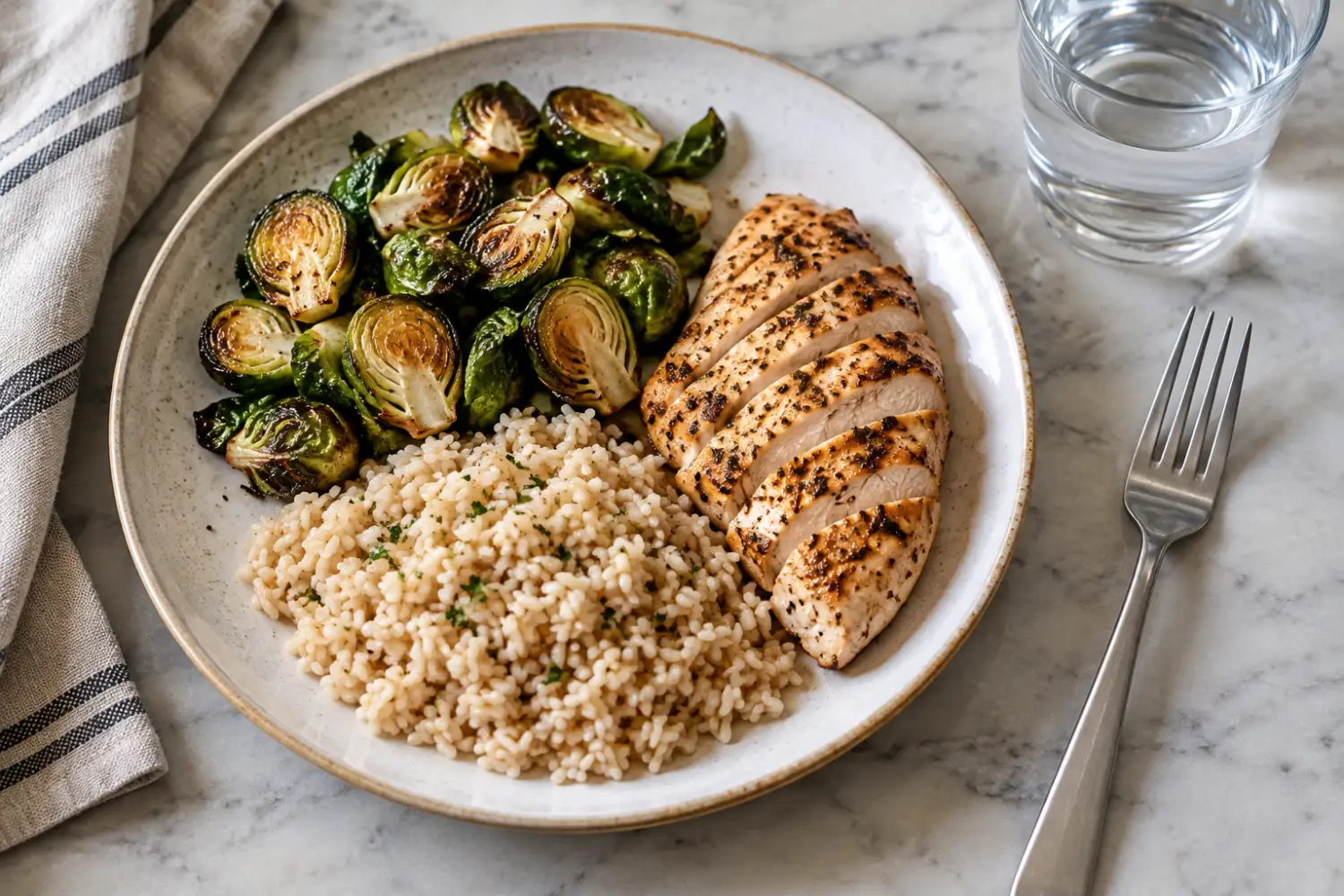
The easiest way to use Brussels sprouts is to stop asking them to do every job. Pair them with a protein food that fits your diet and a carbohydrate source that fits the meal. For example, roasted sprouts can sit beside chicken and rice, tofu and potatoes, or beans and a grain. The vegetable adds flavor, texture and micronutrients; the other foods provide much more of the protein or energy. Our guide to what chicken breast contributes shows why the protein side of that plate has its own role.
You can also make sprouts the supporting ingredient rather than the entire side: shred a small amount into a warm grain bowl, mix roasted sprouts with another vegetable, or add them to a leftover meal. This can be easier on the budget and on digestion than buying enough to make a large serving every day. Fresh and frozen versions are both workable; cook the frozen product according to its package and judge the finished texture rather than assuming one version is nutritionally superior in every setting.
There is no need to force them into a pre-workout meal if their fiber or flavor does not sit well before training. A normal meal later in the day is still a normal meal. Similarly, a rest-day plate does not need fewer vegetables because no workout happened. The value comes from the overall eating pattern and from meals you can repeat, not from timing Brussels sprouts around a session.
If your main question is which carbohydrate belongs next to them, our comparison of rice choices for strength training keeps that decision practical. If you want another vegetable with a different flavor and preparation style, broccoli is another useful option. Variety is often more realistic than declaring one vegetable the winner.
A simple buying and preparation routine
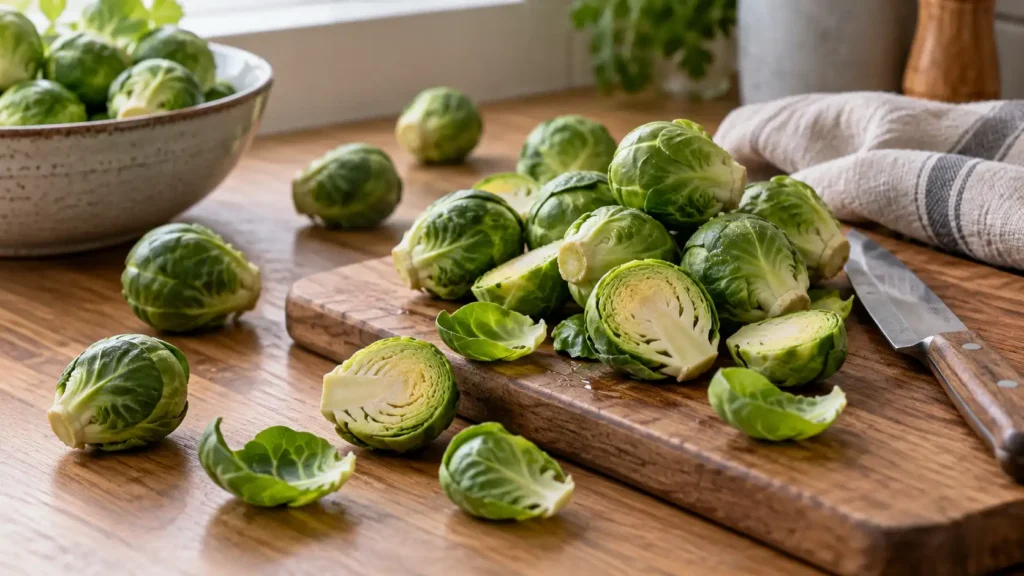
Choose one version you will actually use this week. Fresh sprouts should feel firm and have tightly held leaves; remove any damaged outer leaves and trim the stem end before cooking. Frozen sprouts remove most of that preparation. Neither needs a complicated recipe. A small amount of oil, seasoning and an uncluttered pan can be enough; overfilling the pan tends to steam the sprouts rather than brown them.
If bitterness puts you off, try halving and browning them instead of boiling them for a long time. If you still dislike them, choose another vegetable. Nutrient tables describe what is available in food; they do not make that food compulsory. Broccoli, peppers, leafy greens, carrots and many other vegetables can contribute to a varied diet without requiring you to enjoy every member of the cabbage family.
Keep the serving realistic for your appetite and the rest of the meal. There is no need to turn a vegetable into a protein target, a cure or a test of discipline. The useful question is whether adding it makes the meal easier to enjoy and the overall diet more varied.
Conclusion
Brussels sprouts earn their place as a vegetable side. A cooked reference serving provides fiber, vitamin C, folate, vitamin K and potassium, while offering only modest protein and carbohydrate. They can improve the variety of an ordinary meal, but they do not replace a substantial protein food or a training fuel source.
Cook them in a way you will repeat, pair them with foods that do the other jobs on the plate, and let tolerance and preference decide the portion. That is a more useful standard than treating one vegetable as either a miracle food or a waste of space.