Salmon gets recommended so often that it can start to sound like a nutrition cliche. For lifters, though, the case is still solid when it is kept honest. Salmon is not a muscle-building shortcut. It is a protein food that also brings nutrients many people are not getting from chicken breast, rice, and protein powder.
The main package is simple: high-quality protein, EPA and DHA omega-3 fats, vitamin D, selenium, and potassium. That makes salmon useful for a training diet because it can cover several jobs at once. It can anchor a meal, add dietary fat, contribute micronutrients, and help someone eat seafood without needing a complicated recipe.
This article is for healthy adults who lift and want a practical food-level explanation. The short version is this: salmon can be a strong repeatable protein option, especially when you build the rest of the plate around it and keep seafood variety and mercury guidance in mind.
- Why salmon works for lifters
- What a reference serving gives you
- Why omega-3s get so much attention
- How vitamin D, selenium, and potassium fit
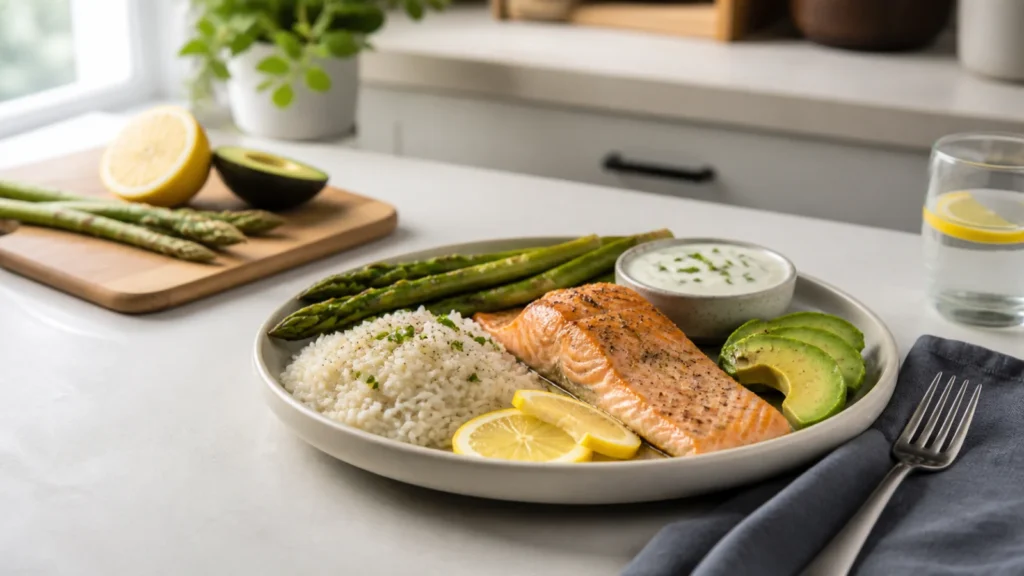
- How to build a salmon meal that supports training
Why salmon works for lifters
The obvious benefit is protein. The ISSN position stand on protein and exercise points to daily protein intake around 1.4-2.0 g per kilogram of body weight for most exercising individuals and meal-level targets that often fall around 20-40 g of high-quality protein. A normal salmon portion can help reach that without needing a shake.
But salmon is more interesting than protein alone. Unlike very lean protein foods, salmon also contains meaningful fat, including long-chain omega-3 fatty acids. That can make the meal more satisfying, and it changes the nutrient profile in ways that matter for general health.
The mistake is turning that into a recovery fantasy. Eating salmon after training does not erase bad programming, poor sleep, or under-eating. It simply gives the diet a nutrient-dense protein option that is easy to pair with carbohydrates and vegetables.
What a reference serving gives you
Using USDA FoodData Central values for 100 g cooked farmed Atlantic salmon as a reference, salmon provides roughly:
- 22.1 g protein
- 13.1 mcg vitamin D
- 41.4 mcg selenium
- 384 mg potassium
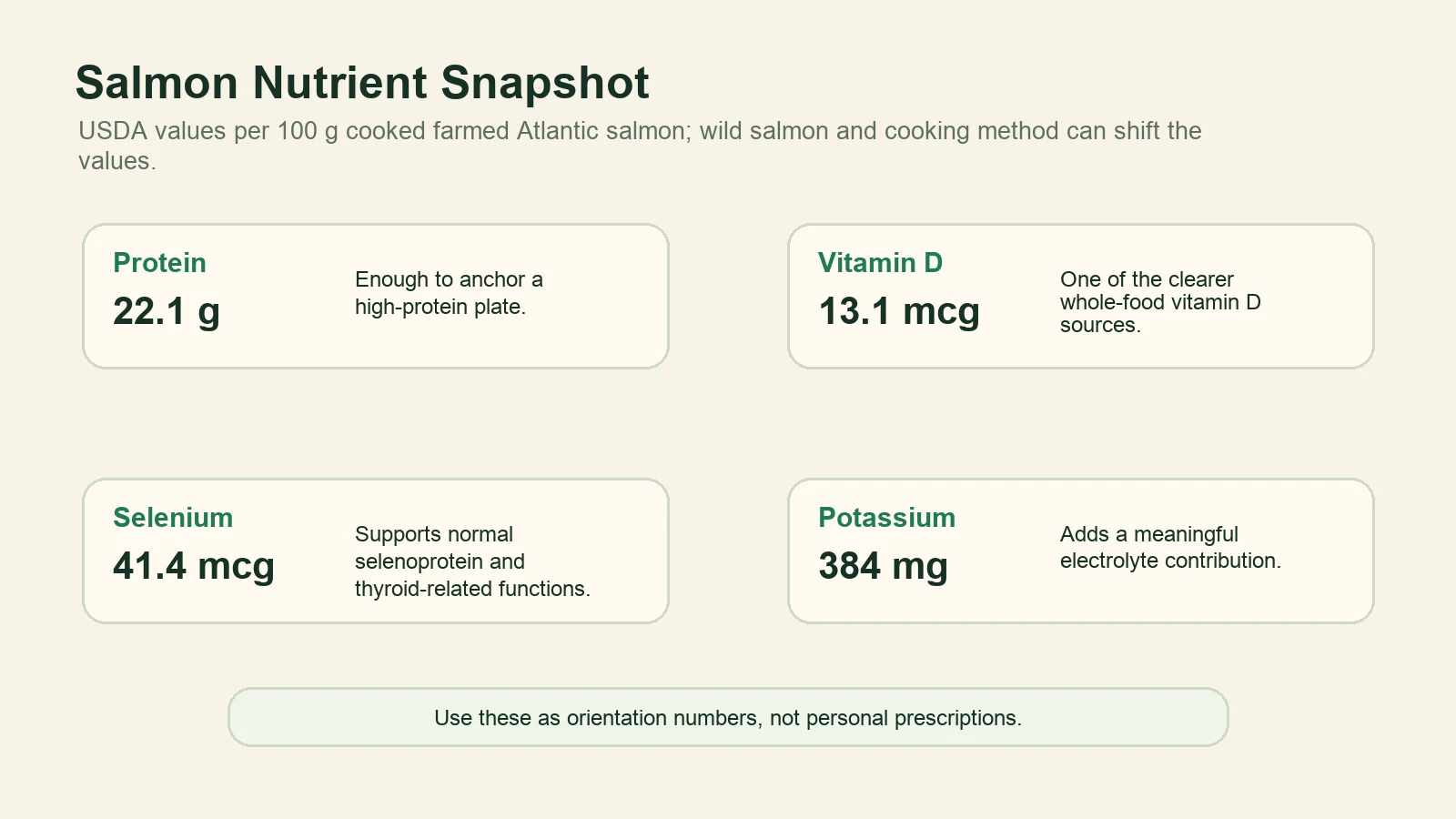
Those numbers make the food practical. A 100 g portion is already a meaningful protein serving, and many meals use more than that. The vitamin D and selenium numbers are especially notable because they are not nutrients lifters usually plan around.
The values also show why salmon should be interpreted as food, not as a prescription. Wild salmon, farmed salmon, canned salmon, smoked salmon, and different cooking methods can shift the final nutrient picture. Smoked products can also be much higher in sodium, which changes the meal.
Why omega-3s get so much attention
The NIH Office of Dietary Supplements omega-3 fact sheet explains that the omega-3 family includes ALA, EPA, and DHA, with much of the research attention focused on EPA and DHA. These long-chain omega-3s are found mainly in seafood and fish oil.
For lifters, omega-3s should be framed as part of diet quality, not as a guaranteed soreness cure. They are important fats with roles in human physiology, and fatty fish is one of the most direct food routes to EPA and DHA. That is enough reason to care without pretending that one salmon dinner changes performance the next day.
This distinction matters because supplement culture often makes nutrients sound like switches. Omega-3s are not a switch. They are part of a broader pattern that includes total energy, protein, carbohydrates, sleep, training load, and overall food variety.
How vitamin D, selenium, and potassium fit
Vitamin D is one of salmon’s strongest practical arguments. The NIH vitamin D fact sheet notes that vitamin D status is influenced by sun exposure as well as diet, and that few foods naturally contain meaningful amounts. Fatty fish is one of the clearer natural food sources.
That does not mean salmon replaces blood testing or medical guidance for someone with suspected deficiency. It does mean salmon can be one useful dietary contributor, especially for people who get limited sunlight or eat very little seafood.
Selenium is another under-discussed nutrient. The NIH selenium fact sheet describes selenium as a component of selenoproteins involved in thyroid hormone metabolism, DNA synthesis, reproduction, and protection from oxidative damage and infection. Salmon can contribute a large share of the adult daily target in a normal serving.
Potatoes for Lifters explains why this ordinary side dish contributes more than carbohydrate when you build a practical training meal.
Potassium is quieter but still useful. The NIH potassium fact sheet describes potassium as an essential mineral and electrolyte. Salmon is not a potassium champion compared with potatoes, beans, or some fruits, but it adds a meaningful amount to a meal that may already include potassium-rich sides.
How to build a salmon meal that supports training
Start with a clear portion. A palm-sized fillet is easier to repeat than a vague "some salmon" serving. If you track intake, weigh it cooked or raw consistently so your numbers do not drift.
Then add carbohydrate. Salmon with only salad can be fine for a low-energy meal, but many lifters need more fuel than that. Rice, potatoes, noodles, bread, fruit, or beans can turn salmon from a protein plate into a training-day meal.
Next, add produce. Asparagus, broccoli, tomatoes, greens, citrus, berries, cucumber, or cabbage all work. Produce adds fiber, volume, potassium, and meal satisfaction. It also keeps the meal from becoming one rich food repeated without balance.
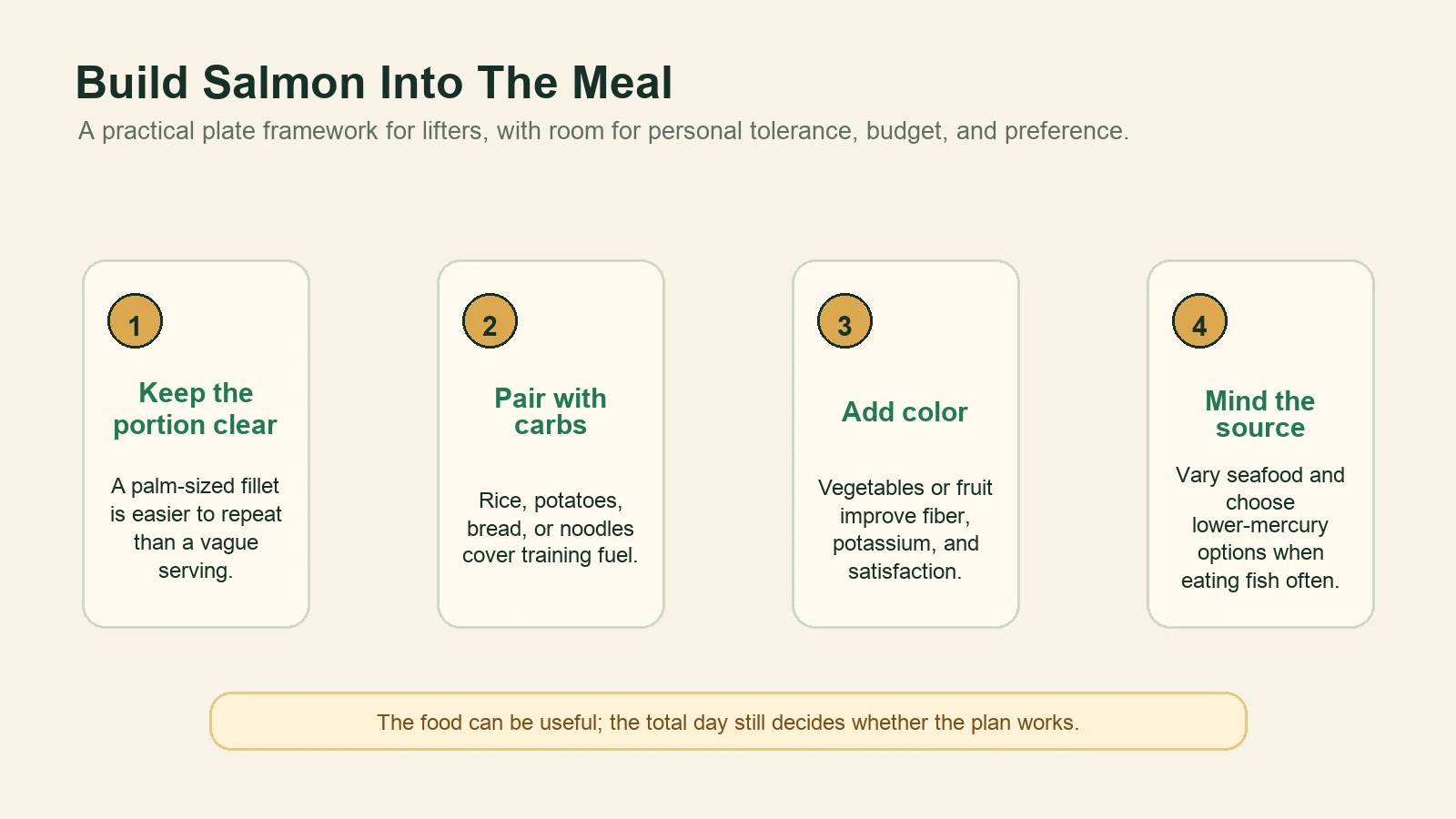
The final piece is seafood variety and safety. The FDA advice about eating fish encourages choosing a variety of fish lower in mercury. Salmon is commonly included among lower-mercury choices, but variety still matters, especially for people who eat fish several times per week.
If you are pregnant, breastfeeding, immunocompromised, managing kidney disease, on blood-thinning medication, or under medical advice about seafood, mercury, sodium, or vitamin D, use individual guidance rather than a general article.
What salmon does not do
Salmon does not replace a full protein plan. It does not make vegetables optional. It does not fix low carbohydrate intake if your training volume needs more fuel. It also does not need to be eaten by people who dislike fish or avoid animal foods.
It is also not automatically better in every form. Fresh, frozen, canned, and smoked salmon can all fit, but they behave differently. Canned salmon can be convenient. Smoked salmon can be very salty. Sauces can add calories quickly. These details do not make salmon bad; they make label-reading useful.
The best role for salmon is repeatable variety. It gives lifters a different nutrient profile from poultry, beef, eggs, or dairy. That is the point.
A practical serving note
For most lifters, salmon is easiest to use when the serving is boringly clear. Decide whether the meal is a snack, a light meal, or a full training meal. A small fillet with vegetables may be fine on a rest day, but it may not be enough after a hard lower-body session if the rest of the day is light on calories and carbohydrate.
This is also where cost matters. Fresh salmon is not the only valid option. Frozen fillets, canned salmon, and simple meal-prep portions can all make the food more repeatable. The goal is not a perfect restaurant plate. The goal is a seafood option you can use without making the week harder.
Continue with a related guide
For the next practical step, read Sardines Might Be the Most Underrated Food in a Lifter’s Diet. For a second perspective from the same topic cluster, continue with Beef for Strength Athletes: Protein, Iron, Zinc, B12 and Creatine Explained.
Conclusion
Salmon is useful for lifters because it combines high-quality protein with EPA and DHA omega-3s, vitamin D, selenium, and potassium. That makes it more than a protein source, but less than the recovery miracle it is sometimes made out to be.
Use salmon as a practical seafood option inside a balanced pattern. Pair it with enough carbohydrate for your training, add produce, keep the serving clear, and vary seafood choices over the week. The value is not drama. The value is a food that quietly covers several nutritional jobs at once.
FAQ
Is salmon good after lifting?
Yes, it can be. Salmon provides high-quality protein and useful nutrients, but the whole meal matters. Many lifters will benefit from adding carbohydrate and produce rather than eating salmon alone.
Is canned salmon as useful as fresh salmon?
It can be, depending on the product. Canned salmon is convenient and may contain edible bones for calcium, but sodium and texture vary. Check the label and choose the version that fits your meal.