
Balancing the gym with a full-time job is not mainly a motivation problem. It is a scheduling problem, an energy problem, and sometimes a commute problem. If the plan only works when work ends on time and your brain is fresh, the plan is too fragile.
The gym can fit a normal workweek, but it has to be treated like a real appointment. The CDC adult physical activity guidance includes muscle-strengthening activity at least two days per week. That is a useful starting point because it makes the first target smaller than many people expect.
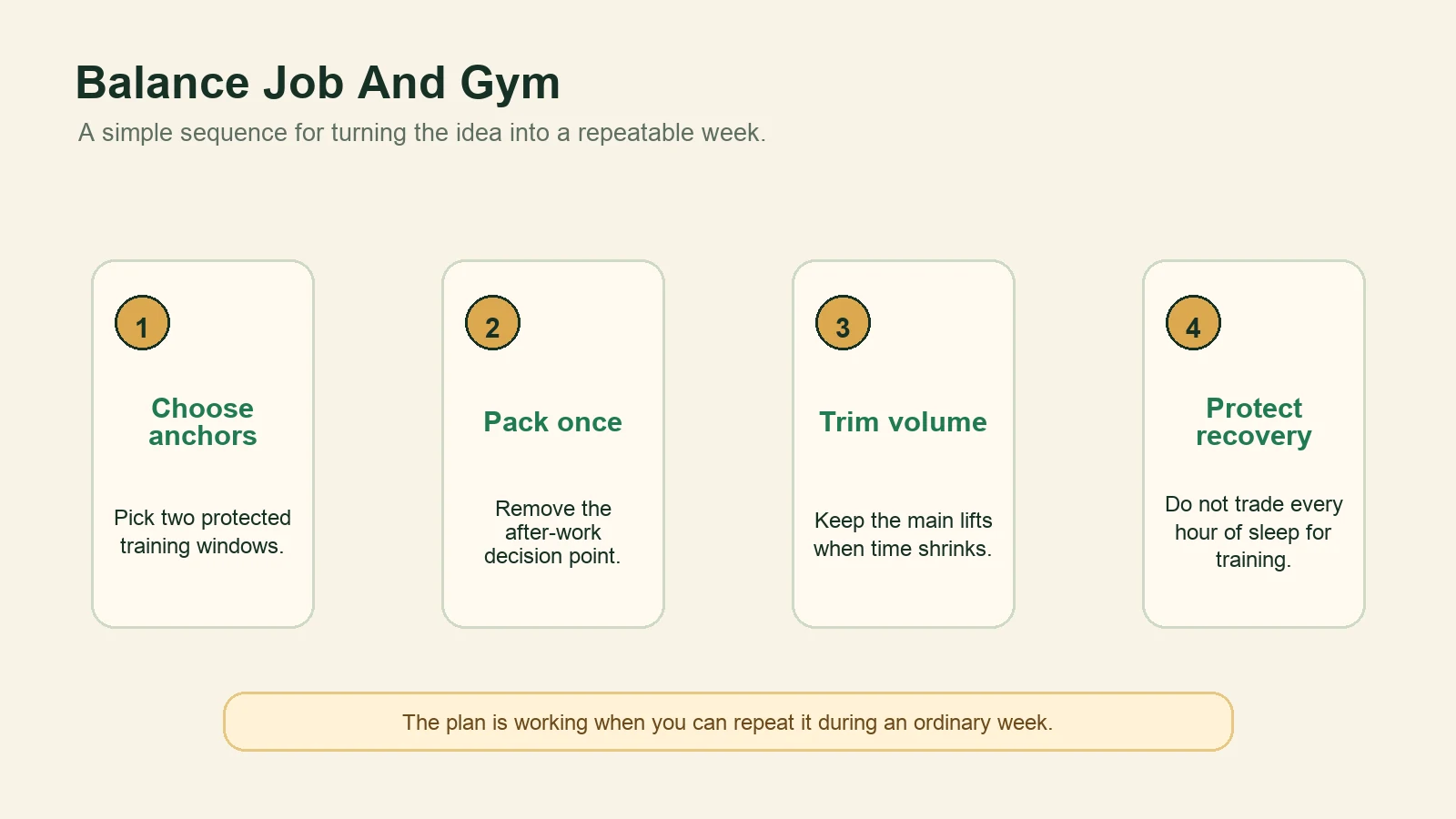
This guide is for people with jobs, meetings, emails, commutes, errands, and limited evening energy. The short version is this: pick two protected training windows, prepare before decision fatigue hits, and use shorter sessions when the week gets tight.
- Choose your training window honestly
- Use two anchors and one backup
- Trim the workout before you skip it
- Protect recovery from the workweek
Choose your training window honestly
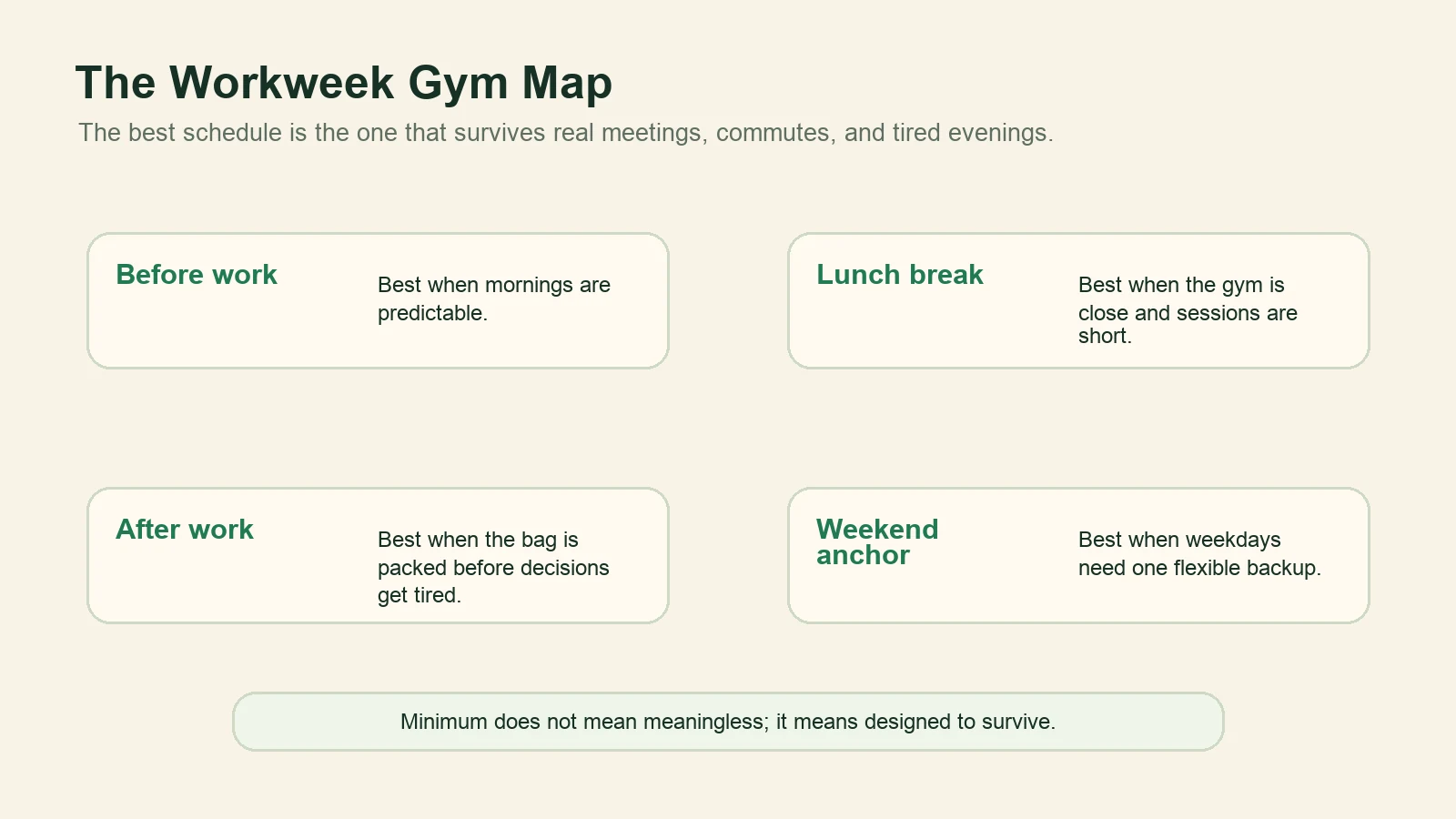
There is no universal best time to train. Before work is useful if mornings are predictable and you can sleep enough. Lunch training works if the gym is close, the session is short, and your workplace allows it. After work works well if the bag is packed and you do not go home first into a couch-shaped trap.
The mistake is choosing the time you admire instead of the time you can repeat. If you are not a morning person and regularly sleep late, a 6 a.m. plan may create more guilt than progress. If work regularly runs late, after-work training may need a shorter version or a weekend anchor.
Use two anchors and one backup
A full-time job rewards simple systems. Choose two anchor sessions that are protected by default. For example, Tuesday after work and Saturday morning. Or Monday lunch and Thursday before work. The exact days matter less than whether they have a reason to exist.
Then choose one backup window. This is the key detail. Without a backup, one late meeting can cancel half the week. With a backup, you already know where the session moves.
The Move Your Way campaign from HHS is built around making activity fit real life, and that framing is helpful here. You are not failing because your schedule has constraints. You are designing around constraints.
Trim the workout before you skip it
When time shrinks, do not treat the workout as all-or-nothing. Keep the main work and cut the extras. If the normal session is six exercises, the short version might be three: squat or leg press, row or pull, and press. If the normal session is 60 minutes, the short version might be 30.
The ACSM progression model shows that resistance training can be organized through many variables, including volume and intensity. For the everyday lifter, that means you have levers. You can reduce sets, keep effort controlled, and preserve the pattern without pretending the short session is useless.
Short sessions are not a lack of discipline. They are how training survives employment.
Protect recovery from the workweek
The easiest way to make a job and gym conflict worse is to steal all training time from sleep. That may work for a week. It usually fails as a lifestyle.
Recovery does not need to be fancy. Eat enough. Keep some protein in the day. Do not turn every session into a max-effort test. Leave enough time to wind down after late workouts if training at night makes sleep harder.
The habit side also matters. A real-world habit formation study found that automaticity develops gradually and varies widely. Give your work-gym routine time to become normal instead of judging it after one awkward week.
If work explodes, do 25-30 minutes: one lower-body move, one push, one pull, and leave. Protect the rhythm first.
Make the commute part of the plan
The gym is not only the workout. It is also the travel, changing clothes, showering, eating, and getting home. A plan that ignores those pieces can look efficient on paper and still feel impossible by Thursday.
If the commute is long, choose fewer gym days and make them more protected. If the gym is close to work, train before going home. If home is the realistic base, use a short home setup during busy weeks and save the gym for heavier sessions. None of these choices are less serious. They are logistics.
Meal timing can also reduce friction. A packed snack, a simple dinner plan, or a meal-prep container can prevent the classic after-work problem where hunger and fatigue negotiate against the gym.
Continue with a related guide
For the next practical step, read How to Make Strength Training Part of Your Life. For a second perspective from the same topic cluster, continue with How to Stay Consistent When Life Gets Chaotic.
Conclusion
Balancing the gym with a full-time job is easier when the plan respects the job instead of pretending it does not exist. Pick two anchor sessions, pack before decisions get tired, keep a backup window, and shorten workouts before you skip them.
The goal is not to win the week perfectly. The goal is to keep training present in a life that already has responsibilities.
FAQ
Is it better to train before or after work?
The better time is the one you can repeat while sleeping enough. Morning, lunch, evening, and weekend sessions can all work when the setup fits your real schedule.
How many days should I train with a full-time job?
Start with two consistent strength sessions. Add a third only when recovery, schedule, and motivation are stable enough that it does not break the plan.