
Strength training becomes part of your life when it stops depending on a perfect week. That is the piece many beginners miss. They build a plan for the version of themselves who sleeps well, leaves work on time, has no family emergencies, and always feels motivated. Then real life arrives and the plan feels broken.
A better approach is smaller and more durable. You need enough training to create progress, but not so much that it competes with every other responsibility. The CDC adult physical activity guidance includes muscle-strengthening activity at least two days per week, which is a useful reminder that strength does not need to start with a six-day program.
This guide is for healthy adults who want strength training to become normal. The short version is simple: choose two repeatable sessions, attach them to real routines, track only what helps, and keep a shorter fallback version ready.
- Start with a minimum week
- Attach training to something that already exists
- Make setup easier than skipping
- Progress without turning life into a program
Start with a minimum week
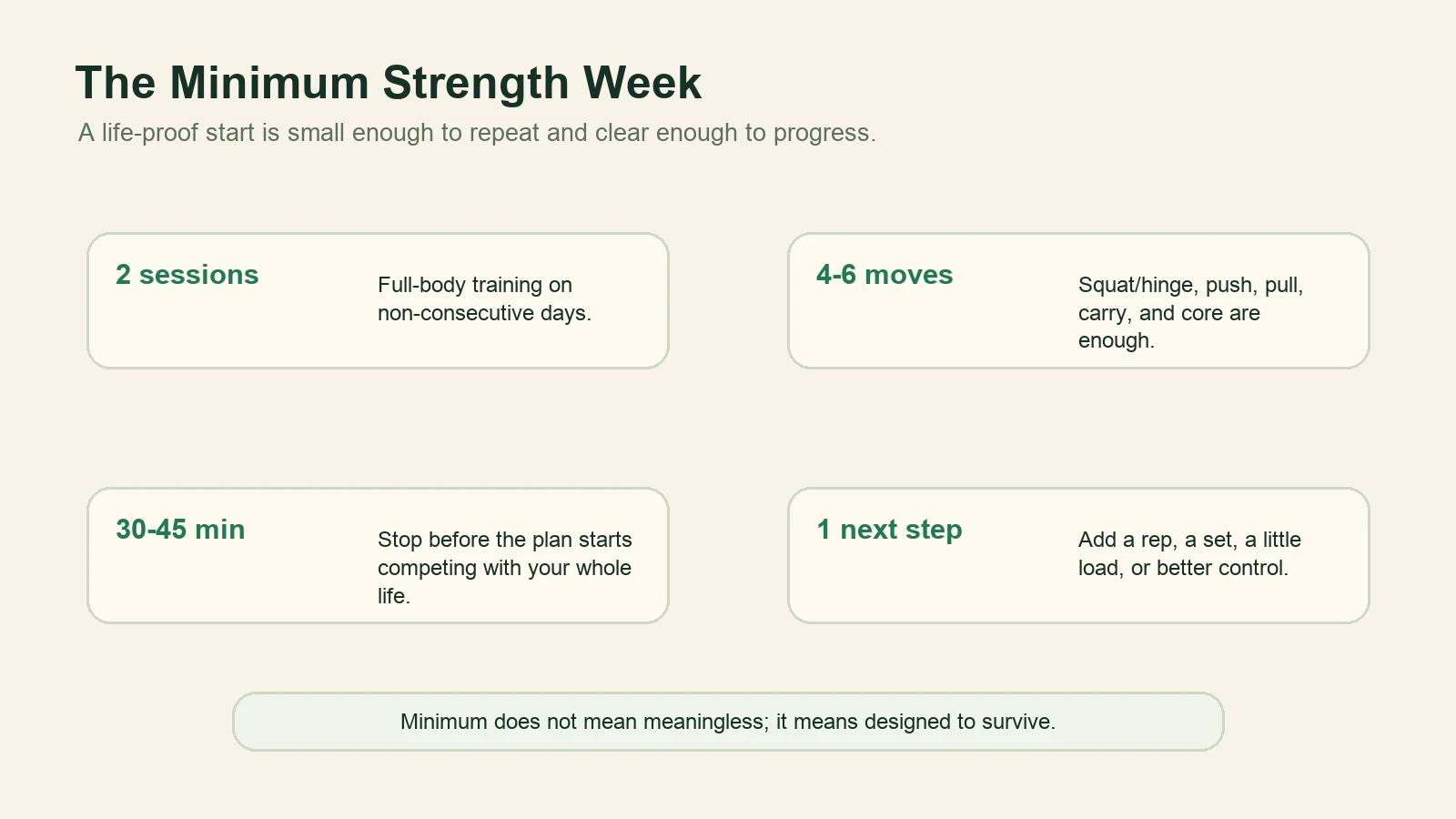
The minimum week is not the dream version. It is the version you can repeat while tired, busy, and slightly distracted. For many people, that means two full-body sessions on non-consecutive days.
Each session can include four to six movement patterns: a squat or leg press, a hinge, a push, a pull, a carry, and a simple core movement. You do not need to collect exercises like souvenirs. You need enough structure to practice the important patterns and enough repetition to get better at them.
The Physical Activity Guidelines for Americans emphasize that adults gain health benefits from moving more and sitting less, and that some activity is better than none. That principle matters emotionally as much as physiologically. A 35-minute session that happens every week beats a perfect program that keeps being postponed.
Attach training to something that already exists
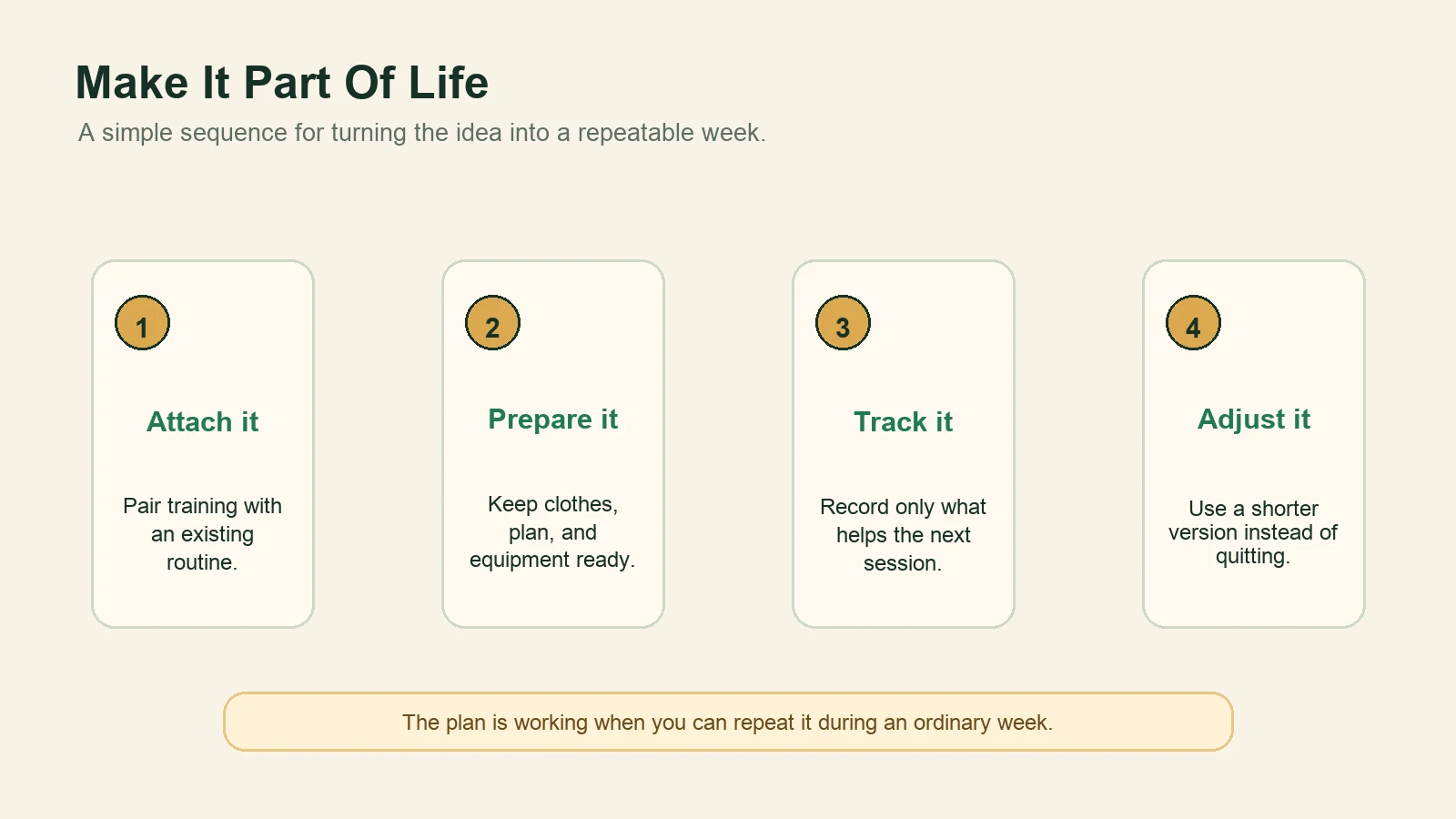
New habits survive better when they have a cue. You can attach training to the end of work, the start of a lunch break, the school drop-off window, or the first quiet hour on Saturday. The point is to stop asking "When will I feel like training?" and start asking "Where does this already fit?"
The habit research is not as simple as "21 days makes a habit." A study by Lally and colleagues found that habit formation varies widely and often takes longer than popular claims suggest. That is useful, not discouraging. It means the first weeks are supposed to feel a little deliberate.
Pick a cue, then repeat it. Training after work on Tuesday and Friday may feel boring, but boring is often the bridge between intention and identity.
Make setup easier than skipping
Friction kills good plans. If your shoes are buried, your program is undecided, your water bottle is dirty, and your gym bag is empty, skipping becomes easier than starting.
Prepare the next session before you need motivation. Put the clothes out. Keep the plan in your notes app. Leave your gym card where you can see it. If you train at home, keep the first piece of equipment visible enough that the session has a beginning.
This is not about aesthetic discipline. It is about reducing decision points. The fewer choices required before the first set, the more likely the session is to happen.
Progress without turning life into a program
Progression does not have to be dramatic. The ACSM progression model for resistance training discusses progression through variables such as load, volume, rest, and exercise selection. For everyday lifters, the practical version is simple: add a rep, add a small amount of weight, add a set, or improve control when the current work is clearly manageable.
You do not need to chase personal records every week. You need a record of what you did and one reasonable next step. That can be as simple as writing down exercise, load, reps, and how hard the set felt.
When life gets busy, keep the main pattern and cut accessories first. One squat pattern, one push, and one pull still count. The goal is to keep the thread alive.
When the week is crowded, do two exercises for two hard-but-controlled sets each. That is not your forever plan. It is the bridge back to your normal plan.
Continue with a related guide
For the next practical step, read How to Stay Consistent When Life Gets Chaotic. Continue with The Sustainable Lifter: How to Train for Years, Not Seasons, then use How Much Space Should Fitness Take Up in Your Life? to set realistic boundaries.
Conclusion
Strength training becomes part of your life when the plan is realistic enough to repeat and flexible enough to survive imperfect weeks. Start with two sessions, keep the exercise list simple, attach training to an existing routine, and make setup easy.
The point is not to build your whole identity around the gym. The point is to make strength work a normal part of the way you take care of yourself.
Review the plan after two weeks, not after one emotional day. If the sessions happened, keep going. If they did not, reduce friction before adding more ambition.
FAQ
Is two days per week enough to start?
Yes. Two well-planned full-body sessions are a strong start for many beginners and fit the general muscle-strengthening frequency included in public health guidance.
What if I miss a week?
Restart with the next available minimum session. Do not punish yourself with extra volume. The fastest way back is one normal workout.