A lifting belt is neither a magic strength switch nor a sign that someone has failed to learn how to lift without one. It is equipment that changes the conditions around a brace. That is useful only when the lifter understands the task, the belt fits the movement, and the decision serves the current training plan.
This article is a general equipment explainer, not medical advice or a prescription for pain. It does not claim that a belt prevents injury for an individual. If pain, numbness, weakness, breathing issues, a medical condition, or a recent injury changes how you lift, seek qualified individual advice rather than using a belt choice to solve a clinical problem.
- What a belt can change during a lift
- What it does not do for you
- How width, thickness, and closure affect the decision
- How to test fit without forcing it
- When belt use belongs in a program
A belt gives you a surface to brace against
The simple explanation is mechanical: a belt gives the trunk a firm external surface. The lifter still needs to create a deliberate brace, position the body, control the load, and complete the movement. The belt does not perform any of those steps. Its value depends on the interaction between the equipment and the lifter’s setup.
Research can describe a mechanism without delivering a personal guarantee. In a controlled study of deadlifts, the effect of a belt on intra-abdominal pressure included higher measured pressure variables when participants wore a belt. A later in-vivo study examined how a stiff belt affected trunk mechanics and modeled spinal compression during lifting. These studies are useful context for how belts may change lifting conditions. They do not prove that any specific person will be stronger, pain-free, or safer because they buy a belt.
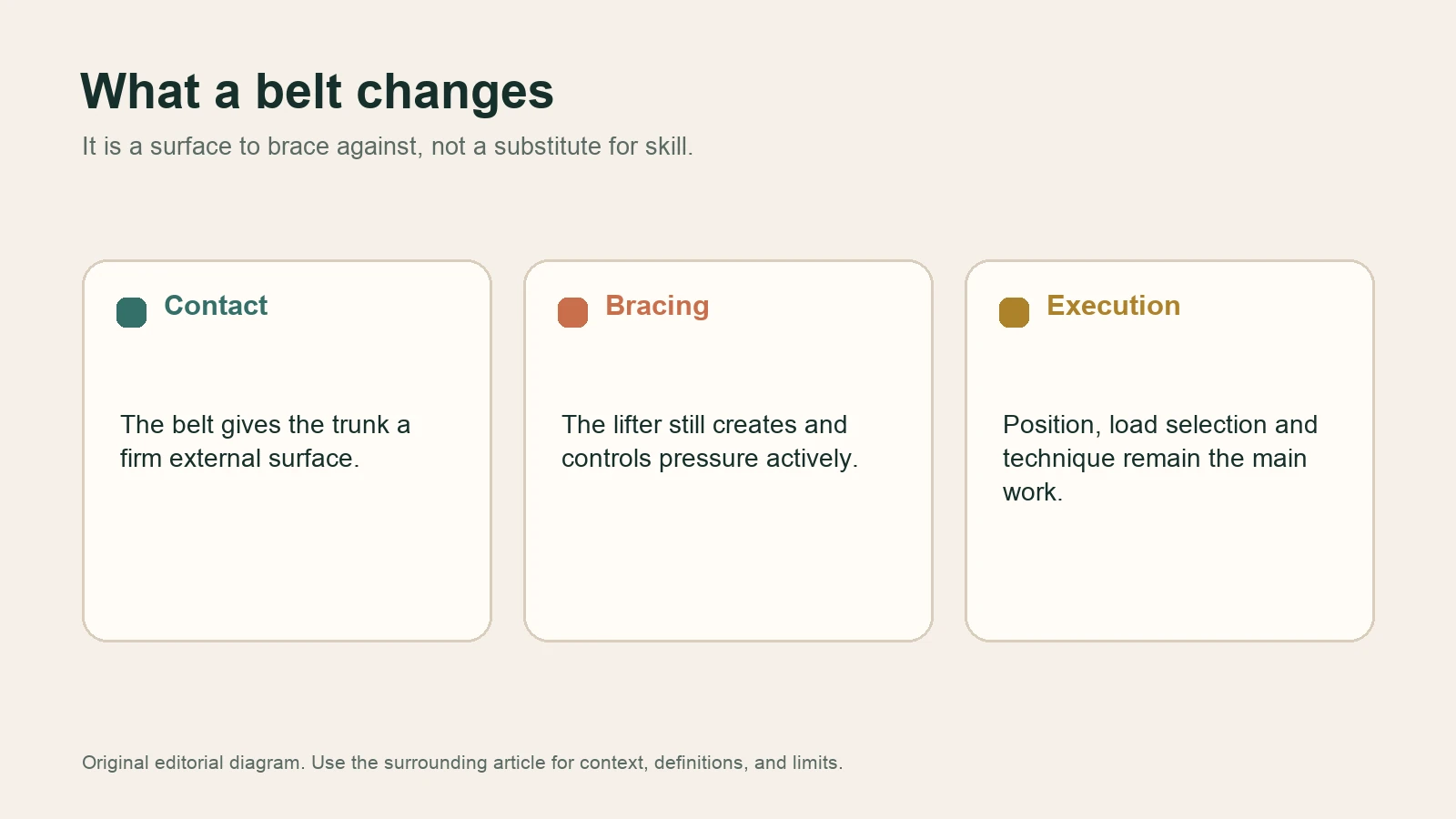
This distinction matters because it keeps the focus on skill. A lifter who has never practiced a controlled brace or a repeatable setup does not solve that gap by tightening leather around the torso. Learning the movement, choosing an appropriate load, and building a training dose you can recover from still come first. The basic framework in a first strength program that stays boring on purpose is a better starting point than an equipment upgrade.
What a belt does not promise
A belt does not guarantee a stronger lift, protect you from every injury, substitute for coaching, or make a poorly chosen load appropriate. It does not turn every repetition into a heavy repetition worth belting. It also does not need to be worn for every exercise just because it is available. The correct question is not “Should serious lifters always wear belts?” It is “Does using this belt help the planned task, with a setup I can repeat, without creating a new problem?”
Belts can feel very different between individuals because torso shape, movement style, belt position, breathing strategy, and the lift itself vary. One person may prefer a consistent-width belt for a squat and another may find the same profile uncomfortable in a hinge. Comfort is not the only criterion, but it is real information. If a belt pinches, causes breathlessness, shifts during the set, or changes your setup in an unhelpful way, do not override the signal simply because a product page calls the item essential.
Choose specifications for the job
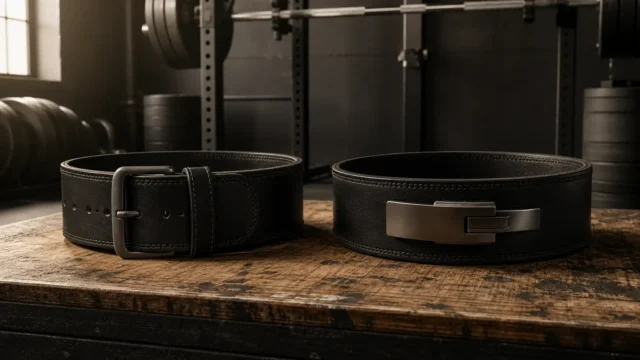
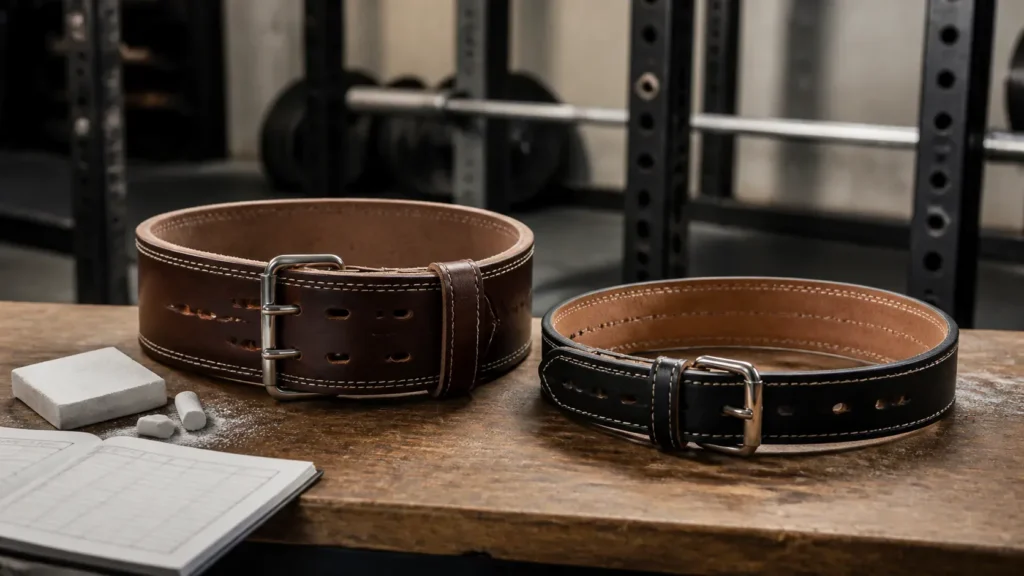
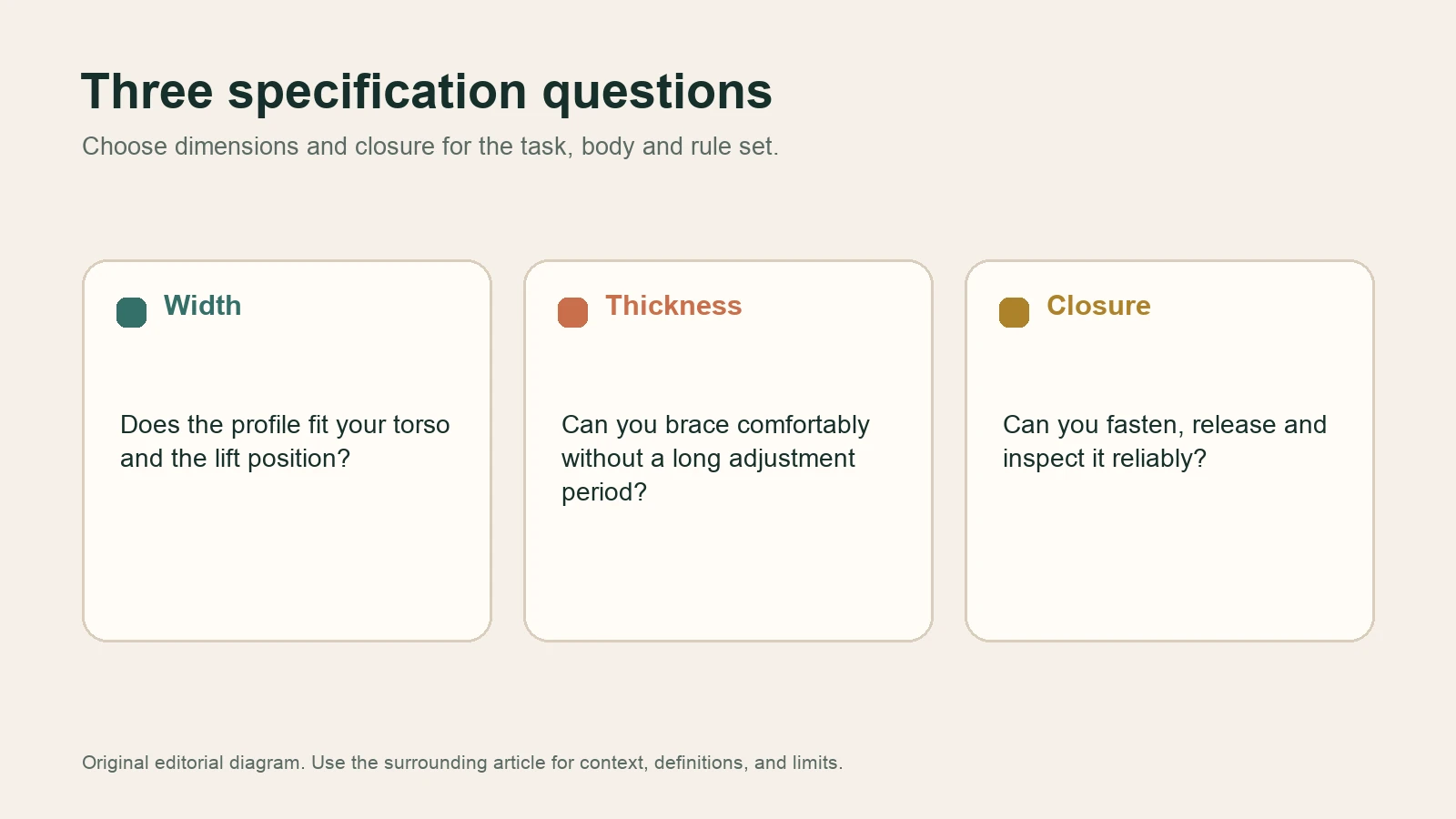
Three specifications deserve attention: width, thickness, and closure. Width affects how much of the torso the belt contacts and whether the profile fits comfortably between ribs and hips in the positions you use. Thickness affects stiffness, feel, and the adjustment period. Closure affects how quickly and consistently you can fasten and release the belt. None of these properties is “best” in isolation.
If you plan to compete, check your federation before selecting dimensions or closure. The IPF’s current technical rules specify personal-equipment requirements, including belt details. Other federations may differ. The rulebook and event instructions are the authority, not a retailer’s “competition approved” label.
Avoid treating specification choices as a ranking exercise. A thicker belt is not automatically a better belt. A lever is not automatically more practical than another closure. A tapered design is not automatically better for all lifters. The useful choice is the one that you can fasten reliably, position consistently, use with your planned movements, and keep within the rules that matter to you.
Test fit before testing hard loads
Start with familiar, light work. Choose a position, fasten the belt with enough room to create a deliberate brace, and perform repetitions you can control. Notice whether your setup remains consistent and whether the belt allows the range and posture you need. Then compare with your usual unbelted warm-up or work at a sensible load. The goal is to learn the equipment, not to manufacture a dramatic first session.
Use the same small set of observations every time: placement, tension, breath control, setup, repetition quality, and response afterward. If a different belt position changes the lift significantly, change one variable at a time. Do not also increase load, alter stance, add a new exercise, and cut rest in the same session. A clean comparison produces better decisions than a big feeling after one rep.
If you need a belt to tolerate a movement at all, treat that as information rather than a challenge to push through. Reduce or modify the task and seek individual guidance as appropriate. Equipment is not a diagnostic tool and does not determine whether it is safe for you to train through symptoms.
Put belt use inside the program
Some lifters decide to use a belt for a subset of familiar, heavier work and train other sets unbelted. Others use one more regularly because it fits their competitive practice. Both choices can be reasonable when they are intentional. The point is to make belt use a visible programming decision, not a rule that drifts into every warm-up, accessory, and machine exercise.
Write the decision in the log. For example: use the belt for the final planned sets of a familiar squat variation, compare setup quality to unbelted work, and keep the other training variables stable. Review the choice after several sessions, not one. Did the belt make the intended work more repeatable? Did it create a fit or setup problem? Did it change nothing useful? The answer can be “not yet,” and that is a valid outcome.
Maintain the equipment and keep the limits clear
Inspect the belt like any load-bearing item. Check leather or material condition, stitching, rivets, buckle or lever function, prongs, and signs of damage. Store it dry and avoid crushing it in a hot car or under heavy objects for long periods. Do not make unsafe modifications to force a closure or change a dimension. If you compete, inspect it against the current rules before meet day rather than discovering a problem at equipment check.
A lifting belt can be a useful tool when it has a defined role in a familiar movement and a setup you can reproduce. It is not a requirement for becoming stronger, and it is not a guarantee about safety or performance. Choose by function, test with restraint, check the applicable rules, and let the program remain the main event.
Continue with a related guide
Start with the equipment framework in You Need Less Gym Gear Than You Think. Continue with The Belt Question: When Does It Actually Make You Stronger?, then compare another support decision in Sleeves or Wraps?.