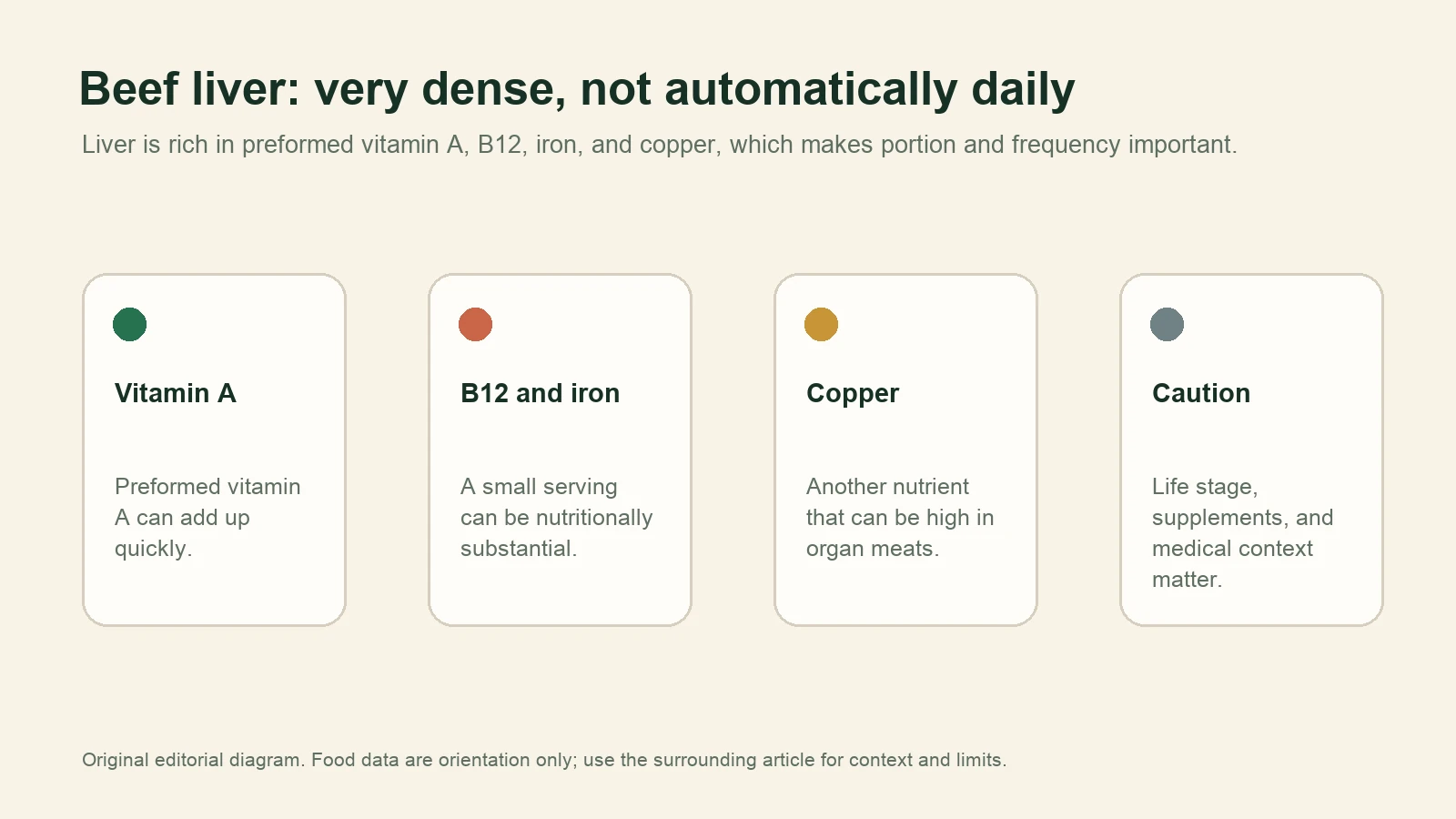
Beef liver deserves its reputation as a nutrient-dense food. It can provide a striking amount of preformed vitamin A, vitamin B12, iron, copper, and protein in a relatively small serving. The same fact is also the reason not to talk about it as a food that everyone should eat in large amounts or every day.
“Nutritional powerhouse” is accurate but incomplete. Density is not automatically a reason to maximize intake. With foods that are unusually high in certain nutrients, portion size, frequency, supplements, life stage, and medical context matter. The practical question is not whether liver is good or bad. It is whether a measured serving fits the rest of a person’s diet safely and enjoyably.
This article is general nutrition information for adults, not medical advice. Pregnancy, plans to become pregnant, liver disease, hemochromatosis, diagnosed nutrient deficiencies, medication use, and supplement questions require individual professional guidance. Do not use liver or a vitamin A supplement to self-treat fatigue, low energy, or a suspected deficiency.
- Why beef liver is unusually dense
- Why preformed vitamin A changes the conversation
- What B12, iron, and copper add
- How to think about portions and frequency
- When to ask for individual advice
Liver is not ordinary muscle meat
Beef liver has a different nutrient profile from steak or ground beef. It is particularly rich in preformed vitamin A, B12, iron, and copper. The USDA FoodData Central database provides entries for cooked liver that make the scale visible, though values change with the serving, cooking method, and record used.
Protein is present, but it is not the most important reason to compare liver with other foods. Lean beef, chicken, dairy, eggs, fish, soy foods, and legumes can all contribute protein without carrying the same concentration of preformed vitamin A. If your goal is simply to make a protein target easier, liver is not required. Its distinctive feature is micronutrient density.
That distinction prevents two common mistakes. The first is dismissing liver because its flavor or texture is unfamiliar, as if that means it has no place in a diet. The second is treating it as a mandatory “superfood” and ignoring the nutrients already coming from a multivitamin, cod liver oil, fortified foods, or other organ meats. Both positions are less useful than looking at the complete pattern.
Preformed vitamin A is the key safety detail
Vitamin A exists in different dietary forms. The NIH vitamin A fact sheet distinguishes preformed vitamin A, found in animal foods including organ meats, from provitamin A carotenoids found in plant foods. It also explains that vitamin A is fat-soluble and that excessive intakes of preformed vitamin A can be harmful.
That is why liver is not directly comparable to carrots, spinach, or sweet potatoes. Plant foods provide carotenoids that the body converts to vitamin A, while liver supplies preformed vitamin A. The units are also important: vitamin A recommendations are expressed in micrograms of retinol activity equivalents, not simply a vague “high vitamin A” label. The adult RDA differs by sex and life stage, and the tolerable upper intake level applies to preformed vitamin A from food and supplements.
This is especially important for pregnancy and people who may become pregnant. The NIH fact sheet advises particular attention to excessive preformed vitamin A in this context. That does not mean a general article can tell a specific person exactly how much liver is appropriate. It means this is a situation where individual medical and nutrition guidance is the responsible next step.
B12, iron, and copper are useful, but not a diagnosis
Liver can be a substantial source of vitamin B12 and iron. The NIH B12 fact sheet describes B12’s role in normal blood and nerve-cell health, while the iron fact sheet explains iron’s role in hemoglobin and oxygen transport. These are real physiological roles, but they do not turn liver into a treatment for tiredness or prove that a person has a deficiency.
Copper is another nutrient to notice. The NIH copper fact sheet describes copper’s role in energy production, iron metabolism, and other functions. Organ meats can be high in copper, which again makes the full diet relevant. If a food is rich in several nutrients at once, more is not always better.
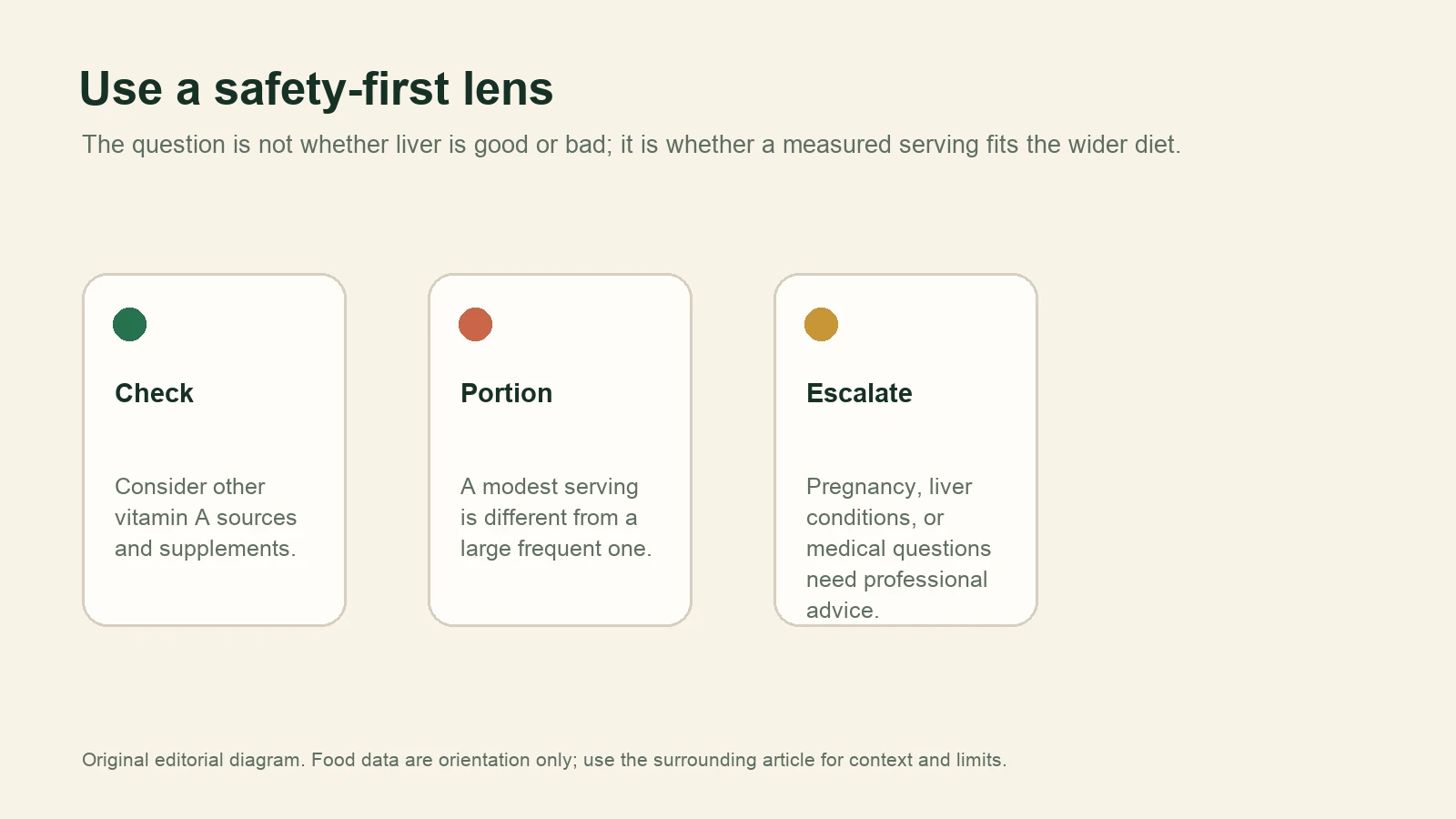
If low iron, B12 deficiency, or another issue is suspected, lab testing and clinical interpretation matter. Food can be part of a clinician-guided plan, but self-prescribing frequent liver portions or supplements can obscure the real question. This is one of the clearest examples of why nutrient-rich and medically appropriate are not interchangeable phrases.
A measured food can still be enjoyable
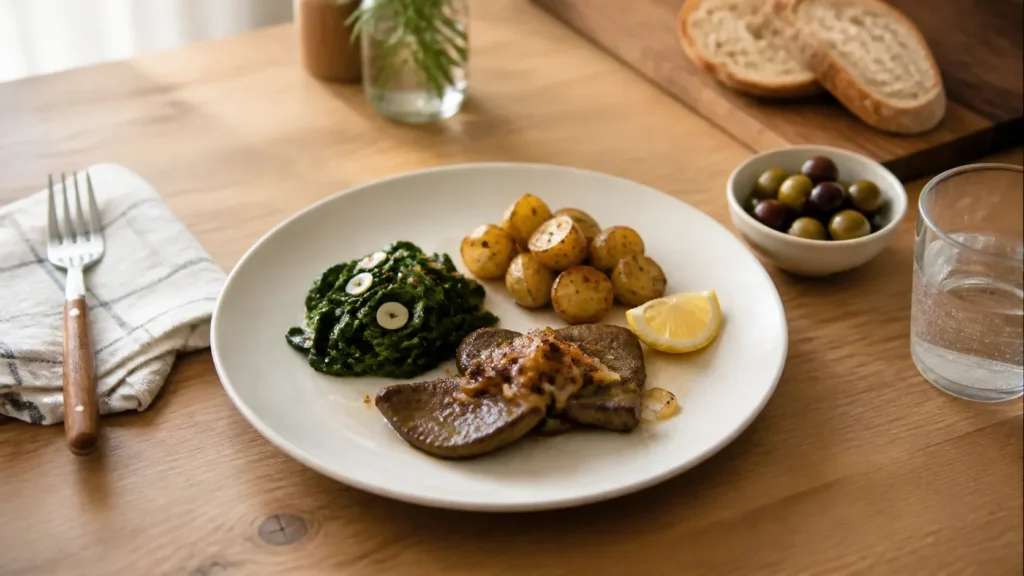
For people who enjoy it and have no relevant reason to avoid it, liver can be used as one food in a varied rotation. Cooking it in a meal with potatoes, grains, vegetables, onions, acids such as lemon, or other familiar ingredients can make the portion feel like dinner rather than a challenge. A modest serving is meaningfully different from large, frequent servings.
Before making liver regular, check the rest of the pattern. Are you using a multivitamin or a separate vitamin A product? Do you eat other organ meats? Are there special life-stage considerations? Is the goal variety and enjoyment, or are you trying to solve a symptom without medical assessment? This brief review is more valuable than an internet rule about a universal frequency.
Beef liver is a legitimate nutrient-dense food. It is also a food where restraint and context are part of the nutrition skill. Treat it as an occasional, measured option unless qualified individual guidance tells you otherwise, keep supplements in view, and let a varied diet do most of the work.
Portion, frequency, and food safety
With many foods, a larger serving mostly changes calories and protein. With liver, a larger serving also changes exposure to certain micronutrients substantially. A small serving used occasionally is therefore a different decision from a large serving used frequently. Avoid internet rules that turn this into a fixed prescription. The useful frequency depends on portion, other vitamin A sources, supplements, life stage, and medical context.
Before adding liver regularly, decide what role it has. It may be a food you enjoy in an occasional meal or one way to add variety to a protein rotation. It should not be a self-treatment for a symptom, a lab result, or a fear of deficiency. Those questions belong with a clinician and, where appropriate, a registered dietitian.
Handle liver with the same basic food-safety care as other fresh meats: keep it separate from ready-to-eat foods, refrigerate promptly, clean preparation surfaces, and cook it safely. Desiccated-liver capsules and powders are not automatically interchangeable with a measured food portion. Their labels also need to be considered alongside vitamin A-containing supplements.
For most active adults, regular foods can provide protein, iron, B12, and other nutrients without relying on organ meat. Lean beef, seafood, dairy, eggs, legumes, fortified foods, and plant sources each contribute different pieces. Liver can be an optional addition, not the foundation of the diet. Nutrient density is valuable when it fits a balanced pattern and is handled with context.
The cautious conclusion is still a positive one
It is possible to appreciate liver’s nutrient density without treating it as a challenge or a cure. A person who enjoys a modest liver dish can include it thoughtfully. A person who dislikes it has many other ways to obtain protein and micronutrients. Neither choice needs a dramatic story.
The important distinction is between food planning and treatment. Food planning asks how a meal fits preferences, budget, and variety. Treatment asks what is appropriate for a diagnosed condition or a particular life stage. Beef liver belongs to the first conversation until there is a health-specific reason to bring in a professional. Keeping that boundary clear is what lets the article be useful without overreaching.
In everyday terms, the sensible approach is calm: include liver only when it suits the wider diet, avoid using it to chase a health claim, and use professional advice whenever the decision is connected to pregnancy, supplements, symptoms, or a diagnosis.
That approach leaves room for enjoyment and for caution at the same time. Liver can remain one interesting food among many without becoming either a forbidden food or a mandatory performance ritual.
The same rule applies to every unusually nutrient-dense food: understand what it contributes, then let the complete diet determine the role it deserves.
Continue with a related guide
For the next practical step, read Chicken Breast Is Great for Protein – But What Else Does It Give You?. For a second perspective from the same topic cluster, continue with Chicken Thighs vs Chicken Breast: Nutrition, Micronutrients and Calories Compared.