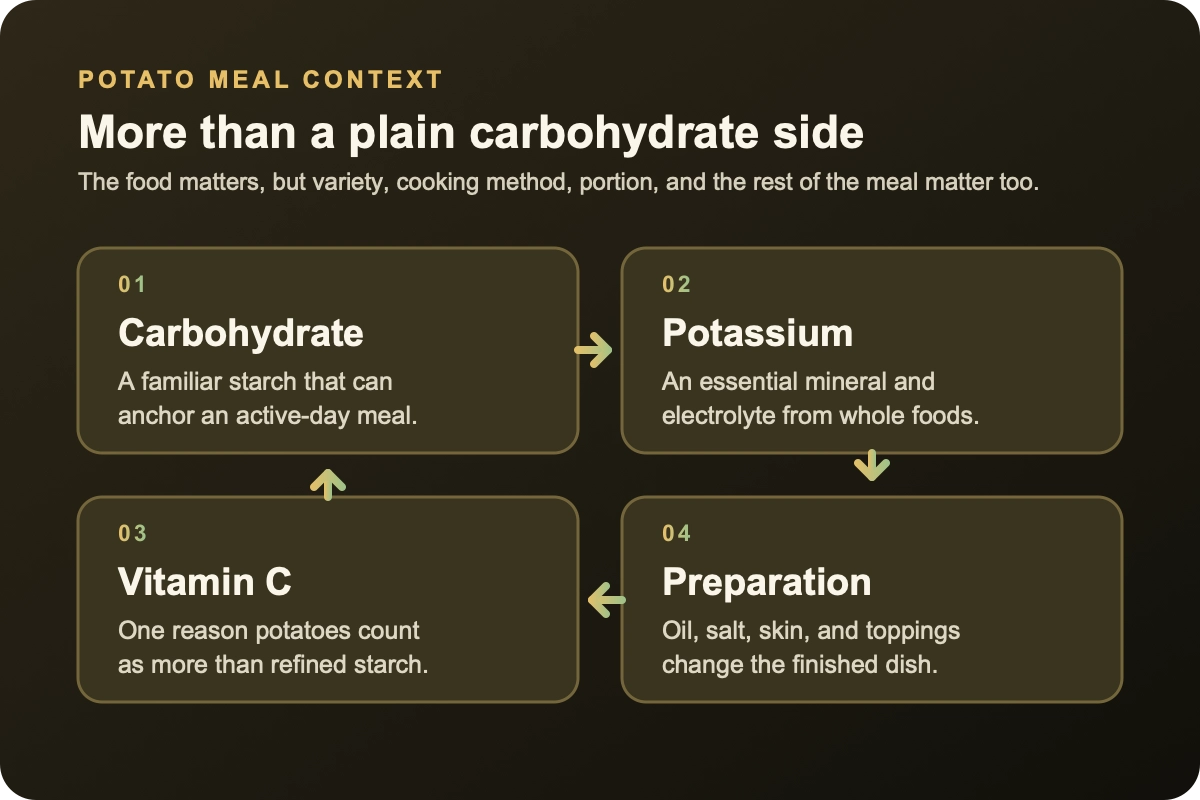
Potatoes have an image problem in fitness culture. They are often placed on the “plain carb” side of a false choice: chicken and rice are disciplined, potatoes are somehow a treat, and fries are evidence that the whole food does not count. That is not a useful way to think about them. A potato is a flexible, familiar carbohydrate food that also contributes potassium and vitamin C. The more useful question is how it fits the meal and the day.
For lifters, potatoes can make it easier to build a satisfying plate around training. They are neutral enough to work with eggs at breakfast, fish at lunch, beans in a vegetarian bowl, or meat and vegetables at dinner. They also offer a different texture and cooking pattern from rice, oats, bread, or pasta, which matters when eating the same foods repeatedly becomes tiring.
This article is for healthy adults seeking general food guidance. It is not a prescription for calories, carbohydrate intake, or potassium intake. People with kidney disease, a potassium restriction, or medication that affects potassium balance should follow their clinician’s or dietitian’s guidance rather than making changes from a general fitness article.
- Why potatoes are more than a carbohydrate side
- How carbohydrate fits a lifting diet
- What potassium and vitamin C add to the picture
- Why preparation changes the practical meal
- How to use potatoes without turning them into a nutrition rule
A whole-food carbohydrate that can carry a meal
Potatoes are mainly valued in an active diet for carbohydrate. Carbohydrate is not a personality trait or a reward for a hard workout; it is one of several food components that can help an active person meet the energy demands of training. The best amount and timing depend on the session, total activity, appetite, body size, goals, and what has already been eaten that day.
That is why potatoes are useful rather than mandatory. A person who lifts after work might find a potato-based dinner easy to tolerate and satisfying. Someone training early may prefer toast, fruit, oats, or a smaller meal beforehand. A long conditioning session can create a different food need from a short strength session. There is no requirement to eat potatoes after every workout.
The 2022 systematic review and meta-analysis on carbohydrate feeding and resistance exercise found that carbohydrate ingestion improved total session training volume in the pooled analysis, with the clearest benefit in sessions longer than 45 minutes and after a fast of at least eight hours. That evidence does not make a potato a performance supplement. It supports the simpler point: carbohydrate availability can matter in particular training contexts, and a normal food can be one way to meet it.
Potassium and vitamin C are part of the case
The potato’s value is broader than starch. The USDA’s FoodData Central is the right reference for checking the exact version you buy or cook because variety, size, skin, and preparation change the nutrition information. Across common forms, potatoes contribute carbohydrate and can also contribute potassium and vitamin C.
Potassium is an essential mineral and electrolyte. The NIH potassium fact sheet explains its role in normal body function and also notes that needs and safe intake can be individual when kidney function or relevant medications are involved. For most healthy people, potatoes can be one potassium-containing food among fruit, beans, dairy, vegetables, fish, and other staples. They are not a reason to ignore the rest of the diet.
Vitamin C is another reason to view potatoes as more than refined starch. The NIH vitamin C fact sheet includes potatoes among food sources of the nutrient. That does not put them in competition with citrus, peppers, berries, or broccoli. It simply means a potato meal can contribute something a bowl of white rice does not, particularly when the skin and a sensible cooking method remain part of the dish.
Preparation is not a footnote
“Potatoes” can mean a baked potato, boiled pieces, mash, roasted wedges, chips, fries, a creamy gratin, or a fast-food side. These are not nutritionally identical meals. Added oil, butter, cream, cheese, salt, breading, and portion size can change energy density, sodium, fat, and how the food fits your appetite.
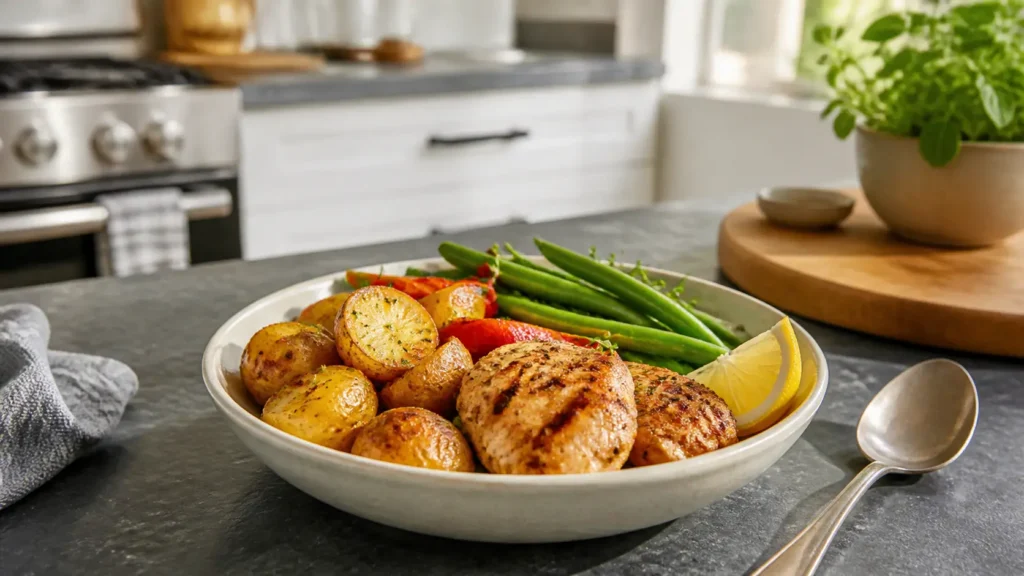
That is not an argument for eating dry boiled potatoes forever. It is an argument for describing the real dish. A roasted potato tray with olive oil, herbs, chicken, and green vegetables is a different meal from a large serving of deep-fried potatoes with a high-sodium sauce. Both can exist in a normal diet; neither has to be classified as morally clean or bad. The useful decision is whether the meal fits the person’s overall pattern and the occasion.
Keeping the skin when practical can add texture and fiber, but the goal is not to turn skin-on potatoes into a rule. Some people prefer peeled potatoes, mash, soup, or a preparation that is easier to digest around training. Cooking method, tolerance, budget, time, and food culture all matter more than performing a perfect version of a single ingredient.
Build the rest of the plate deliberately
Potatoes work best when they have a clear job. If the meal needs a carbohydrate base, add a protein source and produce around them. That might be potatoes with eggs and tomatoes, a bean-and-potato bowl with greens, a salmon plate with vegetables, or potatoes alongside chicken and a yogurt-based sauce. The structure makes the meal more useful than treating any one food as a complete diet.
Protein is still worth planning separately. Potatoes contain a little protein, but they are not a protein anchor for most lifters. Our guide to Chicken Breast Is Great for Protein — But What Else Does It Give You? explains how a lean protein can become one part of a larger training meal. For a different food that combines protein and potassium, see Greek Yogurt: The High-Protein Food That Also Brings Calcium, B12, Iodine and Potassium.
The same meal can change across the week. A larger potato portion may make sense when an active day and appetite call for a fuller dinner. A smaller serving may be enough in a lighter meal with beans, vegetables, and another carbohydrate already present. This is not macro math. It is simply noticing that a food’s role depends on the whole plate and the broader day.
Give potatoes a normal place in the rotation
The main reason potatoes deserve more respect is not that they beat every other carbohydrate. It is that they are affordable in many places, easy to cook in batches, satisfying, and nutritionally more interesting than their reputation suggests. Carbohydrate, potassium, vitamin C, and culinary flexibility make them a practical option for people who train.
Use baked, boiled, roasted, mashed, or pan-cooked potatoes in the forms you genuinely enjoy. Pair them with protein and produce when the meal needs more structure. Check the preparation rather than judging the ingredient in isolation. And keep other carbohydrate foods in the rotation too: grains, legumes, fruit, bread, pasta, and oats all bring different strengths to an active diet.
Continue with a related guide
For another protein-and-meal-building perspective, read Salmon for Lifters: Protein, Omega-3s, Vitamin D, Selenium and Potassium. For a practical comparison of protein anchors, continue with Lean Beef vs Chicken: Which Makes More Sense for a Strength Athlete?.