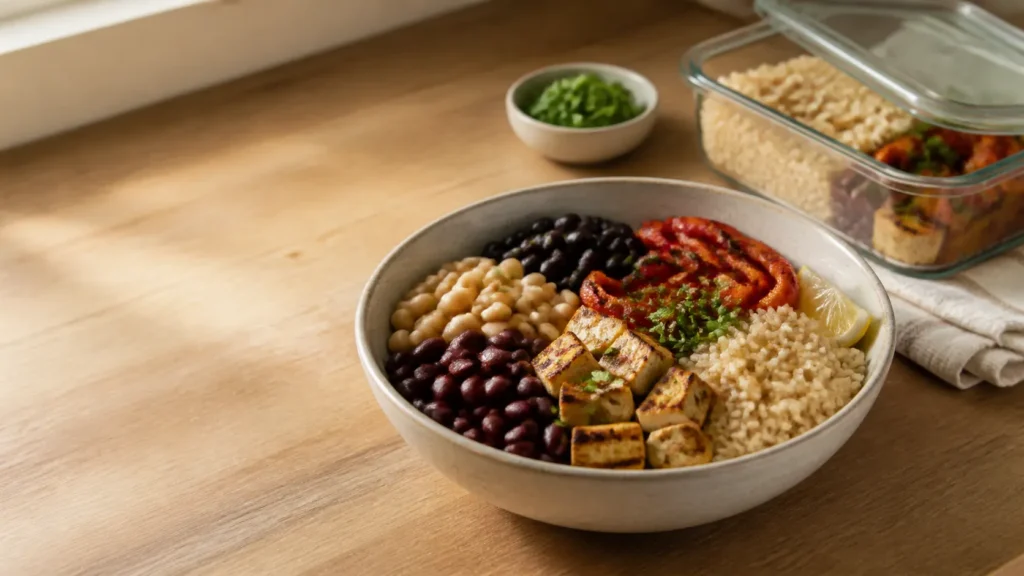
Beans often enter fitness conversations as a protein debate. Are they high enough in protein? Are they complete? Are they good enough after training? Those questions are understandable, but they can make a useful food seem less useful than it is. A bean meal is not valuable because it imitates a scoop of protein powder. It is valuable because it can bring several ordinary jobs to one plate: carbohydrate, some protein, fiber, minerals, texture and a base that is easy to cook or keep in the cupboard.
That matters for athletes and lifters because food has to work repeatedly. A meal that is affordable, satisfying, easy to batch cook and flexible enough to pair with other foods can support training more reliably than a supposedly perfect ingredient that never fits the week.
This article gives general food context for healthy active adults. It does not set individual protein, calorie, fiber or mineral targets. Anyone with a food allergy, digestive condition, kidney disease, a medically prescribed diet, or a diagnosed nutrient issue should use advice tailored to their situation rather than relying on a general fitness article.
- Why protein is only one part of the decision
- The four jobs beans can do in a meal
- How timing and tolerance change the choice
- Why pairing still matters
- Easy ways to use canned and cooked beans
Protein is a contribution, not the whole meal
Beans contain protein, and that contribution matters. But a cup of beans is not the same practical thing as a portion of meat, fish, dairy, eggs, tofu, tempeh or a concentrated protein food. It also contains carbohydrate and fiber, which changes its role on the plate. That is not a weakness. It is simply why the question should be, “What does this meal need?” rather than, “Can beans be ranked against every other protein source?”
The ISSN position stand on protein and exercise emphasizes the broader picture for exercising adults: adequate total protein, protein quality and the overall dietary pattern matter more than a single food claiming to solve the whole requirement. Beans can help a person build that pattern. They do not need to be asked to replace every other protein food in every meal.
The exact profile also changes with the bean, the cooking method and whether the food is plain, salted, sauced or part of a prepared dish. The USDA’s FoodData Central is a useful reference when you want to compare the specific canned, dried or cooked product you actually buy. A label is information, not a verdict on whether the meal is good.
Four useful jobs on one plate
The practical value of beans is easiest to see when the jobs are separated.
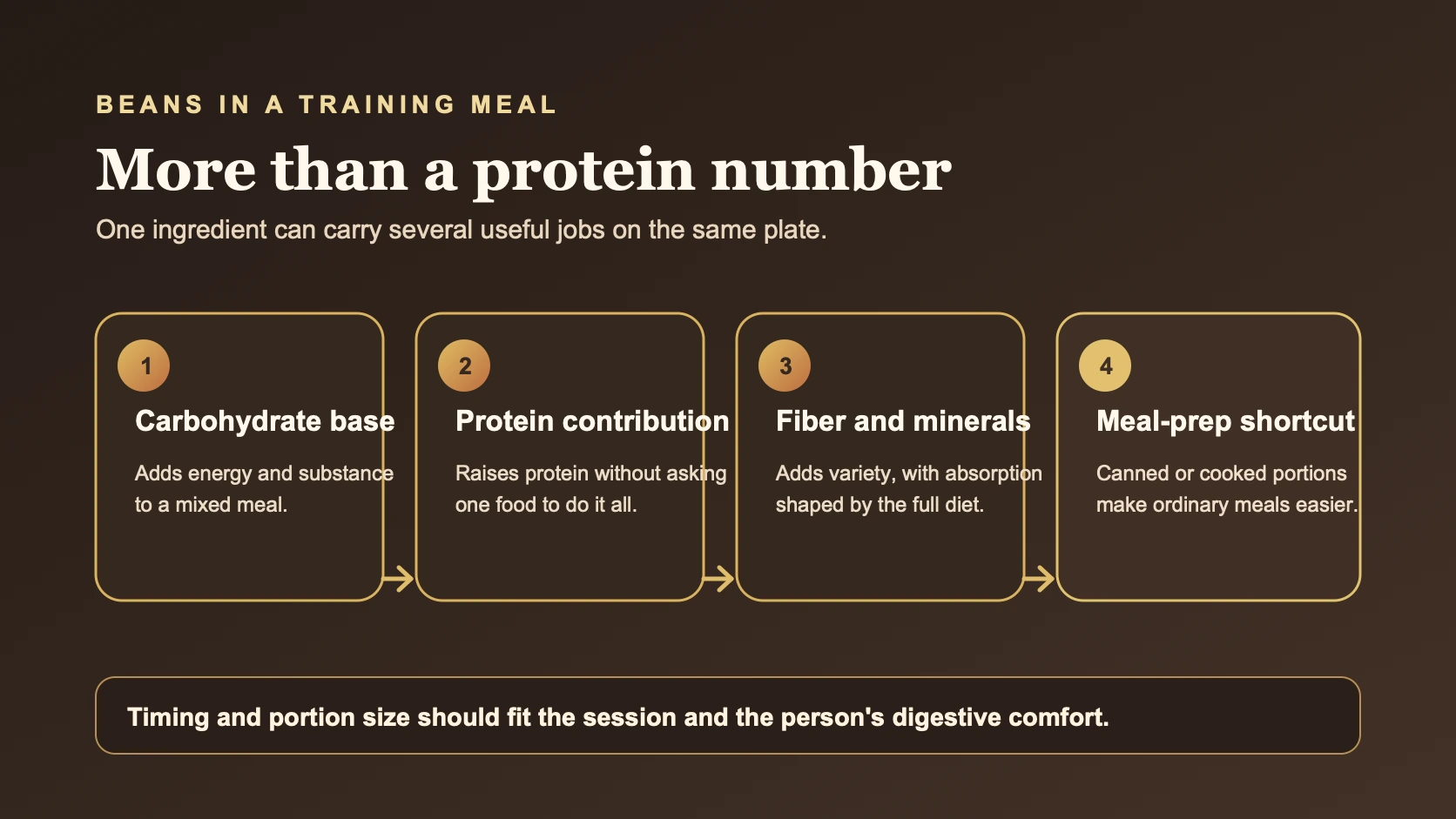
Carbohydrate foundation. Beans can add energy to a meal that also includes a dedicated protein source and vegetables. In a burrito bowl, chili, soup or rice dish, they make the meal more substantial without requiring a separate side for every ingredient.
Protein contribution. Beans can raise the protein content of a mixed meal. This is useful in plant-forward meals and also in meals that include chicken, eggs, dairy, fish or tofu. Combining foods is not cheating; it is how ordinary meals work.
Fiber and micronutrients. Beans add fiber and contain minerals and B vitamins, although the exact nutrients vary by type and preparation. Plant foods also contain compounds that can affect the absorption of minerals. The NIH iron fact sheet notes that iron from plant foods is nonheme iron and that its absorption is influenced by the wider meal. This is a reason for variety and context, not for turning dinner into a chemistry exercise.
Meal-prep convenience. Dried beans can be inexpensive and flexible; canned beans make the same ingredient available in minutes. Both can be useful. Convenience is a real nutrition advantage when it helps you assemble a balanced meal on a busy day instead of skipping the meal or defaulting to something you do not enjoy.
Timing is about comfort, not a moral rule
The same qualities that make beans satisfying can make a very large portion feel heavy close to hard exercise for some people. Their fiber content and the amount of food in the meal affect comfort differently from person to person. If you are training soon and know beans do not sit well, choose a smaller portion, move the meal farther away from the session, or use a lower-fiber carbohydrate that you tolerate better.
That does not make beans a bad pre-training food. It means timing should fit your own digestion, session and schedule. A bean-and-rice lunch several hours before lifting may work well for one person. The same bowl immediately before intervals may not. Training nutrition is more useful when it recognizes that difference instead of declaring one food universally light or universally heavy.
The review of common-bean products for sportspeople notes that beans contain protein, carbohydrate and fiber alongside compounds that can affect digestion and nutrient availability. Read it as a review of the tradeoffs, not as evidence that every athlete needs a bean-specific product. The practical response is modest: introduce portions gradually, prepare them properly and let tolerance decide the timing.
Pair beans with the job the meal still needs
Beans are especially useful because they combine easily with other basics. If a meal needs more direct protein, add tofu, eggs, yogurt, chicken, fish, lean meat, tempeh or another food that fits your preferences. If it needs more carbohydrate for a bigger training day, use rice, potatoes, bread, pasta, tortillas or another staple. If it needs freshness, add tomatoes, peppers, greens, fruit, herbs or citrus.
This is not an instruction to make every meal elaborate. A simple bowl of beans on toast with eggs can be enough. So can beans folded into leftover rice with vegetables and a sauce. The point is to notice the difference between beans as one ingredient and beans as the entire nutrition plan.
Our guide to lentils for lifters explains the same principle from another legume angle, including why plant-based iron deserves context. For the carbohydrate side of a familiar bowl, compare rice for strength training. The foods are not competing for one winner’s spot. They solve different meal problems.
Canned beans are a legitimate shortcut
Canned beans are not a lesser version of dried beans just because they save time. They can be rinsed, added to a pan, blended into a soup or tipped into a bowl. Check the label if sodium matters for your own diet, and choose the product that fits the meal. For many people, the difference between an ideal dried-bean plan and a useful canned-bean dinner is the difference between cooking something balanced and not cooking at all.
Dry beans offer a different kind of flexibility. They work well for soups, stews, batch-cooked chili and freezer portions. Follow the package instructions, especially for dried kidney beans, and do not eat dried beans raw or undercooked. Proper soaking and cooking are ordinary food-safety steps, not a fitness technique.
Rotate flavors instead of forcing the same bowl every week. Black beans work in tacos and rice bowls. White beans can disappear into a soup or tomato sauce. Kidney beans suit chili. Chickpeas can be roasted, stewed or added to salads. A food becomes more useful when it has several preparations you genuinely want to eat.
Useful because they make meals work
Beans are more useful for athletes than their protein count suggests because protein is only one part of what a meal has to do. They can help build a filling carbohydrate base, contribute protein, add fiber and micronutrients, and make an affordable meal easier to repeat. Their limitations are equally ordinary: plant-based minerals need dietary context, large portions may not suit the hour before training, and no single bean dish replaces a varied protein plan.
Use beans when they make the meal more practical. Pair them when the meal needs more protein or energy. Adjust portions and timing to your own comfort. That is a better use of beans than either treating them as a miracle food or dismissing them because they are not a protein shake.
FAQ
Are beans enough protein after lifting?
Beans can contribute protein after lifting, but whether a meal contains enough depends on the portion and the rest of the plate. Pair them with other protein foods when that makes the meal more suitable for your overall eating pattern.
Are canned beans good for athletes?
Yes. Canned beans are a practical option when they help you build and repeat balanced meals. Check the label for the product you buy and rinse or season them according to the meal and your preferences.
Should beans be avoided before a workout?
Not automatically. Their fiber and portion size may feel heavy close to training for some people. Use timing and serving sizes that you digest comfortably rather than applying a universal rule.
Continue with a related guide
For another plant-based staple, read Lentils for Lifters: Protein, Iron, Folate, Fiber and the Catch With Plant-Based Minerals. For a meal-building comparison, continue with Quinoa: Complete Protein Miracle or Just Another Good Carb Source?.