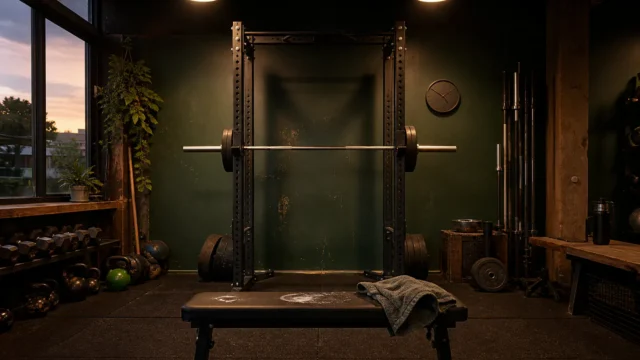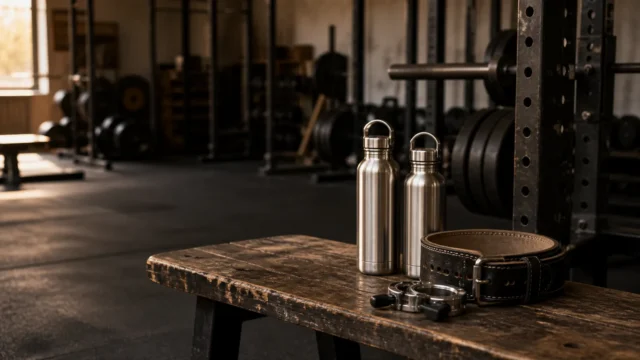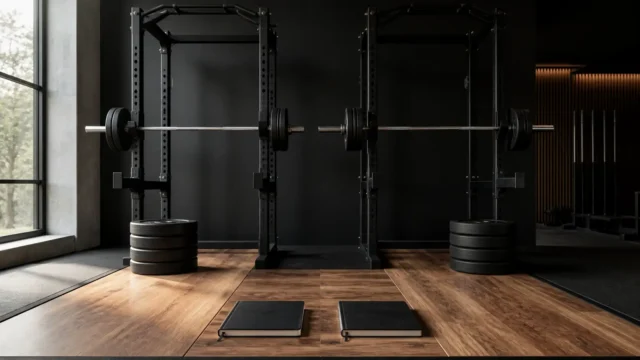
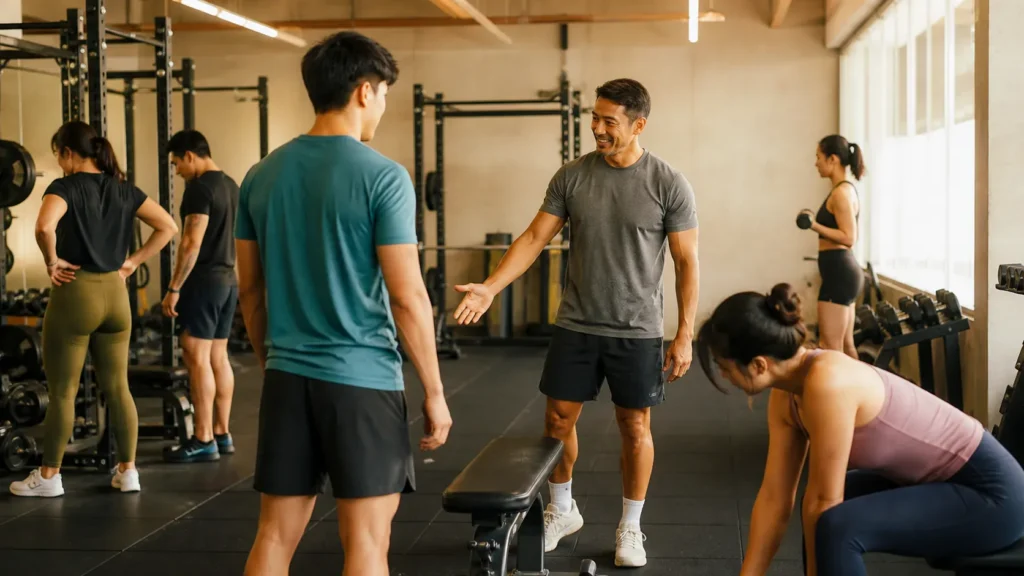
The best gyms are businesses that understand the product is not only equipment. Members also pay for a predictable environment: a place where the rules are fair, the room is maintained and people can practice without unnecessary friction. When those conditions are repeated, the gym begins to feel like a community.
Community is not a substitute for competent operations. Friendly staff cannot compensate for unsafe equipment, hidden fees or harassment. The strongest gym cultures combine human recognition with professional standards.
- Community starts with operations
- Good norms are visible
- Coaching respects consent
- Commerce stays transparent
- How to evaluate a gym
Community starts with operations
Clean floors, working equipment and clear opening hours may sound mundane. They are also signs that members’ time matters. A gym earns trust when broken items are marked and repaired, staff can explain policies, and crowded areas are managed consistently. Reliability gives social connection a stable place to develop.
The layout matters as well. There should be enough room to move safely, sensible places to wait and equipment arranged so members can share without conflict. A lounge is optional. A culture of basic consideration is not.
Good norms are visible in behavior
Look beyond motivational words on the wall. Do members rerack plates? Do people ask before joining equipment? Is filming controlled so bystanders are not treated as background content? Does the strongest person in the room still make space for a beginner? These small behaviors reveal the actual rules.
Staff shape the standard by what they reinforce. Calm intervention when someone harasses another member protects the community more than a hundred social posts. So does applying rules consistently, regardless of popularity or lifting ability.
The NIH guidance on social support and activity explains that friends, groups and classes can help people become more active. In a gym, that support often appears as practical reliability: a familiar class starts on time, a training partner arrives, or someone provides a competent spot.
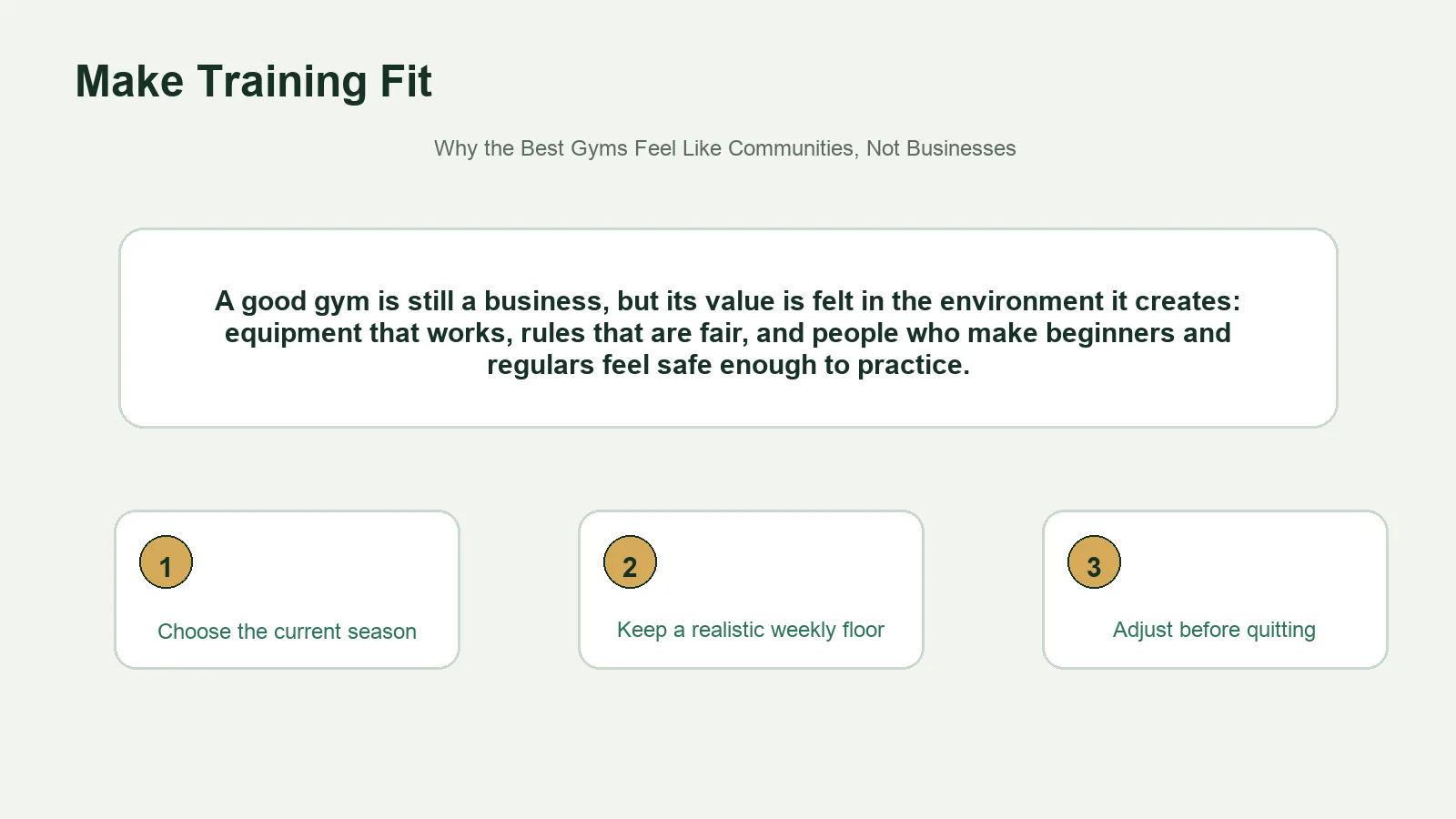
Coaching should respect consent and scope
Helpful communities share knowledge without turning every interaction into an assessment. Experienced members can answer questions, demonstrate equipment when asked and point beginners toward staff. They should not diagnose pain, prescribe extreme diets or physically adjust someone without permission.
Professional coaches should explain their role, fees and limits. Good coaching makes the member more capable of making decisions. It does not use fear or humiliation to create dependence. When a concern falls outside fitness coaching, referral to an appropriate qualified professional is a sign of competence.
Commerce should stay transparent
A gym has to earn money. Memberships, coaching and retail are not evidence of a bad culture. Problems begin when belonging is used to hide costs or pressure purchases. Contracts should be readable, cancellation should follow the stated terms, and optional services should remain optional.
Members also deserve clarity around sponsorships, challenges and social-media use. A community event tied to a product should say so. A member’s image should not be used without permission. Transparency protects trust because people know when they are participating socially and when they are being marketed to.
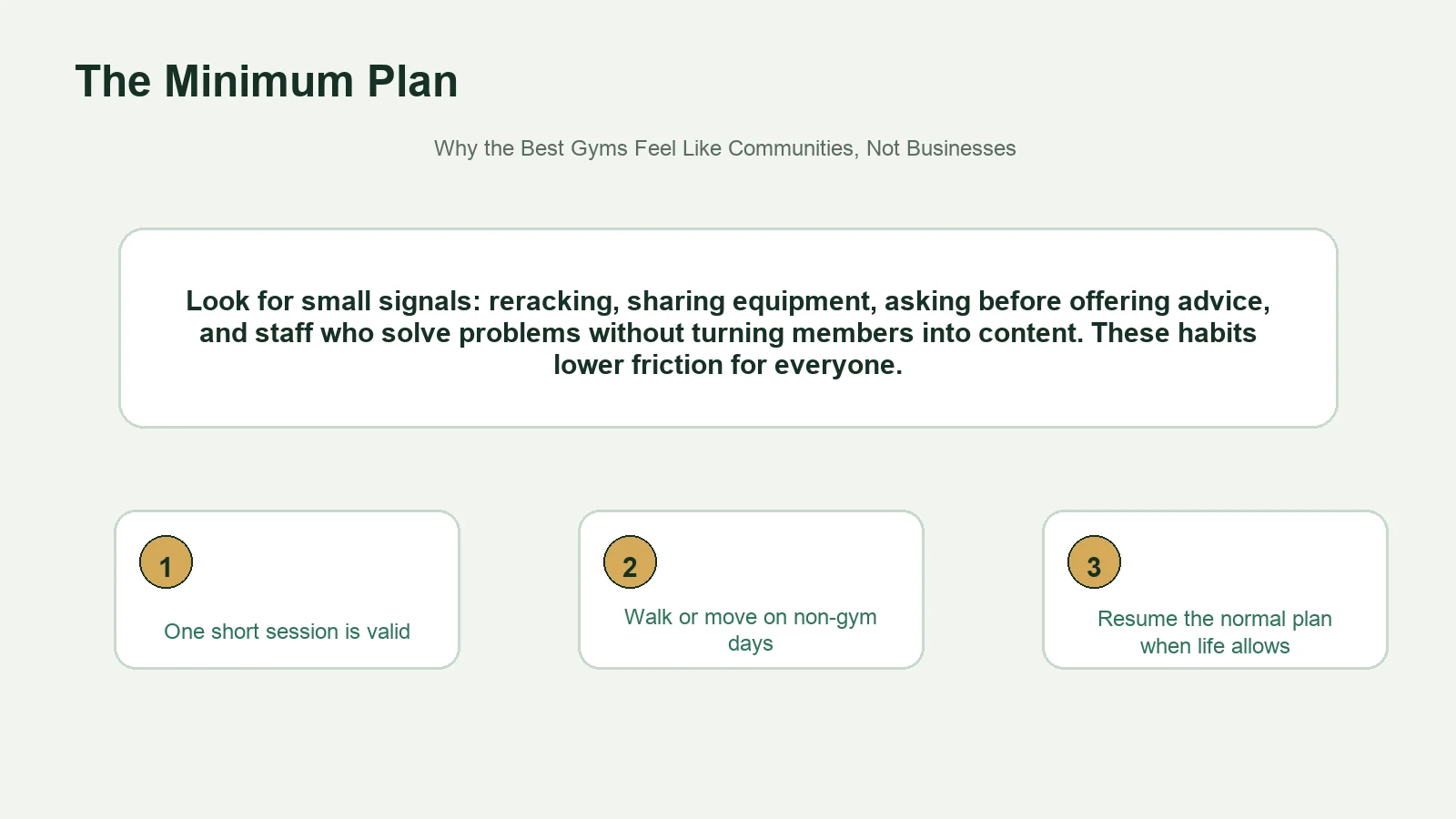
How to evaluate a gym
Use a trial visit at the time you expect to train. Check equipment availability, ventilation, cleanliness and how staff respond to a basic question. Notice whether members can focus without being interrupted. Read the membership and cancellation terms before paying.
Then assess the social fit. You may want a talkative strength club, a quiet room or a coached group. None is universally best. The best gym is the one whose equipment, rules, cost and culture let you train consistently without asking you to become someone else.
A community feeling is valuable because it makes good practice easier to repeat. It should come with professional operations, transparent commerce and respect for people who want different levels of connection. That combination is what turns a room full of equipment into a place worth returning to.
Audit the culture before signing a long contract
Use a trial visit to observe a real training period. Check whether racks, benches and changing areas are maintained; whether staff can explain cancellation and guest policies; and whether members can work around one another without constant conflict. Ask how broken equipment is reported and what happens when filming captures bystanders. Clear answers are more useful than a sales tour built around atmosphere.
Notice who receives attention. A healthy gym can support competitive lifters while still treating beginners, older members and people using lighter loads as full customers. Coaching should be offered with consent, and staff should distinguish a genuine safety concern from a personal preference about how someone trains.
Community language should never hide the commercial relationship. Read the contract, understand renewal terms and decide whether optional coaching, classes or products are actually optional. A strong culture makes the service easier to use; it does not ask members to overlook poor operations or unclear charges. The best gym is not necessarily the loudest or most exclusive one. It is the place whose standards remain visible on an ordinary crowded day.
A gym can be welcoming without serving every goal equally. Lifters who want frequent platform access, specialty equipment, or a competition-first culture should compare that environment with a commercial gym and a powerlifting gym before signing a long contract.
That consistency also gives members a fair basis for deciding whether the service still deserves their time, trust and monthly fee.
Continue with a related guide
For the next practical step, read You Don’t Need to Live in the Gym to Become Strong. For a second perspective from the same topic cluster, continue with Fitness for People With Actual Lives.