Chickpeas are easy to underestimate because they do not fit neatly into one fitness category. They are not a lean, concentrated protein food. They are not just a carbohydrate side dish either. A serving brings carbohydrate, some protein, fiber and a useful mix of micronutrients, including iron and folate. That makes chickpeas less like a single-purpose ingredient and more like a dependable base for a meal.
For lifters, that is often the point. Most meals do not need one food to win every nutrition argument. They need enough energy, enough protein across the day, ingredients you enjoy, and a format that works around training and ordinary life. Chickpeas can help with all of that, especially when they are paired with the foods that fill the remaining gaps on the plate.
This is general food context for healthy active adults. It does not set individual protein, calorie, fiber, iron or folate targets. Anyone with a diagnosed nutrient deficiency, food allergy, digestive condition, kidney disease or medically prescribed diet should use advice tailored to their situation.
- Why chickpeas are more than plant protein
- What protein and carbohydrate do in the same bowl
- Why fiber, iron and folate need context
- How timing and tolerance affect the choice
- Simple ways to make chickpeas practical
Chickpeas are a mixed-food ingredient
Chickpeas, also called garbanzo beans, are legumes. Their profile is mixed: most of their energy comes from carbohydrate, they contribute plant protein, and they contain substantial fiber alongside vitamins and minerals. The exact numbers depend on whether you compare dried chickpeas, cooked chickpeas, canned and drained products, or a prepared recipe with oil and sauce.
The USDA FoodData Central entry for cooked chickpeas is useful when you want the details for a specific portion or product. It shows why a label can be more informative than a vague claim that chickpeas are “high protein.” The food has protein, but it also brings enough carbohydrate and fiber that its role in a meal is different from chicken breast, Greek yogurt, eggs or a protein shake.
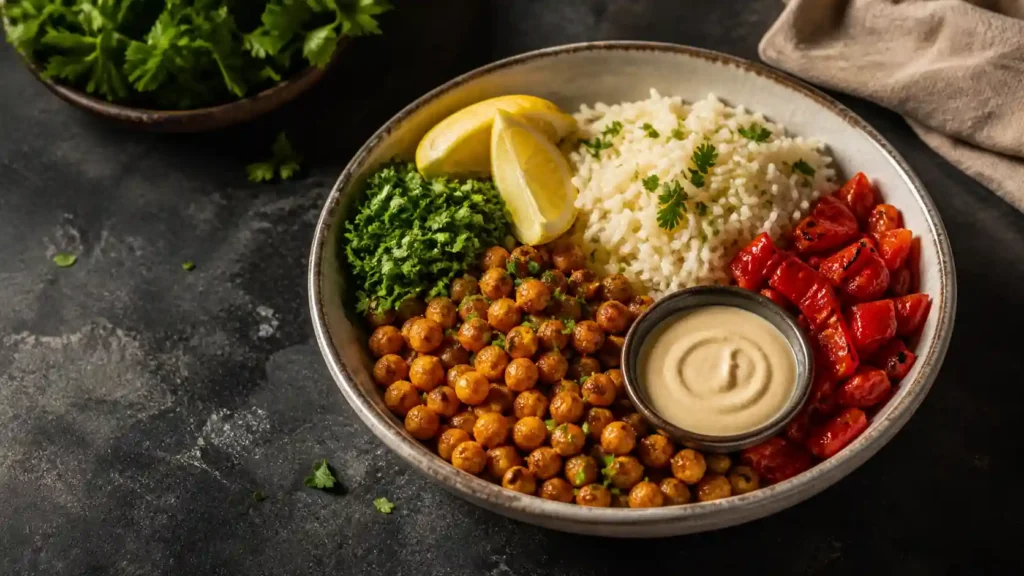
That difference is useful, not a flaw. A bowl with chickpeas, rice, vegetables and a direct protein source can cover several practical jobs at once. A review of chickpea composition describes the legume as a source of protein, fiber, vitamins and minerals including iron and folate. Read the 2025 chickpea nutrition review for the broader composition discussion and its limits. In a real meal, preparation and portion still decide what lands on the plate.
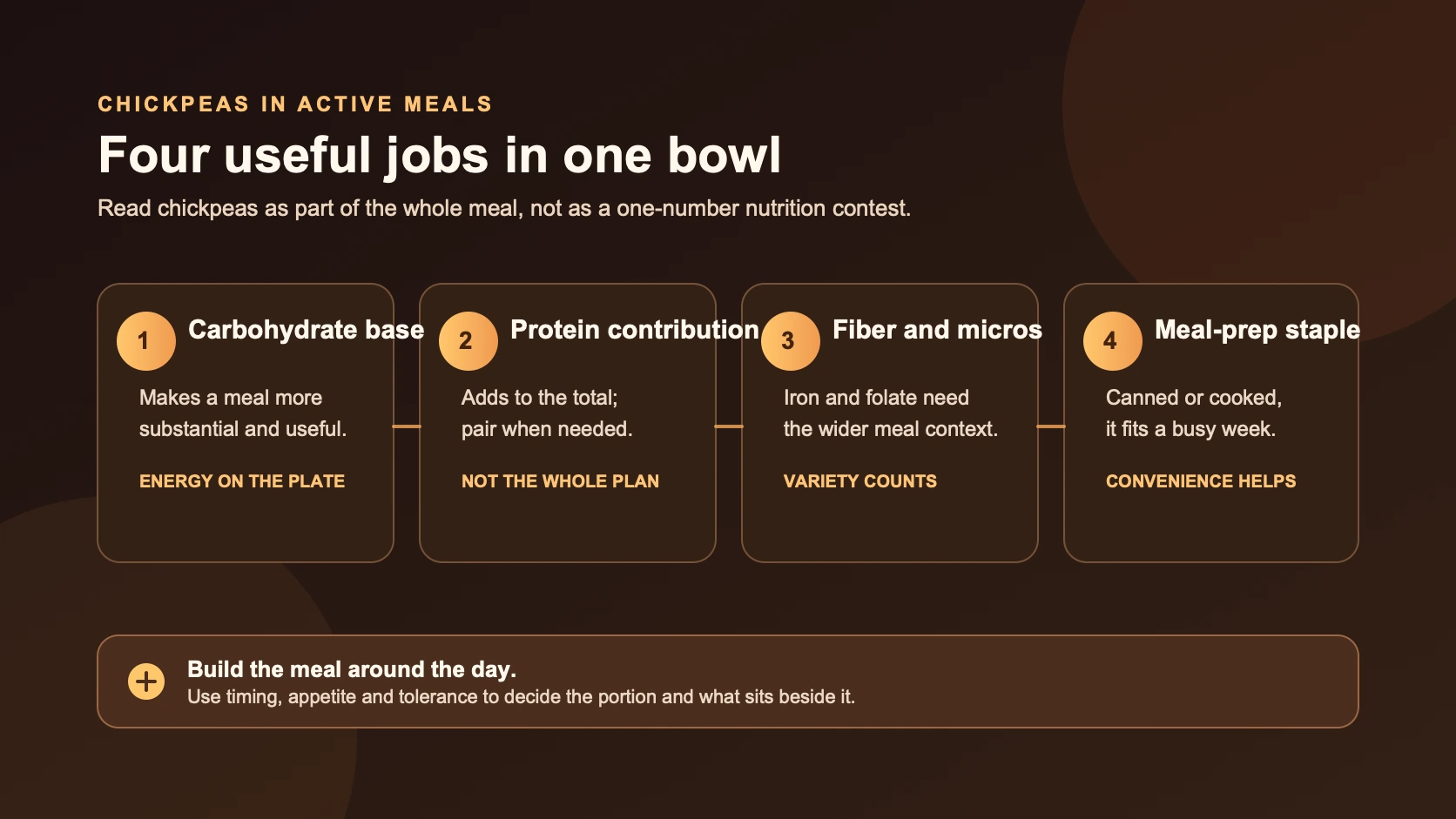
Protein and carbohydrate can share the same job
The protein in chickpeas counts. In a mixed meal, it raises the total protein without requiring a second separate side. But chickpeas are usually more useful when viewed as a protein contribution than as the only protein plan for a lifter. If a meal needs a more concentrated protein source, pair them with tofu, tempeh, eggs, dairy, fish, poultry, lean meat or another option that fits your preferences.
Their carbohydrate matters just as much. Chickpeas can make a meal more substantial on a training day and work well with other staples such as rice, potatoes, bread or tortillas. If your session is demanding and you need a larger carbohydrate meal, adding rice or potatoes is not a sign that chickpeas were insufficient. It is simply a way to match the meal to the amount of food and energy you want.
This is why “complete” versus “incomplete” protein is rarely the most helpful everyday question. Whole meals include several foods, and a whole day includes several meals. The practical question is whether the pattern gives you enough total protein and energy while remaining enjoyable and repeatable. Beans Are More Useful for Athletes Than Their Protein Count Suggests explains that broader meal role. Chickpeas make the same case in a slightly different form: they are valuable because they bring several ordinary ingredients together, not because they imitate a protein powder.
Fiber is useful, but timing still matters
Fiber is one reason chickpeas can be satisfying and useful in a main meal. It is also one reason a large chickpea portion immediately before hard training may not suit everyone. The best timing is individual. A chickpea-and-rice bowl at lunch may feel completely normal before an evening lift; the same meal close to intervals, running or a heavy session may feel too substantial for someone else.
Treat that as a planning problem rather than a judgment about the food. If you know legumes sit heavily before training, use a smaller portion, place the meal farther from the session, or choose a lower-fiber carbohydrate for that meal. Chickpeas can then fit later in the day, on a rest day, or in another meal where fullness is useful.
Rinsing canned chickpeas, starting with a modest portion and using recipes you enjoy are practical ways to learn tolerance. You do not need to force a huge serving because a food is nutritious. The useful serving is the one that supports the rest of your day without making a planned session uncomfortable.
Iron and folate belong in the wider meal
Chickpeas contribute iron and folate, but a nutrition headline should not turn that into a promise about individual status or absorption. Folate is found naturally across a wide range of foods, including beans and peas; the NIH folate fact sheet is a good reference for food sources and recommended intakes. Chickpeas can contribute to a varied diet without needing to carry the entire folate target alone.
The iron in plant foods is nonheme iron. Its absorption is affected by the wider meal. The NIH notes that vitamin C improves absorption of nonheme iron, so pairing chickpeas with peppers, tomatoes, citrus, berries or another vitamin-C-containing food is a sensible food-level choice. See the NIH vitamin C fact sheet for the evidence and boundaries of that statement. It does not mean that adding lemon to one bowl diagnoses or corrects an iron issue.
That distinction matters for active people. A nutrient-containing food is not an assessment or treatment. If you have been told you have low iron, unusual fatigue or another medical concern, use qualified medical advice and appropriate testing rather than trying to solve it with one ingredient.
Give chickpeas a practical place in the week
Chickpeas are unusually flexible. Canned chickpeas can be rinsed and added to a salad, soup, wrap or grain bowl in minutes. Dried chickpeas are inexpensive and useful for larger batches. Roasted chickpeas can add texture to a meal, while blended chickpeas can become hummus or thicken a sauce. The right version is the one you will actually use.
For a simple post-training meal, combine chickpeas with rice or potatoes, vegetables and a protein source you enjoy. For a lunch that needs to keep you full, use them in a salad or wrap with greens, a dressing and a more concentrated protein if the meal needs it. For a lighter snack-style option, hummus with bread, crackers or vegetables can be more practical than building another full bowl.
The carbohydrate choice around chickpeas is flexible. Rice for Strength Training can help you choose a rice style by preference, timing and convenience rather than by a false ranking. Chickpeas do not need to replace rice, and rice does not need to replace chickpeas. Together, they can make a basic meal easier to repeat.
Conclusion
Chickpeas are useful because they bring more than one thing to a meal: carbohydrate, plant protein, fiber, iron, folate and a format that works in batch cooking or a quick cupboard meal. Their protein contribution matters, but it does not need to be their only selling point.
Use chickpeas as a flexible base. Pair them with the protein, carbohydrate, vegetables and timing that fit the day. That is a more realistic way to get value from a nutritious food than asking it to solve every nutrition question alone.
FAQ
Are chickpeas a good protein source for lifters?
They contribute useful plant protein, but they are usually best treated as one part of a mixed meal. Pair them with other protein foods when the meal needs more concentrated protein.
Are chickpeas good before a workout?
They can be, especially when there is enough time before the session. Their fiber may feel too heavy close to hard exercise for some people, so use your own tolerance and timing rather than a universal rule.
Do chickpeas provide iron and folate?
Yes, cooked chickpeas contribute both. Their value is part of the wider diet, and plant-based iron absorption depends on meal context. A food source is not a substitute for individual medical assessment.
Continue with a related guide
For a broader look at legumes in active meals, read Beans Are More Useful for Athletes Than Their Protein Count Suggests. For another protein-and-fiber-rich option, continue with Lentils for Lifters.