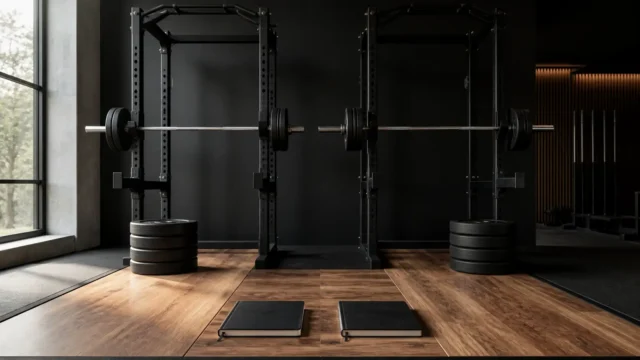

A gym can become more than the room where you complete sets. With repeated visits, familiar faces and shared routines, it can become a place you belong outside home and work. Sociologists often use “third place” for informal public settings where people return regularly and social connection can grow. A gym can serve that function, but only when belonging remains voluntary and the space still works for people who simply want to train.
This article is about the social experience of a gym, not a claim that group exercise solves loneliness or mental-health problems. Community can support activity; it cannot replace professional care or the relationships outside the gym.
- How a gym becomes familiar
- The value of weak ties
- Belonging without performance
- Boundaries that keep it healthy
- How to participate gradually
Familiarity is built by repetition
Third places rarely feel important on the first visit. Their value develops through repeated low-stakes contact: the receptionist recognizes you, another member asks whether you are using a bench, and the same small group trains on Tuesday evening. None of these interactions needs to become a close friendship to make the room feel less anonymous.
Routine is the mechanism. Attending at a consistent time increases the chance of seeing the same people. Following basic etiquette makes interactions easier. Over time, the gym becomes predictable enough that arriving requires less emotional effort.
The NIH article on getting active together notes that social support can help people start, continue or increase physical activity. It also offers different forms of connection, from a friend to a class or club. The useful word is “can.” Some members are energized by conversation; others prefer quiet familiarity.
Weak ties can still matter
Not every useful relationship needs to leave the building. A person who says hello, shares a rack fairly or notices that you have returned after an absence can add texture to the week. These weak ties create recognition without the obligations of close friendship.
They can also support practical learning. You may hear when equipment is broken, learn the quietest time to train or find a reliable spotter. This information reduces friction. It should not become unsolicited coaching. Asking before giving advice is one of the clearest signs that a gym respects autonomy.
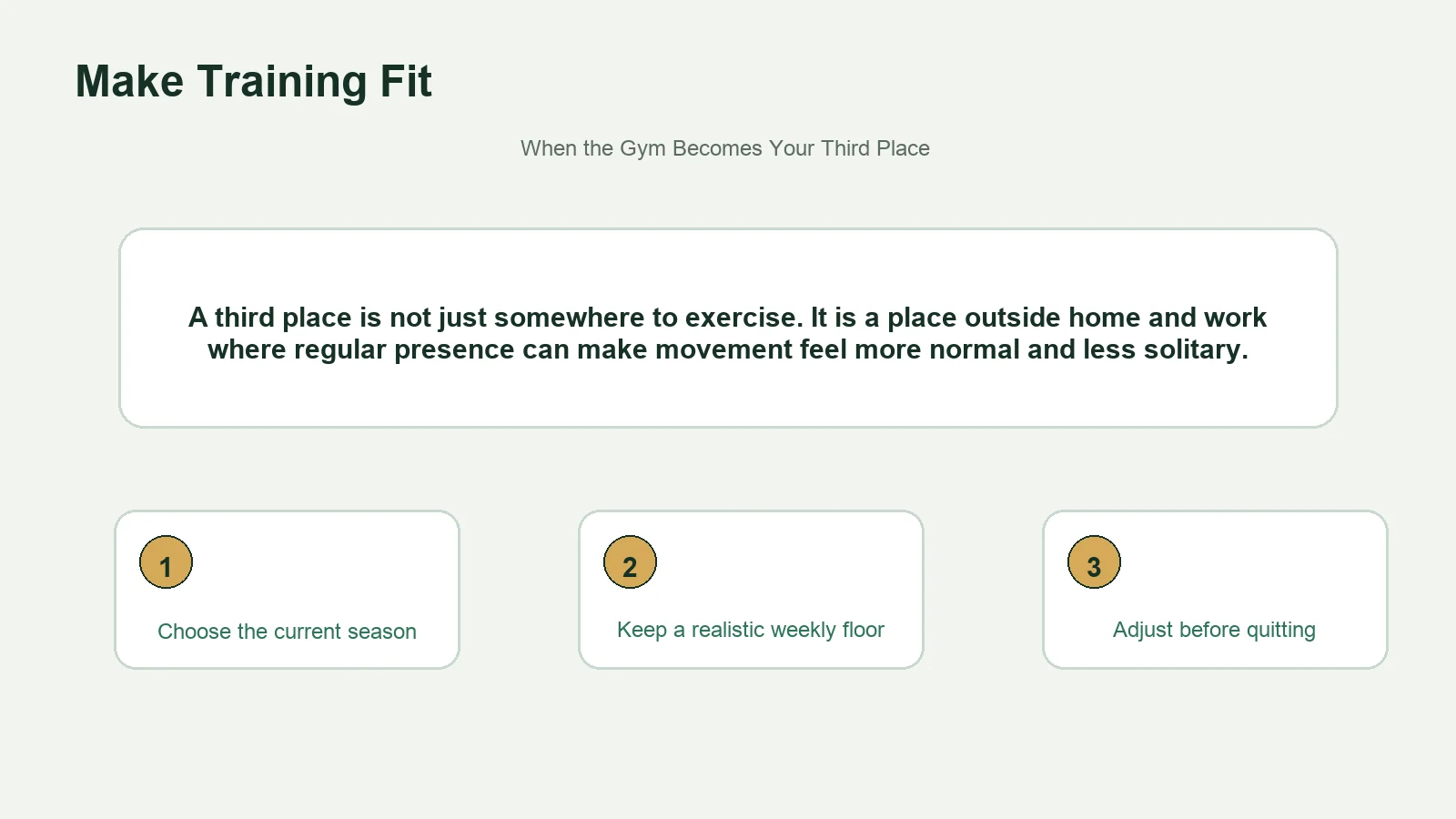
Belonging should not require a performance
A healthy gym community does not demand a certain body, training style, clothing brand or social personality. Members should be able to train seriously without becoming content, joining a clique or explaining their goals. The room becomes more welcoming when competence is shared quietly and beginners are allowed to learn.
Watch how the culture responds to difference. Are older members, beginners and people using lighter loads treated with the same basic respect? Do staff intervene when someone harasses, films or monopolizes equipment? A community is defined less by slogans on the wall than by what happens when courtesy is tested.
Keep boundaries around the place
A third place is valuable partly because it is not home or work. It should not become the only source of identity or social contact. Maintain relationships and interests that do not depend on training performance. If an injury or schedule change removes gym access, the rest of your support system should still exist.
Financial boundaries matter too. A sense of belonging can make it harder to evaluate rising fees, aggressive sales or poor maintenance. Community value is real, but it does not require accepting unsafe equipment, unclear contracts or pressure to buy extras. You are still a customer with the right to assess the service.
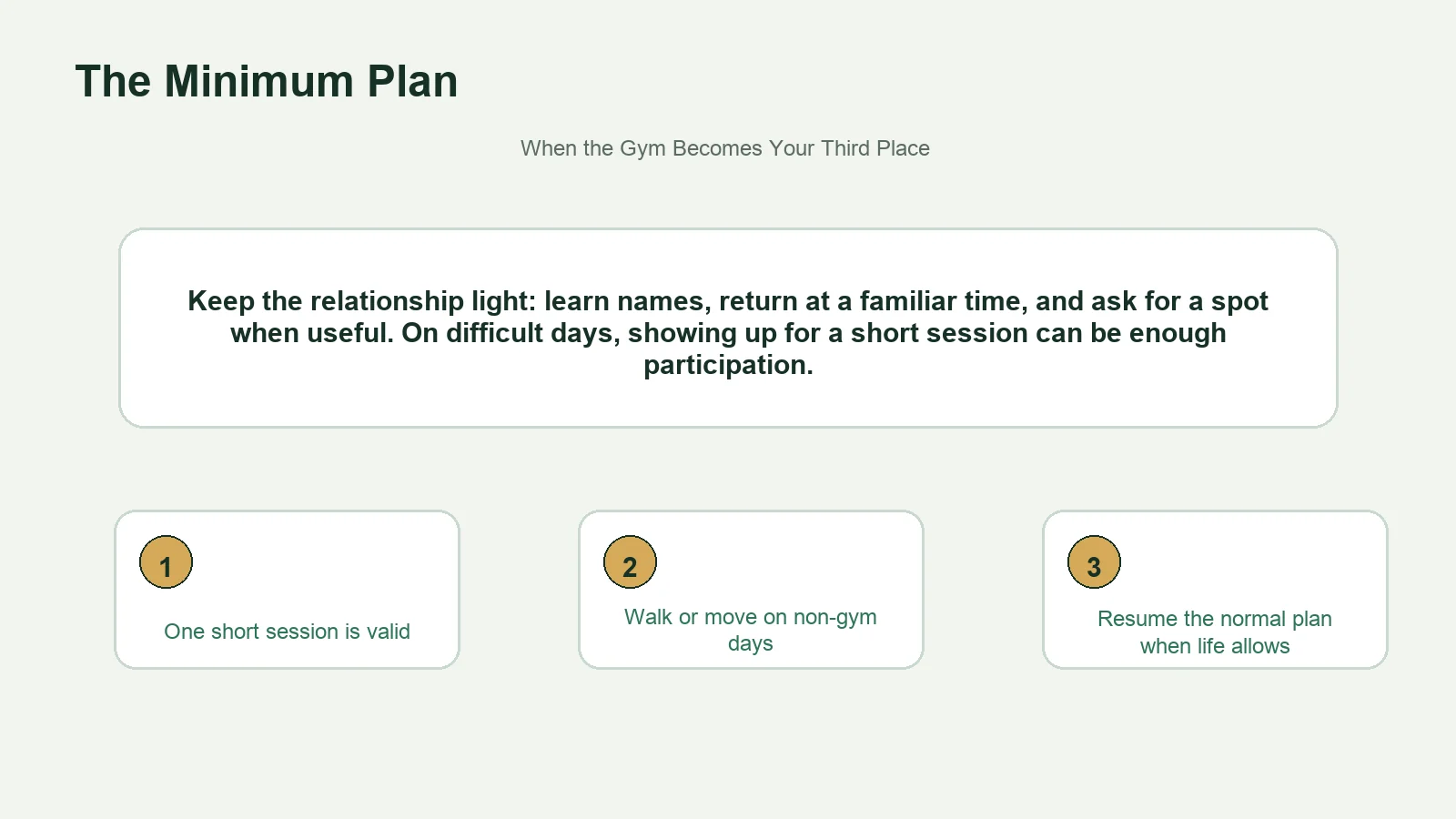
How to participate gradually
Start with behavior that already belongs in a good gym: rerack weights, share equipment and communicate clearly. Train at a consistent time for several weeks. Learn one staff member’s name. Ask for a spot when you need one and offer only when appropriate. These actions create connection without forcing intimacy.
If you want more, try a small group, club event or regular training partner. If you do not, familiar solitude is a valid outcome. The best version of a gym as a third place is not constant conversation. It is a room where you can arrive as yourself, practice something meaningful and feel that your presence is ordinary.
Choose the room as carefully as the program
If community matters to you, evaluate it during the hours you will actually train. Visit at your normal time and notice how members share popular equipment, how staff respond to questions and whether newcomers can understand the rules. A quiet tour at midday may not represent a crowded weekday evening.
Look for ordinary evidence rather than staged friendliness. Are names learned without pressuring people into conversation? Are class regulars welcoming without controlling the room? Can someone decline advice, filming or social events without becoming an outsider? Good belonging leaves people free to participate at different levels.
The room still needs to fit the work you plan to do. Before treating a gym as a regular place to spend time, decide whether its equipment, rules, and training culture match your needs; commercial and powerlifting gyms make different tradeoffs.
Your own contribution can remain modest. Be predictable, communicate when sharing equipment and thank people who help. Avoid turning familiarity into entitlement: another member does not owe you a spot, a conversation or access to equipment they are using. A third place works because repeated contact feels safe and optional. Protecting those boundaries is part of what makes the connection worth returning to.
Continue with a related guide
For the next practical step, read Why the Best Gyms Feel Like Communities, Not Businesses. For a second perspective from the same topic cluster, continue with You Don’t Need to Live in the Gym to Become Strong.