Quinoa has acquired a familiar fitness reputation: it is a "complete protein," so it must be a superior choice for building muscle. The first half of that statement has a useful basis. The second half turns a food fact into a marketing conclusion. Quinoa is worth knowing because it is a versatile carbohydrate food that also brings some protein, fiber, and an unusually well-balanced amino acid profile. It is not a shortcut around planning the rest of a meal.
For someone who trains, that distinction is practical. Quinoa can make a lunch bowl, dinner plate, or batch-cooked side more interesting than eating the same grain every day. It can also make plant-forward meals easier to assemble. But a cooked serving is not automatically a protein anchor, a recovery formula, or a reason to rank other carbohydrate foods as inferior.
This article offers general food context for healthy adults. It does not set individual calorie, carbohydrate, or protein targets. Anyone managing coeliac disease, a food allergy, digestive symptoms, kidney disease, or a medically prescribed diet should use advice tailored to their situation rather than relying on a general fitness article.
- Why the complete-protein label needs context
- Where quinoa sits in a training meal
- What fiber and variety add to the decision
- How to pair quinoa without turning it into a rule
- Preparation details that actually matter
The label is true, but it is not the whole decision
Proteins are made from amino acids. Some amino acids are essential, meaning the body must obtain them from food. Quinoa is regularly described as a complete protein because its amino acid pattern includes all of them and is more balanced than that of many staple grains. The review Quinoa: composition, chemistry, nutritional, and functional properties explains why its protein quality has drawn attention, while a regional amino-acid analysis of quinoa seed also found a broad essential-amino-acid profile across the samples studied.
That is a legitimate advantage, especially for people who enjoy plant-forward eating. It does not tell us everything a lifter needs to know. Protein quality is only one variable; total protein across the day, the amount in a particular meal, food tolerance, convenience, cost, and the rest of the plate all still count. The ISSN’s 2017 review of protein for exercising people makes the broader point: active people can meet protein needs with whole foods, while adequate quantity and a balanced essential amino acid supply remain the practical focus.
Calling quinoa complete should therefore change the conversation from "is it a real protein?" to "what job is this serving doing in this meal?" It can contribute protein. It is rarely the only protein plan a strength-focused meal needs.
Think of quinoa as a grain-like carbohydrate food first
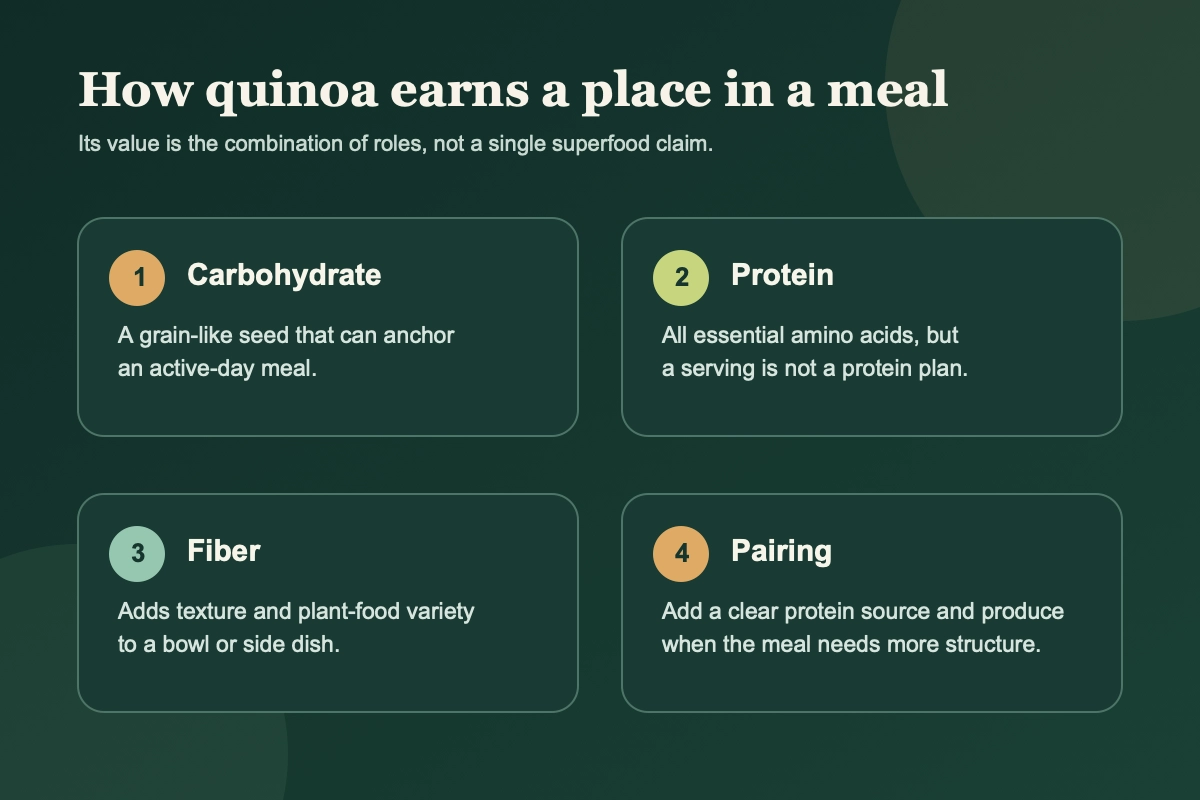
Quinoa is technically a seed, often called a pseudocereal, but it behaves in the kitchen much like a grain. It absorbs liquid, becomes fluffy when cooked, and can take the place of rice, couscous, bulgur, or another starchy side. That is its most useful everyday identity.
The USDA’s FoodData Central is a sensible place to check the specific cooked or packaged product in front of you because dry weight, cooked weight, flavorings, and branded versions vary. In normal cooked form, quinoa brings substantially more carbohydrate than protein. That does not make its protein irrelevant. It means the food works best when described honestly: it can provide a carbohydrate base while making a modest protein contribution.
That role can suit an active day. A quinoa bowl may feel easier to eat than a very large plate of pasta for one person, while another person may prefer potatoes, oats, bread, or rice. Training does not require a hierarchy in which one carbohydrate wins every meal. Variety can help people build meals they will actually repeat, prepare, and enjoy.
Fiber and plant-food variety are part of the appeal
Quinoa also brings fiber and a distinct texture. That can make a meal feel more substantial, particularly when it is combined with vegetables, beans, fruit, nuts, seeds, or a protein source. Fiber is not a performance trick, and more is not always better at every moment. A person who is about to train may prefer a meal with a different texture or a lower-fiber option because it sits better. Another person may like quinoa precisely because it helps a lunch bowl feel satisfying.
The point is flexibility. The same food can be a useful batch-cooked base for weekday lunches, a warm side with fish and vegetables, or a cold salad component. It can also be skipped when a different carbohydrate is cheaper, more available, better tolerated, or simply more appealing. Food variety is valuable when it supports a consistent eating pattern, not when it creates a new obligation.
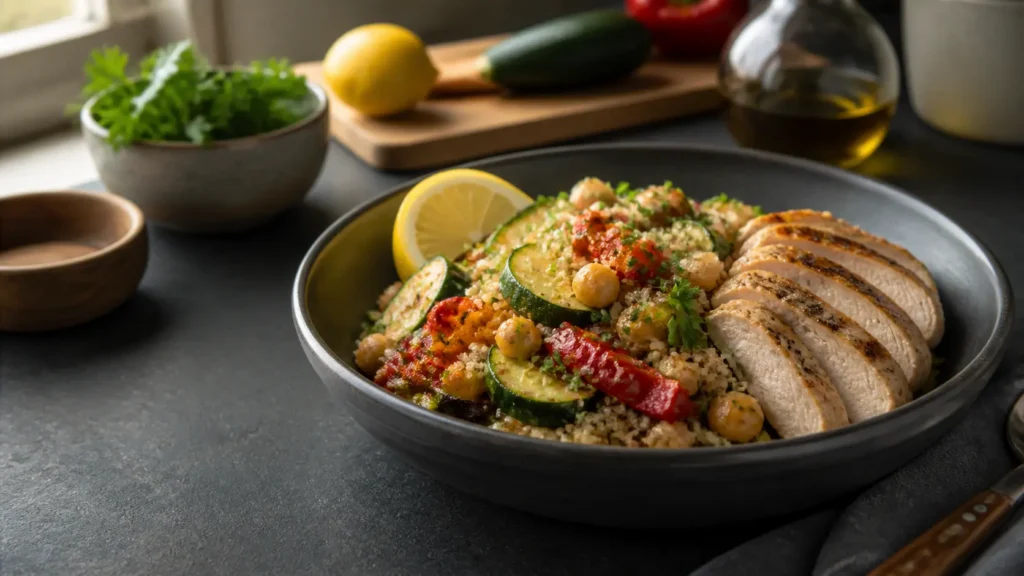
Quinoa’s protein profile should not erase the value of pairings. A bowl with quinoa, roasted vegetables, chickpeas, herbs, and a clear protein source has a different practical structure from a bowl of quinoa alone. The first is not morally better; it just has more pieces doing distinct jobs.
Build the meal around the purpose, not the trend
If quinoa is the carbohydrate foundation, choose the rest of the meal based on what is missing. Add eggs, dairy, fish, chicken, tofu, tempeh, beans, lentils, or another protein-containing food when a more protein-focused meal is useful. Add vegetables or fruit when you want color, volume, and a different set of flavors. Use fats such as olive oil, tahini, avocado, nuts, or a sauce because they make sense for taste and satiety, not because every bowl needs to look identical.
This is also where quinoa fits naturally beside other site guides. If the meal needs a leaner protein anchor, see our practical chicken-breast meal guide. For a dairy-based option that can complement a grain bowl, read our guide to Greek yogurt’s wider nutrient profile. Neither article makes quinoa redundant. They simply show why a meal is stronger as a combination than as a single-ingredient claim.
Plant-based meals can use the same principle. Beans, lentils, soy foods, and quinoa can appear together because they provide different textures and make it easier to build a satisfying plate. There is no need to turn every meal into an amino-acid puzzle. Across a varied diet, ordinary whole foods can work together without forcing a precise pairing at every bite.
Preparation and labels deserve a quick check
Plain quinoa is simple to cook, but it benefits from a few practical details. Rinsing dry quinoa before cooking can remove surface saponins that some people find bitter. Stock, herbs, citrus, garlic, spices, vegetables, and a sauce can make it more enjoyable without pretending there is one ideal preparation. A large pre-seasoned packet, restaurant bowl, or ready meal may have a very different sodium, fat, and portion profile from plain cooked quinoa, so the label and the actual dish matter more than the word "quinoa" on its own.
Quinoa is naturally gluten-free, yet that does not guarantee every packaged product is appropriate for every person avoiding gluten. Cross-contact and labeling standards matter for people with coeliac disease or a medical reason to avoid gluten. That is a product-selection issue to confirm with a qualified clinician or dietitian, not a reason for a general article to make an individual safety call.
It is also fine if quinoa is not a favorite. Some people dislike its texture, find it expensive, or prefer the cooking time of another staple. Fitness nutrition becomes less useful when it treats a trendy food as a requirement. The best rotation is usually the one that includes foods you can prepare, afford, tolerate, and return to.
A useful carb source with a better-than-average protein story
Quinoa earns its place in an active kitchen without being marketed as a miracle. It is a flexible, grain-like carbohydrate food with fiber, a balanced essential-amino-acid profile, and enough protein to contribute to a meal. Those are meaningful traits. They do not mean a serving replaces the deliberate protein source, produce, and overall food pattern that support regular training.
Use quinoa when you enjoy it and when it makes a meal easier to build. Pair it with foods that provide the structure you want. Keep rice, potatoes, oats, beans, bread, pasta, and other staples in the rotation. The useful conclusion is not that quinoa wins the carbohydrate category. It is that it is one more practical option with a genuinely interesting protein profile.
Continue with a related guide
For another everyday-food perspective, read our guide to milk in active diets. For a protein-focused food comparison, continue with Lean Beef vs Chicken: Which Makes More Sense for a Strength Athlete?.